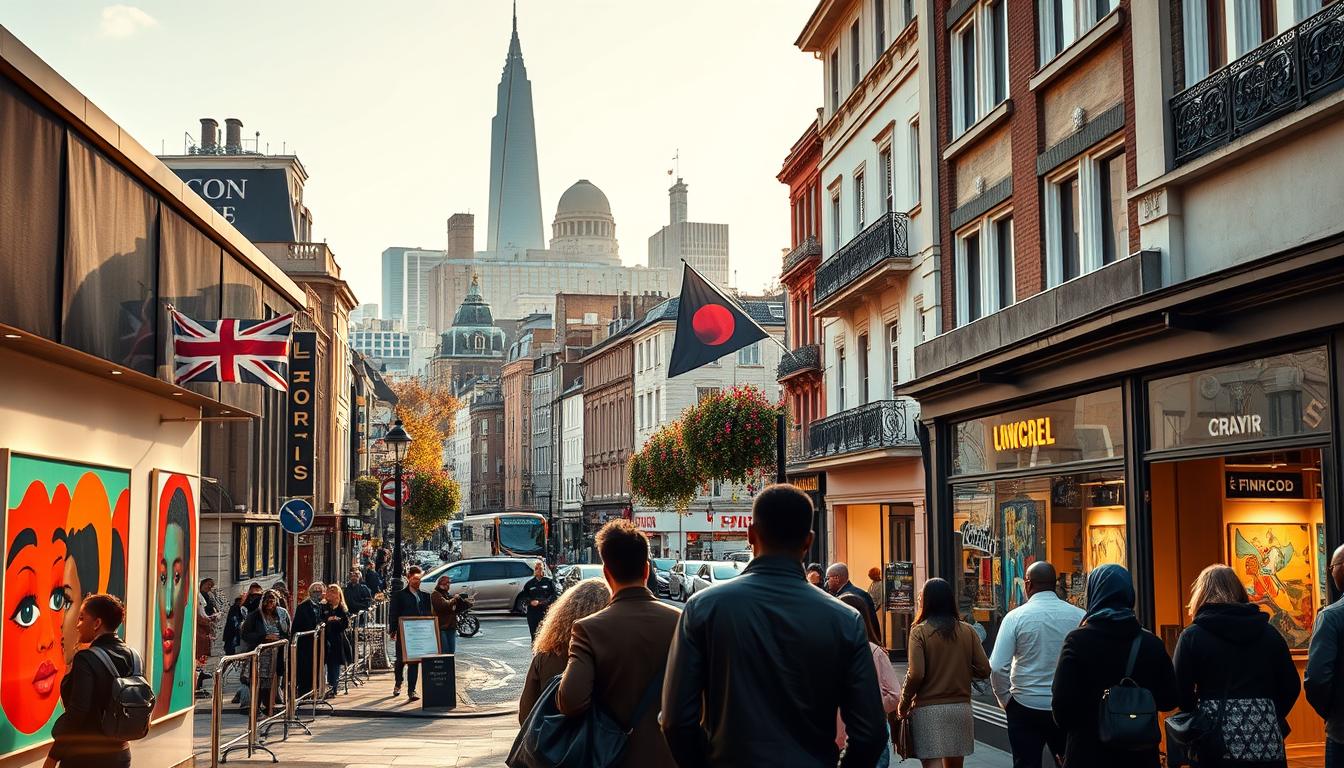
Can a single fair reshape how we see work from across a whole continent?
2025’s big edition at Somerset House offered one clear answer. The fair welcomed more than 50 exhibitors and showcased works by over 100 artists, mixing painting, photography, sculpture, performance, textiles, and ceramics.
The Edmond J. Safra Fountain Court hosted a monumental installation that became a talk of the season. Curated talks, tours, and a lively VIP and public program gave extra depth to the visitor experience.
This 13th edition tied the city event to a wider circuit with sister editions in New York and Marrakech, showing how the fair now operates across three continents in a single year.
Read on to discover which galleries to watch, which artists defined the moment, and why this edition matters to collectors, curators, and curious visitors from the United States.

Key Takeaways
- The Somerset House edition featured 50+ exhibitors and 100+ artists in 2025.
- A monumental installation anchored the fair in the Edmond J. Safra Fountain Court.
- Programming included talks, tours, and a robust VIP and public schedule.
- The fair spans three continents with linked editions in New York and Marrakech.
- Readers will get a guide to standout galleries, key artists, and notable works.
London’s spotlight on contemporary African art: what’s driving the moment
Over more than a decade, fairs and institutions turned a focused scene into a durable platform. Since 2013, 1-54 has built year-round engagement and three annual editions that let galleries show to curators and collectors from across the globe.
Museums such as Zeitz MOCAA and partner exhibitions have shifted how institutions treat work from the continent. This shift deepens scholarship and public engagement and attracts european american collectors who now hunt for fresh voices.
Cross-continental collaboration matters: when galleries, residencies, and fairs connect, discovery speeds up. Curators meet hundreds of artists in one visit, creating a feedback loop that feeds acquisitions and new research.
"The fair's role is to link galleries with institutions on and off the continent and make sure artists are part of broader narratives."
- Long-term, year-round platforms build credibility.
- Institutions reframe history and widen public engagement.
- Collectors and fairs create new market pathways for artists and galleries.
Somerset House sets the stage: inside 1-54 London’s past edition and its program
Staged inside a landmark building, this edition amplified visibility for galleries and works alike.

The fair’s return to a historic venue and why it matters for visibility
Somerset House gave the fair unmatched reach: central location, dramatic rooms, and the Edmond J. Safra Fountain Court for a monumental installation.
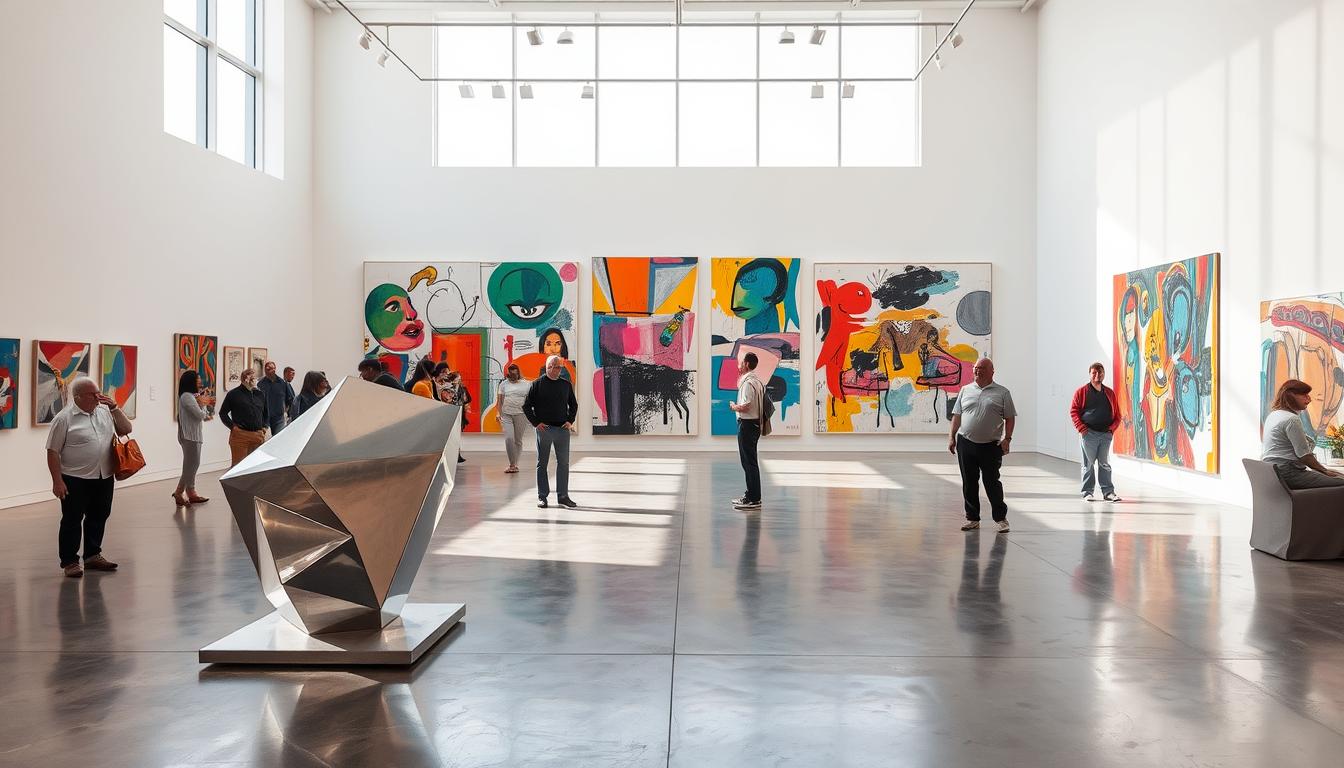
That mix let larger projects sit next to focused booths. Curators and collectors moved easily between sculpture, photography, textiles, and painting.
Touria El Glaoui’s vision and the evolution across three continents
Touria Glaoui framed the 13th edition as the result of sustained growth over years. The fair now links London, New York, and Marrakech to keep galleries in steady engagement.
"Our goal is sustained engagement with galleries and artists across continents."
From VIP to public programme: talks, tours, and curated events
The layered programme included VIP previews, public talks, and guided tours that helped new visitors and seasoned buyers alike.
- 50+ galleries and roughly 100 artists showcased diverse media.
- Special projects and partnership activations extended the week beyond booths.
- Participants ranged from The 1897 Gallery to Gallery 1957 and regional spaces such as KUB’ART and Rele.
For a detailed look at the fair’s special projects and partnerships, see the coverage of 1-54 London’s 13th edition special projects.
african contemporary art london: galleries, artists, and media to know
Visitors found a compact survey of leading galleries, each offering distinct curatorial priorities and fresh commissions.

Galleries shaping the scene
Rele Gallery (Lagos/London/Los Angeles), Gallery 1957 (Accra/London), Affinity, The 1897 Gallery, KUB’ART, and OH Gallery each presented targeted programs that connect local practice with global collections.
Artists across generations
Hassan Hajjaj, Ibrahim El‑Salahi, Arthur Timothy, and Vanessa Endeley represented different generations and approaches. Their presentations helped visitors link signature styles to specific gallery programs.
Media on view
The fair offered a clear snapshot of photography, painting, sculpture, textiles, and ceramics. This mix showed how makers combine traditional technique and new forms to reframe familiar subject matter.
"Galleries act as mentors, commissioners, and connectors—placing works with institutions and collectors."
| Gallery | Base | Focus |
|---|---|---|
| Rele Gallery | Lagos / London / LA | Cross‑city projects, emerging artists |
| Gallery 1957 | Accra / London | Historical dialogue, modern legacies |
| The 1897 Gallery | Lagos | Contemporary Nigerian voices |
| KUB’ART | Kinshasa / Montreal | Regional networks, bold media |
Modern legacies—Seydou Keïta and Malick Sidibé—sat alongside rising and emerging artists, showing how history guides new directions. For more on the fair’s program and exhibitors, see this coverage of the 1‑54 London 2025 edition.
Special projects and installations transforming Somerset House
A suite of special projects animated Somerset House, turning courtyards and galleries into sites for sustained, hands-on encounter.
Earthworks by Mónica de Miranda
Earthworks occupied the courtyard as a site-specific installation about ecology, memory, and terrestrial communities.
The piece asked viewers to slow down and read landscape as archive.
The Inherited Counter‑Archive
Everyday Lusaka reimagined Zambia’s first Black photo studio with Alick Phiri’s material and methods.
The exhibition confronted colonial visual regimes through a living, community-centred display.
The Sartorial Spirit of Punk Tailors
Art Comes First blended craftsmanship with British tailoring in a multi-room installation.
The idea linked making, posture, and wardrobe as a practiced form of resistance.
Seed Archives: Form, Feeling
Seed Archives created a ritual space of touch that invited embodied learning.
This participatory project questioned conventional museum distance.
Partnership highlights and individual spotlights
Nando’s x Spier Arts Trust supported sustainable pathways by showing works from Anastasia Pather, Boyce Magandela, and Mbuso Hlongwa.
Other projects included PICHA Association’s presentations, Kahlil Joseph’s BLKNWS, and performances by Rohan Ayinde and Tayo Rapoport.
Individual highlights—Lakwena Maciver, Leonard Pongo, and Aliaa Elgready—offered vivid, tactile moments that stayed with visitors.
"These special projects made the fair feel less like browsing and more like participation."
- Special projects reshaped public spaces into lasting encounters.
- Installations and exhibitions encouraged slow looking and community exchange.
- Artists and partners made the fair an active part of the city’s cultural programme.
From modern to contemporary: how history powers today’s market and museums
A clear thread ran through the displays: history supplies the reference points that shape what we collect today.
The 2025 edition foregrounded modern masters alongside new voices. Names like Seydou Keïta and Malick Sidibé anchored photographic lineages, while Ousmane Sow’s monumental sculpture recalled African modernism’s scale and reach.
Senegal, Nigeria, South Africa: foundations and new directions
Senegal showed a long arc—from Ousmane Sow to Soly Cissé and Viyé Diba—where abstraction meets social commentary. Nigeria’s scene, via Affinity and The 1897 Gallery, links historic practice to museum placements.
South Africa’s ecosystem—Afronova, Eclectica Contemporary, Guns & Rain—sustains residencies and brings painting and sculpture to international audiences.
Techniques that bridge media
Material experiments tied history to form. Alexis Peskine’s hammer‑and‑nail portraiture reframes traditional portrait making.
Zenaéca Singh’s molasses on cotton challenges medium expectations while honoring local materials.
"Institutional interest and market momentum are now recognizing modernists as part of a broader story."
- Galleries translate history for museums and the secondary market.
- Curators and collectors follow formal innovation and narrative depth.
Partnerships, fairs, and collectors: the expanding platform
When leading houses and banks back a fair, the ripple effects reach museums, dealers, and artists alike.
1-54’s partnerships with Christie’s and Afreximbank boosted secondary‑market visibility and deepened institutional ties.
Afreximbank’s Art Programme showcased emerging artists across the continent and launched the Afreximbank Art Prize, first due at 1‑54 Marrakech in February 2026.
Christie’s and Afreximbank: shaping the secondary market and new prizes
Christie’s connection brings auction pathways that help galleries and collectors place work into museum and private collections.
Afreximbank adds funding and prize structure that supports research and long‑term careers for emerging artists.
Why American institutions and collectors are looking to the Global South
US institutions and collectors use editions in New York and London as discovery points. These fairs act as a bridge to the Global South.
The 1897 Gallery and other galleries used the platform to connect with curators and secure acquisitions today.
"Partnerships create consistent year‑over‑year opportunities for visibility, sales, and cross‑border collaboration."
- Watch for prize announcements, residencies, and museum collaborations that often begin at the fair.
- South Africa’s networks feed continental projects that benefit institutions, galleries, and artists.
Conclusion
, This 13th edition proved that careful programming and bold installations can recast museum and market priorities in one week.
The fair honored art history while pushing new voices. Partnerships with Christie’s and Afreximbank and special projects in archives, ecology, film, and fashion made that clear.
As a cross-continental platform linking London, New York, and Marrakech, the edition helped institutions, galleries, and artists find sustained engagement. South Africa and other regions played visible roles in shaping the story.
For collectors, the message is simple: ongoing engagement with galleries and museums yields smarter acquisitions. This edition acted as a catalyst—one part of a year-round system that will carry momentum into the next edition and year.
Enhance Your Space with Unique Modern Masterpieces by Chiara Rossetti

Are you inspired by the innovative mediums and conceptual depth highlighted in our exploration of contemporary art? You’re not alone! Today’s art enthusiasts are seeking cultural relevance and emotional connections in their artwork. However, finding pieces that resonate with modern themes and fit your unique style can be a challenge. That’s where we come in!

At Rossetti Art, we specialize in canvas prints, original paintings, and modern sculptures that celebrate the spirit of now. Each piece created by Chiara Rossetti brings a personal touch that connects deeply with current social narratives—just like the modern masterpieces discussed in the article. Don’t miss out on the chance to elevate your home decor with breathtaking artwork that speaks to your values and aesthetic. Explore our collection today and find your perfect piece! Act now, and transform your space into a gallery of inspiration!
FAQ
What is 1-54 and why is its return to Somerset House important?
1-54 is a leading fair dedicated to artists from Africa and the diaspora. Its presence at Somerset House brings major visibility, connects galleries, and creates public programmes that attract collectors, curators, and new audiences to a historic London venue.
Who is Touria El Glaoui and what role does she play?
Touria El Glaoui founded 1-54 to create a global platform across three continents. Her vision has expanded the fair’s reach, forged partnerships with institutions, and helped emerging galleries and artists gain international exposure.
What kinds of events happen during the fair beyond gallery booths?
The programme typically includes artist talks, panel discussions, guided tours, film screenings, and special commissions. These public events deepen engagement and offer context for works on view.
Which galleries are shaping the scene right now?
Notable spaces include Rele, Gallery 1957, Affinity, The 1897 Gallery, KUB’ART, and OH Gallery. These galleries represent a mix of established and emerging voices across varied media and markets.
Which artists should collectors and visitors pay attention to?
Look for established figures like Hassan Hajjaj, Seydou Keïta, and Malick Sidibé, alongside emerging names such as Vanessa Endeley, Arthur Timothy, Lakwena Maciver, Leonard Pongo, and Aliaa Elgready. They represent generational breadth and diverse practices.
What media and techniques dominate exhibitions and special projects?
You’ll find photography, painting, sculpture, textiles, and ceramics alongside experimental techniques like Alexis Peskine’s nail work or Zenaéca Singh’s textured processes. Curators often foreground cross‑media dialogues.
Can you give examples of special projects that transform the fair space?
Recent commissions have included ecological installations, counter‑archives, collaborative tailoring projects, seed archives, and partnerships supporting Southern African artists—works that extend beyond gallery presentation into immersive, site‑specific experiences.
How do partnerships with institutions and markets affect visibility and sales?
Collaborations with institutions, auction houses, and banks help legitimize emerging markets, create secondary‑market infrastructure, and attract institutional and private collectors. These ties also fund prizes and long‑term support for artists.
Why are American museums and collectors increasingly interested in this scene?
Interest stems from a wider shift toward global narratives, museum programming that reflects postcolonial histories, and the commercial recognition of artists from the Global South. Institutional acquisitions and targeted collecting strategies have accelerated attention.
What resources help me learn more or plan a visit?
Check official fair pages, Somerset House listings, gallery websites, and press from major outlets. Many galleries publish exhibition notes and artist bios online; public programmes often require advance booking.

About the Author
Chiara Rossetti
Chiara Rossetti is the founder of Rossetti Art, a canvas print and original art brand. She writes about interior design, wall art styling, and the art of making a home feel alive.


Leave a comment
This site is protected by hCaptcha and the hCaptcha Privacy Policy and Terms of Service apply.