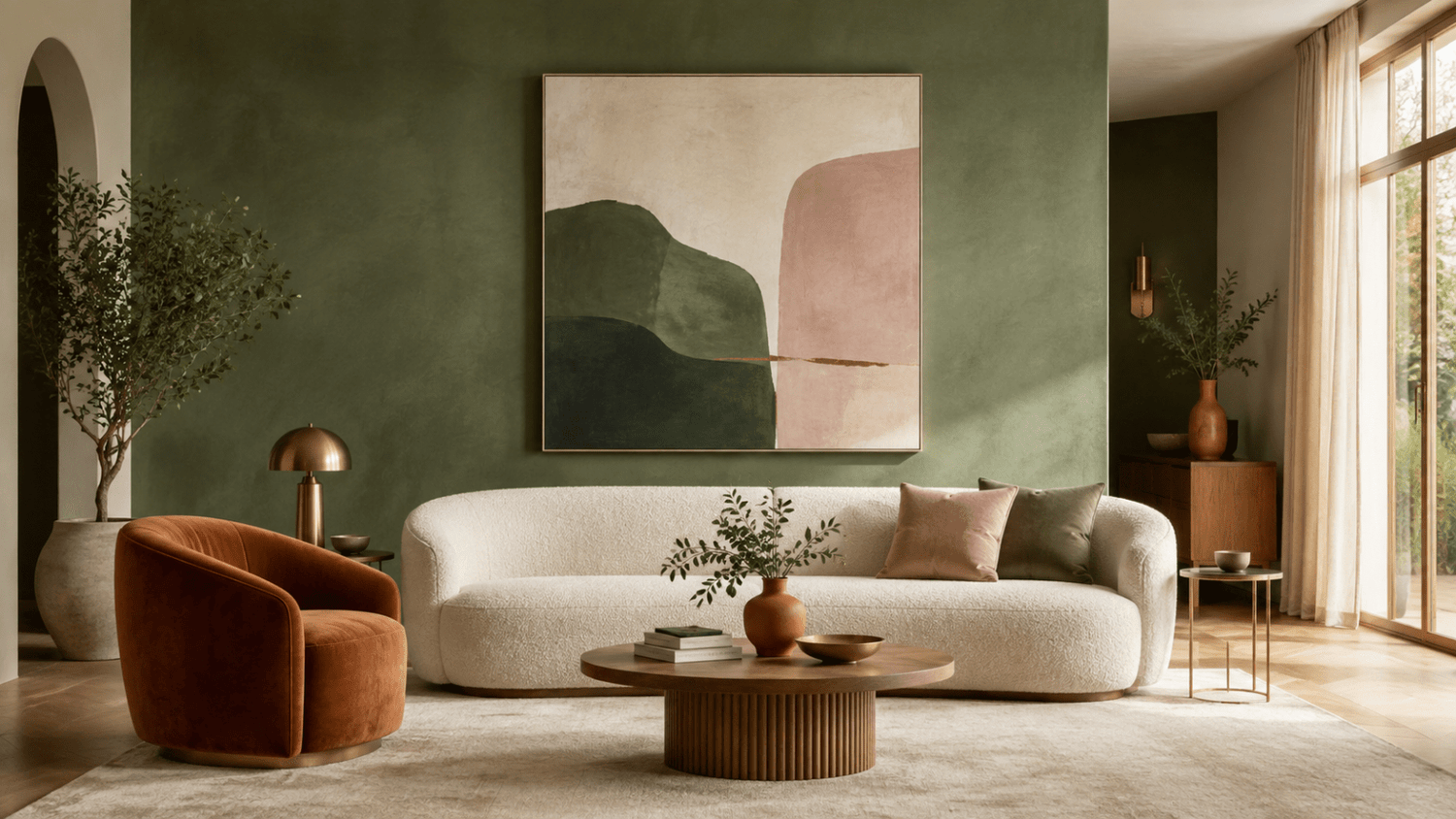
What Colors Go With Green? 5 Best Pairings + Designer Tips
Warm vs. Cool Green Undertones
Every green shade leans warm or cool, and that undertone decides which pairings will feel harmonious rather than off.
Warm, yellow-based greens — sage, olive, moss, chartreuse — contain yellow or brown notes. They pair naturally with terracotta, mustard, and cream, and create relaxed, earthy atmospheres that suit living rooms and bedrooms.
Cool, blue-based greens — emerald, forest, hunter, teal-leaning greens — lean toward blue. They complement navy, blush pink, and crisp white beautifully, and work exceptionally well in more formal or jewel-toned interiors.
5 Best Color Pairings for Green
1. Cream — the safest, most classic pairing. Warm cream (ivory) suits sage and olive; cool cream (linen) suits emerald and forest. Layer a few different cream shades so the room doesn't read flat, and add wood or brass accents to bridge the two tones.
2. Terracotta — an earthy, Mediterranean combination that channels desert landscapes and sun-baked clay. Terracotta's warm orange-red undertone plays beautifully off olive and sage, especially layered with rattan, linen, and greenery.
3. Navy Blue — a bold, jewel-tone pairing that reads sophisticated rather than matchy, since blue and green sit next to each other on the color wheel and share a cool base. Best with deeper greens like emerald, forest, and hunter — think a navy sofa against a forest-green feature wall.
4. Blush Pink — a soft, on-trend contrast that's especially popular with sage green right now. Pink and green sit roughly opposite each other on the color wheel, so even a muted blush reads as a deliberate, considered accent rather than a clash.
5. Gold or Brass — best used as an accent rather than a base color, at roughly 10–15% of the room. Gold lighting fixtures, mirror frames, and hardware add warmth and a touch of drama against deep emerald or hunter-green walls.

How Much of Each Color to Use
The 60-30-10 rule keeps any green-based scheme feeling balanced rather than accidental: use green for about 60% of the room (walls or large furniture), your chosen partner color for 30% (rugs, curtains, upholstery), and an accent color for the remaining 10% (small decor, hardware, art).
Texture matters as much as color. Green rooms can look flat without variation — mix velvet with linen, matte painted walls with glossy ceramics, and a jute rug against sleek furniture to keep the palette feeling layered rather than one-note.

Shop the Original Paintings Collection →
Frequently Asked Questions
What Colors Go With Green?
The most versatile colors that go with green are cream, terracotta, navy blue, blush pink, and gold. Cream and ivory create a soft, classic look, while terracotta adds earthy warmth to sage and olive greens. For a bolder look, pair green with navy — and for an on-trend, softer look, try blush pink against sage.
What Is the Complementary Color of Green?
Green's complementary color is red, since the two sit directly opposite each other on the color wheel. In practice, most interiors use a muted version of this pairing — dusty pink or brick red — rather than true red, since it's easier to live with and still creates the same balanced, eye-catching contrast.
What Color Goes Best With Dark Green?
Dark green (forest or hunter) pairs best with lighter, warmer tones that keep a room from feeling heavy, such as cream, blush pink, soft gold, or warm white. Dark green sofas and cabinetry look most balanced against pale walls and light textiles, which stop the space from feeling closed in.
What Colors Should You Avoid Pairing With Green?
Avoid pairing green with colors that clash in undertone, such as a cool, blue-based gray next to a warm, yellow-based olive with no neutral to bridge them. Overly saturated brights in large doses can also compete with green rather than complement it — use them as small accents instead.
Browse the collection →
Keep Reading
- What Colors Go With Brown? 5 Best Pairings + Designer Tips
- Warm Minimalist Interior Design
- Shop the Original Paintings Collection

About the Author
Chiara Rossetti
Chiara Rossetti is the founder of Rossetti Art, a canvas print and original art brand. She writes about interior design, wall art styling, and the art of making a home feel alive.

Leave a comment
This site is protected by hCaptcha and the hCaptcha Privacy Policy and Terms of Service apply.