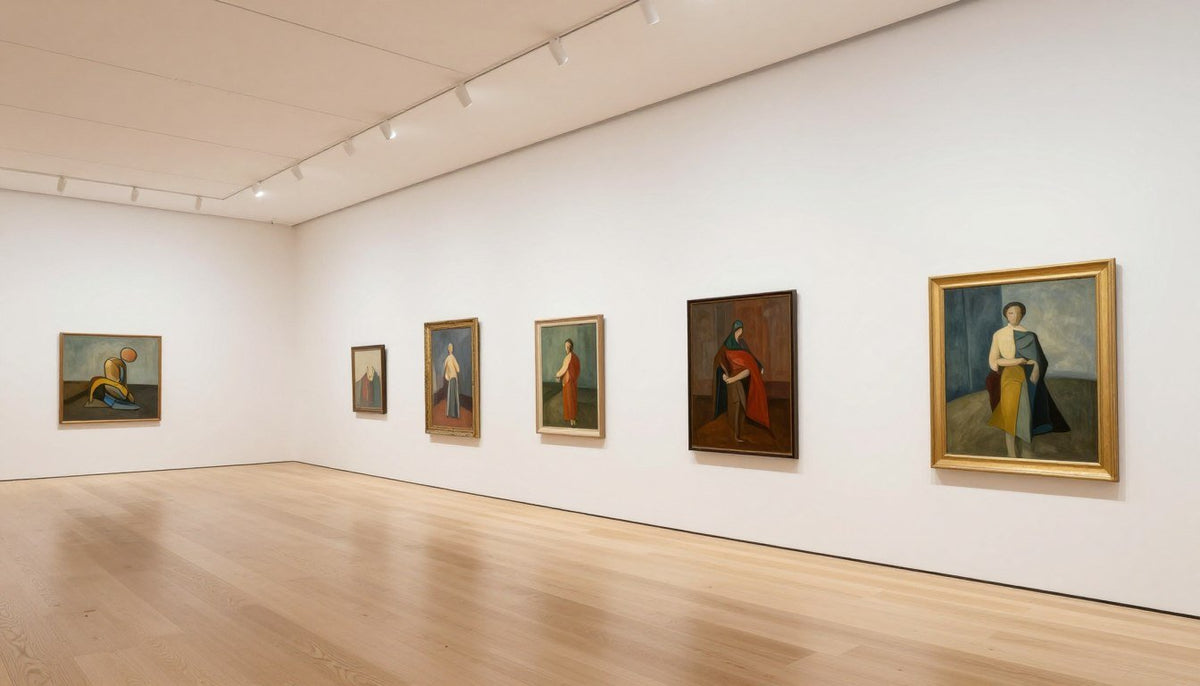
An art movement represents a distinct period where artists share common philosophies, goals, or aesthetic techniques to respond to the changing world around them. Understanding these artistic developments helps anyone select wall decor that balances visual interest, historic character, and personal taste across contemporary residential spaces.
Personal preference and architectural layout dictate which aesthetic tradition works best in a specific room. Exploring how primary traditions developed provides practical direction when selecting framed prints, colour palettes, and focal points for everyday living areas.

What is an art movement
An art movement is a collective style, attitude, or artistic philosophy shared by a group of painters, sculptors, and designers over a specific era. Rather than operating in isolation, artists within a movement react against earlier conventions or reflect major cultural and technological transformations occurring in society.
These collective shifts often start with written manifestos, collaborative exhibitions, or shared studio circles where participants debate form, technique, and subject matter. Over time, critics and art historians identify recurring visual signatures, establishing names that help subsequent generations categorise stylistic developments.
Recognising the core motivation behind a historic school of painting simplifies the process of pairing modern reproductions with existing furniture, decorative lighting, and room architecture.
Every major movement alters how people perceive depth, brushwork, colour relationships, and the purpose of visual representation. By moving beyond literal transcription, successive generations of creatives paved the way toward modern abstraction and conceptual innovation.
Art movements at a glance
Comparing stylistic periods side by side reveals how artistic sensibilities evolved from loose, naturalistic brushwork into rigorous geometric abstraction. The following overview summarises the defining characteristics of eight foundational movements alongside clear styling guidance for domestic interiors.
| Movement | Years | Look | How it works at home |
|---|---|---|---|
| Impressionism | 1860s to 1880s | Dappled natural light | Softens formal rooms, brightens dark hallways, and complements traditional wooden furniture. |
| Post-Impressionism | 1880s to 1905 | Vivid expressive colour | Creates warm focal points above mantelpieces, sofas, and dining tables. |
| Cubism | 1907 to 1920s | Deconstructed forms | Pairs naturally with industrial architecture, neutral palettes, and structured modern cabinetry. |
| Surrealism | 1920s to 1950s | Dreamlike motifs | Adds whimsical talking points to private studies, home libraries, and reading nooks. |
| Abstract Expressionism | 1940s to 1950s | Dynamic energetic marks | Anchors large living rooms and open-plan spaces with commanding visual drama. |
| Pop Art | 1950s to 1970s | Bold graphical motifs | Energises contemporary flats, creative workspaces, and modern entertainment areas. |
| Minimalism | 1960s to 1970s | Sparse reduced geometry | Promotes visual calm in decluttered bedrooms, bathrooms, and modern hallways. |
| Bauhaus | 1919 to 1933 | Structured colour grids | Complements mid-century furniture, linear joinery, and clean architectural lines. |
Each visual tradition introduces a different emotional weight and chromatic profile to an interior. Choosing the right piece depends on whether a room requires calming tonal equilibrium or an injection of graphic energy.
Impressionism: light and everyday life
Impressionism emerged in France during the late nineteenth century as artists moved away from rigid studio compositions to paint outdoors. Painters sought to record transient environmental light, shifting weather conditions, and ordinary scenes of modern Parisian life.
Instead of blended layers and crisp outlines, the style relies on short, visible dabs of pure pigment placed close together. The viewer's eye optically mixes these spontaneous brushstrokes from a distance, producing an atmospheric shimmering effect across landscapes, garden pathways, and river scenes, as defined in the Tate Art Terms glossary.
Impressionist imagery works exceptionally well in dining spaces and sunlit bedrooms where natural daylight can illuminate the subtle pastels and warm highlights across the canvas surface.
On interior walls, Impressionist artwork introduces an airy, gentle texture that prevents small rooms from feeling enclosed. Pairing soft watercolours or pastoral oil reproductions with linen drapery, light timber finishes, and muted wall paint establishes a harmonious, relaxed interior aesthetic.

Post-Impressionism: emotional colour and structured form
Post-Impressionism arose as a direct reaction against the loose, purely visual focus of Impressionism. Rather than merely documenting outdoor sunlight, artists turned toward greater emotional expression, symbolic resonance, and structured compositions.
This period introduced intense colour palettes, defined contours, and experimental paint application ranging from systematic dot patterns to thick, rhythmic swirls. Visual storytelling shifted inward, allowing subjective emotions to dictate the colours and proportions of figures, interiors, and nighttime skies.
- Displays dense, saturated colours that establish an immediate focal presence on neutral walls.
- Introduces distinct linear outlines and sculptural weight to decorative compositions.
- Bridges the gap between recognisable figurative subjects and emotional colour expression.
Styling a home with Post-Impressionist work creates warmth and historic depth across transitional living spaces. Hanging a bold, expressive piece above an ornate fireplace mantel or behind a dark velvet sofa grounds the entire seating arrangement.
Cubism: fractured perspectives and geometric planes
Cubism transformed Western art in the early twentieth century by abandoning single-point linear perspective. Originating in Paris through collaborative experimentation, the movement deconstructed three-dimensional reality into multifaceted two-dimensional geometric planes.
Instead of depicting a subject from one fixed viewpoint, Cubist compositions represent objects, faces, and still-life arrangements from multiple angles simultaneously. The resulting interlocking shapes, earthy tones, and fragmented forms challenge traditional notions of pictorial illusion and spatial depth.
Analytic structure
Focuses on monochromatic palettes, complex angles, and overlapping planes to dissect physical structure.
Synthetic collage
Introduces simpler shapes, brighter tones, textures, and patterned motifs to build new composite forms.
In residential settings, Cubist works complement angular mid-century furnishings, blackened steel details, and exposed brick walls. The disciplined geometric arrangements bring sophisticated intellectual rhythm to home studies, library walls, and minimalist urban dining rooms.

Surrealism: dreamscapes and unexpected imagery
Surrealism developed during the 1920s as an avant-garde exploration of the subconscious mind, psychology, and uninhibited imagination. Influenced by dream analysis, surrealist artists sought to liberate visual expression from the constraints of rational thought and conventional social order.
The visual signature of Surrealism pairs hyper-realistic painting techniques with bizarre, illogical arrangements and dreamlike juxtapositions. Melting objects, levitating forms, distorted human anatomy, and vast desolate landscapes create arresting visual paradoxes that intrigue the viewer.
Surrealist artwork carries strong psychological weight; balance its theatrical presence with understated surrounding decor to avoid overwhelming smaller living areas.
Displaying Surrealist art creates an engaging, contemplative focal point in entryways, home cocktail lounges, and creative studios. Surrounding the piece with understated architectural lamps, neutral wool rugs, and sculptural ceramics allows the visual mystery to shine without clutter.
Abstract Expressionism: raw emotion and physical gesture
Abstract Expressionism developed in New York during the 1940s, marking a decisive shift in global modernism. Painters abandoned recognisable subject matter entirely, turning to pure abstraction to express profound emotional states, subconscious drives, and spontaneous physical movement.
The movement diverged into two complementary directions: energetic gestural action painting characterised by broad drips and sweeps, and contemplative colour field painting featuring expansive, meditative planes of tone. Both approaches prioritise scale, surface texture, and the raw visual impact of unadorned pigment.
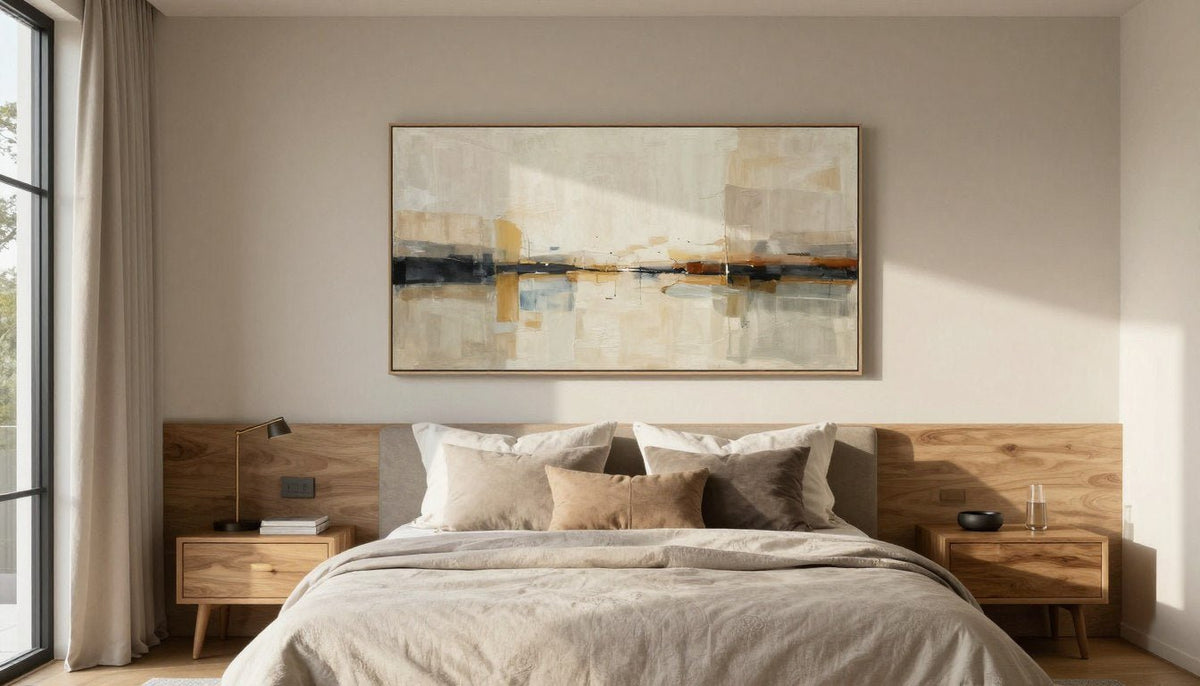
On interior walls, these dynamic works introduce extraordinary scale and movement. A contemporary piece inspired by this tradition, such as Coastal Silence Horizon, brings atmospheric presence to an expansive wall space. This horizontal contemporary abstract landscape features ivory, sand, warm beige, slate blue, and charcoal tones, available in sizes ranging from 24x16 to 81x54 inches. Printed on artist-grade poly-cotton canvas with UV- and fade-resistant HP latex inks (UL GREENGUARD Gold certified), it is hand-stretched over a 1.25-inch hardwood stretcher frame with a satin-matte low-glare finish, arriving ready to hang with an optional handcrafted poplar hardwood floater frame featuring a 5/16 in shadow gap.

Pop Art: commercial culture and vibrant repetition
Pop Art emerged across Britain and the United States in the mid-1950s, bridging the gap between high culture and everyday commercial reality. Artists rebelled against the solemn intensity of Abstract Expressionism by embracing popular culture, comic books, consumer advertising, and celebrity mass media.
Characterised by sharp graphic contours, commercial silk-screen printing methods, Ben-Day dots, and high-octane primary palettes, the style transformed ordinary commercial items into museum-worthy icons. The resulting compositions celebrate mass communication with playful wit, striking irony, and sharp graphic legibility.
For modern homes, Pop Art introduces lively colour and energetic charisma. Pieces such as Modern Muse embrace this vibrant sensibility. Built as a square vintage pop art portrait in sizes from 20x20 to 58x58 inches, it showcases hot pink, turquoise, yellow, green, purple, orange, and grayscale tones. Those exploring characterful figurative work can also consult What is an Abstract Portrait to see how contemporary portraits reinvent conventional facial features.
Pop prints create instant visual excitement when hung against white brick, painted wood panelling, or neutral modern feature walls. The high-contrast tones energise open-plan kitchens, home bars, and creative family rooms without clashing against sleek contemporary appliances.
Minimalism: purity of form and quiet space
Minimalism arose during the 1960s as artists stripped away decorative embellishment, narrative metaphor, and overt emotional expression. The movement sought an objective artistic form where the artwork referred strictly to its own physical presence and materials.
Minimalist art relies on clean lines, monochrome or restrained colour palettes, geometric grids, and industrial materials. By removing personal brush marks and complex visual storytelling, these compositions direct full attention to proportion, spatial balance, and the interaction between object and surrounding light.
Advantages for home decor
- Creates a calm, uncluttered visual rhythm across open living spaces.
- Complements both historic period properties and modern architectural apartments.
- Allows statement furniture and lighting fixtures to stand out effortlessly.
Design considerations
- Requires thoughtful surrounding negative space to avoid feeling cold or empty.
- Demands careful framing selection to preserve intentional architectural borders.
Minimalist prints provide essential visual breathing room when arranging diverse pieces across a large room. Reviewing How to Mix and Match Art Prints for a Stunning Gallery Wall demonstrates how combining sparse geometric arrangements with expressive figurative works creates balanced visual hierarchy.

Bauhaus: functional geometry and timeless balance
Founded in Germany in 1919, the Bauhaus school revolutionised modern aesthetics by unifying fine art, craft, and industrial architecture under a unified functional philosophy. Teachers and students eliminated unnecessary ornamentation, famously asserting that physical form must follow functional purpose.
Visual work from the Bauhaus movement highlights fundamental geometric shapes including circles, squares, and triangles, combined with structured grid layouts and primary colours. This rigorous aesthetic language influenced graphic design, typography, furniture manufacturing, and modern interior architecture throughout the twentieth century.
Decorating with Bauhaus-inspired art reinforces clean architectural lines and purposeful living spaces. A striking example is Chromatic Circles, a vertical geometric Op Art and Bauhaus-inspired canvas print offered in sizes from 16x24 to 53x75 inches. Its vibrant chromatic layout incorporates red, blue, yellow, pink, green, purple, and orange segments structured across an elegant circular grid.
This ordered geometric approach harmonises perfectly with mid-century interior spaces. Interior enthusiasts can discover additional styling strategies in Mid-Century Modern Wall Art: 13 Ideas That Interior Designers Love to see how structured geometric balance anchors dining credenzas and console tables.
Visualising art at scale in your home
Selecting artwork involves balancing room dimensions, wall heights, and existing furnishings to establish natural visual harmony. Viewing a print in isolation often makes it difficult to judge whether a bold canvas will anchor an entire living area or overwhelm a modest bedroom.
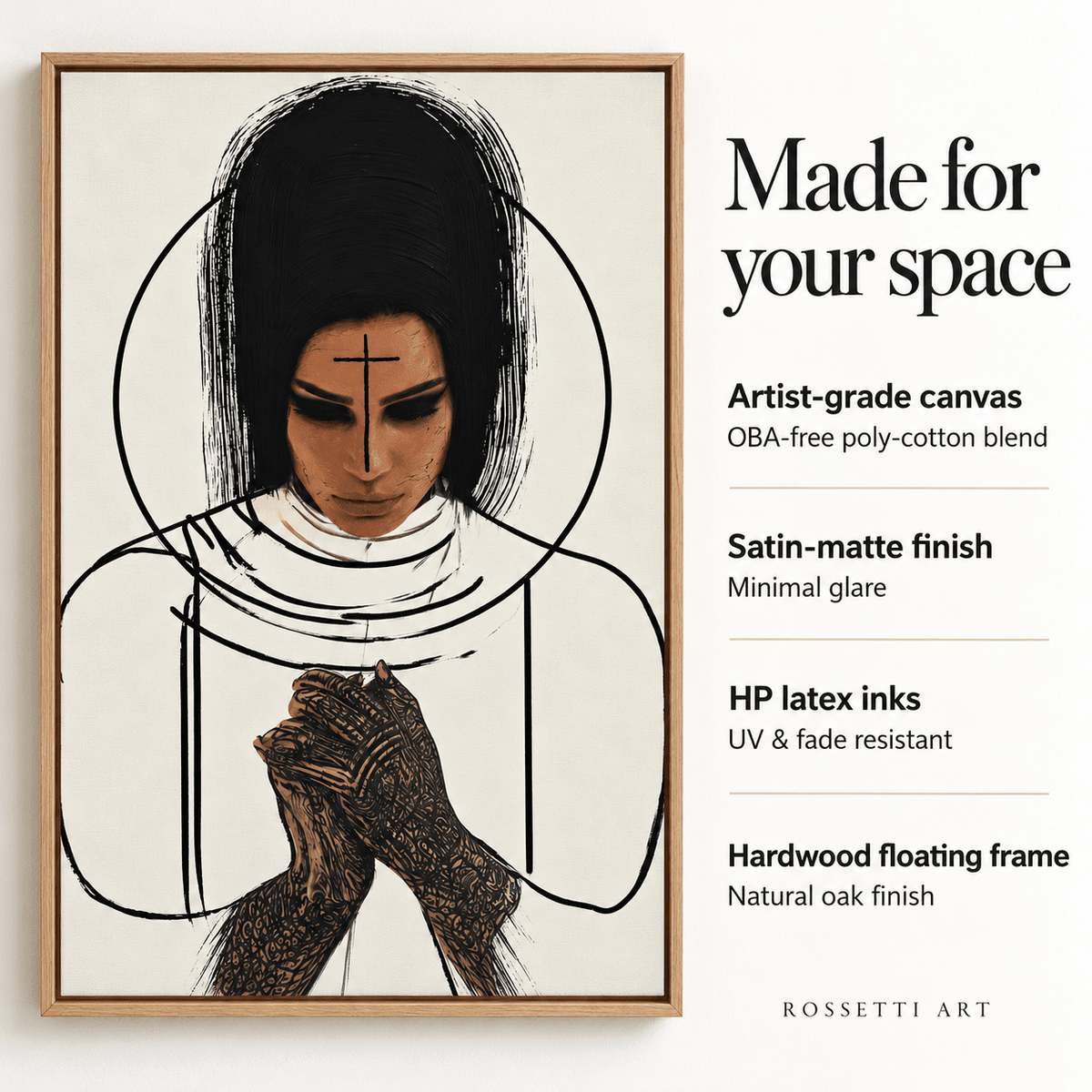
Every product is made to order, printed on artist-grade poly-cotton canvas using fade-resistant HP latex inks, and hand-stretched over a 1.25-inch hardwood frame. Standard orders include a 30-day full refund policy, while pieces with a side of 40 inches or more are final sale except in cases of transit damage. Production takes 3 to 5 business days, followed by 8 to 10 business days tracked shipping with free worldwide delivery.
See it on your wall before you buy
Use the Live Preview tool directly on any artwork page to display the piece to true scale in your room before ordering.
Frequently asked questions
What are the main art movements?
The primary Western art movements include Impressionism, Post-Impressionism, Cubism, Surrealism, Abstract Expressionism, Pop Art, and Minimalism. Each phase represented a deliberate shift in philosophy, technique, and subject matter, gradually moving artistic practice from realistic figurative depiction toward expressive emotional abstraction and structured conceptual design.
What came after Impressionism?
Post-Impressionism developed immediately after Impressionism during the late nineteenth century. Artists felt that spontaneous outdoor painting focused too heavily on fleeting light. They introduced structured geometric brushwork, bold synthetic colours, and deeper emotional symbolism, establishing the visual foundations for twentieth-century modernism and abstract experimentation.
What is the difference between Cubism and Abstract Expressionism?
Cubism deconstructs recognisable physical subjects into multifaceted geometric planes viewed from multiple vantage points simultaneously. In contrast, Abstract Expressionism abandons recognisable figures entirely. It relies on gestural paint application or expansive fields of pure colour to convey raw emotional and psychological states directly on large-scale canvases.
Which art movement is best for modern homes?
Bauhaus, Minimalism, and Abstract Expressionism work exceptionally well in modern homes because their clean lines, geometric balance, and textured colour fields complement contemporary architecture. Selecting a piece depends on room proportions, wall colours, and whether the space requires subtle visual calm or an energetic visual anchor.
What is Pop Art?
Pop Art is a twentieth-century artistic movement that originated in Britain and America during the 1950s. It incorporates imagery from popular commercial culture, including advertising, comic strips, and mass consumer products, using bright primary colours, commercial screen-printing techniques, and playful visual irony to challenge traditional fine art.
Bringing historical movements into everyday spaces
Integrating prints from historic art traditions creates layered character, visual texture, and timeless conversation across any interior design scheme. Focus on architectural proportions, room lighting, and complementary framing to choose canvas art that enriches daily living spaces for years to come.

About the Author
Chiara Rossetti
Chiara Rossetti is the founder of Rossetti Art, a canvas print and original art brand. She writes about interior design, wall art styling, and the art of making a home feel alive.

Leave a comment
This site is protected by hCaptcha and the hCaptcha Privacy Policy and Terms of Service apply.