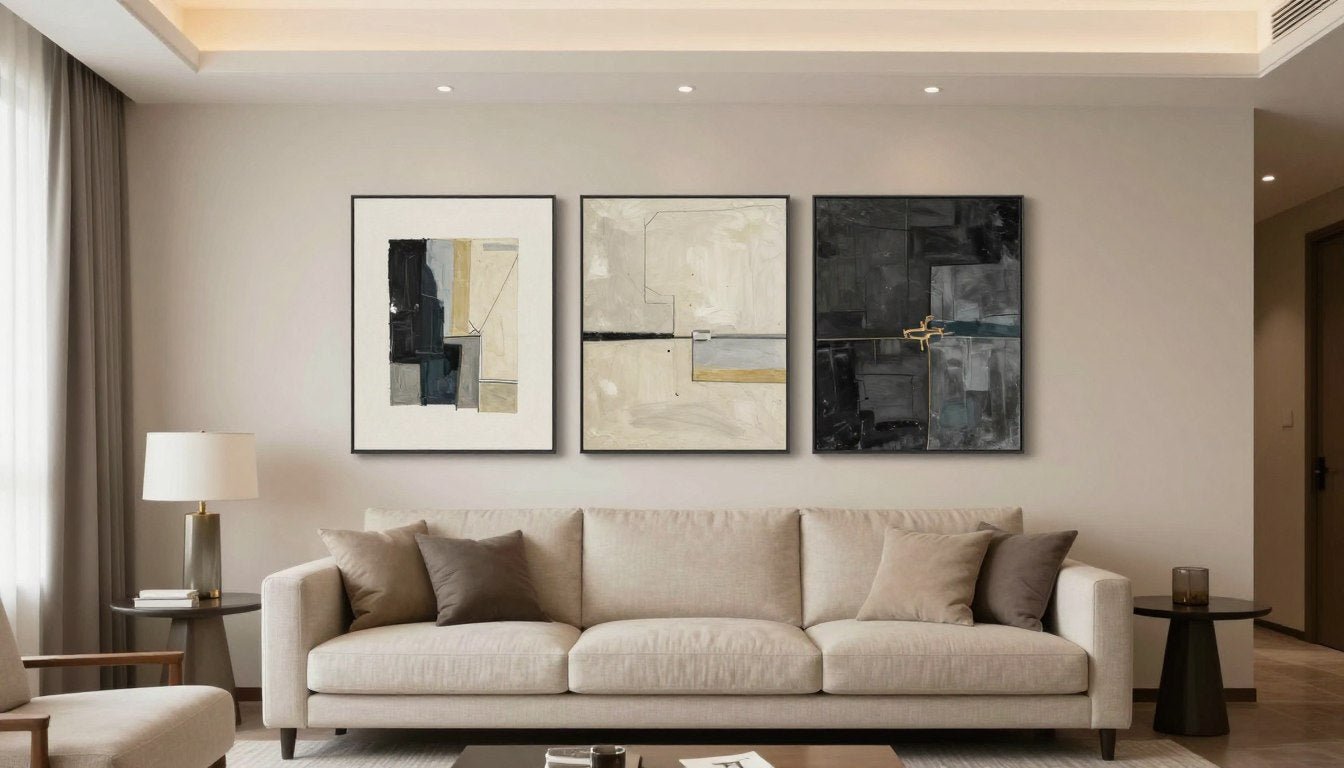
Buying art for your home should feel exciting, not overwhelming. Whether you're furnishing your first apartment or adding a statement piece to a curated collection, the art world can seem full of unwritten rules and insider knowledge. The truth is simpler than you might think.
This comprehensive guide walks you through every decision point, from understanding your space and budget to verifying authenticity and choosing the right medium. You'll learn how collectors approach art purchases, how to evaluate quality without a fine art degree, and how to build a cohesive collection over time. We've also created our complete art buying guides checklist and matrix to reference while you shop, plus answers to the most common questions first-time buyers ask.
If you want deeper guidance on specific topics, explore our art education resources, including our detailed art print sizing guide and canvas print buyer's guide.

TL;DR — The 60-Second Art Buying Checklist
Before you purchase any piece of art, run through this quick checklist to ensure you're making a confident, informed decision.
- Measure your wall space and nearby furniture before shopping
- Choose one focal point per room to avoid visual competition
- Match the art's mood to the room's function and your daily routine
- Select your medium based on style goals: canvas prints for flexibility, original paintings for texture and uniqueness, sculptures for dimension
- Verify materials, finish quality, and mounting options before purchasing
- Request or confirm certificate of authenticity for limited editions and original works
- Review return policies, shipping protection, and packaging standards
Keep this list handy as you explore the detailed steps below. Each section expands on these principles with practical examples and expert insights from the art world.
Step 1 — Decide the Role of the Artwork (Statement vs Harmony)
Every piece of art in your home serves a purpose. Some works command attention the moment you enter a room. Others quietly complement existing design elements, creating a sense of calm and cohesion. Understanding which role you need helps narrow your search and prevents common decorating mistakes.
Start by observing your space. Does the room already have strong visual elements like bold furniture, patterned rugs, or architectural features? If so, you might want art that harmonizes rather than competes. Conversely, a minimalist room with neutral tones often benefits from a statement piece that becomes the focal point.

One Focal Point Rule
The human eye naturally seeks a resting place when scanning a room. Professional interior designers follow the one focal point rule: each room should have a single dominant visual anchor. This might be a fireplace, a statement furniture piece, or a work of art.
When art is your intended focal point, it should be the largest and most visually striking element in the space. Surrounding pieces should be smaller or more subdued. This hierarchy creates visual comfort rather than chaos.
If you love multiple bold pieces, consider rotating them seasonally or displaying them in different rooms. Many collectors find this approach keeps their collection feeling fresh and allows each work to receive proper attention.
Matching Mood to Room Function
The function of a room should guide your art selection. Bedrooms benefit from calming, contemplative works that promote rest. Think soft abstracts, serene landscapes, or gentle color palettes. The art world recognizes that cooler tones and horizontal compositions create tranquility.
Living rooms and dining areas, where you entertain and socialize, can handle more energetic pieces. Bold colors, dynamic compositions, and conversation-starting subjects work well here. These spaces invite engagement with art.
Home offices require a different approach. Choose art that inspires focus without becoming distracting. Many professionals prefer structured compositions, monochromatic works, or pieces with personal meaning that provide motivation during long work sessions.
Consider your daily routine in each space. Morning light in a kitchen might pair beautifully with warm, optimistic artwork. Evening relaxation spaces might call for deeper, more contemplative pieces.
Step 2 — Choose Your Medium (Canvas Prints vs Original Paintings vs Sculptures)
Understanding the characteristics of different art mediums helps you make choices that align with your aesthetic goals, budget, and lifestyle. Each medium offers distinct advantages, and the best collectors often mix formats to create varied, interesting collections.
Canvas prints, original paintings, and sculptures each interact differently with light, space, and architectural elements. Your decision should balance practical considerations like budget and maintenance with artistic preferences like texture and uniqueness.

Canvas Prints: Best for Scale, Flexibility, Modern Rooms
Canvas prints offer the look of traditional paintings at accessible price points. Modern printing technology produces gallery-quality reproductions with rich colors and fine detail. These works suit contemporary art enthusiasts who prioritize scale and visual impact.
The flexibility of canvas prints makes them ideal for renters or anyone who likes refreshing their space regularly. You can experiment with large-scale pieces without the investment commitment of original art. Many artists now release their works as limited edition canvas prints, bridging the gap between accessibility and exclusivity.
Canvas prints work particularly well in modern and transitional interiors. The wrapped edges and frameless presentation create clean lines that complement minimalist design. For texture enthusiasts, gel-coated finishes can mimic brushstroke depth.
When selecting canvas prints, verify the printing method, canvas weight, and stretcher bar quality. Professional-grade prints use HP latex inks and acid-free materials to prevent fading. To understand more about what canvas art means in terms of materials and finish, explore our detailed materials guide.
If you want to see examples of high-quality canvas prints across different styles and sizes, browse our canvas print collection.
Original Paintings: Best for Uniqueness + Texture
Original paintings carry an energy that reproductions cannot replicate. The visible texture of brushstrokes, the subtle variations in color mixing, and the knowledge that you own the only version of that exact work create a different relationship with art.
Collectors value original paintings for their investment potential and emotional resonance. As an artist's reputation grows, original works typically appreciate, though this should never be the primary reason for purchasing art. Buy what moves you.
Original paintings require slightly more care than prints. Keep them away from direct sunlight to prevent color fading. Temperature and humidity fluctuations can affect certain mediums, particularly oils. Professional framing with UV-protective glass adds a layer of preservation for works on paper.
The art world offers originals at every price point. Emerging artists at galleries and art fairs often sell works for hundreds rather than thousands. Many artists may offer payment plans or smaller studies alongside major pieces. Building relationships with living artists can be one of collecting art's most rewarding aspects.
For those interested in exploring original works by contemporary artists, view our curated original painting collection.
Modern Sculptures: Best for Dimension + "Gallery Corner" Styling
Sculptures transform spaces by introducing three-dimensional form. A well-placed sculpture creates visual interest from multiple angles and interacts with light throughout the day in ways that flat art cannot.
Modern sculptures range from tabletop pieces that accent bookshelves to floor installations that command entire corners. Materials vary widely, from traditional bronze and stone to contemporary resin, glass, and mixed media. Each material brings different weight, both literal and visual.
Placing sculptures requires attention to viewing angles and traffic flow. Pedestal displays elevate smaller works to eye level, while larger floor sculptures need clearance space for viewing from all sides. Lighting becomes crucial with sculpture. Side lighting creates dramatic shadows that emphasize form and texture.
Sculptures pair beautifully with two-dimensional art. The interplay between flat works and dimensional objects creates a sophisticated, gallery-like environment. This mixing of mediums shows confidence in collecting art and prevents rooms from feeling one-dimensional.
For inspiration on incorporating sculptural elements into your home, explore modern sculpture options that work in residential settings.
Download Your Free Art Buying Matrix + Checklist
We've compiled everything covered in this guide into a practical reference tool you can use while shopping. The matrix compares canvas prints, original paintings, and sculptures across key decision factors, while the checklist ensures you verify every important detail before purchasing.

Art Buying Matrix & Printable Checklist
| Medium | Best For | Budget Range | Key Quality Checks | Sizing Tip | Styling Note |
| Canvas Print | Living room statements, modern spaces, renters, flexible decorating | Low to Mid | HP latex inks, canvas weight, stretcher bar quality, wrap finish | Go large (40x60" or bigger for statement walls) | Pairs with minimalist furniture, needs good lighting |
| Original Painting | Collectors, investment pieces, unique focal points, texture lovers | Mid to Investment | Artist signature, provenance, medium materials, framing needs | Medium (24x36") works for most rooms; scale to wall proportion | Benefits from dedicated lighting, becomes conversation piece |
| Modern Sculpture | Corners, bookcases, pedestals, adding dimension, sophisticated collectors | Low to Investment | Material durability, base stability, weight, edition numbers | Tabletop (8-15") or floor (24"+); needs viewing clearance | Requires side lighting, pairs with 2D art, needs space around it |
Essential Art Buying Checklist
- Measure wall dimensions and furniture width before shopping
- Photograph your space in different lighting conditions
- Identify existing color palette and dominant tones
- Determine if you need a statement piece or harmonizing element
- Select appropriate medium based on room function and style
- Verify print method, canvas quality, or paint medium used
- Check for certificate of authenticity on limited editions and originals
- Confirm artist signature placement and edition numbering
- Review frame quality, mounting hardware, and hanging requirements
- Understand return policy, damage protection, and shipping insurance
- Plan lighting strategy (natural light position, accent lighting needs)
- Consider long-term care requirements and maintenance
Save this matrix and checklist to your phone or print it out before visiting galleries, art fairs, or shopping online. Having this reference ensures you ask the right questions and evaluate pieces systematically rather than impulsively.
Step 3 — Size & Placement (So It Looks Intentional, Not Accidental)
Proper sizing and placement transform good art into great design. Even gallery-quality pieces look awkward when hung at the wrong height or scale. The relationship between artwork, furniture, and wall space determines whether a room feels professionally designed or haphazardly decorated.
The most common mistake first-time art buyers make is choosing pieces that are too small for their intended space. Undersized art creates visual confusion and makes rooms feel unfinished. When in doubt, go larger than you think necessary.

The "Above Sofa / Above Bed" Sizing Rule
For art hanging above furniture, interior designers use a reliable proportion rule. The artwork should measure between two-thirds and three-quarters the width of the furniture piece below it. This creates visual balance without overwhelming the space.
For a standard 84-inch sofa, this means your art should span roughly 56 to 63 inches wide. You can achieve this with a single large piece or a curated gallery grouping. The key is treating multiple pieces as one unified composition with consistent spacing between frames.
Vertical clearance matters as much as width. Leave approximately 6 to 12 inches between the furniture top and the bottom edge of your artwork. This creates breathing room while maintaining visual connection between the two elements.
Above beds, the same proportions apply, though you have more flexibility with vertical orientation. Headboards provide a natural anchor point. Without a headboard, center your art on the wall space above the mattress, maintaining that 6 to 12-inch clearance from the pillows.
For precise measurements and recommendations across different furniture configurations, consult our comprehensive resource on art print sizes and optimal dimensions.
Vertical vs Horizontal vs Multi-Piece Planning
The orientation of your artwork should respond to both the wall space and the room's architectural features. Horizontal pieces emphasize width and work well above low, wide furniture like sofas and sideboards. They make rooms feel more expansive.
Vertical works draw the eye upward, making ceilings appear higher. These pieces suit narrow wall spaces, hallways, and areas flanking windows or doorways. Vertical orientation adds elegance and formality to spaces.
Square compositions feel balanced and modern. They work particularly well in contemporary interiors and provide flexibility in placement since they adapt to various wall configurations without forcing directional flow.
Multi-piece installations, often called gallery walls, require careful planning. The most successful approaches include creating templates on paper first, maintaining consistent spacing between frames (typically 2 to 3 inches), and establishing a unifying element like matching frames, a consistent color palette, or a cohesive theme.
When planning gallery walls, arrange pieces on the floor first. Photograph different configurations before committing to hammer and nails. The goal is creating one unified composition rather than a collection of individual pieces competing for attention.
📐 FREE DOWNLOAD
The Rossetti Art Canvas Size Cheat Sheet — the quick reference every art buyer needs before ordering.
Download Free PDF →Step 4 — Quality & Trust Checks (What to Verify Before You Buy)
Buying art requires verifying authenticity, quality, and value. Whether purchasing from established galleries, online platforms, or directly from artists, certain standards protect buyers and ensure satisfaction. Understanding what to look for and what questions to ask separates confident collectors from uncertain shoppers.
The art market has become more accessible through online platforms, but this accessibility also requires greater diligence. Reputable sellers welcome questions about materials, provenance, and authenticity. Hesitation to provide detailed information is a warning sign.

Materials, Finish, Framing/Mounting
Quality begins with materials. For canvas prints, look for heavyweight canvas (at least 400 gsm) stretched over solid wood stretcher bars. Gallery-quality prints use HP latex inks that resist fading for decades. Avoid prints that specify dye-based inks, which degrade quickly under light exposure.
The finish affects both appearance and longevity. Matte finishes reduce glare and suit most residential settings. Gloss finishes create vibrant colors but can reflect light distractingly. Satin finishes offer a middle ground. Some canvas prints include gel coatings that add texture and additional UV protection.
For original paintings, examine the substrate quality. Professional artists use acid-free, archival-grade canvases or papers. Oil paintings should show proper layering without cracking. Acrylic works should have smooth, even application unless texture is intentional. Watercolors and works on paper require protection from moisture and sunlight.
Framing significantly impacts both presentation and preservation. Custom framing costs vary, but investment in quality framing for valuable pieces is worthwhile. UV-protective glass or acrylic prevents fading. Acid-free matting prevents yellowing and deterioration over time.
Mounting hardware should be professional grade. D-rings or wire hanging systems distribute weight evenly. Cheap sawtooth hangers work only for lightweight pieces and risk damaging walls or dropping art. Never hesitate to ask about included hanging hardware before purchasing.
COA / Provenance Basics (Simple Definitions)
A certificate of authenticity (COA) is a document verifying that artwork is genuine and created by the attributed artist. For limited edition prints, the COA specifies edition size and the number of your specific print. Original works should include COAs describing medium, dimensions, creation date, and artist signature.
Provenance refers to the documented history of an artwork's ownership. While less critical for contemporary works by living artists, provenance becomes essential for pieces by established artists or works entering the secondary market. A clear ownership history protects against purchasing stolen or forged art.
For emerging collectors, focus on these essentials: artist name and signature location, medium and materials used, creation year, edition information if applicable, and seller or gallery contact information. Store COAs safely with other important documents. Digital copies provide additional backup.
When purchasing directly from artists, request a signed COA even for modestly priced works. Many artists may offer to create one upon request. Professional artists understand this practice and respect buyers who request proper documentation.
Understanding how auction houses and galleries handle authenticity verification provides additional perspective on these standards.
If you're curious how auctions work, this short primer demystifies the process and shows how major auction houses authenticate and sell art.
Shipping, Packaging, Returns
Professional art sellers invest in proper packaging. Canvas prints should arrive in rigid cardboard corners and protective wrapping. Framed pieces require foam padding and double boxing. Sculptures need custom crating for safe transport. Damage during shipping is the seller's responsibility when packaging is inadequate.
Shipping insurance is essential for valuable pieces. Verify that the seller includes insurance and understands the claims process in case of damage. Signature confirmation prevents porch theft and documents delivery.
Return policies vary significantly across sellers. Established galleries typically offer 7 to 30-day return windows. Some online platforms like Artsy or Saatchi Art provide buyer protection programs. Understanding the policy before purchasing avoids disappointment if the piece doesn't work in your space.
Inspect art immediately upon delivery. Document any damage with photographs before handling the piece. Contact the seller within 24 hours if issues exist. Most reputable sellers resolve problems quickly when notified promptly.
For expensive purchases, consider condition reports. Galleries and auction houses provide detailed documentation of any imperfections, repairs, or condition concerns. This transparency protects both buyer and seller.
Step 5 — Budgeting Like a Calm Collector
Art collecting on any budget requires strategy. The smartest collectors focus on building thoughtful collections over time rather than filling walls quickly. Understanding where to invest and where to save helps stretch budgets without compromising on pieces you'll love for years.
Your budget should reflect both acquisition cost and long-term value. A piece that brings daily joy justifies investment. Art that feels like a compromise rarely satisfies over time. Patient collecting builds better collections than rushed buying.

Where to Invest vs Where to Save
Invest in pieces for high-impact locations: the wall you see when entering your home, the focal point of your living room, above your bed. These positions deserve your best pieces because you'll see them daily. Quality matters more than quantity in primary positions.
Statement pieces in these locations should represent the upper end of your budget. Whether that means $500 or $5,000 depends on your resources. The principle remains consistent: invest where impact is greatest.
Save strategically on supporting pieces. Hallway art, bedroom accents, and office decoration can come from more affordable sources without diminishing overall collection quality. Online platforms offer accessible options from emerging artists. Art fairs often feature works at various price points.
Many artists offer different price tiers within their body of work. Original paintings command premium prices, but the same artist may sell high-quality prints, studies, or smaller works at accessible rates. Following artists whose work resonates with you allows you to purchase within your budget while supporting their practice.
Frame quality matters more than most buyers realize. Cheap frames undermine even excellent art. Allocate budget for professional framing on important pieces. For supporting works, affordable ready-made frames from art supply retailers offer decent quality without custom costs.
Building an art collection is a marathon, not a sprint. Purchasing one exceptional piece yearly creates a more meaningful collection than buying ten mediocre pieces impulsively. Trust your evolving taste.
How to Avoid "Too Good to Be True"
Art fraud and misrepresentation exist at every price point. Warning signs include prices dramatically below market for established artists, sellers unwilling to provide provenance or authenticity documentation, and pressure tactics urging immediate purchase without time for research.
Research the artist before purchasing. Living artists typically maintain websites showing their work and listing authorized galleries. For established artists, compare prices across multiple sources. Dramatic discrepancies signal potential problems.
Be skeptical of pieces marketed as investments. While some art appreciates significantly, treating art primarily as financial investment leads to poor buying decisions. Purchase art you love that fits your space. Any appreciation is a bonus, not the goal.
Limited edition prints should clearly state edition size. An "edition of 100" where 50 different versions exist with slight variations is not truly limited. Legitimate limited editions are numbered (example: 42/100) and don't have multiple versions.
Avoid buying solely based on online images. Colors, scale, and texture often appear different in person. Reputable online platforms offer generous return policies acknowledging this reality. Use these protections if the delivered piece doesn't match your expectations.
Trust develops through relationships. Working with the same galleries and artists over time builds confidence and often provides access to new works before public release. Many collectors find this relationship aspect one of collecting art's greatest pleasures.
Curator Notes — How to Build a Cohesive Home Collection Over Time
Curators in museums and galleries spend careers developing eyes for what makes collections feel cohesive rather than random. These same principles apply to home collections. The goal isn't matching everything perfectly, but creating intentional relationships between pieces that tell a story about your aesthetic sensibilities.
Collections evolve as your taste develops. Early purchases may eventually rotate to secondary spaces as you acquire pieces that better reflect your refined preferences. This evolution is natural and healthy. The art world understands that collections are living entities, not static displays.

Repeating a Color Thread
One of the simplest ways to create collection coherence is through color. This doesn't mean every piece shares the same palette, but rather that certain colors echo throughout your collection, creating visual connections even between stylistically different works.
Choose two or three accent colors that appear in various pieces throughout your home. These might be a particular shade of blue, a warm terracotta, or a vibrant yellow. When these colors repeat across rooms, they create subconscious connections that make your home feel thoughtfully designed.
This approach allows tremendous style flexibility. You might pair abstract modern works with representational pieces, or mix photography with paintings, yet the shared color thread unifies them. Visitors may not consciously notice the color repetition, but they'll sense the intentionality.
Your existing furniture and decor should inform these color choices. Identify dominant colors in your space first, then seek art that incorporates those tones along with one or two accent colors you want to emphasize.
This strategy works particularly well when collecting art over time. Each new acquisition can reference existing pieces through color while introducing fresh styles or subjects. The result feels curated rather than accidental.
Mixing 2D + 3D
Sophisticated collectors understand that visual interest comes from variety in dimension. Combining two-dimensional works like paintings and prints with three-dimensional sculptures creates dynamic spaces that feel gallery-like without seeming cold or impersonal.
Place sculptures strategically to break up expanses of wall art. A sculpture on a console table beneath a painting creates conversation between the pieces. Bookshelf sculptures add visual interest and provide scale transition between books and larger wall works.
Think about how pieces interact from different angles. Unlike flat art that offers one viewing experience, sculptures reveal different perspectives as you move through a room. This movement adds life to your collection and rewards attention.
Lighting becomes more complex but more rewarding with mixed dimensions. Sculptures benefit from side lighting that creates shadows and emphasizes form. This same lighting often beautifully illuminates nearby wall art. Consider how light sources affect multiple pieces simultaneously.
Don't relegate sculptures to peripheral spaces. Bold sculptural works deserve primary placement just as paintings do. A floor sculpture can serve as a room's focal point, with surrounding wall art in supporting roles. This reversal of typical hierarchy shows collecting confidence.
For ideas on incorporating sculptural dimension into your collection, explore contemporary sculpture options that complement various interior styles.
Common Art Buying Mistakes (and Quick Fixes)
Even experienced collectors make occasional missteps. Learning from common mistakes helps you avoid the same pitfalls and build a collection you genuinely love rather than one filled with regret purchases.

Impulse Buying Without Measuring
Purchasing art without knowing your wall dimensions leads to pieces that don't fit their intended space. Always measure before shopping, even when browsing online. Carry measurements on your phone or write them down.
The fix: Create a simple document listing each room's wall dimensions, furniture sizes, and ceiling heights. Update it whenever you rearrange. Reference this when considering new pieces.
Choosing Art to Match Furniture
Attempting to match art perfectly to throw pillows or rugs creates dated, overly coordinated spaces. Art should have longevity beyond trend-driven decor items you'll likely replace.
The fix: Select art you love independent of current decor. Choose furniture and accessories that complement the art rather than the reverse. This approach creates more timeless, sophisticated spaces.
Hanging Everything at the Same Height
While consistency has value, rigidly hanging all art at identical heights ignores furniture relationships and creates monotony. The standard gallery height of 57 to 60 inches (center of artwork) works for standalone wall art but fails above furniture.
The fix: Use the 57-inch center rule for art on empty walls. Above furniture, position pieces 6 to 12 inches above the furniture top, regardless of the resulting center height. This creates proper visual relationships.
Ignoring Lighting Considerations
Art without proper lighting loses impact. Colors appear muddy, details vanish, and even excellent pieces look mediocre. Natural light changes throughout the day, and artificial light requires planning.
The fix: Observe how light hits walls at different times. Avoid placing art in direct sunlight, which causes fading. Install picture lights or track lighting for important pieces. LED bulbs with high color rendering index (CRI above 90) show art most accurately.
Creating Too Many Focal Points
Filling every wall with bold statement pieces overwhelms spaces. The eye needs resting places. Too much visual competition creates stress rather than enjoyment.
The fix: Designate one focal point per room. Surrounding pieces should be smaller or more subdued. If you own multiple bold works, rotate them seasonally or distribute them across different rooms.
Buying Art As Pure Investment
Purchasing art solely for potential appreciation leads to regret when markets shift or when you realize you don't actually enjoy living with the piece. The art market is unpredictable.
The fix: Buy art you love that fits your life. If it appreciates, wonderful. If not, you still own something that brings daily joy. That emotional return has real value even without financial gain.
Skipping Authentication Checks
Accepting sellers' claims without verification leaves you vulnerable to overpaying or purchasing inauthentic work. Even honest mistakes in attribution occur.
The fix: Request certificates of authenticity. Research artists independently. For expensive purchases, consider third-party authentication services. Ask questions until you're satisfied with the answers.
Recommended Next Reads
Continue your art education with these comprehensive guides that explore specific aspects of buying and displaying art in greater detail.
Ultimate Guide to Art Print Sizes
Learn the standard print dimensions, optimal sizing for different rooms, and how to choose frames that complement your art without overwhelming it.
Canvas Print Buyer's Guide
Discover what separates high-quality canvas prints from cheap imitations, where to buy from reputable sources, and tips for saving money without sacrificing quality.
What is Canvas Art Print
Understand the materials, manufacturing processes, and finish options that define canvas art prints and how these factors affect appearance and longevity.
These resources complement this guide and provide deeper dives into technical aspects of art buying. Bookmark them for reference as you develop your collection.
Frequently Asked Questions About Buying Art
How do I buy art online safely?
Purchase from established platforms with buyer protection policies, such as Artsy, Saatchi Art, or directly from artist websites. Verify return policies before completing transactions. Request detailed photos showing texture and true colors. Ask about certificates of authenticity and shipping insurance. Research the seller through reviews and social media presence. For expensive pieces, consider using escrow services. Many reputable online platforms offer authentication guarantees and will facilitate returns if pieces don't match descriptions.
What's the difference between a canvas print and an original painting?
Canvas prints are reproductions of artwork created through digital printing technology on canvas material. Original paintings are one-of-a-kind pieces created directly by the artist using paint on canvas or other substrates. Original paintings feature visible brushstrokes, texture variations, and unique characteristics that cannot be replicated. They typically cost more and may appreciate over time as the artist's reputation grows. Canvas prints offer affordability and accessibility while providing similar visual impact. Both have value depending on your collecting goals and budget. Many collectors build collections that include both originals and high-quality prints.
What size art should I hang above a sofa or bed?
Art above furniture should measure between two-thirds and three-quarters the width of the furniture below it. For a standard 84-inch sofa, choose art that spans 56 to 63 inches wide. This can be a single piece or a grouped arrangement treated as one composition. Leave 6 to 12 inches of clearance between the furniture top and the artwork's bottom edge. Above beds, follow the same proportion rule using the headboard width or mattress width if you don't have a headboard. When in doubt, go slightly larger rather than smaller. Undersized art is the most common placement mistake.
Do I need a certificate of authenticity?
Yes, certificates of authenticity (COAs) protect your investment and verify the work's legitimacy. For original paintings, COAs confirm the artist created the piece and document details like medium, dimensions, and creation date. For limited edition prints, COAs specify the edition size and your print's number within that edition. Store COAs safely with other important documents and keep digital copies as backup. When purchasing directly from artists, request a signed COA even for modestly priced works. Established galleries and reputable online platforms automatically provide COAs with purchases. Missing authentication documents can significantly reduce resale value.
How do I start collecting art on a budget?
Begin by purchasing one quality piece that you genuinely love rather than multiple mediocre works. Explore art fairs and open studio events where emerging artists sell works at accessible prices. Many artists offer payment plans for larger purchases. Consider high-quality prints from artists whose original works exceed your budget. Online platforms like Saatchi Art and Artsy filter by price range and offer works at various levels. Follow artists on social media where they sometimes offer exclusive deals to followers. Prioritize art for high-impact locations first and build your collection gradually over time. Quality always trumps quantity in collecting art.
How do I choose art that matches my interior design style?
Start by identifying your existing color palette and design elements. Take photos of your space in natural light to reference while shopping. Rather than matching art perfectly to decor, look for pieces that share one or two accent colors with your room. Consider the mood you want to create: calming art for bedrooms, energetic pieces for social spaces, focused works for offices. Your design style provides guidance but shouldn't limit you completely. Contemporary spaces can incorporate traditional art successfully when scale and framing are considered. Visit galleries and browse online to expose yourself to various styles and discover what resonates emotionally beyond matching aesthetics.
Are sculptures hard to style in small spaces?
Sculptures work beautifully in small spaces when chosen and positioned thoughtfully. Select tabletop pieces (8 to 15 inches) for shelves, console tables, and side tables. These add dimension without consuming floor space. Wall-mounted sculptures provide three-dimensional interest without footprint demands. Choose pieces with vertical emphasis in tight spaces to draw the eye upward rather than outward. Place sculptures where they're visible from multiple angles to maximize impact. Avoid cluttering surfaces with multiple small sculptures; one quality piece per surface creates more sophisticated displays. Proper lighting enhances sculptural form and creates the illusion of more space through dramatic shadows.
What should I check before buying wall art as a gift?
Consider the recipient's existing decor style and color preferences without trying to match exactly. Choose pieces with broad appeal rather than highly specific subjects unless you're certain of their taste. Verify return and exchange policies in case the piece doesn't suit their space. Include gift receipts when possible. Opt for neutral or standard sizes that fit various wall dimensions. Frameless canvas prints or pieces with simple framing adapt to different aesthetics more easily than ornate frames. Consider whether the recipient has adequate wall space for large pieces. Gift cards to art galleries or online art platforms allow recipients to choose pieces they'll love while still showing thoughtfulness in selecting an art-focused gift.
Building Your Art Collection with Confidence
Collecting art is a deeply personal journey that reflects your evolving taste, experiences, and the life you're building. The most successful collectors approach acquisitions thoughtfully, purchasing pieces that resonate emotionally while considering practical factors like sizing, placement, and budget.
Remember that your collection will evolve. Early purchases may eventually rotate to different spaces as your taste refines and your collection grows. This evolution is natural and healthy. What matters most is that each piece brings you joy when you encounter it daily.
Trust your instincts while applying the practical frameworks covered in this guide. Measure before buying. Verify quality and authenticity. Consider how pieces relate to your existing collection. Build relationships with artists and galleries. Take your time making decisions.
The art world welcomes new collectors at every budget level. Whether you're purchasing your first canvas print or adding to an established collection, approaching art buying with confidence and knowledge ensures satisfaction with each acquisition. Your home should tell your story through the art you choose to live with.
Start with one piece you love, in a space where you'll see it daily, and build from there. The journey of collecting art is as rewarding as the destination.

About the Author
Chiara Rossetti
Chiara Rossetti is the founder of Rossetti Art, a canvas print and original art brand. She writes about interior design, wall art styling, and the art of making a home feel alive.


Leave a comment
This site is protected by hCaptcha and the hCaptcha Privacy Policy and Terms of Service apply.