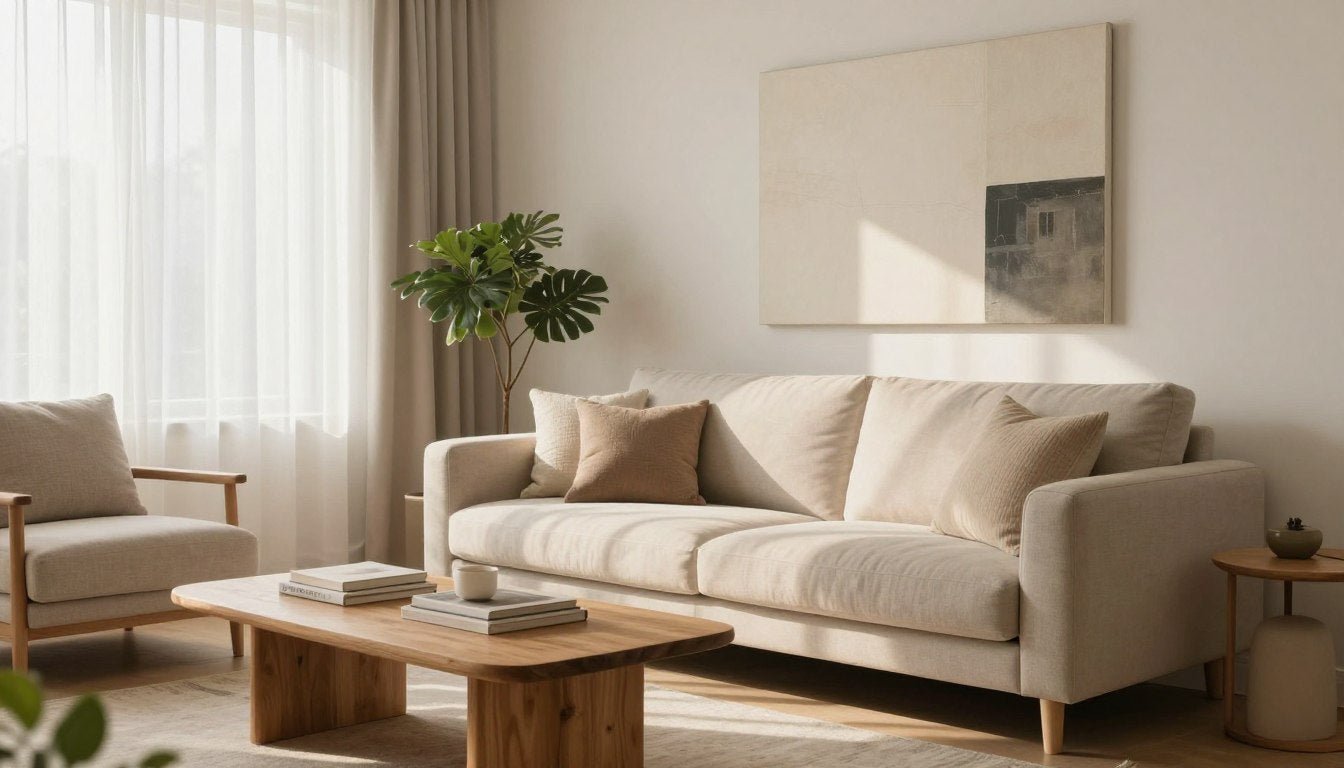
Your living room feels like something is missing. The furniture sits in place, but the space lacks warmth and personality. You want a room that feels inviting when you walk in after a long day, yet the idea of a full renovation makes your wallet hurt.
Here is the good news. You can transform your living room without buying new furniture or hiring a designer. The secret lies in understanding what "simple things" really means.
Simple things are not about spending less. They are about choosing pieces that create maximum impact with minimal effort. A well-placed piece of art changes the entire mood. The right lamp brings warmth that overhead light never could. These small upgrades make a room feel complete.

This guide walks you through a proven method that interior stylists use. You will learn the three-layer approach that makes any living room look pulled together. We start with what you already own, then add strategic pieces that matter.
Most people make the same mistakes. They buy too many small items that create clutter. They hang art too high or choose rugs too small. By the end of this article, you will know exactly which simple things deserve space in your living room and which ones to skip.
TL;DR — 7 Simple Upgrades That Change Everything
If you only have ten minutes, focus on these seven changes. Each one delivers visible results without major effort or expense.
- Declutter surfaces – Remove 70% of items from your coffee table, side tables, and shelves. Keep only pieces that serve a purpose or bring joy.
- Fix your lighting – Add two lamps at different heights. Turn off harsh overhead lights and create a warm glow instead.
- Anchor with a rug – Place a rug under your seating area with at least the front legs of furniture touching it. This defines the space instantly.
- Create one art focal point – Choose the wall behind your sofa or the first wall you see when entering. Hang one substantial piece of art at eye level.
- Layer textiles – Add throw pillows in different textures and one cozy blanket. This makes the room feel lived-in and inviting.
- Bring in greenery – Place one tall plant in a corner and one trailing plant on a shelf. Living things make spaces feel fresh and complete.
- Add one sculptural accent – A modern sculpture on a shelf or pedestal adds depth and shows intentional design without taking up much space.
These seven upgrades work together. They create layers of interest that make a room feel designed rather than simply furnished. The best part is you can complete most of these changes in a single afternoon using things you already own or can find affordably.
Start Here: The 10-Minute Reset (Before You Buy Anything)
Before you spend a dollar, reset what you already have. Most living rooms suffer from too much stuff in the wrong places rather than too little. This ten-minute reset creates a clean foundation for every improvement that follows.

Clear Surfaces (Keep Only "Hero" Pieces)
Look at your coffee table right now. How many items sit on it? If you count more than three, you have clutter rather than style. The same rule applies to side tables, shelves, and mantels.
Pick up each item and ask yourself if it deserves to be a "hero piece." A hero piece is something beautiful, meaningful, or highly functional. A stack of books you actually read qualifies. A random candle you never light does not.
Keep surfaces 70% clear. This creates breathing room that makes each remaining piece feel intentional. Group items in odd numbers when possible. Three candles look better than two or four. One substantial vase beats five small ones.
Store items you remove in a basket or box. You might bring some back later, but most will stay gone. That empty space is not wasted. It gives your eye a place to rest and makes the room feel larger.
Move Furniture Back Into a Conversation Shape
Furniture pushed against walls makes a room feel like a waiting area. Pull pieces away from the wall to create an intimate conversation zone. Even six inches makes a difference.
Arrange seating so people can see each other without turning their heads. An L-shape or U-shape works best in most living rooms. If you have a sofa and two chairs, angle the chairs slightly toward the sofa rather than placing them parallel.
Your coffee table should sit about 18 inches from the sofa edge. This distance lets people reach their drink without standing but keeps enough space to walk around comfortably.
Check traffic flow. You should be able to walk through the room without squeezing between furniture pieces. If you must turn sideways, something needs to move. Simple adjustments in furniture arrangement often solve problems that seem to require new purchases.
The Simple Living Room Formula: Anchor + Layers + Glow
Every well-designed living room follows the same three-layer formula. This is not a secret design trick. It is simply how professionals think about space. Once you understand this structure, you can apply it to any room in your home.
Anchor: Rug + Coffee Table Zone
The anchor layer defines your living space. Without an anchor, furniture floats in the room with no relationship to each other. A rug serves as the foundation that pulls everything together.
Your rug should be large enough to fit at least the front legs of your sofa and chairs. A common mistake is choosing a rug that sits entirely in front of the sofa like a doormat. This makes the room look smaller and disconnected.
The coffee table sits in the center of this rug zone. It becomes the physical and visual anchor where people naturally gather. Choose a table that is about two-thirds the length of your sofa. Too small looks like an afterthought. Too large crowds the space.

If you have a small living room, do not buy a small rug. Buy the largest rug that fits your space. This counterintuitive choice actually makes the room feel bigger by unifying the area rather than breaking it into pieces.
Layers: Textiles, Texture, Height
The second layer adds dimension through different textures and heights. A room where everything sits at the same level feels flat. You need variation to create visual interest.
Start with textiles. Add throw pillows in at least three different textures. Mix a chunky knit, smooth linen, and soft velvet. The color can be similar, but the texture variation creates depth.
Drape a blanket over the arm of your sofa or the back of a chair. This adds softness and makes the space feel cozy rather than formal. Choose materials like cotton, wool, or faux fur that invite touch.
Balance heights throughout the room. If your sofa is low, place a tall plant nearby. If you have high ceilings, add floor-to-ceiling curtains that draw the eye upward. Mix tall items with low items to create rhythm as your eye moves around the space.
Think about what each texture brings to the room. Hard surfaces like wood and metal provide structure. Soft surfaces like fabric and plants provide comfort. A successful room needs both in balance.
Glow: Lamps > Overhead Lighting
The third layer is often the most overlooked. Lighting transforms the mood of a room more than any other single element. Yet most people rely entirely on harsh overhead lights.
Turn off your overhead light right now. Add two or three lamps at different heights instead. Place one floor lamp in a corner. Add a table lamp on a side table. If you have space, include a third light source like a small accent lamp on a shelf.
This creates "layered lighting" that makes the room feel warm and inviting. The glow from multiple light sources at eye level mimics natural light better than a single ceiling fixture.
Choose warm bulbs over cool ones. Look for bulbs labeled 2700K to 3000K on the package. These create the cozy feel you want in a living room. Cool bulbs above 4000K feel clinical and make spaces look uninviting.
Place lamps near seating areas where people actually sit. You want functional light for reading while also creating ambient glow. A dimmer switch on lamps gives you control over mood throughout the day.
Make One Wall the Star (The Easiest "Designer" Move)
Every living room needs a focal point. Without one, the eye wanders aimlessly and the space feels incomplete. Creating a feature wall with art is the simplest way to anchor your entire room design.
How to Choose the Right Wall
The right wall is usually the first one you see when entering the room. This is where your eye naturally lands, so it should offer something worth looking at. In most living rooms, this is the wall behind the sofa.
If your sofa does not sit against a wall, choose the wall opposite your main seating area. This becomes the view you see when sitting down and relaxing. It should hold your best piece of art or your most interesting arrangement.
Avoid choosing a wall that is broken up by doors, windows, or built-in features. You want a clean expanse where art can make a statement without competing for attention. A wall between two windows works well because it frames the art naturally.
Consider the lighting on that wall throughout the day. Natural light changes how colors look. A wall that gets direct afternoon sun might fade art over time. A wall with soft, indirect light shows art at its best all day long.
Art Placement Rules (Above Sofa, Eye Level, Spacing)
Hanging art seems simple until you start doing it. Most people hang pieces too high, creating an awkward gap between the sofa and the art. The standard rule is to center art at 57 inches from the floor, which is average eye level.
When hanging art above a sofa, leave 6 to 8 inches between the top of the sofa back and the bottom of the frame. This creates a visual connection between the furniture and the art. If the gap is too large, they look like separate elements rather than a unified design.

Size matters more than most people think. Art above a sofa should be roughly two-thirds the width of the sofa. Too small looks lost on the wall. A 60-inch sofa works well with a 40-inch wide piece or a gallery arrangement within that 40-inch span.
If you are creating a gallery wall, maintain 2 to 3 inches of space between frames. More than that creates disconnect. Less than that feels crowded. Use painter's tape on the wall to plan your layout before hammering any nails.
For detailed guidance on selecting the right size, check this art print sizing guide that walks through measurements for every common wall and furniture combination.
If you rent or worry about wall damage, learn how to hang a canvas without nails using damage-free methods that work just as well as traditional hanging.
Style With Simple Things You Already Own
You own more styling tools than you realize. Before buying anything new, shop your own home. Items from other rooms often work perfectly in your living room when styled with intention.
If you want a quick visual walkthrough, this HGTV clip shows budget-friendly updates you can copy in an afternoon.
The "Tray + Book + Object" Vignette
A vignette is a small styled grouping that looks intentional rather than random. The easiest formula is tray plus books plus one interesting object. This works on coffee tables, side tables, ottomans, and shelves.
Start with a tray. This creates a boundary that makes whatever you place on it look curated. The tray can be wood, metal, woven material, or decorative ceramic. Round or rectangular both work as long as the size fits the surface.
Stack two or three books on the tray. Choose books with attractive covers or turn them spine-in for a cleaner look. The stack should vary in size with the largest on bottom. These books can be real reads or decorative coffee table books.
Add one object on top of or beside the books. This could be a small plant, a candle, a decorative bowl, or a sculptural piece. The object should contrast with the books in shape. If books are rectangular, choose something round or organic.

Keep the overall height low on a coffee table so it does not block conversation across the table. On a side table, you can go taller since people view it from the side rather than across.
This simple formula works because it follows the rule of three. Three elements create visual interest without clutter. You can repeat this vignette in different areas of your living room using different trays and objects for a cohesive but not matchy look.
Pillows & Throws (Texture > Matching)
Throw pillows are the fastest way to change your living room look. Yet most people buy matching pillow sets that feel safe but boring. The secret to interesting pillows is mixing textures rather than matching patterns.
Start with an odd number of pillows. Three or five works better than two or four. Odd numbers create asymmetry that looks more natural and less staged than even pairs.
Choose one color family but vary the textures dramatically. Imagine all cream pillows but in linen, velvet, faux fur, and chunky knit. The color harmony keeps it cohesive while the texture variety makes it interesting.
Arrange pillows by size with larger ones in back and smaller ones in front. A common arrangement is two 20-inch pillows in back, two 18-inch pillows in middle, and one 16-inch lumbar pillow in front. This creates a pleasing slope that looks styled but still invites sitting.
Drape a throw blanket over the arm or back of your sofa rather than folding it perfectly. This casual approach makes the room feel inviting rather than formal. Choose a blanket texture that contrasts with your sofa fabric.
Change pillows and throws with the seasons. Lighter linens and cottons work in warm months. Heavier wools and velvets feel right in cooler months. This simple swap keeps your living room feeling fresh without requiring major changes.
Plants (One Tall + One Trailing)
Plants bring life to a room literally. They add organic shapes that contrast with the straight lines of furniture and architecture. Two plants positioned strategically do more than a dozen small ones scattered randomly.
Place one tall plant in a corner or beside a piece of furniture. Floor plants like fiddle leaf fig, rubber plant, or bird of paradise add vertical interest. They fill empty corners and balance low furniture by drawing the eye upward.
Add one trailing plant on a shelf, bookcase, or plant stand. Pothos, philodendron, or string of pearls create movement as they drape downward. This contrasts beautifully with the upward growth of your floor plant.

If you worry about plant care, choose low-maintenance varieties. Snake plants, ZZ plants, and pothos thrive on neglect and work in low light. They deliver the same visual impact as fussier plants without the stress.
Use planters that match your room style. Woven baskets feel casual and warm. Ceramic pots in white or neutral tones work with any decor style. Metal planters add modern edge. The planter matters as much as the plant itself.
Group small plants in odd numbers on surfaces rather than spacing them evenly. Three small succulents on a tray look intentional. Three small plants scattered across a shelf look random. Clustering creates impact that individual plants cannot achieve.
Add One Piece of Art (And Stop There)
If you add only one new thing to your living room, make it art. A single substantial piece creates more impact than a dozen small decorative items. Art tells visitors this space matters to you.
When to Choose Canvas Prints vs Original Paintings
The choice between canvas prints and original paintings comes down to budget, style preference, and the statement you want to make. Both options can look stunning when chosen thoughtfully.
Canvas prints offer affordability and consistency. Modern printing technology creates rich colors and sharp details that look professional in any living room. Prints work especially well for contemporary or minimalist spaces where the image matters more than the texture of paint.
Browse modern canvas wall art examples to see how high-quality prints create focal points in different room styles.
Original paintings bring unique texture and depth that prints cannot replicate. Visible brushstrokes add dimension that changes as light moves across the surface throughout the day. Originals work beautifully in traditional, eclectic, or artistic spaces where craft and uniqueness matter.
For a more distinctive statement, explore original painting statement pieces that serve as conversation starters and investment-quality art.

Canvas Prints
Perfect for modern spaces that need bold color and crisp imagery. Canvas prints deliver consistent quality at accessible price points. They work especially well in open floor plans where you need a strong focal point.
Canvas prints resist glare better than framed art behind glass. This makes them ideal for rooms with lots of natural light or TV viewing areas.

Original Paintings
Original work adds sophistication and individuality. The texture of real paint creates depth that changes throughout the day. Original paintings appreciate in value and become family heirlooms.
Choose originals when you want to invest in pieces that reflect your personal taste. Each painting is one-of-a-kind, ensuring no one else has the same art in their home.
To understand more about the materials and quality of modern prints, read about what canvas art is and how it differs from traditional printing methods.
A Small Sculpture for Depth (Modern Pedestal / Shelf Styling)
While wall art creates your main focal point, a small sculpture adds unexpected dimension. Sculptural elements catch light differently than flat art, creating shadows and interest that change throughout the day.
Place a modern sculpture on a floating shelf, bookcase, side table, or dedicated pedestal. The sculpture does not need to be large to make an impact. Even a piece 8 to 12 inches tall creates visual interest when positioned thoughtfully.

Choose sculptural pieces that contrast with the straight lines of your furniture. Organic, curved forms work beautifully in rooms full of rectangular furniture. Angular geometric sculptures complement softer, rounded furniture shapes.
Materials matter for the mood you want to create. Stone and ceramic feel grounded and natural. Metal adds modern edge and reflects light. Wood brings warmth and texture. Match the material to your existing decor style.
View modern sculptures for shelf styling to see how small three-dimensional art creates sophisticated depth in contemporary interiors.
Place sculptures where they interact with light. Near a window, a sculpture becomes a shadow study. Beside a lamp, it glows from the side. The interplay between sculpture and light adds movement to static spaces.
Simple Living Room Styling Checklist
Use this practical checklist to evaluate your living room and identify which simple upgrades will create the biggest impact. Each item includes the problem it solves and a quick action you can take today.
| Simple Thing | What It Fixes | Best Placement | Pro Tip | 5-Minute Version |
| Floor Lamp | Harsh overhead lighting, flat atmosphere | Corner near seating area | Choose warm bulbs (2700K-3000K) | Move existing lamp to better spot |
| Table Lamp | Poor reading light, empty surfaces | Side table beside sofa or chair | Lamp shade bottom should be at eye level when seated | Turn off overhead light, use lamps instead |
| Area Rug | Disconnected furniture, cold floor, lack of definition | Under seating area with front furniture legs on rug | Bigger is better - rug should extend beyond furniture edges | Adjust existing rug position under furniture |
| Throw Pillows | Flat sofa, lack of color, uncomfortable seating | Sofa and accent chairs in odd numbers | Mix textures in same color family | Fluff and arrange existing pillows properly |
| Throw Blanket | Cold, uninviting space, lack of texture | Draped over sofa arm or chair back | Choose texture that contrasts with sofa fabric | Casually drape blanket instead of folding neatly |
| Wall Art | Empty walls, lack of focal point, boring space | Above sofa or on wall opposite seating | Center at 57 inches from floor, leave 6-8 inches above furniture | Adjust height of existing art |
| Tall Plant | Empty corners, lack of life, flat space | Floor in corner or beside furniture | Choose low-maintenance varieties like snake plant or ZZ plant | Move existing plant to more prominent location |
| Trailing Plant | Empty shelves, lack of movement, static design | High shelf or plant stand | Pothos and philodendron thrive in most conditions | Place existing small plant on elevated surface |
| Decorative Tray | Cluttered coffee table, random items, messy look | Coffee table or ottoman | Use tray to corral books and small objects | Gather scattered items onto one tray |
| Mirror | Dark space, small room, lack of light | Opposite window to reflect natural light | Larger mirrors make bigger impact than small ones | Clean existing mirror and adjust position |
| Curtains | Bare windows, harsh light, lack of warmth | Floor-to-ceiling on all windows | Hang rod near ceiling and let curtains puddle slightly on floor | Raise existing curtain rod higher |
| Small Sculpture | Flat surfaces, lack of dimension, boring shelves | Shelf, side table, or pedestal | Choose forms that contrast with furniture lines | Group three small objects to create sculptural effect |
Work through this checklist room by room. Start with items you already own and can reposition. Then identify one or two purchases that will create the most impact for your specific space.
Common Mistakes (And the Fast Fixes)
Even with good intentions, certain decorating mistakes appear in most living rooms. Recognizing these errors helps you avoid them. Better yet, most fixes take less than an hour and cost nothing.
Tiny Rug Syndrome
Small rugs make rooms look smaller. They create a disconnect between furniture pieces rather than unifying them. This is the single most common mistake in budget decorating.
- At minimum, front furniture legs must rest on the rug
- Ideally, all furniture legs sit on the rug surface
- Leave at least 18 inches of rug visible on all sides
- In small rooms, use the largest rug that fits
Too Many Small Objects
Collections of small items create visual clutter even when neatly arranged. Your eye struggles to focus when everything competes for attention. Less is genuinely more.
- Keep only three to five items on coffee table
- Group small items on trays to contain them
- Choose one substantial piece over three small ones
- Leave empty space on shelves and surfaces
Art Hung Too High
Most people hang art above furniture at picture-hanging height rather than furniture-relationship height. This creates awkward gaps and makes ceilings feel lower.
- Leave only 6 to 8 inches between sofa and art bottom
- Center art at 57 inches from floor when not above furniture
- Scale art to be two-thirds width of furniture below
- Use painter's tape to visualize before hammering
Harsh Overhead Lighting
Single ceiling fixtures create unflattering shadows and make spaces feel cold and institutional. Overhead light alone never creates the warm atmosphere you want.
- Add at least two lamps at different heights
- Use warm-toned bulbs between 2700K and 3000K
- Install dimmer switches for mood control
- Layer three types: ambient, task, accent light

Most decorating mistakes happen because people follow furniture showroom layouts rather than real-life principles. Showrooms arrange furniture for display and traffic flow, not for comfortable living. Trust the formulas in this guide over what looks good in a store.
When in doubt, step back and squint at your room. Your eye will naturally find imbalances. Heavy furniture on one side with nothing balancing it on the other creates visual discomfort. Too many small items feel busy. These gut reactions usually point you toward the right fix.
Recommended Next Reads
Continue improving your living room with these detailed guides that expand on the concepts covered here. Each resource provides specific measurements, product recommendations, and step-by-step instructions.
Ultimate Guide to Art Print Sizes
Learn exactly which print sizes work for your wall and furniture dimensions. This guide includes measurement formulas and visualization tips that take the guesswork out of choosing art.
How to Hang Canvas Without Nails
Renters and wall-conscious homeowners can hang substantial art using damage-free methods. Discover the best adhesive strips, hooks, and rail systems that hold securely without leaving marks.
What Is Canvas Art Print
Understand the materials and printing methods that create gallery-quality canvas prints. This technical guide helps you evaluate quality and make informed decisions when shopping for wall art.
Transform Your Living Room Today
The simple things that make the biggest difference are often the most overlooked. Start with one focal wall, add warm lighting, and choose a few meaningful pieces. Your living room will feel completely transformed without major expense or renovation.
Frequently Asked Questions
What are the simplest ways to make a living room look better?
The three fastest improvements are fixing your lighting, clearing clutter, and adding one substantial piece of wall art. Replace harsh overhead light with two or three warm lamps at different heights. Remove 70 percent of items from surfaces and keep only meaningful pieces. Hang art at the right height above your sofa to create an instant focal point. These changes require minimal investment but deliver maximum visual impact.
How do I decorate my living room on a tight budget?
Start by rearranging what you already own. Move furniture away from walls to create conversation areas. Shop your own home for items from other rooms that work better in the living room. Invest in one good piece of art rather than many small decorative items. Add inexpensive updates like throw pillows in new textures, a larger area rug, and low-maintenance plants. Focus budget on items you see every day like lighting and the wall behind your sofa.
Where should I hang art above a sofa?
Leave 6 to 8 inches of space between the top of your sofa back and the bottom edge of the art frame. This creates a visual connection between furniture and wall art. The art width should be about two-thirds the width of your sofa. For a 72-inch sofa, choose art around 48 inches wide. Center the art horizontally on the wall space above the sofa. For specific measurements and visual guides, check this art sizing guide.
What size wall art looks best in a living room?
Art size depends on your wall space and furniture dimensions. As a general rule, art above furniture should be two-thirds the furniture width. For a standard 60 to 72 inch sofa, choose art between 40 and 48 inches wide. On an empty wall, art should fill 60 to 75 percent of the wall width. Larger art creates more impact than several small pieces. When in doubt, choose bigger rather than smaller for main focal points.
How can I make my living room cozy without buying new furniture?
Coziness comes from layering textures and creating warm light. Add throw pillows in soft fabrics like velvet, faux fur, or chunky knit. Drape a blanket over your sofa arm. Replace overhead lighting with warm lamps that create a gentle glow. Bring in plants to add life and organic shapes. Use a large area rug to anchor the space and add warmth underfoot. These textile and lighting changes transform atmosphere without replacing a single piece of furniture.
How do I decorate a small living room with simple things?
Small rooms need large-scale thinking. Use the biggest rug that fits rather than a small accent rug. Choose one substantial piece of art instead of a gallery wall. Select furniture with exposed legs that let light flow underneath, making the room feel more open. Add a large mirror opposite a window to reflect light and create depth. Keep surfaces clear and use vertical space with tall plants or floor-to-ceiling curtains that draw the eye upward.
How many throw pillows is too many?
For a standard sofa, three to five pillows is the sweet spot. More than that makes the sofa look cluttered and leaves no room for sitting. Use odd numbers for visual interest. A common arrangement is two larger pillows in back, two medium pillows in middle, and one lumbar pillow in front. On accent chairs, one or two pillows is enough. The goal is to look styled but still inviting to sit down.
What lighting makes a living room feel warm?
Warm lighting comes from using multiple light sources at different heights with warm-toned bulbs. Choose bulbs labeled 2700K to 3000K rather than cool daylight bulbs above 4000K. Place a floor lamp in one corner, a table lamp on a side table, and perhaps an accent light on a shelf. This layered approach creates ambient glow without harsh shadows. Dimmer switches let you adjust brightness for different times of day and activities. Always choose warm bulbs over cool ones for living spaces.
Final Thoughts
Decorating your living room with simple things is not about compromise. It is about understanding which elements create the most impact with the least effort. You do not need expensive furniture or a designer budget to create a room that feels complete and inviting.
The formula remains consistent across every successful living room. Anchor your space with properly sized foundational pieces. Layer textures and heights to add dimension. Create warm glow with multiple light sources. Choose one strong focal point for your walls. Everything else is just refinement.
Start with the ten-minute reset. Clear your surfaces and rearrange your furniture into a conversation shape. This costs nothing and creates immediate improvement. Then add strategic pieces one at a time. A new lamp this month. Wall art next month. Each addition builds on the foundation you created.

Remember that your living room should reflect how you actually live. Design magazines show perfect rooms that no one touches. Your room needs to be beautiful and functional. It should invite you to sit down, relax, and feel at home.
The simple things that matter most are often the ones you overlook. Proper lighting changes everything. The right rug grounds your space. One piece of meaningful art tells your story. These elements work together to create rooms that feel intentional rather than accidental.
Take action on one idea from this guide today. Move a lamp to a better spot. Hang your art at the correct height. Clear your coffee table. Small changes compound into transformation. Your living room will thank you.

About the Author
Chiara Rossetti
Chiara Rossetti is the founder of Rossetti Art, a canvas print and original art brand. She writes about interior design, wall art styling, and the art of making a home feel alive.


Leave a comment
This site is protected by hCaptcha and the hCaptcha Privacy Policy and Terms of Service apply.