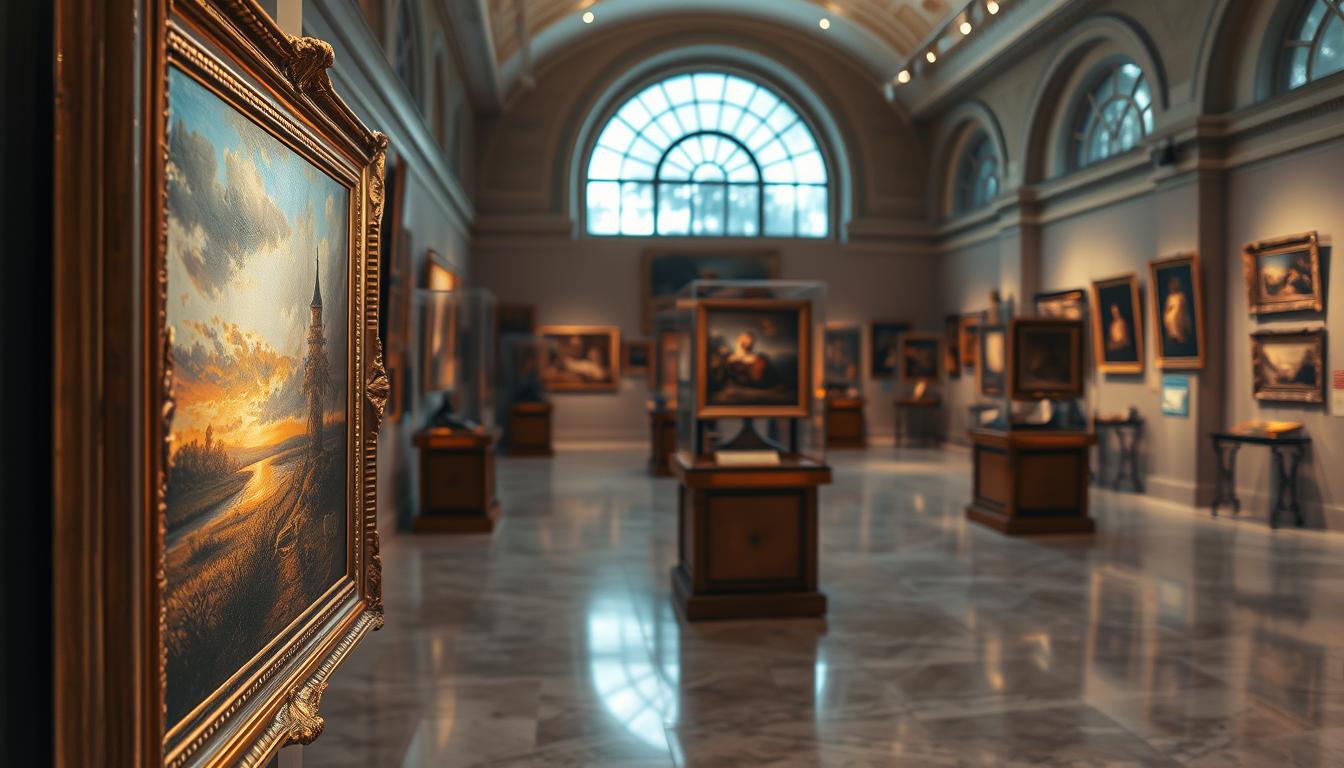

What makes a work of art stop time and keep drawing people decades after it was made? This question guides a short tour through how the world names certain pieces as masterpieces.
Art lovers and casual visitors judge works by clear signs: skill, context, emotional pull, rarity, and the artist’s reputation. These factors shape how a painting becomes a cultural touchstone with wide appeal.
Museum spaces, conservation efforts, and the stories behind each canvas all matter. They help viewers connect technique to history and feel why famous paintings still move people today.
The guide that follows highlights artists, key works, and the moments that lifted them into lasting fame. Whether a reader is new to galleries or a seasoned visitor, the piece shows how context makes viewing richer and more rewarding.
Key Takeaways
- Mastery of technique and historical context often define a masterpiece.
- Emotional impact and rarity boost a work’s lasting appeal.
- Museum settings and conservation preserve cultural value for future viewers.
- Fame grows from a mix of innovation, critical praise, and public interest.
- Understanding context deepens enjoyment for newcomers and regulars alike.
A Friendly Guide to the World’s Most Iconic Masterpieces
Approaching a famous canvas with a clear method helps viewers spot the choices that shape each work's meaning.
Start with composition: note how the artist arranges figures, shapes, and empty space. Look for lines that guide the eye and a focal point that anchors the scene.
Check color and light: color can set mood and era. Lighting reveals depth and highlights key gestures or objects that carry symbolic weight.
Read the label. A brief caption links a painting to its artist, original setting, and history. Labels help viewers connect a work to movements like the italian renaissance or later modern trends.
- Compare similar works by different artists to trace changes in style and technique.
- Notice small details—gaze, gesture, and props—that alter interpretation.
- When allowed, photograph or copy labels to build a personal must-see list.
Tip: imagine the painting in its original place—chapel, salon, or palace—to grasp its intended impact.
| Focus | What to Look For | Why It Matters | Example Era |
|---|---|---|---|
| Composition | Focal point, balance, perspective | Shows how meaning is organized | Italian Renaissance |
| Color & Light | Palette choices, chiaroscuro | Sets mood and guides the eye | Baroque / Dutch |
| Surface & Brushwork | Texture, visible strokes | Reveals technique and intent | Impressionism / Modern |
| Context | Original setting, patronage | Explains social and cultural meaning | Across the world |
Use this guide as a quick checklist. It prepares readers to move from early revolutions to bolder experiments in the list ahead, so each gallery visit uncovers new connections and lasting impact.
Renaissance Foundations: Beauty, Innovation, and the Italian Renaissance
The Italian Renaissance combined scientific inquiry and visual grace to rewrite what art could say about humanity.
Leonardo da Vinci — Mona Lisa (Louvre Museum, Paris)
Leonardo da Vinci used sfumato to blur edges and build a sense of depth. The Mona Lisa (c. 1503–1506) is famed for its enigmatic expression and subtle realism. This technique changed portraiture by making faces feel alive.
Leonardo da Vinci — The Last Supper (Santa Maria delle Grazie, Milan)
The Last Supper (1495–1498) showcases linear perspective that centers on Christ at the vanishing point. The composition is rigorous, turning a sacred scene into a focused visual drama. The work teaches how mathematical space guides narrative impact.
Sandro Botticelli — The Birth of Venus (Uffizi Gallery, Florence)
Sandro Botticelli blends myth and lyrical line in The Birth of Venus. The painting favors graceful movement over strict realism and reflects the era’s poetic ideals.
Michelangelo — The Creation of Adam (Sistine Chapel, Vatican City)
Michelangelo’s fresco on the Sistine ceiling fuses sculptural anatomy with dynamic gesture. The Creation of Adam celebrates human potential and the artist’s command of fresco technique.
- These works show how the italian renaissance united beauty, science, and faith.
- Workshops trained artists in drawing, color, and composition, shaping art history and future works.
Light and Drama: Baroque Brilliance and the Dutch Golden Age
Baroque masters used light like a director uses a spotlight, shaping drama and meaning across a scene. This approach made scenes feel immediate and emotional, helping viewers read intent through shadows and highlights.
Rembrandt van Rijn — The Night Watch (Rijksmuseum, Amsterdam)
Rembrandt van rijn filled a civic portrait with motion. The Night Watch (1642) uses chiaroscuro to lift figures from darkness and create depth. The crowded composition feels alive, as if the militia will move out of the frame.
Caravaggio — The Calling of St Matthew (San Luigi dei Francesi, Rome)
Caravaggio turned a simple room into a theater of belief. A sharp beam cuts across a table to mark a spiritual turn. The technique made conversion visible and urgent in everyday settings.
Johannes Vermeer — Girl with a Pearl Earring (Mauritshuis, The Hague)
Johannes vermeer favored quiet intensity. The girl pearl earring glints under soft light, and the sitter’s gaze creates an intimate stage. Small surface details and controlled light give the work lasting impact.
- Chiaroscuro models form and guides attention without extra ornament.
- Baroque artists placed sacred or historical themes in familiar settings to bridge past and present.
- These works influenced later artists who wanted to control the viewer’s eye through light and composition.
For deeper context on Dutch approaches to light and group composition, see Dutch Baroque.
Romantic Reveries and Symbolist Splendor

Romantic and Symbolist artists shifted focus inward, turning mood and memory into the main subject of a work. They used landscape, light, and ornament to make feeling visible.
Francisco Goya — The Third of May 1808
Francisco Goya made a raw, anti-war scene that hangs at the Museo del Prado in Madrid. The Third of May 1808 (1814) centers on a lit victim and uses stark contrast to show terror and injustice. The painting's directness gives it lasting impact in art and history.
Caspar David Friedrich — Wanderer above the Sea of Fog
Caspar David Friedrich painted solitude. Wanderer above the Sea of Fog (1818), in the Hamburger Kunsthalle, sets a lone figure before a vast landscape. The work invites quiet awe and introspection, a key style of German Romanticism.
Gustav Klimt — The Kiss
Gustav Klimt blends gold, pattern, and intimacy in The Kiss (c. 1907–08). Seen in the Belvedere and exhibited at the Neue Galerie, this painting pairs ornament with emotional warmth to celebrate beauty and desire.
- These works show a shift from outward narrative to inner experience.
- Museums in Madrid, Hamburg, Vienna, and New York let visitors feel each piece's power up close.
From Impression to Emotion: Monet, Renoir, and Van Gogh’s Evolving Vision
A new generation of artists began to capture the momentary effects of light and weather. They moved outdoors and painted what they saw in small bursts. This change reshaped the way people understood art and perception.
Claude Monet — Impressionist Masterworks
claude monet made nature the subject, letting water and sky dissolve into color. Key works appear at the National Gallery, London, and the National Gallery of Art, Washington. His quick brushstrokes record shifting atmosphere more than fine detail.
Pierre-Auguste Renoir — Dance and Portraits
Renoir balanced lively crowds and tender portraits. Dance at Le Moulin de la Galette is in the Phillips Collection, Washington, while portraits can be found at the Art Institute of Chicago. Light plays across skin and fabric to create warmth and immediacy.
Vincent van Gogh — Irises and Sunflowers
van gogh translated feeling into color. Irises is at the J. Paul Getty Museum, Los Angeles; Sunflowers is at the Van Gogh Museum, Amsterdam. Bold strokes and vivid hues turned simple flowers into charged symbols.
| Artist | Signature Approach | Representative Work | Museum |
|---|---|---|---|
| Claude Monet | Broken color, luminous atmosphere | Water Lilies series | National Gallery (London); NGA Washington |
| Pierre-Auguste Renoir | Warm light, social scenes | Dance at Le Moulin de la Galette | Phillips Collection; Art Institute of Chicago |
| Vincent van Gogh | Expressive strokes, bold color | Irises; Sunflowers | J. Paul Getty Museum; Van Gogh Museum |
Why it matters: these techniques shifted focus from recording to feeling. The new style paved the way for later modern experiments. For practical museum tips and related collections, see museum collections guide.
Modern Art Breakthroughs: Emotion, Form, and the Shock of the New

In the early twentieth century, artists pushed form and feeling into bold, new territory. Modern art traded strict realism for emotion, distortion, and fresh visual language. These shifts changed how people read a canvas and why a work matters.
Vincent van Gogh — Starry Night (MoMA, New York)
Vincent van Gogh turned sky into motion. Starry Night (1889) at MoMA, New York, blends color and swirl to fuse outer landscape with inner feeling.
Pablo Picasso — Guernica (Museo Reina Sofía, Madrid)
Pablo Picasso fractured figures to force a response. Guernica (1937) uses black, white, and gray to confront viewers with war’s trauma.
Edvard Munch — The Scream (National Museum, Oslo)
Edvard Munch reduced anxiety to an unforgettable form. The Scream makes private anguish feel universal and immediate.
Wassily Kandinsky — Abstract Visions (Solomon R. Guggenheim Museum, New York)
Kandinsky moved toward pure abstraction. His works suggest music in color and shape, arguing that a painting can be pure emotion.
- Result: distortion, fragmentation, and non-objective form opened new paths for seeing.
- Visits: MoMA, Museo Reina Sofía, National Museum Oslo, and the Guggenheim let readers experience these milestones in person.
| Artist | Work | Museum | Key Innovation |
|---|---|---|---|
| Vincent van Gogh | Starry Night | MoMA, New York | Expressive color and motion |
| Pablo Picasso | Guernica | Museo Reina Sofía, Madrid | Fragmentation to convey trauma |
| Edvard Munch | The Scream | National Museum, Oslo | Emotional distillation of anxiety |
| Wassily Kandinsky | Abstract works | Solomon R. Guggenheim, New York | Non-objective, music-like abstraction |
Masterpieces and Where to See Them Today
Seeing a masterpiece in the right gallery can change how the work reads and feels. This short checklist pairs famous works with the best place to view them, so a museum day becomes a clear plan.
United States Highlights
MoMA (New York) holds major modern landmarks like Van Gogh’s Starry Night. The National Gallery of Art in Washington showcases key Impressionist and earlier works. The J. Paul Getty Museum in Los Angeles pairs great views with Van Gogh’s Irises.
European Icons
The Louvre in Paris displays Leonardo’s masterpieces. In Madrid, Museo del Prado centers historic scenes such as Goya’s work. The Rijksmuseum in Amsterdam highlights Dutch masters, including Rembrandt van Rijn.
Focused Gems
- Mauritshuis (The Hague) for intimate Vermeer studies.
- Belvedere (Vienna) for Klimt’s shimmering canvases.
- Neue Galerie (New York) for Viennese modernism and related artists.
Practical tip: check opening hours, timed entry, and special exhibitions. Pair nearby venues—like Prado and Reina Sofía—to see history and modern responses in one city. Small rooms often allow closer study of surface and glaze.
What Makes Timeless Paintings Endure
Close study shows that visual choices, more than fame alone, decide which works keep drawing viewers.
Technique and Style: Sfumato, Chiaroscuro, Brushstrokes, and Realism
Specific techniques shape how people look at a work. Soft edges from sfumato suggest depth without hard lines. Chiaroscuro uses dramatic light to focus the eye.
Expressive brushstrokes can record motion or emotion. Realism may mean truthful anatomy, convincing light, or honest feeling depending on the artist’s goal.
History, Impact, and Cultural Appeal Across Generations
Context gives a work its larger meaning. Knowing when and why a piece was made clarifies its innovations and social role.
"Endurance comes from craft, context, and a human truth that invites return visits."
- Style links form to meaning, making images legible and memorable.
- Appeal often rests on universal themes—love, loss, and courage—reframed by later viewers.
- Impact measures include influence on other artists and ongoing public devotion.
| Element | What to See | Why It Matters |
|---|---|---|
| Surface | Layers, glazes, impasto | Reveals process and intent |
| Light | Chiaroscuro, naturalism | Directs the viewer’s look |
| Gesture | Brushwork and mark | Conveys emotion and motion |
In short, enduring beauty in a painting grows from a blend of techniques, history, and human truth. That mix keeps viewers returning and keeps art alive for new generations of artists.
Timeless Paintings to Add to Your Must-See List
A short shortlist helps travelers and first-time museumgoers pick works that truly changed art’s course.
From the Mona Lisa to Starry Night: begin with Leonardo’s Mona Lisa at the Louvre. The small portrait shaped portraiture and how the world reads a face. Next, see Vincent van Gogh’s Starry Night at MoMA for color that makes night feel alive.
Balancing Beauty, Innovation, and Influence in Every Choice
Include Gustav Klimt’s The Kiss for ornament and intimacy. Add Johannes Vermeer’s Girl with a Pearl Earring for a single glance that holds centuries of fascination.
- Claude Monet shows how light marks time in a scene.
- Goya’s The Third of May 1808 at Museo del Prado records a turning point in history and life.
- Sandro Botticelli and other Renaissance works map myth, line, and ideal beauty.
The list balances innovation and influence. It points to artists whose works still draw crowds and shape other makers. Check museum schedules—an unmissable masterpiece may be on tour. Note how each work reflects the artist’s life and era while speaking to our time.
Conclusion
One canvas can act like a mirror, reflecting new meanings as viewers return with fresh eyes. A single visit may change how someone understands life and history.
Readers are invited to keep exploring museums and books. Whether in New York or abroad, seeing van gogh or leonardo vinci in person adds context and surprises.
Good works bridge tradition and innovation. They fold beauty, nature, and human life into a compact image that keeps giving.
Take your time: stand back, move close, and let surface and subject unfold. Modern art and old masters belong in the same conversation.
Thanks for taking this journey. Plan a small list, follow curiosity, and expect moments when a masterpiece suddenly feels made just for you.
Enhance Your Space with Unique Modern Masterpieces by Chiara Rossetti

Are you inspired by the innovative mediums and conceptual depth highlighted in our exploration of contemporary art? You’re not alone! Today’s art enthusiasts are seeking cultural relevance and emotional connections in their artwork. However, finding pieces that resonate with modern themes and fit your unique style can be a challenge. That’s where we come in!

At Rossetti Art, we specialize in canvas prints, original paintings, and modern sculptures that celebrate the spirit of now. Each piece created by Chiara Rossetti brings a personal touch that connects deeply with current social narratives—just like the modern masterpieces discussed in the article. Don’t miss out on the chance to elevate your home decor with breathtaking artwork that speaks to your values and aesthetic. Explore our collection today and find your perfect piece! Act now, and transform your space into a gallery of inspiration!

FAQ
What defines a masterpiece and why do some works endure?
A masterpiece combines technical skill, originality, and emotional power. Works by artists like Leonardo da Vinci, Vincent van Gogh, and Johannes Vermeer endure because they innovate technique—sfumato, chiaroscuro, expressive brushwork—and connect with viewers across eras, reflecting cultural moments and universal human experience.
Where can visitors see the Mona Lisa and The Last Supper?
The Mona Lisa is on display at the Louvre Museum in Paris. The Last Supper is painted in the refectory of Santa Maria delle Grazie in Milan; visitors should book tickets in advance because viewing times are limited to protect the fresco.
Which museums in the United States hold major works mentioned here?
Key U.S. institutions include MoMA in New York (Starry Night), the National Gallery of Art in Washington (Impressionist holdings), and the J. Paul Getty Museum in Los Angeles (Van Gogh works). Each offers rotating exhibitions, so check museum schedules before planning a visit.
How did Impressionism change how artists treated light and color?
Impressionists such as Claude Monet shifted emphasis from detailed realism to sensory impressions. They painted en plein air, used broken color and loose brushstrokes, and focused on changing light to convey mood rather than fixed detail, influencing later movements including Post-Impressionism.
What is the significance of Girl with a Pearl Earring and where is it housed?
Johannes Vermeer’s Girl with a Pearl Earring is celebrated for its intimate realism, luminous skin tones, and masterful use of light. The portrait resides in the Mauritshuis in The Hague and is often cited for its quiet mystery and compositional balance.
How do Baroque and Dutch Golden Age works differ in style and subject?
Baroque art, seen in Caravaggio’s dramatic scenes, emphasizes strong contrast, theatrical lighting, and emotional intensity. Dutch Golden Age painters like Rembrandt focused on realism, portraiture, and everyday life, using subtle light to reveal texture and character.
Are there particular techniques viewers should look for when seeing Renaissance art?
Look for techniques such as sfumato—soft transitions promoted by Leonardo—accurate anatomical drawing, and careful perspective. These methods create depth, lifelike figures, and harmonized compositions central to works by Michelangelo and Botticelli.
What makes modern works like Guernica and The Scream so powerful?
Picasso’s Guernica and Munch’s The Scream capture intense psychological and social trauma through fragmented form, stark symbolism, and expressive color. Their power lies in conveying collective anxieties and emotional extremes in ways that resonate beyond their historical moments.
Can visitors see Gustav Klimt’s The Kiss in New York?
Klimt’s original The Kiss is housed at the Belvedere in Vienna. The painting occasionally travels for exhibitions, including past shows at the Neue Galerie in New York; check temporary exhibition listings for any loaned displays.
How should someone plan a museum trip to see multiple masterpieces in Europe?
Prioritize must-sees—Louvre in Paris, Museo del Prado in Madrid, Rijksmuseum in Amsterdam—and book timed tickets. Allow extra time for focused galleries like the Mauritshuis or Belvedere. Use museum maps and audio guides to navigate highlights efficiently.
What role did landscape and nature play in Romantic art?
Romantic artists such as Caspar David Friedrich used landscape to explore individual feeling, the sublime, and spirituality. Works like Wanderer above the Sea of Fog emphasize emotional response to vast nature, often with solitary figures framed by dramatic scenery.
Where can someone study Van Gogh’s development across his works?
The Van Gogh Museum in Amsterdam offers the most comprehensive view of his career, while major works also appear at the J. Paul Getty Museum and MoMA. Comparing early portraits with later canvases like Sunflowers and Starry Night shows his evolving color palette and brushwork.
Are reproductions or digital tours reliable ways to experience these works?
High-quality reproductions and museum virtual tours provide accessible study and can reveal detail, but they cannot fully replicate scale, texture, and the presence of the original. They’re excellent for preparation and research, while an in-person visit remains the ideal experience.
How do curators decide which works to display together?
Curators group works by theme, period, or technique to highlight connections—such as Renaissance innovations or Impressionist explorations of light. Exhibitions may contrast artists and movements to reveal influence, technique, and evolving ideas across time.
What should a first-time museum visitor focus on to get the most out of a visit?
Start with a few iconic works, read wall labels or use an audio guide, and pause to observe composition, brushwork, and use of light. Allow time for reflection; quality engagement with a few pieces often provides deeper insight than rushing through many.


Leave a comment
This site is protected by hCaptcha and the hCaptcha Privacy Policy and Terms of Service apply.