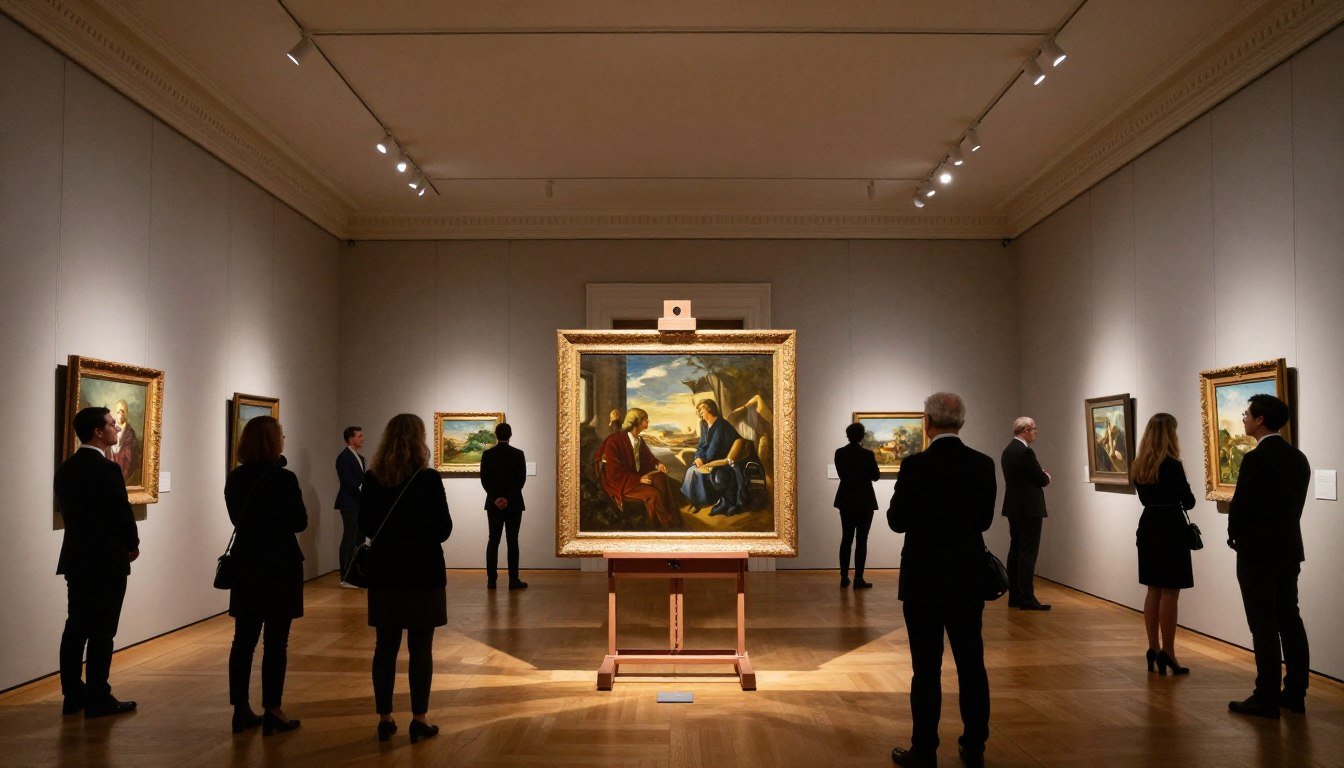

The art world erupted when a single canvas commanded a staggering $70 million at auction. This wasn't just another sale. It was a moment that redefined value in contemporary art markets.
The story behind this transaction reveals much about our current art landscape. Collectors, museums, and investors watched as the hammer fell. The price shattered expectations and sparked worldwide conversation.
This remarkable sale joins an elite group of paintings that have crossed similar financial thresholds. Understanding what drives these astronomical prices offers insight into art, culture, and human desire. Let's explore the fascinating world of record-breaking art sales and discover what makes certain works worth millions.
The $70 Million Masterpiece Revealed

The painting that commanded $70 million represents more than just pigment on canvas. It embodies artistic vision, historical significance, and cultural impact. Such works typically emerge from pivotal moments in art history.
Record sales at this price point often feature artists whose work fundamentally changed how we see art. These creators pushed boundaries and defined new movements. Their influence extends far beyond their own time.
The auction took place at one of New York's prestigious houses, where the world's most serious collectors gather. The New York Times covered the sale extensively, noting the fierce competition among bidders. Multiple phone lines remained active throughout the bidding process.

The final price reflected numerous factors beyond aesthetic appeal. Provenance played a crucial role. Previous ownership by notable collectors or prominent families adds substantial value to any work.
Condition matters immensely at this level. The painting likely underwent extensive examination by conservation experts. Any restoration work would have been documented meticulously. Collectors at this tier demand perfection.
For those interested in following art market trends and learning more about what drives these remarkable valuations, our art blog offers regular insights into auction records and collecting strategies.
Historic Record-Breaking Art Sales

The $70 million sale exists within a remarkable context of even higher prices. The art market has witnessed transactions that dwarf this already impressive figure. Understanding these sales provides perspective on valuation.
Leonardo da Vinci's "Salvator Mundi" holds the current record. The work sold for over $450 million at Christie's in New York. The sale sparked intense debate about attribution and condition, yet the price stood.
Pablo Picasso appears frequently among the most expensive paintings ever sold. His work "Les Femmes d'Alger" brought over $179 million at auction. The painting exemplifies his cubist period and bold use of color.

Amedeo Modigliani's "Nu couché" achieved $170 million at a New York auction. The reclining nude represents the artist's distinctive elongated style. Only a few dozen works by Modigliani exist, making each extremely valuable.
Vincent van Gogh commands extraordinary prices despite creating his masterworks in poverty. "Portrait of Dr. Gachet" sold for $82.5 million in 1990. Adjusted for inflation, that figure exceeds $150 million today.

Van Gogh's Market Dominance
Vincent van Gogh remains among the most sought-after artists. His tragic life story adds emotional resonance to the work. Collectors prize the raw emotion visible in every brushstroke.
The artist created fewer than 900 paintings during his lifetime. This scarcity drives demand. Museums hold many works, removing them from the market permanently. Private sales rarely occur.
When a Van Gogh does appear at auction, international competition intensifies. The New York Times reported that multiple museums and private collectors typically compete. Phone bidders from Asia, Europe, and the Americas participate.

Gustav Klimt's work "Portrait of Adele Bloch-Bauer I" sold for $135 million. The golden painting became famous beyond art circles through the film "Woman in Gold." Its Nazi-looted provenance added historical weight.
Mark Rothko's large color field paintings regularly exceed $70 million at auction. His work "Orange, Red, Yellow" achieved $86.9 million. The abstract expressionist created paintings meant for contemplation and emotional response.

These record sales share common elements. Rarity, condition, provenance, and cultural significance all contribute. The artist's place in art history matters enormously. So does timing and market conditions.
Understanding the Art Auction Market

The auction process drives prices through competitive bidding. Multiple interested parties create urgency and push values higher. This differs fundamentally from private sales, where negotiation occurs between two parties.
Major auction houses in New York dominate the high-end market. Christie's and Sotheby's handle the majority of eight-figure sales. These institutions provide authentication, marketing, and global reach that private galleries cannot match.
Timing affects auction results significantly. Sales typically concentrate in May and November. These periods align with when serious collectors travel to New York. The calendar creates predictable market rhythms.

Pre-sale estimates guide expectations but rarely limit final prices. When a work carries exceptional appeal, bidding can soar past the high estimate. The shocking painting that sold for 70 million likely exceeded its projected range.
Buyer's premium adds substantial cost beyond the hammer price. This fee, typically 12 to 25 percent, goes to the auction house. A $70 million hammer price becomes $80 million or more after premiums.

The Auction Process
Auctions follow established protocols developed over centuries. The auctioneer controls pacing and recognizes bids. Staff members take phone bids from remote participants worldwide.
Opening bids typically start below the low estimate. This encourages participation and builds momentum. As bidding progresses, increments increase with the price level.

Global Participation
Modern technology enables worldwide bidding. Phone lines connect specialists with remote clients. Online platforms now allow internet bidding for certain sales, though the highest-value lots still require personal representation.
Time zones matter less than they once did. Asian collectors participate in New York evening sales during their morning hours. European buyers call in during their late night.

Documentation Requirements
Extensive documentation supports every major sale. Provenance research traces ownership back as far as possible. Exhibition history in respected institutions adds credibility and value.
Scientific analysis confirms authenticity. X-rays reveal underdrawings and changes. Infrared imaging shows details invisible to the naked eye. Material analysis dates pigments and canvas.
The auction record for any artist establishes a benchmark. Subsequent works are valued in relation to this figure. A new record can lift the entire market for an artist. Conversely, a work failing to sell can depress values temporarily.
Guarantees play an increasingly important role. Auction houses sometimes guarantee a minimum price to secure important consignments. This shifts risk from the seller to the house or third-party guarantors.

Understanding these dynamics helps explain how paintings reach $70 million or beyond. The system combines traditional practices with modern financial mechanisms. Competition, scarcity, and desire drive extraordinary prices.
Notable Sales at $70 Million and Above

Several specific sales deserve detailed examination. Each represents a unique moment in art market history. The circumstances surrounding these transactions reveal market dynamics and collector psychology.
Andy Warhol's "Silver Car Crash (Double Disaster)" sold for $105 million in New York. The work exemplifies Warhol's commentary on American culture and tragedy. Its large scale and powerful imagery justified the extraordinary price.

Francis Bacon's "Three Studies of Lucian Freud" achieved $142 million at Christie's. The triptych format adds complexity and visual impact. Bacon's distorted figures create psychological intensity that resonates with collectors.
Paul Gauguin's "Nafea Faa Ipoipo (When Will You Marry?)" reportedly sold privately for $300 million. The Tahitian scene represents Gauguin's post-impressionist style at its peak. The sale to Qatar Museums demonstrated Middle Eastern investment in Western art.
The Gauguin Sale Impact
The Nafea Faa Ipoipo sale occurred privately, not at auction. Private treaty sales avoid public scrutiny but lack the competitive energy of auctions. The price remained unconfirmed for years.
This transaction demonstrated that the highest prices no longer require public sales. Wealthy institutions and individuals negotiate directly. Discretion appeals to certain sellers despite potentially leaving money on the table.
The painting had been owned by a Swiss family for decades. Rudolf Staechelin's collection included important impressionist and post-impressionist works. The sale marked the end of an era for this distinguished collection.

Willem de Kooning's "Woman III" sold for $137.5 million in a private sale. David Geffen, the media mogul and prominent collector, owned the painting. The sale to Steven Cohen demonstrated the active market among ultra-wealthy collectors.

David Geffen has participated in multiple record-breaking transactions. His collection includes masterworks across movements and periods. The Geffen sales often set new benchmarks for specific artists.
The "Portraits of Maerten Soolmans and Oopjen Coppit" by Rembrandt sold jointly to the Rijksmuseum and the Louvre for $180 million. The pair of portraits had remained together for centuries. The unprecedented museum collaboration ensured they would stay united.

These Maerten Soolmans and Oopjen Coppit portraits represent rare Rembrandt full-length works. The artist typically painted bust-length or three-quarter portraits. Full-length compositions commanded higher prices even in the 17th century.
Bring Museum-Quality Art Home
While original masterworks command millions, you can enjoy stunning reproductions of famous paintings and contemporary art. Our canvas prints capture the beauty and impact of museum-quality artwork at accessible prices.
Each of these sales above $70 million shares common elements. The works represent pivotal moments in their respective artists' careers. Condition remains excellent despite age. Provenance includes distinguished collections or exhibitions.
The New York Times and other major publications cover these sales extensively. Media attention increases public awareness and can affect future valuations. Publicity creates a virtuous cycle for certain artists and movements.
Why Paintings Command Astronomical Prices

Multiple factors converge to create values reaching $70 million or beyond. Understanding these elements demystifies seemingly inexplicable prices. The art market operates on principles both logical and emotional.
Scarcity drives value fundamentally. Many important artists created relatively few works during their lifetimes. Vincent van Gogh painted for only a decade. His total output remains finite and largely in museums.
Historical significance elevates certain paintings above others. Works that changed art history command premiums. The first cubist painting or the definitive example of a movement carries extra weight. These pieces exist in art historical textbooks and university curricula.

Provenance adds substantial value. Previous ownership by famous collectors or prominent families validates quality. Exhibition history in major museums provides institutional endorsement. Gaps in provenance raise concerns and reduce values.
Condition affects price dramatically. Original, untouched surfaces command premiums. Extensive restoration or damage reduces value significantly. Conservation reports detail every intervention and repair.
The Artist's Reputation
An artist's standing in art history determines the ceiling for their work. Masters like Pablo Picasso, whose innovations shaped modern art, command the highest prices. Lesser-known artists, regardless of quality, rarely reach eight figures.
Critical consensus matters immensely. When scholars agree on an artist's importance, collectors follow. Museum acquisitions and major exhibitions build reputation over decades. This process cannot be rushed or manufactured.
The artist's biography contributes to mystique and value. Tragic lives like Van Gogh's add emotional resonance. Revolutionary figures like Picasso embody creative genius. Collectors buy into these narratives as much as the physical artwork.

Market timing influences prices substantially. Strong economic periods see record auction results. Wealthy collectors feel confident spending. Conversely, recessions can soften the market temporarily, though truly exceptional works maintain value.
Competition among buyers drives prices up. When multiple determined collectors want the same work, auctions become contests. Ego and desire to own overcome financial considerations. The final price paid often exceeds pre-sale estimates significantly.

Investment potential attracts certain buyers. Art has proven to hold value over decades and centuries. Unlike stocks or bonds, paintings provide aesthetic enjoyment while potentially appreciating. This dual benefit appeals to sophisticated collectors.
The physical presence of great paintings cannot be replicated digitally. Standing before a masterwork provides an experience that photographs cannot capture. This irreplaceable quality justifies high prices for those who can afford them.

Cultural prestige accompanies ownership of important art. Collectors gain status within social circles. Lending works to museums provides public recognition. This social capital has measurable value beyond the monetary.
Tax considerations affect decisions at this level. Donations to museums provide deductions. Strategic timing of sales can minimize tax liability. Wealthy collectors employ advisors who understand these financial implications.
The Role of Collectors and Families in Art Sales

Individual collectors shape the art market profoundly. Their decisions to buy, hold, or sell affect prices and availability. Understanding collector motivations provides insight into how paintings reach $70 million valuations.
Long-term family ownership creates powerful provenance. When a family has held a painting for generations, it suggests quality and importance. The decision to sell often follows changes in family circumstances or financial needs.
David Geffen exemplifies the influential modern collector. His purchases and sales have set records repeatedly. When Geffen offers a work, the market pays attention. His taste and judgment carry weight with other collectors.

Estate sales bring important works to market. When prominent collectors pass away, their collections often sell at auction. These moments create opportunities for new collectors to acquire masterworks that have been unavailable for decades.
Museum deaccessioning remains controversial but occurs regularly. Institutions sell works to refine collections or raise funds. These sales typically require board approval and must follow strict ethical guidelines.

Institutional Collections
Museums acquire works strategically to fill gaps in their holdings. Competition between institutions can drive auction prices. The desire to secure important examples before they disappear into private hands motivates aggressive bidding.
The Rijksmuseum and Louvre collaboration on the Maerten Soolmans and Oopjen Coppit portraits demonstrated creative solutions. When individual institutions cannot afford a work, partnerships become necessary. This trend may increase as prices continue rising.
Private collectors often develop relationships with specific artists or movements. Focused collections gain importance through their coherence. When such collections come to market, they can command premium prices due to their thoughtful assembly.
The New York Times regularly profiles major collectors and their acquisitions. This media coverage influences perception and values. Publicity creates recognition that extends beyond the art world into broader culture.

Anonymous bidding protects privacy but also creates mystery. When an unknown buyer pays record prices, speculation follows. Eventually, the art community usually identifies major purchasers through various channels.
Family disputes over art ownership occasionally surface publicly. These legal battles can affect values and tie up works for years. Resolution often requires court intervention or negotiated settlements.

Collecting motivations vary widely. Some acquire art purely for aesthetic pleasure. Others view paintings as investments. Many combine both motivations, seeking works that provide enjoyment while maintaining or increasing value.
Generational wealth enables sustained collecting. Families that have collected for decades or centuries understand art markets deeply. This long-term perspective allows patient accumulation of important works.
Modern Art Versus Classical Works Pricing

The art market divides roughly between modern and contemporary works versus old master paintings. Each category has distinct dynamics, collector bases, and price structures. Understanding these differences illuminates how values reach extraordinary levels.
Modern art generally includes work from the 1880s through 1970s. This encompasses impressionism, cubism, surrealism, abstract expressionism, and pop art. These movements revolutionized artistic expression and remain highly valued today.
Pablo Picasso dominates modern art sales. His prolific output and constant innovation created a large body of museum-quality work. The best Picasso paintings regularly exceed $100 million at auction. His market remains robust across economic conditions.

Mark Rothko represents another pinnacle of modern art pricing. His large color field paintings create immersive viewing experiences. Collectors prize the emotional and spiritual qualities of his work. The largest and finest examples command prices approaching $100 million.
Contemporary art, generally defined as work created after 1970, has seen explosive price growth. Living artists like Jeff Koons and Damien Hirst have achieved auction records exceeding $50 million. This represents a significant shift from historical patterns.

Old Master Market
Old master paintings, created before 1800, form a separate market category. Works by Rembrandt, Caravaggio, and other pre-modern artists carry immense historical importance. However, fewer collectors focus exclusively on this period.
The old master market faces authentication challenges. Centuries have passed since these works were created. Scientific analysis continues improving, sometimes upending long-held attributions. This uncertainty affects values.
Major old master discoveries are increasingly rare. Most important works have been known for centuries. New attributions do occur, often involving paintings thought to be by students or followers. These upgrades can multiply values dramatically.
Supply constraints affect old masters more severely than modern art. Far fewer paintings survive from the Renaissance or Baroque periods. War, fire, and time have destroyed countless works. Museums hold the majority of known masterpieces permanently.

The Leonardo da Vinci "Salvator Mundi" sale demonstrated that exceptional old masters can achieve record prices. Only about 15 Leonardo paintings exist. This extreme rarity justified the $450 million price despite authentication debates.
Modern art benefits from better documentation. Photographs of artists in their studios, exhibition records, and contemporary reviews provide solid provenance. This documentation reduces uncertainty and supports higher valuations.

Market preferences shift over time. Impressionism dominated collecting for decades but has been somewhat eclipsed by post-war and contemporary art. Younger collectors often prefer more recent work that reflects current cultural conversations.
The shocking painting that sold for 70 million likely falls within the modern or contemporary category. These periods currently generate the highest prices and most active trading. The market for recent art remains dynamic and growing.
Investment returns differ between categories. Modern art has shown consistent appreciation over decades. Contemporary art offers potential for higher returns but carries more risk. Old masters appreciate slowly but steadily, backed by centuries of established value.

Scale plays a role in modern art pricing. Large paintings command premiums because they create greater visual impact. Mark Rothko and other abstract expressionists worked on massive canvases intentionally. These works suit museum galleries and large private spaces.
How to Start Your Own Art Collection

While $70 million masterworks remain beyond most budgets, art collecting is accessible at many levels. Building a meaningful collection requires knowledge, patience, and passion. The journey offers rewards beyond financial considerations.
Start by educating yourself about art history and different movements. Visit museums regularly and attend gallery exhibitions. Read books about artists and periods that interest you. This foundation will guide your collecting decisions.
Define your collecting focus. Some collectors pursue specific artists, movements, or time periods. Others collect thematically around subjects like landscapes or portraiture. A focused collection gains coherence and impact over time.

Budget realistically for art purchases. Quality matters more than quantity. One significant work often provides more satisfaction than multiple lesser pieces. Remember to factor in framing, insurance, and conservation costs.
Build relationships with galleries and dealers. These professionals provide expertise and access to works before they reach the general market. Trust develops over time through multiple transactions.
Where to Find Art
Multiple venues offer artwork at various price points. Local galleries represent emerging and mid-career artists. Prices here range from hundreds to thousands of dollars. These works may appreciate if the artists gain recognition.
Art fairs bring together multiple galleries in one location. Major fairs attract international dealers and serious collectors. Smaller regional fairs offer more accessible options for beginning collectors.
Online platforms have democratized art buying. Websites connect collectors directly with artists and galleries worldwide. This access makes collecting easier but requires careful due diligence regarding authenticity and condition.

Consider prints and multiples as entry points. Works on paper, including etchings, lithographs, and screenprints, cost less than unique paintings. Many important artists created significant print editions. These offer quality at lower prices.
Discover Original Artwork for Your Collection
Begin or expand your art collection with original paintings created by talented contemporary artists. Each work is unique and comes with full documentation, allowing you to build a collection with investment potential and personal meaning.
Condition matters even for affordable works. Examine paintings carefully for damage, restoration, or condition issues. Request condition reports for significant purchases. Factor conservation costs into your decision.
Provenance documentation protects your investment. Request receipts, certificates of authenticity, and any exhibition history. Maintain these records carefully. Future buyers will want this information.

Display your collection thoughtfully. Proper lighting protects artwork and enhances viewing. Avoid direct sunlight, which can fade pigments. Consider hiring a professional art handler for valuable works.
Insurance becomes important as your collection grows. Standard homeowner's policies provide limited coverage for art. Specialized fine art insurance protects against theft, damage, and loss. Document your collection with photographs and appraisals.

Join collector groups and museum support organizations. These memberships provide access to special exhibitions, lectures, and networking opportunities. Learning from experienced collectors accelerates your education.
Resist impulse purchases. Live with a decision mentally before committing. Visit the work multiple times if possible. True collecting involves passion, but financial discipline ensures long-term sustainability.
The Investment Potential of Art

Art has emerged as a recognized alternative investment asset class. Wealthy individuals and institutions allocate portions of their portfolios to tangible assets including fine art. Understanding the investment case requires examining both opportunities and risks.
Historical data shows quality art appreciating steadily over decades. The shocking painting that sold for 70 million likely increased substantially from its previous sale price. This appreciation occurs because supply remains fixed while demand grows with global wealth.
Low correlation with traditional financial markets makes art attractive for diversification. When stocks decline, art values typically remain stable. This counter-cyclical behavior provides portfolio protection during economic downturns.

Liquidity remains art's primary investment challenge. Selling artwork takes time and involves transaction costs. Unlike stocks, you cannot sell instantly at market price. This illiquidity requires long investment horizons.
Transaction costs substantially impact returns. Auction houses charge buyer's and seller's premiums totaling 20 to 30 percent. Gallery commissions can reach 50 percent. These fees must be factored into investment calculations.
Art Market Indices
Several organizations track art market performance through indices. These tools help investors understand trends and compare returns to other assets. However, indices have limitations because each artwork is unique.
The Mei Moses index tracks repeat sales of identical works over time. This methodology provides genuine price appreciation data. The index shows blue-chip modern art appreciating at 8 to 10 percent annually over long periods.
Contemporary art shows higher volatility than established masters. Prices can rise rapidly but also correct sharply. Investment in living artists carries additional risk because their careers are still developing.

Art investment funds have proliferated in recent decades. These vehicles pool capital to acquire portfolios of artwork. Professional managers make acquisition decisions. Investors gain exposure without directly owning or storing pieces.
Tax advantages benefit art investors in many jurisdictions. Long-term capital gains rates apply to appreciated artwork. Donations to museums provide tax deductions. Estate planning can utilize art to reduce tax burdens.

Authentication risk affects investment value. If a work's attribution is later questioned, value can evaporate completely. This risk decreases for well-documented works by thoroughly researched artists. Buying from reputable sources provides protection.
Market timing matters in art investment. Buying at market peaks can result in years of flat or negative returns. Patient investors who purchase during market corrections or stable periods typically achieve better outcomes.

Pure investment motivation may lead to poor art choices. The most successful art investors combine genuine passion with financial analysis. Enjoyment of the work provides utility even if financial returns disappoint.
Diversification within art collections reduces risk. Owning multiple works by different artists in various price ranges protects against individual artist market declines. This mirrors diversification principles in traditional investing.
Insurance and storage costs create ongoing expenses. Climate-controlled storage facilities charge annual fees. Comprehensive insurance premiums can reach one to two percent of value annually. These costs must be considered in return calculations.

The emotional attachment to art distinguishes it from purely financial investments. Collectors live with their acquisitions daily. This utility provides value beyond monetary returns. The pleasure of ownership should not be underestimated.
Displaying Museum-Quality Art at Home

Creating an art-focused living environment enhances both the artwork and your daily experience. Proper display techniques protect your investment while maximizing visual impact. These principles apply whether you own originals or high-quality reproductions.
Lighting dramatically affects how artwork appears. Natural daylight provides ideal color rendering but must be controlled to prevent fading. UV-filtering glass or acrylic protects valuable works. Adjustable track lighting allows you to highlight specific pieces.
Wall color influences perception of artwork. Neutral tones like white, cream, or gray provide versatile backgrounds. Bold wall colors can work but require careful coordination with the artwork's palette. Museums typically use neutral walls for maximum flexibility.

Height matters when hanging artwork. The center of paintings should align at eye level, typically 57 to 60 inches from the floor. This standard provides comfortable viewing. Adjust for ceiling height and furniture placement.
Grouping arrangements create visual interest and dialogue between pieces. Gallery walls combine multiple works in unified compositions. Symmetrical arrangements convey formality. Asymmetrical groupings feel more dynamic and contemporary.

Framing Considerations
Quality framing protects and enhances artwork. Conservation materials prevent damage from acidic components. Spacing between the artwork and glazing allows air circulation. Professional framers understand these technical requirements.
Frame style should complement both the artwork and your interior design. Contemporary works often benefit from simple, minimal frames. Traditional paintings may call for more ornate framing. The frame should enhance, not overwhelm, the work.
Glazing options include regular glass, museum glass, and acrylic. Museum glass eliminates reflections and blocks UV light. Acrylic weighs less but scratches more easily. The choice depends on the work's value and display location.
Scale relationships between artwork and furniture affect room composition. Large-scale paintings make bold statements and suit spacious walls. Smaller works create intimate viewing experiences and work well in personal spaces.
Climate control protects artwork from damage. Maintain consistent temperature and humidity levels. Rapid fluctuations cause canvas and wooden supports to expand and contract, leading to cracking. Aim for 65 to 70 degrees Fahrenheit and 45 to 55 percent humidity.

Avoid hanging valuable artwork above fireplaces or heating vents. Heat and smoke damage paintings over time. Similarly, avoid locations receiving direct sunlight for extended periods. Even indirect daylight can cause fading over years.
Three-dimensional art requires different display considerations. Sculptures need adequate space around them for viewing from multiple angles. Pedestal height affects perception. Lighting from above or the side creates dramatic shadows and highlights form.

Sculpture Placement
Consider sight lines when positioning sculptures. Entryways provide natural focal points. Corners can accommodate larger pieces without obstructing traffic flow. Rotating displays periodically maintains visual interest.

Material Considerations
Different sculpture materials require specific care. Bronze develops patina over time, which many collectors prize. Marble remains vulnerable to staining and should be sealed. Wood sculptures need climate control to prevent cracking.

Statement Pieces
Large-scale sculptures transform spaces into galleries. These investment pieces require careful selection to ensure they complement architecture and design. Consider scale, color, and style compatibility with your overall aesthetic.
Security considerations become important for valuable collections. Install alarms and consider safes for smaller works. Insurance companies may require specific security measures. Document your collection with detailed photographs and descriptions.
Rotation keeps displays fresh and protects light-sensitive works. Store pieces not currently displayed in proper conditions. This approach allows you to enjoy a larger collection over time while providing necessary rest periods for delicate works.

Creating dedicated gallery spaces within homes has become increasingly popular. Spare rooms convert into private galleries with proper lighting, climate control, and display systems. These spaces allow focused viewing separate from daily living areas.
Professional art consultants can help design display systems and select appropriate works for your spaces. Their expertise ensures both aesthetic success and proper conservation. This investment protects valuable collections and creates more satisfying viewing experiences.
The Enduring Appeal of High-Value Art

The shocking painting that sold for 70 million represents far more than a financial transaction. It symbolizes humanity's enduring need to create, collect, and preserve beauty. These record sales capture public imagination precisely because they touch something fundamental in human nature.
Art transcends time in ways few other human creations achieve. Paintings by Vincent van Gogh, Pablo Picasso, and other masters speak to us across decades and centuries. Their work remains vital and relevant despite massive cultural changes. This timeless quality justifies extraordinary valuations.
The art market will continue evolving as new collectors enter and tastes shift. Contemporary artists working today may achieve similar recognition in future decades. Each generation discovers the artists who speak most powerfully to their moment while rediscovering past masters.

For most people, owning $70 million masterworks remains impossible. Yet the appreciation of art and the joy of collecting exist at every price point. Building a personal collection, even modestly, connects you to this ancient human tradition.
Quality artwork enriches daily life in immeasurable ways. Whether you collect original works or carefully selected reproductions, surrounding yourself with beauty provides lasting satisfaction. The investment in art pays dividends in aesthetic pleasure and intellectual stimulation.

The stories behind record-breaking sales remind us that art matters profoundly to human culture. These transactions make headlines, but the real story is our collective commitment to preserving and celebrating creative achievement. From cave paintings to contemporary masterworks, art defines our humanity.
As you develop your own relationship with art, remember that value extends beyond price tags. The work that speaks to you personally holds value regardless of market consensus. Trust your eye, educate yourself continuously, and collect what you love.
Continue Your Art Journey
Explore more insights about art collecting, market trends, and creative inspiration. Our blog features expert analysis, artist profiles, and practical advice for building your collection at any level.
The art world remains dynamic and accessible. Whether you aspire to acquire museum-quality originals or wish to enjoy beautiful reproductions, opportunities exist to engage meaningfully with visual culture. Your journey begins with curiosity and grows through sustained engagement.
Record prices will continue making news as exceptional works come to market. Each sale writes another chapter in the ongoing story of human creativity and the value we place on beauty, innovation, and cultural significance. The shocking painting that sold for 70 million is just one chapter in this endless, fascinating narrative.



Leave a comment
This site is protected by hCaptcha and the hCaptcha Privacy Policy and Terms of Service apply.