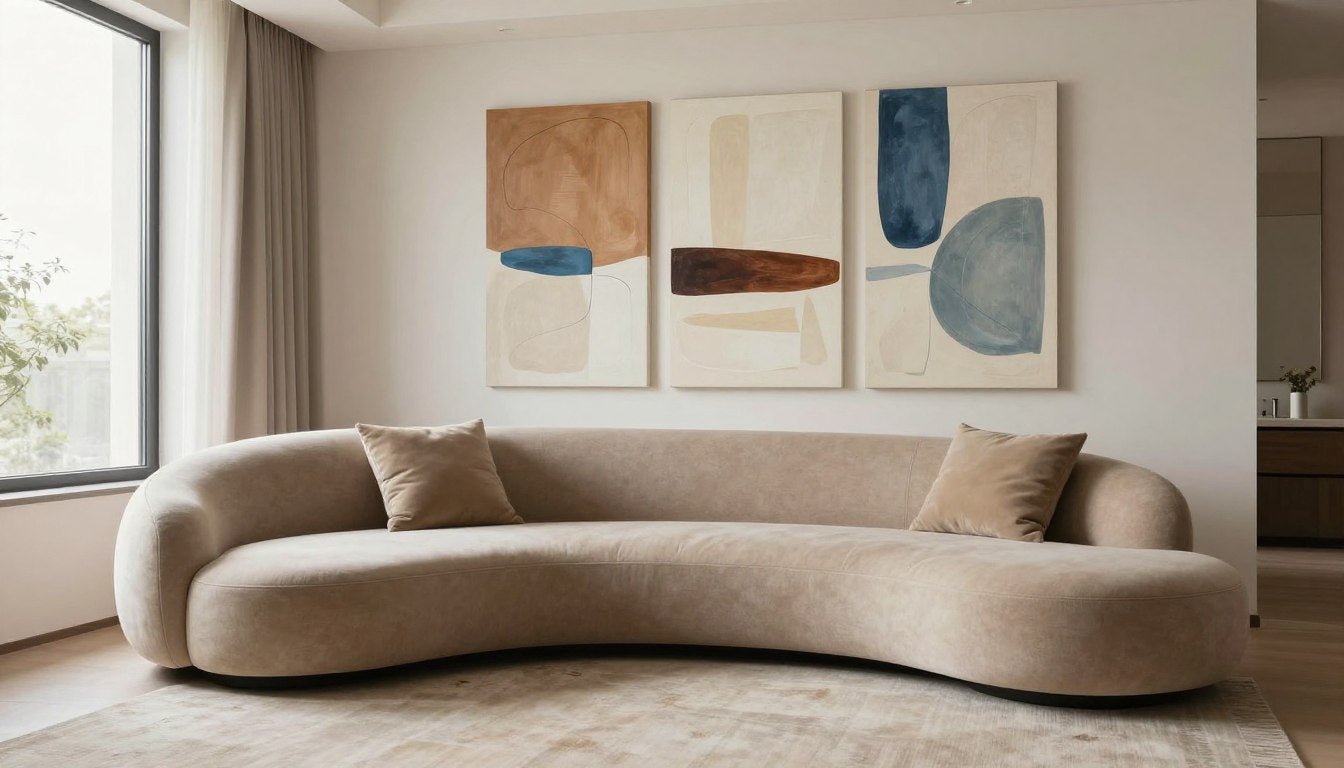

The number one rule for pairing art with 2026 sofa trends is this: match the mood, not the color. This year brings sofas with sculptural curves, performance fabrics, and rich natural tones that demand art with similar organic energy and texture. You will learn which sofa styles are dominating interiors this year and exactly how to choose wall art that enhances rather than fights your furniture investment.
From curved silhouettes to velvet upholstery in unexpected shades, the sofa trends of 2026 reflect a shift toward comfort without sacrificing style. The right canvas prints can either elevate these pieces into focal points or leave your room feeling disconnected. We will walk through the key trends, show you palette strategies, and connect you with curated art that works with what designers are calling the most interesting sofa year in a decade.
Whether you are updating your living room or starting fresh, understanding how art and furniture talk to each other saves you from costly mismatches. Rossettiart canvas prints offer museum-quality options that align with every major trend we will cover. Let's break down what's in style and how to make your space feel intentional.
If You Love Organic Curves, Here Are 3 Prints That Bring That Mood

The curved sofa dominates 2026, and art with rigid geometry will clash. You need pieces that echo that soft, flowing aesthetic.

Flowing Terra Canvas - Warm curves in terracotta and cream mirror the organic shapes of curved sectionals and rounded armchairs without being too literal.

Soft Circles Collection - Overlapping circular forms in muted blues and beiges complement performance velvet sofas in similar color families.

Wave Study Print - Horizontal wave patterns in neutral earth tones work especially well above low-profile curved sofas that emphasize width over height.
The 5 Major Sofa Trends Defining 2026 Interiors

Sculptural Curves and Organic Shapes

Forget straight lines. The curved sofa is the focal point of 2026. These pieces feature rounded edges, kidney shapes, and flowing armrests that create visual softness in a room.
Designers are moving away from boxy sectionals toward sofas that feel more like sculpture than furniture. The trend pulls from mid-century organic modernism but updates it with today's performance fabrics and comfort engineering.
This style works best in open living spaces where the sofa can be viewed from multiple angles. The curves naturally draw the eye and create conversation areas without harsh visual barriers.
Performance Fabrics That Actually Look Good

Performance fabric technology has caught up with aesthetic demands. You no longer choose between durability and style. Modern performance velvet, bouclé, and textured weaves resist stains and wear while maintaining the look and feel of luxury upholstery.
This matters for homeowners with kids, pets, or anyone who actually lives on their sofa. The fabrics repel spills and clean easily without that plastic-coated appearance older performance materials had.
Velvet performance fabrics lead the trend, available in rich jewel tones and earth shades that add depth to a room. The softness remains even after years of use, which traditional velvet cannot claim.
Earthy, Grounded Color Palettes

Neutrals are not going anywhere, but they are getting warmer. Terracotta, rust, warm sand, deep clay, and muted olive green replace the cool grays that dominated the last decade.
These tones ground a space and work with natural materials like wood, stone, and woven fibers. The color shift reflects a broader design movement toward biophilic interiors that bring nature inside.
Even neutral sofas in cream or beige now lean warm rather than cool. The undertones matter, and designers are choosing pieces with peachy or golden bases rather than gray or blue undertones.
Modular and Reconfigurable Designs

Flexibility defines how people use their living spaces now. Modular sofas with movable sections let you reconfigure your room for movie nights, parties, or everyday life without buying new furniture.
These systems typically include armless sections, corner pieces, and ottomans that connect or stand alone. The design accommodates changing needs as families grow or living situations shift.
The trend also reflects smaller living spaces where one piece of furniture needs to serve multiple functions. A modular sofa becomes a sectional, two smaller sofas, or extra seating depending on the day.
Low-Profile and Floor-Level Seating

Sofas are sitting lower to the ground, creating a relaxed, informal vibe. Low-profile designs with short legs or platform bases make rooms feel larger by emphasizing horizontal space rather than vertical bulk.
This trend connects to global design influences, particularly Japanese and Scandinavian aesthetics that favor low furniture and uncluttered sightlines. The look feels modern without being cold.
Lower sofas pair well with floor cushions, low coffee tables, and layered rugs. The overall effect is casual and approachable, which suits how people actually live in their homes today.
Visual Palettes That Work With 2026 Sofa Trends

Understanding color relationships between your sofa and wall art prevents expensive mistakes. These palettes give you tested combinations that work across different sofa styles and fabric choices.
Warm Earth Palette: Terracotta, Clay, and Cream

- Base: Terracotta or rust-toned sofa with natural linen texture
- Accent: Canvas prints in cream, warm white, or deeper clay shades with abstract organic forms
- Materials: Natural wood frames, woven baskets, ceramic vases in similar warm tones
- Lighting tip: Warm LED bulbs (2700K) in the living room enhance these tones without washing them out
Common mistake to avoid: Do not pair warm terracotta sofas with cool gray or blue-toned art. The temperature clash makes both elements look wrong.
Sage and Natural Wood: Organic Modern

- Base: Sage green or muted olive sofa in performance bouclé or textured fabric
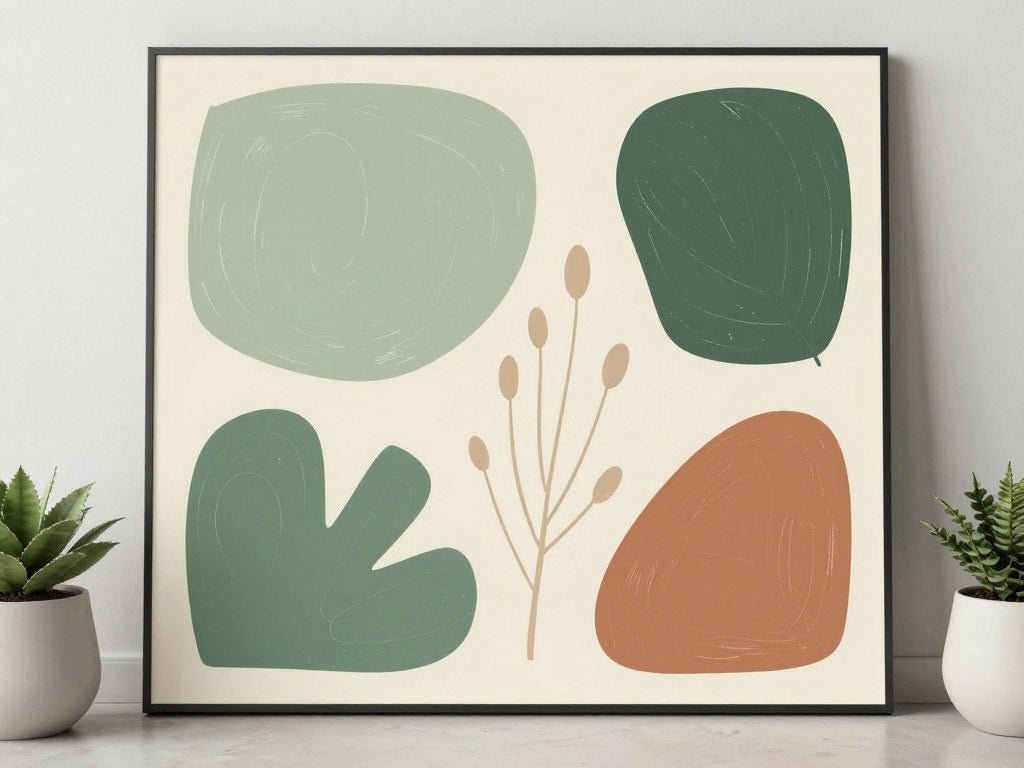
- Accent: Art featuring botanical themes, abstract landscapes, or minimalist line work in black, cream, or forest green
- Materials: Light to medium wood tones, rattan accents, natural fiber rugs
- Lighting tip: Natural light works best; for artificial lighting, use daylight-balanced bulbs (4000K) to keep greens true
Common mistake to avoid: Too many green tones create a monotone space. Break it up with black-framed art or warm wood pieces. Check out Original Paintings for unique options that add visual interest.
Deep Velvet Blues with Warm Metallics

- Base: Navy, sapphire, or deep teal velvet sofa with brass or gold-finished legs
- Accent: Canvas prints with gold leaf details, abstract pieces featuring deep blues and warm ochre, or modern geometric art
- Materials: Brass hardware, marble surfaces, rich wood tones in walnut or mahogany
- Lighting tip: Layer ambient lighting with accent spotlights on art to make metallic details glow without overwhelming the blue tones
Common mistake to avoid: Silver or chrome finishes fight with warm metallics. Stick to one metal family throughout the room.
Minimalist Neutral: Beige, Black, and Natural Textures

- Base: Cream, beige, or warm gray sofa in linen, performance weave, or smooth upholstery
- Accent: Black-and-white photography prints, minimalist line drawings, or abstract art with high contrast
- Materials: Raw wood, stone, concrete, and natural fibers like jute and sisal
- Lighting tip: Use adjustable recessed lighting (3000K) to highlight textures without adding color temperature bias
Common mistake to avoid: All-neutral spaces can feel flat. Add texture through art, not color, to maintain the minimalist aesthetic while creating visual interest.
Jewel Tone Drama: Emerald, Plum, and Gold

- Base: Emerald green or plum-colored velvet sofa with curved silhouette
- Accent: Large-scale abstract art in complementary jewel tones, gold-framed pieces, or botanical prints with rich color saturation
- Materials: Dark stained woods, antique brass, colored glass, luxurious textiles
- Lighting tip: Install dimmer switches; jewel tones look best with controlled warm lighting (2700K-3000K) that can be adjusted for different times of day
Common mistake to avoid: Jewel tones require balance. If your sofa is bold, keep surrounding colors neutral and let one or two art pieces echo the richness.
Match This Vibe to Your Space

Once you understand which trend and palette speak to your style, the next step is finding art that delivers that exact mood. These collections are organized to make matching simple.
- Canvas Prints - Museum-quality prints in modern and abstract styles that work with every sofa trend
- Original Paintings - One-of-a-kind pieces that become focal points alongside statement sofas
- Modern Sculptures - Three-dimensional art that adds another layer of interest to your living space
- Design Blog - In-depth guides on pairing art with furniture, color theory, and interior styling tips
How to Choose Art That Actually Works With Your Sofa

The relationship between your sofa and wall art follows specific principles. Understanding these rules saves you from purchases that looked good in isolation but fail in your actual room.
Scale and Proportion Matter More Than Style

Your art should be roughly two-thirds the width of your sofa. Too small and it looks like an afterthought. Too large and it overwhelms the furniture piece you invested in.
For a standard 84-inch sofa, aim for art that spans 56-60 inches. This applies whether you use one large piece or a gallery wall arrangement. The combined width of grouped pieces should hit that two-thirds mark.
Height placement also matters. The center of your art should sit at eye level when standing, typically 57-60 inches from the floor. Above a sofa, this puts the bottom edge about 6-12 inches above the back cushions.
Match Energy Level, Not Literal Subject Matter

A curved organic sofa needs art with similar flowing energy. This does not mean you need to hang a picture of a sofa. Look for pieces with curved lines, soft edges, or fluid composition.
Conversely, a structured modular sofa with clean lines pairs well with geometric abstracts or minimalist photography. The visual language should echo each other.
Think about movement and rhythm. Active, dynamic art works with bold statement sofas. Calm, meditative pieces suit sofas designed for relaxation and comfort.
Color Temperature Cannot Be Ignored

Warm sofas demand warm art. Cool sofas demand cool art. This is the rule most people break and regret.
If your sofa has warm undertones (peachy beige, terracotta, warm gray), choose art with warm undertones (ochre, rust, warm white, gold). Cool undertones (true gray, cool beige, blue-gray) need art with cool undertones (true white, blue, green, silver).
The easiest test: Hold your art option next to your sofa fabric. If one makes the other look dingy or off, they are fighting temperature-wise. Trust your immediate gut reaction.
Texture Adds Depth When Colors Are Neutral

If you choose a neutral sofa and neutral art (smart for timeless style), texture becomes your differentiator. A flat matte print above a smooth velvet sofa creates visual boredom.
Look for canvas prints that show brushstroke texture, layered paint effects, or dimensional elements. The interplay between your sofa fabric texture and art surface texture creates interest without adding color.
This is where original paintings and textured prints outperform flat digital prints. The physical dimension catches light differently throughout the day, making the art feel alive rather than static.
Frame Choice Is Part of the Design

Black frames: Modern, versatile, work with most sofa styles, especially minimalist and contemporary pieces.
Natural wood frames: Best with organic modern sofas, earthy palettes, and mid-century designs. Match the wood tone to other wood in the room.
No frame (gallery wrap): Works with casual, relaxed interiors and performance fabric sofas where you want a laid-back vibe. The print wraps around the canvas edges.
Gold or brass frames: Pair with jewel-tone velvet sofas and spaces with warm metallic accents throughout. Avoid mixing with silver or chrome.
Rossettiart Picks for Sofa Trends 2026: What's In Style (and How to Choose Art That Works With It)

These pieces are specifically selected to complement the major sofa trends we have covered. Each solves a common design challenge when pairing art with 2026 furniture styles.
For Curved and Organic Sofas

Organic Flow Series - Terracotta Dreams - This piece mirrors the curved silhouette of organic sofas with flowing abstract forms in warm earth tones that ground the space.
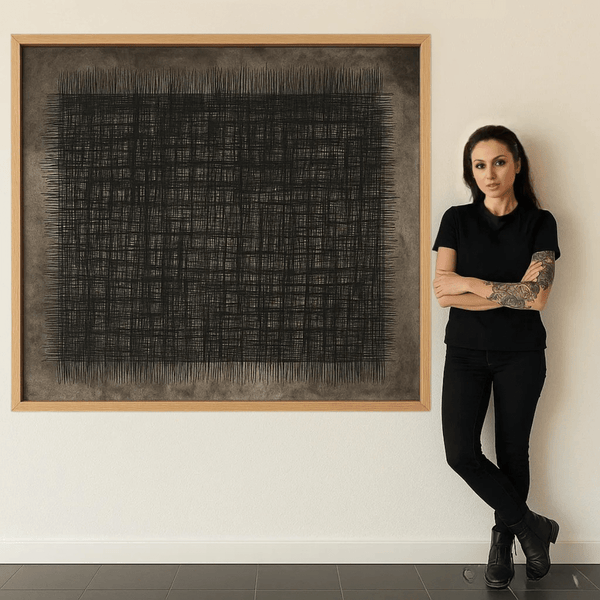
Continuous Line Collection - Minimalist line work that echoes curved furniture forms without competing, perfect for statement sofas that need subtle art support.
For Performance Fabric and Velvet Sofas

Velvet Nights Abstract - Deep jewel tones and metallic accents that complement performance velvet sofas in similar rich color families while adding a focal point above the furniture.
For Modular and Neutral Sofas

Urban Geometry in Monochrome - High-contrast black-and-white abstracts bring structure to flexible modular arrangements without locking you into a specific color scheme.

Layered Neutrals Study - Textured neutral abstracts that work with any sofa color while adding sophistication through varied surface texture rather than bold color.
For Low-Profile Modern Sofas

Horizon Line Abstracts - Wide horizontal compositions that emphasize the low profile of modern floor-level sofas and make rooms feel more spacious.
5 Styling Mistakes That Ruin the Sofa-Art Relationship

Even with the right pieces, poor execution kills the design. These are the mistakes interior designers see repeatedly in client homes.
Hanging Art Too High Above the Sofa
The gap between your sofa back and the bottom of your art should be 6-12 inches maximum. More than that and the pieces feel disconnected, like they accidentally ended up in the same room.
This is the most common mistake in online inspiration photos. People hang art at gallery height without accounting for furniture below. The relationship between pieces is visual, and distance breaks that relationship.
Choosing Multiple Competing Focal Points
If your sofa is a bold curved piece in jewel-tone velvet, your art should support it, not fight for attention. Either your furniture or your art can be the star. Both trying to dominate creates visual chaos.
In most 2026 interiors, the sofa is the focal point. Your art should enhance that choice by complementing the style, color, and mood the furniture establishes.
Ignoring the Rest of the Room
Your sofa and art do not exist in isolation. Wood tones, metal finishes, rug colors, and accent pillows all play a role. An art piece might look perfect with your sofa but clash with your existing coffee table.
Take photos of your entire room and view art options in context through digital mockups or AR apps before purchasing. The relationships between all elements matter.
Using Art That Is Too Trendy
A quality sofa lasts 10-15 years. Art should have similar longevity. Buying a super-trendy art piece that will feel dated in two years is a waste when paired with furniture you plan to keep.
Stick with pieces that feel contemporary but not of-the-moment. Abstract work, photography, and minimalist art age better than literal trendy subjects or internet-famous styles.
Forgetting About Lighting
The best sofa and perfect art still fail in bad lighting. Colors shift, textures disappear, and the entire mood changes based on your light sources.
Install picture lights or adjustable track lighting to properly illuminate your art. Use warm bulbs (2700K-3000K) for residential spaces unless you have a specific reason for cooler lighting. Test your lighting at different times of day.
Watch: How to Style Modern Sofas With the Perfect Wall Art
This video walks through real room setups, showing how professional designers pair art with trending sofa styles. You will see the decision-making process and common adjustments needed to get the relationships right.
Applying Sofa Trends Room by Room

Different rooms have different needs. A living room sofa and a home office loveseat serve different purposes and should be styled accordingly.
Living Room: Where the Sofa Is the Star

Your living room sofa typically faces the main entry point to the space. This is where curved sculptural sofas and bold performance velvets make the most sense. The art above should be substantial enough to balance the furniture's visual weight.
Go for one large statement piece rather than multiple smaller prints. The scale and simplicity create a cohesive focal point that anchors the entire room. This is where you invest in your best art.
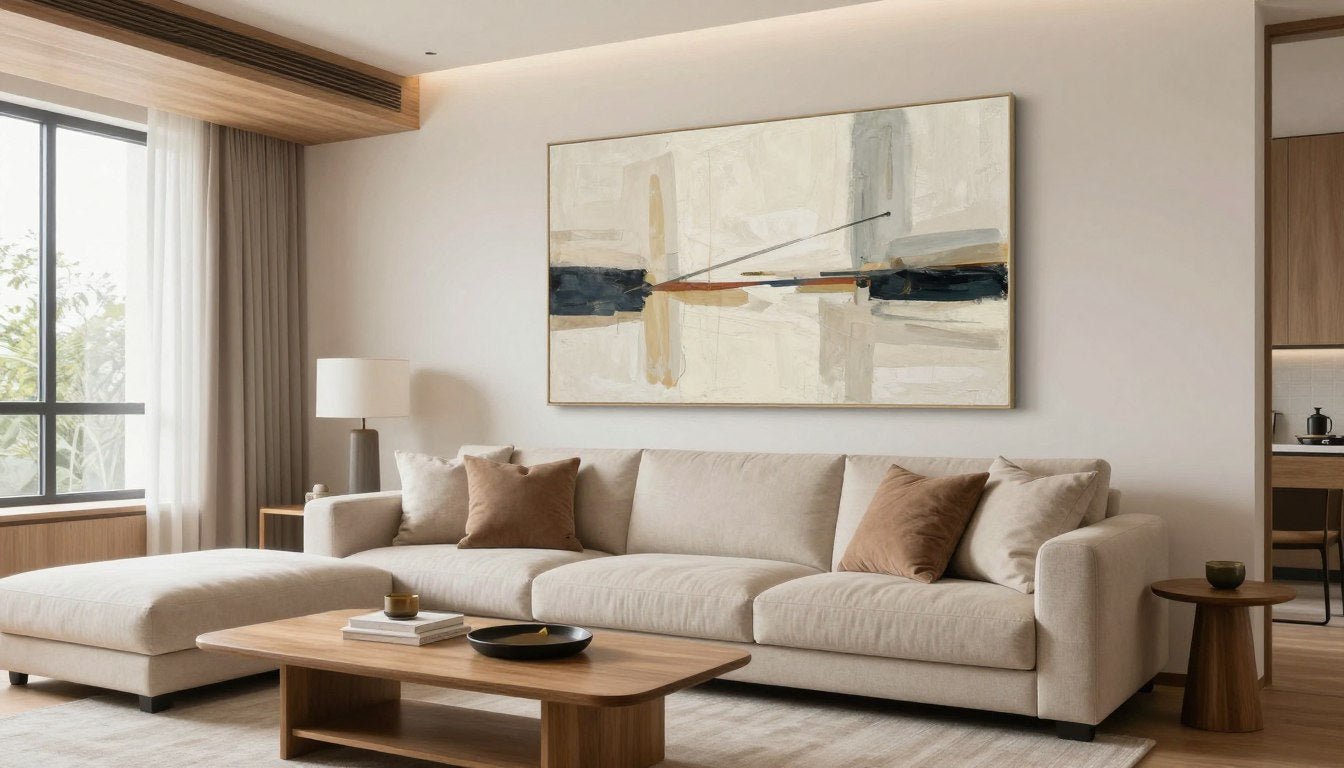
If you have a sectional, consider a horizontal piece that spans the length or a diptych/triptych arrangement that creates visual continuity across the furniture piece.
Den or Family Room: Comfort and Function

Modular sofas excel in family spaces where flexibility matters. Performance fabrics are essential here. Art can be more playful and personal than in formal living areas.
Gallery walls work well in these spaces because they accommodate personal photos mixed with canvas prints. The variety mirrors the multi-use nature of the room itself.
Lower-profile sofas paired with horizontal art make the room feel larger, which helps in smaller den spaces where comfort is prioritized over formality.
Bedroom Sitting Area: Understated and Calming

If you are adding a loveseat or small sofa to a bedroom, keep the style quiet. This is not the place for bold jewel-tone velvet. Stick with neutral performance fabrics that feel soft and inviting.
Art should be calming and understated. Abstract pieces in muted tones, minimalist photography, or subtle botanical prints work better than high-contrast or energetic compositions.
Scale down. Bedroom sitting area sofas are smaller, so your art should be proportionally smaller as well. A 36-48 inch piece is typically sufficient above a loveseat.
Home Office: Professional but Personal

Office sofas should be structured and supportive. Low-profile pieces with clean lines maintain a professional aesthetic. Avoid overly casual or oversized designs.
Art in an office should be inspiring without being distracting. Geometric abstracts, minimalist line work, or black-and-white photography maintain focus while adding visual interest during video calls.
Consider how your sofa and art appear on camera if you take work calls from this space. The background contributes to your professional image.
Investing in Sofas and Art: Where to Spend and Where to Save

A new sofa is a major purchase. Art is an investment. Understanding where your money goes furthest prevents regret and maximizes the impact of both purchases.
Spend More on the Sofa If You Must Choose
A quality sofa costs more upfront but lasts 10-15 years with proper care. Cheap sofas sag, fade, and fail within 3-5 years. The cost-per-year favors the better piece.
Performance fabrics, hardwood frames, and proper cushion construction cost more but perform better. This is furniture you sit on daily. Comfort and durability matter.
You can update art more easily than you can replace a sofa. Start with a great furniture piece and add art as budget allows rather than compromising on both.
Canvas Prints Offer Museum Quality at Accessible Prices
Original art starts at thousands of dollars for established artists. Canvas prints deliver the same visual impact at a fraction of the cost, typically $200-800 for large-format pieces.
Museum-quality printing technology means these pieces look identical to originals from normal viewing distance. The texture, color accuracy, and longevity match expensive originals.
This is where you can achieve the designer look without the designer budget. Invest in the sofa, complement it with high-quality prints, and your room will look like you spent twice what you did.
Frame Quality Matters More Than You Think
A cheap plastic frame diminishes even the best art. Budget $50-200 for proper framing or gallery-wrapped canvas that requires no frame.
Good frames use real wood or metal, have proper hanging hardware, and include UV-protective glazing if applicable. This is a one-time cost that protects your art investment.
Pre-framed options from quality art retailers save money compared to custom framing while maintaining standards. Look for ready-to-hang pieces that eliminate framing costs entirely.
Consider the Total Room Budget
A $3,000 sofa and $100 art looks unbalanced. A $1,500 sofa and $500 art creates a more cohesive high-end feel even though you spent the same total amount.
Allocate roughly 15-20% of your sofa budget to art. This creates proportional visual investment. A room where one element dominates the budget often feels unfinished.
Save money on accent pieces and accessories if needed. The sofa and art are your visual anchors. Pillows, throws, and small decor can come from budget retailers without affecting the overall impression.
How to Update Your Look With Seasons Without Replacing Everything

Your sofa and main art pieces should last years, but spaces feel stale without periodic updates. These strategies refresh your look without major purchases.
Rotate Accent Pillows and Throws

Your sofa fabric is permanent, but pillows and throws can shift with seasons. Warm textures and rich colors for fall and winter. Light linens and cool tones for spring and summer.
This is the easiest and most cost-effective way to update your space. A $200 investment in new pillows completely changes the feeling of a room without touching your major pieces.
Keep your pillow colors within the same temperature family as your sofa and art. If you chose warm-toned art to match your terracotta sofa, your seasonal pillows should also lean warm.
Add Smaller Art Pieces That Rotate

Your main art piece stays. Add smaller complementary pieces around it that you can swap seasonally. This works especially well with gallery wall arrangements.
Botanical prints for spring, abstract coastal pieces for summer, warm textured work for fall, moody photography for winter. The core design remains consistent while details shift.
Use picture ledges rather than hanging all pieces directly on the wall. This makes swapping much easier and protects walls from repeated nail holes.
Change Lighting to Shift Mood
Installing smart bulbs that allow color temperature adjustment gives you seasonal control without physical changes. Warmer light (2700K) for fall and winter. Cooler light (3500K) for spring and summer.
This subtle shift changes how your sofa fabric and art appear, creating a different mood without touching anything. The same pieces feel cozier or fresher based solely on lighting temperature.
Add floor or table lamps with fabric shades to introduce warm pools of light in winter. Remove them in summer to keep the space feeling open and airy.
Bring in Natural Elements
Branches, flowers, plants, and natural objects cost little but make significant visual impact. The specific elements change seasonally while your sofa and art remain constant.
Dried grasses and branches for fall. Fresh flowers for spring. Shells and light arrangements for summer. Evergreen and rich textures for winter. These elements interact with your fixed design to create seasonal feeling.
Place natural elements on coffee tables, side tables, and shelves rather than directly on the sofa or art. They should enhance the scene without blocking or competing with your main design pieces.
Every Rossettiart piece arrives ready to transform your space the moment you receive it. No framing hassles. No complicated installation. Just museum-quality art that pairs perfectly with the sofa trends defining 2026.
Whether you are drawn to organic curves, performance velvet, or minimalist modern designs, you will find canvas prints that enhance your furniture investment rather than fighting it.
Sustainability in Sofa and Art Choices

Environmental impact matters to homeowners making furniture and art decisions. Understanding the sustainability angle of your purchases aligns your space with your values.
Longevity Is the Most Important Factor
The most sustainable sofa is one that lasts 15 years instead of 5. Fast furniture that ends up in landfills has a far worse environmental impact than a higher-quality piece that serves you for decades.
Performance fabrics contribute to sustainability by extending sofa life. A stain-resistant, durable fabric means you keep the piece longer rather than replacing it when wear becomes visible.
The same principle applies to art. Quality canvas prints with archival inks last 100+ years without fading. Cheap posters fade and need replacement within years. Longevity equals sustainability.
Materials Matter in Sofa Construction
Look for sofas with FSC-certified wood frames, natural latex foam cushions, and fabrics made from recycled or organic fibers. Many performance fabrics now use recycled polyester from plastic bottles.
Avoid sofas with polyurethane foam, which off-gasses VOCs and breaks down quickly. Natural latex and high-resilience foam cost more but perform better and have lower environmental impact.
Transparent brands will provide information about materials and manufacturing processes. If a company will not tell you what is inside their sofa, that is usually a red flag.
Art Production and Shipping Impact
Canvas print production has lower environmental impact than traditional framed prints with glass. Less material, less weight, easier shipping all contribute to reduced carbon footprint.
Look for art companies that use water-based inks, recycled packaging, and carbon-neutral shipping options. These details add up across thousands of orders.
Buying from domestic sources reduces shipping distances. A canvas print made and shipped within your country has significantly lower impact than one shipped internationally.
Buy Less, Buy Better
The entire trend-chasing cycle of constant replacement is the enemy of sustainability. A well-chosen sofa and art collection that works for a decade beats constant updates.
This is why understanding how to pair pieces that will age well together matters. Your design choices have environmental implications beyond just the materials used.
Choose classic designs over ultra-trendy pieces. Organic modern, clean lines, and quality materials never truly go out of style. They just are or are not currently featured in magazines.
FAQ: Sofa Trends 2026: What's In Style (and How to Choose Art That Works With It)

What are the biggest sofa trends for 2026?
The biggest sofa trends for 2026 include sculptural curved designs, performance fabrics that look luxurious, warm earth-tone color palettes, modular reconfigurable systems, and low-profile floor-level seating. Curved organic shapes dominate, moving away from boxy sectionals. Performance velvet and bouclé fabrics combine durability with high-end aesthetics.
These trends reflect a broader shift toward comfort, flexibility, and natural materials in home interiors. The focus is on pieces that serve real life while maintaining design integrity.
How do I choose wall art that matches my new sofa?
Choose wall art by matching energy level and color temperature rather than literal subject matter. Your art should be roughly two-thirds the width of your sofa and hung 6-12 inches above the back cushions. Match warm-toned sofas with warm-toned art and cool-toned sofas with cool-toned art to avoid visual discord.
Consider the style energy: curved sofas pair with flowing organic art, structured sofas pair with geometric abstracts. Scale and temperature matter more than the specific subject of the artwork.
What colors are trending for living room sofas in 2026?
Trending sofa colors for 2026 include warm earth tones like terracotta, rust, warm sand, deep clay, and muted olive green. Jewel tones such as emerald, sapphire, and plum appear in velvet upholstery for statement pieces. Neutrals remain popular but have shifted from cool grays to warm beiges and creams with peachy or golden undertones.
The color shift reflects the broader move toward biophilic design that incorporates nature-inspired palettes. Cool tones are falling out of favor as homeowners seek warmth and grounding in their spaces.
Are curved sofas just a passing trend or worth the investment?
Curved sofas have roots in mid-century modern design and have cycled in and out of popularity for decades, which suggests staying power beyond a momentary trend. The current iteration combines classic curved forms with modern performance fabrics and comfort engineering. If you love the aesthetic, it is worth the investment as long as you choose quality construction.
The key is selecting a piece with clean lines and avoiding ultra-trendy details that will date quickly. A well-made curved sofa in a neutral or warm earth tone will remain stylish for 10-15 years.
What is performance fabric and is it worth paying more for?
Performance fabric is upholstery material engineered to resist stains, moisture, fading, and wear while maintaining a soft, natural appearance. Modern performance fabrics like treated velvet and bouclé look and feel like traditional luxury materials but clean easily and last significantly longer. For homes with kids, pets, or heavy use, performance fabric is absolutely worth the upcharge.
The technology has advanced dramatically in recent years. You are no longer choosing between durability and aesthetics. High-quality performance fabrics deliver both, making them a smart long-term investment.
For more design guidance on creating cohesive interiors, check out the Rossettiart Design Blog for in-depth styling tips.
How large should my wall art be above my sofa?
Your wall art should be approximately two-thirds the width of your sofa. For an 84-inch sofa, aim for art that spans 56-60 inches, whether as a single large piece or a gallery wall arrangement. The bottom of the art should sit 6-12 inches above the back of the sofa, with the center at standing eye level (57-60 inches from the floor).
Too small and the art looks insignificant; too large and it overwhelms the furniture. Proper scale creates visual balance and makes both the sofa and art feel intentional rather than accidental.
Should my sofa and art match exactly in color?
Your sofa and art should not match exactly in color, which creates a flat, uninspired look. Instead, they should share color temperature (both warm or both cool) and complementary tones. If your sofa is terracotta, your art might include terracotta but should also introduce cream, warm white, or deeper clay shades for visual interest.
Think of color relationships rather than color matching. Analogous colors (neighbors on the color wheel) or complementary colors (opposites on the wheel) create more dynamic and professional-looking spaces than exact matches.
What mistakes should I avoid when pairing art with a new sofa?
Avoid hanging art too high above the sofa (keep the gap to 6-12 inches), choosing art that is too small (aim for two-thirds the sofa width), mixing warm and cool color temperatures, creating competing focal points, and ignoring proper lighting. These mistakes break the visual relationship between furniture and art, making even quality pieces look wrong together.
Also avoid ultra-trendy art that will date quickly when paired with a sofa you plan to keep for a decade. Choose pieces with staying power that will age gracefully alongside your furniture investment.
Can I mix different art styles above my sofa?
You can mix art styles in a gallery wall arrangement above your sofa, but they should share a unifying element such as color palette, frame style, or visual weight. Mixing abstract prints with photography works if they share similar tones and framing. The key is creating intentional variety rather than random collection.
For beginners, sticking with a single large statement piece is safer than attempting a mixed gallery wall. Once you understand your space, you can add complexity through multiple pieces with shared design DNA.
Are modular sofas worth it for small spaces?
Modular sofas are excellent for small spaces because they adapt to changing needs without requiring new furniture purchases. You can reconfigure sections for different occasions, separate pieces to create more floor space, or rearrange when you move to a new home. The flexibility justifies the typically higher cost for people who value adaptability.
Look for modular systems with quality connectors that hold sections securely together. Cheap modular sofas that constantly separate become frustrating rather than functional. Invest in a quality system that will serve you through multiple living situations.
Final Thoughts on Sofa Trends and Art Pairing

The sofa trends of 2026 give you more options for comfort and style than ever before. Curved organic shapes, performance fabrics, warm earth tones, modular flexibility, and low-profile designs all serve different needs and aesthetics. The right choice depends on your lifestyle, space, and personal taste.
Pairing these trending sofas with appropriate wall art is not complicated once you understand the basic principles. Match energy and color temperature. Scale art to two-thirds your sofa width. Hang pieces 6-12 inches above the furniture. Choose pieces that will age well alongside your investment furniture. These rules work regardless of which specific trend you choose.
The relationship between your sofa and art defines your living space more than any other design decision. Get these two elements right, and the rest of the room falls into place easily. Compromise on either, and you will spend years trying to make a space feel cohesive.
Start with the sofa style that fits your life. Then find art that enhances rather than fights that choice. The result is a room that feels intentional, sophisticated, and uniquely yours.

About the Author
Chiara Rossetti
Chiara Rossetti is the founder of Rossetti Art, a canvas print and original art brand. She writes about interior design, wall art styling, and the art of making a home feel alive.

Leave a comment
This site is protected by hCaptcha and the hCaptcha Privacy Policy and Terms of Service apply.