
Creating a dedicated reading corner doesn't require vast amounts of space or complicated design skills. With a thoughtful approach and a simple framework, you can transform even the smallest nook into a purposeful retreat that looks intentionally designed rather than accidentally assembled.
TL;DR: Creating Your Perfect Reading Corner
- Choose your corner type: window seat, empty wall, bedroom edge, or hallway niche
- Establish the "comfort triangle": comfortable chair + proper lighting + accessible landing surface
- Add one soft layer (rug or throw) for warmth and improved acoustics
- Include a vertical anchor (wall art, not mirrors) to define the space
- Install warm task lighting with an adjustable shade to prevent page shadows
- Incorporate hidden storage (basket or slim shelf) to keep clutter at bay
- Create a 60-second reset routine to maintain the inviting atmosphere
- For renters: use damage-free hanging methods for wall art
Choose Your Reading Corner Type (Fast Decisions)
The first step to creating your perfect reading nook is identifying which type of corner will work best in your space. Each option offers unique advantages and requires slightly different approaches.

Window Corner (Daylight + Glare Control)
Window corners offer natural light—ideal for daytime reading. Position your chair at a 45-degree angle to the window to minimize glare while maximizing light. Add sheer curtains (90-120 cm width) to diffuse harsh sunlight. This corner type works beautifully in living rooms and kitchens where natural light creates an inviting atmosphere.
Empty Wall Corner (Best for Art Focal Point)
An empty wall corner provides a blank canvas for creating a dedicated reading space. This option gives you the most flexibility for furniture placement and is perfect for showcasing a statement piece of wall art. Aim for at least 100 cm (39 inches) of wall space to accommodate a chair and small table without feeling cramped.
Bedroom Reading Nook (Calm Palette)
Bedroom reading nooks benefit from a calming colour palette that promotes relaxation. Choose a corner away from your bed to create psychological separation between sleeping and reading spaces. This approach works especially well in master bedrooms or guest rooms where a quiet retreat enhances the room's functionality.
Hallway/Niche Corner (Slim Furniture + Vertical Art)
Hallway niches and awkward corners can be transformed into charming reading spots with the right approach. Opt for slim-profile furniture (under 70 cm/28 inches wide) and emphasize vertical elements to draw the eye upward. These spaces work best with wall-mounted lighting to avoid taking up precious floor space.
Reading Corner Blueprint
Use this handy reference table to quickly identify the best components for your specific reading corner type.
| Corner Type | Best Chair Style | Best Lighting | Best Landing Surface | Best Storage | Best Wall Art Format | Biggest Mistake to Avoid |
| Window Corner | Swivel armchair | Adjustable floor lamp | C-shaped side table | Under-window bench | Single large piece adjacent to window | Blocking natural light with tall furniture |
| Empty Wall Corner | Wingback chair | Wall sconce + table lamp | Round side table | Slim bookcase | Diptych or triptych above chair | Overcrowding with too many furniture pieces |
| Bedroom Nook | Upholstered slipper chair | Clip-on reading light | Floating shelf | Under-bed baskets | Mini gallery wall (3-4 pieces) | Using stimulating colours instead of calming ones |
| Hallway/Niche | Armless accent chair | Wall-mounted reading lamp | Wall-mounted drop leaf | Vertical floating shelves | Vertical portrait format | Using bulky furniture that blocks passage |
The Cozy Nook Checklist
Use this 10-point checklist to ensure your reading corner has all the essential elements for maximum comfort and functionality.
The Cozy Nook Checklist
- Supportive seat with proper back height (at least 80 cm/31 inches tall)
- Footrest or ottoman for extended comfort
- Warm-toned task lamp positioned to avoid page shadows
- Reachable surface for drinks and books (within 30-45 cm/12-18 inches)
- One soft layer (throw blanket, cushion, or small rug)
- One sensory element (scented candle or small plant)
- Visual anchor on wall (art, not mirror)
- Concealed book storage (basket or slim shelf)
- Hidden cable management for lamps and chargers
- 60-second reset routine (folding throw, straightening cushions)

The Comfort Triangle (Chair + Light + Landing Spot)
The foundation of any successful reading corner is what designers call the "comfort triangle"—the relationship between your seating, lighting, and landing surface. Getting this right makes the difference between a space you'll actually use and one that looks nice but remains unused.

For optimal chair support, look for a seat depth of 55-65 cm (22-26 inches) and a back height of at least 80 cm (31 inches). Your landing surface should sit 5-8 cm (2-3 inches) above your chair's armrest for easy reach without straining. Position your primary reading light 30-45 cm (12-18 inches) behind and to the side of your dominant shoulder to prevent casting shadows on your book.
The most common mistake is placing these elements too far apart. Your hand should naturally reach your drink or book without leaning, and your light should illuminate your pages without you needing to adjust your position.
Lighting for Reading (Without Ruining the Mood)
Proper lighting makes or breaks a reading corner. The goal is to balance task lighting for reading with ambient lighting for atmosphere.
Warm vs. Cool Light
For reading corners, choose warm light (2700-3000K) rather than cool light (4000K+). Warm light creates a cozy atmosphere and causes less eye strain during extended reading sessions. Look for bulbs labeled "warm white" rather than "daylight" or "cool white."
Glare Prevention Tips
- Position lamps to illuminate pages from behind your shoulder
- Choose lampshades that direct light downward
- Avoid placing your chair directly under ceiling lights
- Use matte-finish surfaces for your reading materials

Layered Lighting Approach
The best reading corners incorporate two lighting types: task lighting for reading and ambient lighting for atmosphere. A dimmable table or floor lamp with an adjustable arm provides focused light for reading, while a small accent light or candle adds warmth and depth to the space.
For renters or those without access to electrical outlets, consider rechargeable LED reading lamps or battery-operated puck lights that can be mounted without wiring. These provide flexibility while maintaining proper illumination.
Wall Art That Makes a Reading Corner Feel Finished
Wall art serves as the vertical anchor that defines your reading corner and elevates it from functional to intentional. The right piece creates visual interest and helps establish the mood of your reading space.

The 2/3 Rule
When selecting art for your reading corner, follow the 2/3 rule for proper proportions. Your artwork should be approximately two-thirds the width of the furniture below it. For a standard reading chair (75-90 cm/30-35 inches wide), look for art that's 50-60 cm (20-24 inches) wide.
Height + Spacing Rules
Hang your art with its center at eye level when standing (approximately 150-160 cm/59-63 inches from the floor). When placing art above a chair, maintain 20-30 cm (8-12 inches) of space between the top of the chair and the bottom of the frame. This creates visual breathing room while maintaining connection between the elements.
For more detailed guidance on selecting the right size, check out our ultimate guide to art print sizes.
3 Art Moods for Reading Corners
Calm Minimal
Abstract pieces with simple lines and limited color palettes create a distraction-free environment that promotes focus. Look for pieces with plenty of negative space and subtle textures.
Blue-Toned Nature
Blue landscapes and nature scenes have been shown to reduce stress and promote concentration. The blue tones create a sense of tranquility perfect for immersive reading.
Monochrome Focus
Black and white photography or sketches add sophistication without competing for attention. These pieces create visual interest without distracting from your reading experience.
Storage That Doesn't Ruin the Calm
Effective storage solutions keep your reading corner functional without sacrificing aesthetics. The key is to prioritize hidden storage that maintains visual calm while keeping essentials within reach.

Follow these principles for clutter-free reading corners:
- Baskets over piles: Use a small basket (30-40 cm/12-16 inches wide) beside your chair to store current reading materials rather than creating stacks on surfaces
- Floating shelves: Install a single floating shelf 30-45 cm (12-18 inches) above your side table to create vertical storage without visual weight
- Slim bookcases: If space allows, choose a bookcase no more than 40 cm (16 inches) deep to maintain floor space while providing ample storage
- One-surface rule: Keep only one item (besides a lamp) on your side table at any time—typically your current book or a drink
For small spaces, consider dual-purpose furniture like ottomans with hidden storage or side tables with built-in shelving. These maximize functionality without increasing your corner's footprint.
Renter-Friendly Reading Corner (No Damage)
Creating a beautiful reading corner doesn't require permanent modifications to your rental property. These renter-friendly solutions deliver style without sacrificing your security deposit.
Renter-Friendly Reading Corner Tips
- Use removable hooks or adhesive strips to hang canvas prints without nails
- Opt for floor lamps instead of wall-mounted lighting fixtures
- Choose freestanding bookcases that lean against walls without requiring attachment
- Use tension rods to hang lightweight curtains for privacy or light control
- Place a small area rug (120x180 cm/4x6 feet) to define your space without modifying flooring
- Invest in furniture risers to adjust heights of existing pieces for better ergonomics

Optional: Make It a Mini Gallery Wall
For those who want to add more personality to their reading corner, a mini gallery wall creates visual interest without overwhelming the space. This approach works particularly well in bedroom reading nooks or larger corner setups.

When creating a mini gallery wall for your reading corner, limit yourself to 3-4 pieces in a cohesive color palette. Maintain 5-8 cm (2-3 inches) of space between frames for visual breathing room. Before hanging, test your layout by tracing each frame onto kraft paper and taping the templates to your wall.
For detailed instructions on creating balanced gallery walls, check out our guide on how to mix and match art prints for a stunning gallery wall.
Rossetti Art Picks (Soft Inspiration)
The right wall art transforms your reading corner from functional to inspirational. Here are four canvas print options that perfectly complement different reading nook styles.
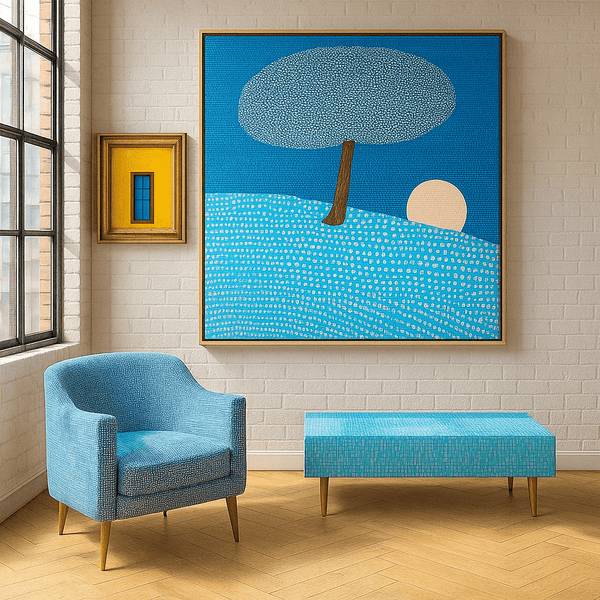
Blue Calm
Our Moonrise Tree canvas print features soothing blue tones that create a tranquil backdrop for your reading sessions. The minimalist tree silhouette adds just enough visual interest without competing for attention.
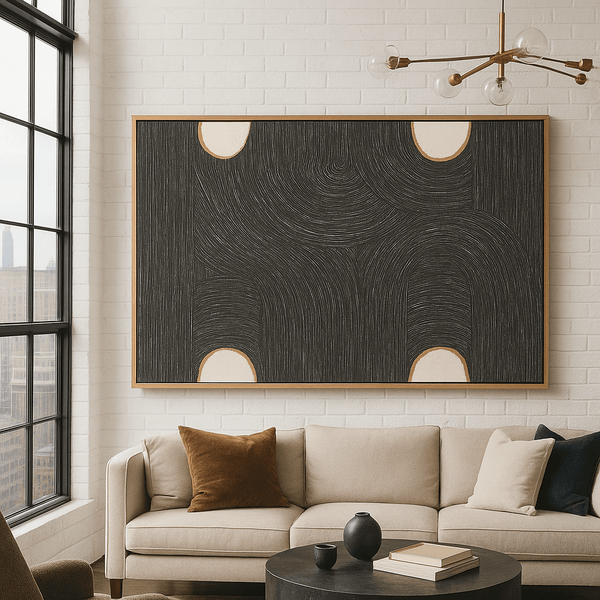
Neutral Modern
The Modern Abstract Arches canvas print offers sophisticated lines and neutral tones that complement any reading corner style. Its balanced composition creates visual harmony without overwhelming your space.
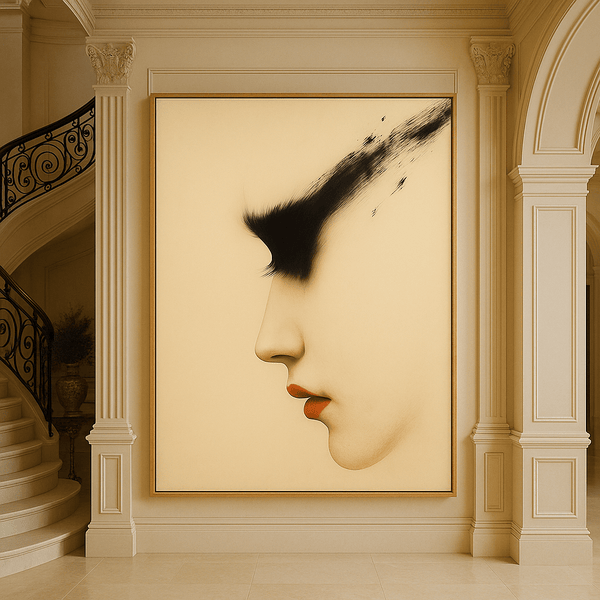
Quiet Portrait
Our Whispered Profile canvas print brings a contemplative energy to your reading nook. The minimalist portrait creates an intimate atmosphere perfect for getting lost in a good book.
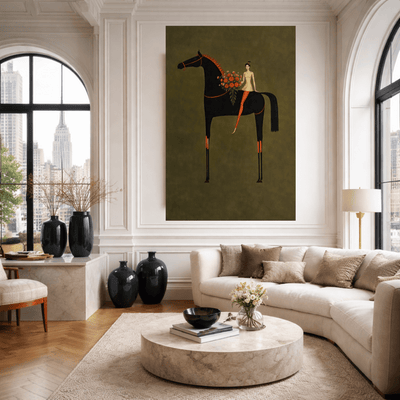
Playful
For a reading corner with personality, explore our Animals & Whimsical Canvas Prints collection. These playful pieces add character and joy to your reading space, making it uniquely yours.
Find Your Perfect Reading Corner Art
Discover more canvas prints that will transform your reading nook from ordinary to extraordinary.
Explore Canvas Prints CollectionFrequently Asked Questions
How do I make a reading corner in a small living room?
In small living rooms, choose a corner away from high-traffic areas and use space-efficient furniture. A compact armchair (75-85 cm/30-33 inches wide) paired with a C-shaped side table that slides under the chair arm maximizes space. Wall-mounted lighting eliminates the need for floor lamps, and vertical storage keeps books organized without consuming floor space.
What's the best lighting for a reading nook?
The best reading light combines proper positioning and colour temperature. Choose a lamp that directs light over your shoulder onto your book (not behind or directly overhead). Opt for warm light (2700-3000K) rather than cool light to reduce eye strain. Adjustable arms allow you to direct light precisely where needed as your position changes.
What size artwork should I hang above a reading chair?
Follow the 2/3 rule: your artwork should be approximately two-thirds the width of your reading chair. For a standard armchair (75-90 cm/30-35 inches wide), choose art that's 50-60 cm (20-24 inches) wide. Hang the piece with its center at eye level when seated (approximately 120-130 cm/47-51 inches from the floor when in your reading chair).
Is a mirror or art better in a reading nook?
Art is generally better than mirrors for reading corners. Mirrors can create distracting reflections and glare while reading, particularly in corners with windows. Art creates a focal point that defines your space and contributes to the mood without the potential for distractions. If you want to make your space feel larger, position a mirror on an adjacent wall rather than directly in your reading area.
How can renters create a reading nook without drilling?
Renters can create damage-free reading corners by using removable adhesive hooks or strips to hang lightweight canvas art, freestanding floor lamps instead of wall sconces, tension rod curtains for privacy, and freestanding bookcases that lean against walls. Area rugs define the space without modifying flooring, and furniture arrangements can create natural divisions without permanent changes.
What are the best colours for a calming reading space?
For a calming reading corner, choose a palette dominated by cool blues, soft greens, or neutral tones. Blue promotes concentration and tranquility, while soft greens connect to nature and reduce eye strain. Neutrals (warm whites, soft greys, and taupes) create a timeless backdrop that won't compete with your reading material. Limit your palette to 2-3 colours for visual cohesion.
Do I need a bookshelf for a reading corner?
A full bookshelf isn't necessary for a successful reading corner. Instead, focus on storage for your current reading material and perhaps 5-10 books you plan to read next. A small basket, floating shelf, or the drawer in your side table can provide sufficient storage without overwhelming your space. This approach keeps your corner feeling intentional rather than cluttered.
Creating Your Perfect Reading Corner
A well-designed reading corner combines the essential comfort triangle (chair + light + landing surface) with a visual anchor that defines the space. By following the framework outlined in this guide, you can create a purposeful retreat that enhances your reading experience and elevates your home's design.
Remember that the perfect reading corner reflects your personal style while maintaining functionality. Whether you choose a calming blue landscape or a sophisticated abstract piece as your visual anchor, the right wall art transforms your reading nook from ordinary to extraordinary.
Ready to complete your reading corner with the perfect canvas print? Explore our collection to find the piece that speaks to you.

About the Author
Chiara Rossetti
Chiara Rossetti is the founder of Rossetti Art, a canvas print and original art brand. She writes about interior design, wall art styling, and the art of making a home feel alive.


Leave a comment
This site is protected by hCaptcha and the hCaptcha Privacy Policy and Terms of Service apply.