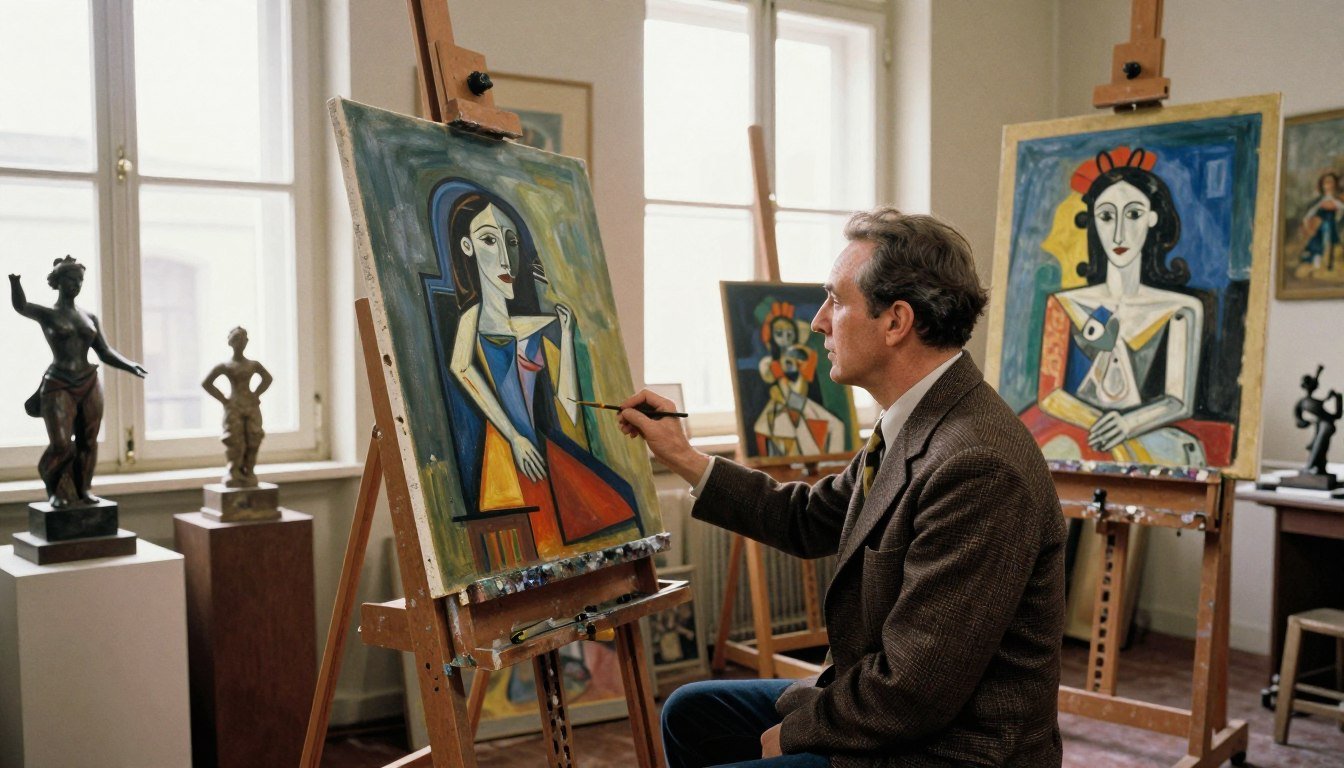

Pablo Picasso remains one of the most influential artists in history. His revolutionary approach to art transformed how the world sees and creates visual expression. Throughout his long career, Picasso produced thousands of works that challenged conventions and redefined modern art.
This comprehensive guide explores the evolution of Picasso paintings across his major periods. You will discover the stories behind his most famous works. You will understand the techniques that made him a master.
From the melancholic tones of his Blue Period to the geometric innovations of Cubism, Picasso's journey reveals constant reinvention. His ability to master multiple styles while maintaining a distinctive voice set him apart from other artists of the 20th century.
Discover Artistic Excellence
Explore curated collections inspired by the masters who revolutionized visual expression and brought new perspectives to the art world.
The Early Years: Foundation of a Master Artist

Pablo Picasso was born in 1881 in Málaga, Spain. His father, José Ruiz Blasco, worked as an art teacher and painter. This early exposure to artistic techniques shaped Picasso's foundation in traditional methods.
By age seven, Picasso received formal training from his father. He quickly demonstrated exceptional talent that surpassed typical childhood abilities. His early drawings showed remarkable understanding of form and composition.
The young artist entered the Royal Academy of San Fernando in Madrid at just sixteen years old. However, he found the traditional academic instruction limiting. Picasso began exploring museums and studying the works of El Greco, Diego Velázquez, and Francisco Goya.

These formative years in Spain provided Picasso with technical mastery. He learned to draw with precision and paint with confidence. This classical foundation would later allow him to break rules with purpose and intention.
In 1900, Picasso made his first trip to Paris. The vibrant art scene captivated him immediately. He encountered the works of Henri de Toulouse-Lautrec, Edgar Degas, and Paul Gauguin. These encounters would transform his artistic vision forever.
The Blue Period: Emotional Depth and Human Suffering

Between 1901 and 1904, Picasso entered what art historians call the Blue Period. This phase emerged after the tragic suicide of his close friend Carlos Casagemas. The loss profoundly affected the young artist's emotional state and creative output.
During the Blue Period, Picasso paintings featured predominantly blue and blue-green hues. These somber colors reflected themes of poverty, isolation, and despair. The artist focused on marginalized subjects including beggars, prostitutes, and the elderly.
One of the most celebrated works from this time is "The Old Guitarist." The painting depicts an elderly, blind man clutching a guitar. His elongated body creates a sense of fragility and vulnerability. The monochromatic blue palette intensifies the emotional weight.

"La Vie" represents another masterwork from this period. The painting explores themes of life, death, and human relationships. Picasso used symbolic imagery to convey complex emotional narratives that transcended simple representation.
The Blue Period demonstrated Picasso's ability to convey profound emotion through color and form. His subjects possessed dignity despite their circumstances. This period established his reputation as an artist of serious contemplation and social awareness.
Today, collectors and enthusiasts appreciate how Picasso captured human vulnerability during this time. The emotional resonance of these works continues to move viewers. Those drawn to expressive portraiture can explore similar depth in contemporary figurative portrait canvas prints that honor this tradition of emotional storytelling.
Experience Emotional Artistry
Discover figurative works that capture the depth of human emotion and expression, inspired by the masterful portraiture traditions of the great painters.
The Rose Period: Warmth and Circus Life

Around 1904, Picasso's palette shifted dramatically. The oppressive blues gave way to warmer tones of pink, rose, and orange. This transition marked the beginning of the Rose Period, which lasted until 1906.
The change coincided with improvements in Picasso's personal life. He met Fernande Olivier, who became his lover and muse. His financial situation improved slightly. The artist moved to the Bateau-Lavoir in Montmartre, joining a community of creative individuals.
During the Rose Period, circus performers became frequent subjects. Harlequins, acrobats, and saltimbanques populated his canvases. These figures represented a bohemian lifestyle that Picasso found appealing and romantic.

"Family of Saltimbanques" exemplifies this period's characteristics. The large canvas depicts six circus figures in a barren landscape. Despite their colorful profession, the performers appear isolated and contemplative. Picasso balanced warmth in color with underlying melancholy in mood.
"Boy with a Pipe" became one of the most valuable Picasso paintings ever sold. The portrait shows a young Parisian boy holding a pipe and wearing a garland of roses. The work combines tenderness with a hint of world-weariness.

The Rose Period revealed Picasso's expanding emotional range. While still exploring human vulnerability, he introduced warmth and gentleness. The figures in these works possessed quiet dignity and grace.
Art collectors value Rose Period works for their accessible beauty and emotional subtlety. The warm palette and humanistic subjects make these paintings particularly beloved. Contemporary artists continue to draw inspiration from this approach to color and subject matter, as seen in modern original figurative portrait paintings that emphasize warmth and human connection.
Cubism: Shattering Visual Reality

In 1907, Picasso created "Les Demoiselles d'Avignon." This shocking work represented a radical break from traditional representation. The painting depicted five female figures with angular, fragmented forms that defied conventional perspective.
This masterpiece marked the birth of Cubism. Picasso, working alongside Georges Braque, developed a revolutionary approach to visual representation. They rejected single-point perspective that had dominated Western art since the Renaissance.
Cubism fractured objects into geometric shapes. Multiple viewpoints appeared simultaneously on the canvas. A face might show both profile and frontal views at once. This approach challenged viewers to see reality in entirely new ways.

Art historians divide Cubism into two phases. Analytical Cubism (1908-1912) broke subjects into fragments and analyzed them from multiple angles. The palette remained limited to browns, grays, and blacks. Forms became so abstracted that subjects were sometimes barely recognizable.
Synthetic Cubism (1912-1914) introduced brighter colors and simpler shapes. Picasso and Braque began incorporating collage elements. They pasted newspaper clippings, fabric, and wallpaper onto canvases. This innovation expanded the definition of what painting could be.

"Ma Jolie" from 1911-1912 demonstrates Analytical Cubism at its peak. The painting fragments a figure and guitar into geometric planes. Musical notations and the words "Ma Jolie" appear within the composition, adding textual elements to visual abstraction.
The Cubist revolution influenced countless artists across the 20th century. It opened doors for abstract art and changed how artists approached representation. The movement's emphasis on geometric forms and multiple perspectives continues to inspire contemporary creators.
Those fascinated by Cubism's geometric innovations can explore similar visual languages in modern abstract geometric canvas prints that carry forward this revolutionary approach to form and space.
Explore Art Collections by Style

Abstract Geometric Works
Discover contemporary pieces that capture the revolutionary spirit of Cubist innovation through bold geometric forms and dynamic compositions.

Figurative Portrait Art
Explore portraits that honor the tradition of emotional storytelling through human form, capturing the depth that defined Picasso's figurative periods.

Original Abstract Paintings
Acquire unique original works that embody the experimental spirit and artistic freedom that characterized the modern art movement's greatest innovators.
Surrealism and Later Experimentation

After Cubism, Picasso continued evolving. In the 1920s and 1930s, he explored Surrealism. This movement emphasized dreams, the unconscious mind, and irrational imagery. Picasso incorporated surrealist elements while maintaining his distinctive visual language.
"Guernica" stands as Picasso's most powerful political statement. Created in 1937, the massive mural responded to the bombing of the Basque town during the Spanish Civil War. The painting depicts the horror of violence through fragmented, anguished figures in stark black, white, and gray.
The work combines Cubist fragmentation with surrealist symbolism. A bull, a wounded horse, and screaming figures fill the chaotic composition. "Guernica" transformed Picasso's experimental techniques into a universal cry against the brutality of war.

During this period, Picasso also created "The Weeping Woman" series. These paintings portrayed Dora Maar, his lover and muse. The distorted, fractured faces expressed intense grief and emotional pain. The bright colors contrasted sharply with the anguished subject matter.
In his later years, Picasso remained extraordinarily productive. He revisited and reinterpreted works by old masters like Diego Velázquez and Édouard Manet. These late paintings demonstrated his continued engagement with art history and his refusal to settle into a single style.

Even in his eighties, Picasso produced work with remarkable energy and invention. His late paintings showed increasing freedom and spontaneity. Critics sometimes dismissed these works, but later generations recognized their boldness and vitality.
The artist worked in ceramics, sculpture, printmaking, and other media throughout his life. This versatility demonstrated that his creative vision extended beyond painting. Each medium offered new possibilities for expression and experimentation.
Techniques and Innovations That Defined His Work

Picasso's technical mastery enabled his revolutionary innovations. He possessed exceptional drawing skills from early training. This foundation allowed him to deconstruct forms with confidence and purpose.
One signature technique involved simultaneous perspective. Picasso showed objects from multiple viewpoints within a single image. A guitar might display its front, back, and sides all at once. This approach revolutionized spatial representation in art.
The artist pioneered collage as a fine art technique. During Synthetic Cubism, he incorporated newspaper, wallpaper, and other materials directly onto canvases. This innovation blurred boundaries between painting and sculpture, between high art and everyday materials.

Picasso also excelled at monotype and linocut printmaking. He approached these media with the same experimental spirit as painting. His prints demonstrated that technical virtuosity could coexist with radical innovation.
His use of color evolved dramatically across different periods. The Blue Period's monochromatic sadness gave way to the Rose Period's warmth. Cubism employed muted earth tones. Later works exploded with vibrant, sometimes jarring color combinations.
Line quality varied from precise academic drawing to gestural spontaneity. Picasso could render forms with photographic accuracy or reduce them to simple, powerful contours. This range made his work endlessly varied and unpredictable.

The artist's sculptural work demonstrated three-dimensional thinking. His assemblages transformed found objects into art. A bicycle seat and handlebars became a bull's head. This conceptual playfulness influenced generations of sculptors.
Contemporary artists and collectors recognize that Picasso's technical innovations opened new creative possibilities. Those seeking to own works that embody similar experimental spirit can explore original abstract paintings that push boundaries and challenge conventional representation.
For Serious Collectors
Discover museum-quality original paintings that embody the innovative spirit and technical excellence of the modern masters who transformed visual art.
Most Iconic Picasso Paintings and Their Impact

Several Picasso paintings have achieved iconic status in art history. These works transcended their time to become cultural touchstones recognized worldwide.
"Les Demoiselles d'Avignon" (1907) ranks among the most revolutionary paintings ever created. The work shattered conventions of representation and beauty. Its impact on subsequent art cannot be overstated. This single painting launched Cubism and changed the course of 20th century art.
"Guernica" (1937) stands as the most powerful anti-war artwork of the modern era. The monumental painting protests the horrors of conflict through visceral imagery. It has appeared in countless reproductions and remains relevant as a statement against violence and oppression.

"The Old Guitarist" (1903-1904) represents the Blue Period at its most emotionally resonant. The painting captures human dignity in the face of poverty and age. Its elongated forms and monochromatic palette create unforgettable visual poetry.
"The Weeping Woman" (1937) distills human anguish into fractured, colorful planes. The painting demonstrates how Cubist fragmentation can intensify emotional expression rather than diminish it. The work remains one of the most powerful portraits of grief in art history.
"Boy with a Pipe" (1905) exemplifies the Rose Period's tender approach. When it sold at auction in 2004 for over $104 million, it set records and demonstrated the enduring market value of Picasso's work.

"Three Musicians" (1921) showcases Synthetic Cubism's mature phase. The large, flat, geometric figures demonstrate how Picasso simplified and brightened his Cubist vocabulary. The painting possesses decorative beauty while maintaining conceptual depth.
Each of these masterworks contributed to Picasso's legendary status. They demonstrated his range, technical skill, and ability to create images that resonate across cultures and generations. Museums worldwide treasure these paintings as highlights of their collections.
Influence on Modern Art and Contemporary Artists

Pablo Picasso's influence on modern art remains immeasurable. He fundamentally altered how artists think about representation, form, and the purpose of art itself. His work opened doors that subsequent generations continue exploring.
Cubism influenced countless movements including Futurism, Constructivism, and Abstract Expressionism. Artists as diverse as Jackson Pollock, Willem de Kooning, and David Hockney acknowledged Picasso's impact on their work. His legacy extends across styles and ideologies.
The concept that artists should constantly evolve came directly from Picasso's example. He never settled into comfortable repetition. Instead, he pursued new directions with remarkable courage. This restless innovation became a model for serious artists worldwide.

Picasso demonstrated that art could address political and social issues without sacrificing aesthetic quality. "Guernica" proved that avant-garde techniques could convey powerful humanistic messages. This lesson influenced socially engaged artists throughout the century.
His entrepreneurial approach to career management also set precedents. Picasso understood self-promotion, dealer relationships, and market dynamics. He showed that artists could be both creative innovators and savvy professionals.
Contemporary artists continue drawing inspiration from Picasso's periods and techniques. The Blue Period's emotional intensity influences figurative painters. Cubism's geometric abstraction appears in digital art and design. His experimental spirit pervades current art education.

Museums worldwide dedicate galleries to Picasso's work. The Musée National Picasso-Paris houses the largest collection of his pieces. Major institutions including the Museum of Modern Art in New York and the Tate Modern in London showcase his paintings prominently.
Scholars continue producing research on Picasso's life and work. New interpretations emerge as cultural contexts shift. The complexity of his output ensures ongoing scholarly interest and debate.
For art enthusiasts inspired by Picasso's revolutionary vision, modern collections offer opportunities to bring similar creative energy into personal spaces. Whether through abstract geometric canvas prints that echo Cubist innovation or figurative portrait canvas prints that capture human emotion, the spirit of artistic excellence remains accessible.
The Art Market and Value of Picasso Paintings

Picasso paintings command extraordinary prices in the art market. His works consistently rank among the most valuable paintings ever sold. This commercial success reflects both artistic merit and cultural significance.
In 2015, "Les Femmes d'Alger (Version O)" sold for $179.4 million at Christie's. This sale set records and demonstrated sustained demand for major Picasso works. Collectors view his paintings as both cultural treasures and investment assets.
The Musée National Picasso-Paris owns approximately 5,000 works spanning the artist's entire career. This collection resulted from inheritance tax payments by Picasso's heirs. The museum provides unparalleled insight into his creative evolution.

Authentication remains crucial in the Picasso market. The artist's productivity means many works circulate. Experts use provenance research, scientific analysis, and stylistic examination to verify authenticity. Reputable dealers and auction houses employ rigorous vetting processes.
Lesser-known Picasso works including prints and ceramics offer more accessible entry points for collectors. While still valuable, these pieces can cost substantially less than major paintings. They allow broader audiences to own authentic Picasso creations.
The secondary market for Picasso artwork remains robust. Major auction houses regularly feature his works. Galleries worldwide specialize in modern art including pieces from various Picasso periods. This liquidity adds to the investment appeal.

For most art lovers, owning original Picasso paintings remains financially unrealistic. However, the appreciation for his artistic vision and revolutionary approach can inspire engagement with contemporary art. Quality reproductions and prints allow wider audiences to experience his imagery.
The continued high value of Picasso's work validates his historical importance. Markets recognize and reward genuine innovation and lasting cultural impact. His commercial success demonstrates how artistic excellence translates into enduring value.
Where to See Picasso Paintings Worldwide

Art enthusiasts can experience Picasso paintings in major museums across the globe. These institutions provide opportunities to see his work in person and appreciate details impossible to capture in reproductions.
The Musée National Picasso-Paris houses the world's most comprehensive collection. Located in the historic Hôtel Salé in the Marais district, the museum displays works from every period of the artist's career. Visitors can trace his complete artistic evolution in one location.
The Museum of Modern Art (MoMA) in New York owns numerous important Picasso works including "Les Demoiselles d'Avignon." The museum's collection demonstrates his central role in the development of modern art alongside contemporaries and successors.

The Tate Modern in London features significant Picasso holdings. The museum presents his work within the broader context of 20th century art movements. Temporary exhibitions regularly explore specific aspects of his career.
Barcelona's Museu Picasso focuses on the artist's formative years and connection to Spain. The collection includes early works that show his development from childhood through young adulthood. The museum occupies five medieval palaces in the Gothic Quarter.
The Art Institute of Chicago owns "The Old Guitarist" along with other important pieces. The museum's collection spans multiple Picasso periods and demonstrates his stylistic range.

Madrid's Museo Reina Sofía permanently displays "Guernica." Seeing this monumental work in person reveals scale and detail that reproductions cannot convey. The museum provides historical context about the painting's creation and significance.
Smaller museums and private collections worldwide also hold Picasso works. The Hermitage in St. Petersburg, the Metropolitan Museum of Art in New York, and the National Gallery in Washington D.C. all feature important pieces.
Visiting these museums provides irreplaceable experiences. Standing before original Picasso paintings allows direct engagement with his vision, technique, and genius. These encounters can profoundly affect one's understanding and appreciation of art.
The Enduring Legacy of Pablo Picasso

Pablo Picasso transformed art history through relentless innovation and technical mastery. His journey from academic training to revolutionary experimentation demonstrates the power of creative courage. Each period of his work contributed unique insights and opened new possibilities.
The Blue Period revealed how color could intensify emotional expression. The Rose Period showed the beauty in life's margins. Cubism shattered and rebuilt visual reality. Later works proved that innovation need not cease with age.
Picasso's influence extends beyond museums and galleries. His vision permeates contemporary culture through design, fashion, and popular imagery. The language he developed continues shaping how we see and create.
For those who appreciate artistic excellence and revolutionary thinking, Picasso's legacy offers endless inspiration. His work reminds us that rules exist to be understood and then transcended. True innovation requires both technical skill and conceptual daring.

The continued study and exhibition of Picasso paintings ensures new generations encounter his genius. Museums preserve and present his work as cultural heritage. Scholars analyze and reinterpret his contributions. Collectors recognize and reward his achievements.
Whether through museum visits, book study, or personal collecting, engagement with Picasso's art enriches understanding of human creativity. His life demonstrates that artistic vision combined with relentless work ethic can achieve the extraordinary.
Modern art lovers need not simply admire the past. The spirit of innovation and artistic excellence that Picasso embodied continues in contemporary creators. Quality art remains accessible to those who seek it, allowing everyone to bring meaningful visual expression into their lives and spaces.
Bring Artistic Excellence Home
Explore Rossetti Art's curated collections featuring abstract geometric works, expressive figurative paintings, and museum-quality original pieces. Discover contemporary artworks that honor the legacy of innovation and creative excellence established by the masters.

About the Author
Chiara Rossetti
Chiara Rossetti is the founder of Rossetti Art, a canvas print and original art brand. She writes about interior design, wall art styling, and the art of making a home feel alive.


Leave a comment
This site is protected by hCaptcha and the hCaptcha Privacy Policy and Terms of Service apply.