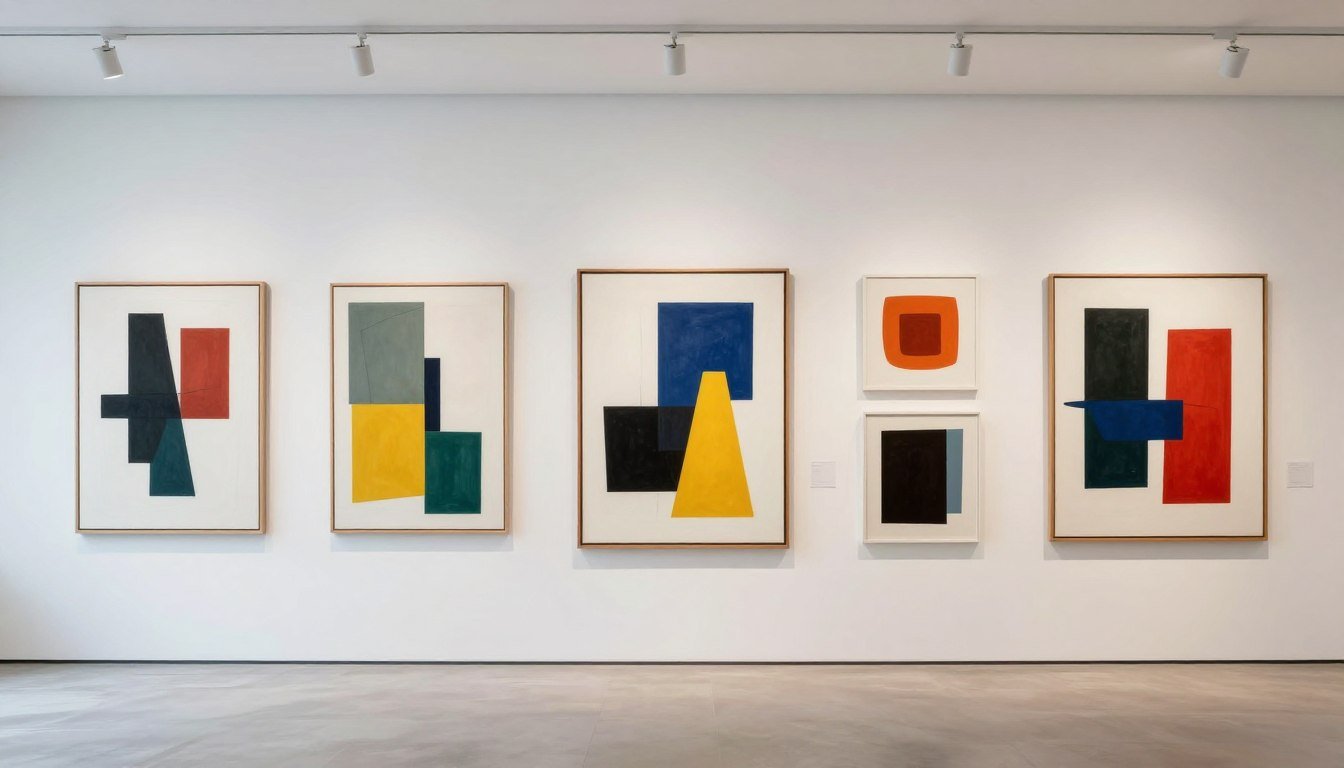
Modernist art shattered centuries of artistic tradition. Between the late 19th century and mid-20th century, artists abandoned realistic representation in favor of bold experimentation. They explored abstraction, geometric forms, and emotional expression in ways that challenged society itself.
This cultural revolution emerged as the world transformed through industrialization, urbanization, and social upheaval. Artists in movements like Cubism, Expressionism, and Abstract Expressionism rejected the idea that art should simply mirror reality. Instead, they used color, form, and composition to express inner truths about modern life.
Understanding modernist art opens a window into how creative minds responded to rapid change. From Picasso's fragmented faces to Kandinsky's color symphonies, modernism gave us visual languages that still influence contemporary culture today. This guide explores the key movements, revolutionary artists, and lasting impact of this transformative era.

The Origins of Modernism: Breaking From Tradition
Modernist art emerged at the turn of the 19th century as artists questioned everything about traditional practices. The movement responded to dramatic shifts in society, technology, and culture. As cities grew and machines replaced handwork, artists felt that old artistic forms could no longer capture modern reality.
Paul Cézanne laid early groundwork by simplifying natural forms into geometric shapes. His approach to painting landscapes and still lifes influenced countless artists. Meanwhile, the Impressionists had already challenged academic painting by working outdoors and capturing fleeting light effects.
The term "modernism" encompasses diverse artistic movements that shared common goals. Artists wanted to break free from representation and explore new visual languages. They experimented with abstraction, distortion, and non-traditional materials. This spirit of experimentation became the defining characteristic of the era.
Key Factors Driving Modernism
- Rapid industrialization changing daily life
- New technologies like photography challenging painting's role
- Scientific discoveries altering worldviews
- Social upheaval and political movements
- Growing cultural exchange between artists worldwide

Artists formed groups and issued manifestos declaring their revolutionary intentions. These movements often emerged in major cities like Paris, New York, and Berlin. Each group developed distinct styles, yet all shared the modernist impulse to make art new.


Essential Modernist Art Movements That Defined an Era
Modernist art encompasses numerous movements, each with distinct philosophies and visual styles. These movements often overlapped chronologically and influenced one another. Understanding these key groups helps decode the broader modernist project.
Cubism: Fragmenting Reality
Cubism revolutionized how artists represented three-dimensional objects on flat surfaces. Pablo Picasso and Georges Braque developed this movement in Paris around 1907. They broke objects into geometric fragments and showed multiple viewpoints simultaneously.
The movement had two phases: Analytic Cubism featured muted colors and complex fragmentation. Synthetic Cubism introduced brighter colors and collage elements. This approach influenced not just painting but sculpture, architecture, and design throughout the century.

Expressionism: Emotion Over Accuracy
Expressionist artists prioritized emotional experience over realistic representation. The movement emerged in Germany and Austria before World War I. Artists used distorted forms, intense colors, and dramatic brushwork to convey inner feelings.
Groups like Die Brücke and Der Blaue Reiter led German Expressionism. Artists such as Ernst Ludwig Kirchner and Wassily Kandinsky created works that expressed anxiety, spirituality, and psychological depth. This emotional intensity responded to the turbulent social climate of the time.
Abstract Expressionism: Pure Visual Language
Abstract Expressionism emerged in New York after World War II. This movement represented American art's rise to international prominence. Artists created large-scale works emphasizing spontaneous creation and emotional intensity.
The movement included two main approaches: action painting and color field painting. Jackson Pollock's drip paintings exemplified action painting's gestural energy. Mark Rothko's luminous color blocks represented the meditative quality of color field work. Both approaches sought to create immediate emotional impact.
Fauvism
Led by Henri Matisse, Fauvist artists used bold, non-naturalistic colors. They applied paint in flat areas, creating decorative, vibrant compositions. The movement earned its name from critics who called these artists "wild beasts."
Futurism
Italian Futurists celebrated speed, technology, and modernity. They attempted to capture movement and dynamism in static images. The movement glorified industrial society and rejected traditional Italian culture.
Suprematism
Russian artist Kazimir Malevich founded Suprematism, pursuing pure abstraction through geometric forms. His famous "Black Square" represented the ultimate simplification. The movement influenced design and architecture worldwide.
Dada: Art as Protest
The Dada movement emerged during World War I as an anti-art protest. Artists like Marcel Duchamp challenged the very definition of art. They used absurdity, randomness, and found objects to critique bourgeois society and artistic conventions.
Duchamp's "Fountain," a signed urinal, became one of art history's most influential works. Dada rejected traditional aesthetics entirely. Instead, members prioritized concept over craft, paving the way for conceptual art movements later in the century.
Surrealism: Dreams and the Unconscious
Surrealist artists explored dreams, the unconscious mind, and irrational juxtapositions. Led by André Breton, the movement drew on Freudian psychology. Salvador Dalí, René Magritte, and Max Ernst created bizarre, dreamlike imagery that challenged rational thought.
Surrealist techniques included automatic drawing and exquisite corpse collaborations. These methods aimed to bypass conscious control and access deeper creative sources. The movement influenced literature, film, and visual culture throughout the 20th century.
De Stijl and Bauhaus: Modernism Meets Design
De Stijl and Bauhaus represented modernism's expansion into architecture, furniture, and everyday objects. These movements believed good design could improve society. They pursued simplicity, functionality, and geometric purity.
De Stijl: Pure Abstraction
Dutch artist Piet Mondrian led De Stijl, which means "The Style" in Dutch. The movement restricted itself to primary colors, black, white, and gray. Artists used only vertical and horizontal lines, creating balanced, grid-based compositions.
This severe reduction aimed to express universal harmony. Mondrian believed this visual language transcended individual expression to reveal fundamental truths. His compositions influenced graphic design, architecture, and modern aesthetics broadly.

Bauhaus: Uniting Art and Craft
The Bauhaus school in Germany revolutionized design education. Founded by Walter Gropius in 1919, it trained students in both fine art and craft. The curriculum emphasized functionality, simplicity, and mass production.
Bauhaus principles shaped modern architecture and industrial design. Teachers like Kandinsky, Paul Klee, and Josef Albers developed innovative teaching methods. Though the Nazis closed the school in 1933, its influence spread globally as members emigrated.

Bauhaus Core Principles
- Form follows function in all design
- Integration of art, craft, and technology
- Rejection of ornamental decoration
- Use of industrial materials and processes
- Democratic access to good design
- Geometric simplicity and clarity
Revolutionary Artists Who Shaped Modernist Art
Individual artists drove modernism forward through their radical experiments. These pioneers questioned artistic assumptions and created entirely new visual languages. Their work continues influencing contemporary art and culture.
Pablo Picasso: Multiple Revolutions
Pablo Picasso co-founded Cubism and continuously reinvented his style. He moved through Blue Period melancholy, Rose Period warmth, Cubist fragmentation, and later surrealist experiments. His prolific output included painting, sculpture, ceramics, and printmaking.
Picasso's "Les Demoiselles d'Avignon" shocked viewers with its angular, mask-like faces. This 1907 painting broke from Western artistic tradition. Throughout his long career, Picasso proved that great artists don't repeat themselves but constantly evolve.
Wassily Kandinsky: Pioneering Abstraction
Wassily Kandinsky created some of art history's first purely abstract works. He believed colors and forms could express spiritual truths without depicting recognizable objects. His book "Concerning the Spiritual in Art" articulated these theories.
Kandinsky compared painting to music, seeking visual equivalents to musical harmony. His works progressed from impressionistic landscapes to geometric compositions to biomorphic forms. As a Bauhaus teacher, he influenced generations of artists and designers.
Marcel Duchamp: Questioning Art Itself
Marcel Duchamp challenged fundamental assumptions about what art could be. His "readymades" – ordinary manufactured objects designated as art – revolutionized artistic practice. By signing a urinal and calling it "Fountain," Duchamp argued that the artist's choice makes something art.
This conceptual approach influenced countless later movements. Duchamp showed that ideas could matter more than technical skill. His legacy extends through Pop Art, Conceptual Art, and contemporary installation practices.
Henri Matisse
Matisse led Fauvism with revolutionary color use. His cut-outs from later life reduced form to essential shapes. He sought to create art that provided visual pleasure and emotional balance.
Kazimir Malevich
Malevich founded Suprematism and created "Black Square," one of abstraction's most radical works. He believed pure geometric forms expressed spiritual reality beyond the material world.
Piet Mondrian
Mondrian reduced painting to its essential elements: primary colors, straight lines, and right angles. His grid compositions sought universal harmony and influenced modern design broadly.
Jackson Pollock: Action and Gesture
Jackson Pollock pioneered action painting by dripping and splashing paint onto canvas. His large-scale works emphasized the physical act of painting. Pollock worked on the floor, moving around the canvas in an almost choreographed process.
His approach removed traditional compositional hierarchy. Every part of the canvas received equal attention. Pollock's work represented American Abstract Expressionism at its most dynamic and influenced artists worldwide.

Frida Kahlo: Personal as Political
Frida Kahlo created intensely personal works that addressed identity, pain, and Mexican culture. Though associated with Surrealism, she rejected the label, saying she painted her reality. Her self-portraits explored themes of suffering, femininity, and national identity.
Kahlo's work gained wider recognition decades after her death. Today she stands as an icon of feminist art and cultural pride. Her unflinching self-examination and symbolic imagery continue inspiring contemporary artists.
How Modernist Art Transformed Society and Culture
Modernist art extended far beyond gallery walls to reshape broader culture. The movement's influence touched architecture, design, literature, music, and everyday life. Understanding this broader impact reveals modernism's true revolutionary nature.
Architecture and Urban Space
Modernist principles transformed the built environment. Architects like Le Corbusier, Ludwig Mies van der Rohe, and Frank Lloyd Wright applied abstraction and functionality to buildings. They rejected ornament in favor of clean lines and honest materials.
The International Style spread globally, creating similar glass-and-steel structures in cities worldwide. While critics later questioned this uniformity, modernist architecture fundamentally changed urban landscapes. Its emphasis on function over decoration still dominates contemporary building.

Graphic Design and Visual Communication
Modernist aesthetics revolutionized graphic design. Bauhaus principles of clarity and functionality shaped typography, posters, and corporate identity. Designers like Jan Tschichold developed modernist typographic rules still taught today.
The movement emphasized sans-serif fonts, asymmetric layouts, and photomontage. These innovations made visual communication more efficient and democratic. Swiss Style and International Typographic Style extended these principles through mid-century.
Literature and Philosophy
Modernist writers paralleled visual artists' experiments. James Joyce, Virginia Woolf, and T.S. Eliot broke narrative conventions. Stream-of-consciousness writing and fragmented structure reflected modernist visual techniques.
These writers questioned traditional storytelling just as painters questioned representation. The modernist literary movement shared visual art's concern with subjective experience and formal experimentation. Both sought new forms appropriate to modern consciousness.
Fashion and Textiles
Modernism influenced fashion through geometric patterns and simplified silhouettes. Designers applied abstract art principles to clothing and fabric design.
- Coco Chanel's minimalist approach
- Geometric patterns in Art Deco textiles
- Bauhaus textile workshops
- Functional, unornamented forms
Film and Photography
Modernist aesthetics shaped experimental cinema and photographic practices. Filmmakers used montage and abstraction to create new visual experiences.
- Soviet montage theory
- German Expressionist films
- Abstract photography experiments
- Documentary social realism
Product Design
Everyday objects received modernist treatment emphasizing form and function. Industrial designers created products that looked forward rather than backward.
- Streamlined appliances
- Ergonomic furniture
- Mass-produced good design
- Honest material expression
Music and Performance
Composers and performers embraced modernist principles of experimentation and breaking conventions. New forms of expression emerged.
- Atonal and twelve-tone composition
- Jazz's improvisational freedom
- Abstract dance movements
- Experimental theater practices
Social and Political Dimensions
Many modernist movements carried political implications. Russian Constructivists aligned with revolutionary socialism. Mexican Muralists used modernist techniques for populist messages. The Bauhaus pursued democratic access to good design.
World War I and World War II profoundly affected modernism. The Dada movement directly protested war's insanity. Abstract Expressionism became linked to American cultural dominance during the Cold War. Art movements reflected and shaped their political contexts.
Modernism in America: New York as Art Capital
American modernism developed its own character while absorbing European influences. New York emerged as the art world's center after World War II. This shift marked American culture's rise to global prominence.
The Armory Show: American Awakening
The 1913 Armory Show introduced European modernism to American audiences. The exhibition shocked viewers with works by Picasso, Duchamp, and Matisse. Marcel Duchamp's "Nude Descending a Staircase" became particularly controversial.
This exhibition transformed American art. Young artists saw possibilities beyond academic realism. Collectors began acquiring modern works. Though initially scandalous, the show legitimized modernist experimentation in America.

Abstract Expressionism: American Innovation
Abstract Expressionism represented American art's coming of age. Artists like Pollock, Rothko, and Willem de Kooning created distinctly American modernism. The movement emphasized scale, spontaneity, and emotional intensity.
New York galleries and critics promoted these artists internationally. The movement aligned with American postwar confidence and cultural ambition. For the first time, American artists led rather than followed European trends.
Regional Modernisms
Modernism wasn't limited to New York. Georgia O'Keeffe developed a unique style blending abstraction with American landscape. Regionalist painters adapted modernist techniques to local subjects. These varied approaches showed modernism's flexibility.
California artists created their own modernist traditions. The Bay Area Figurative Movement combined abstraction with figuration. West Coast Light and Space artists explored perception through minimalist means. These regional variations enriched American modernism.
Modernist Art's Lasting Legacy in Contemporary Culture
Modernism's influence persists throughout contemporary art and design. Though the movement officially ended mid-century, its innovations remain fundamental. Understanding this legacy reveals how deeply modernism shaped visual culture.
Contemporary Art Practices
Contemporary artists continue engaging with modernist questions. Abstraction remains vital in painting, sculpture, and installation. Artists reference modernist movements while adding new perspectives and technologies.
Many contemporary practices build directly on modernist foundations. Conceptual art extends Duchamp's questions. Installation art expands on modernist spatial experiments. Even figurative artists incorporate modernist formal innovations.
Design and Visual Communication Today
Modernist design principles dominate contemporary practice. Clean sans-serif typography, grid-based layouts, and functional aesthetics all derive from modernist sources. Tech companies especially embrace minimalist modernist aesthetics.
Bauhaus principles of form following function remain design orthodoxy. The movement's democratic ideals align with contemporary emphasis on user experience. While postmodernism challenged modernist universalism, many core principles survived.
Modernism's Enduring Contributions
- Expanded definition of what art could be
- Liberated color and form from representation
- Integrated art with everyday life and design
- Emphasized innovation and experimentation
- Created universal visual languages
- Democratized access to good design
Modernism's Limitations
- Sometimes valued novelty over meaning
- Could be elitist despite democratic aims
- Overlooked non-Western artistic traditions
- Marginalized many women and minority artists
- Rejected tradition perhaps too completely
- Created architectural uniformity
Collecting and Living With Modernist Art
Modernist aesthetics remain popular for residential and commercial interiors. The clean lines and bold compositions suit contemporary spaces. Collectors value modernist works for both aesthetic appeal and historical significance.
Original modernist works command high prices, but high-quality reproductions make the aesthetic accessible. Many people appreciate how modernist art complements minimalist interiors. The style's emphasis on essential form creates timeless appeal.
For those seeking to incorporate modernist aesthetics, understanding different movements helps. Geometric abstraction suits formal spaces. Expressionist works add emotional energy. Minimalist compositions create calm environments. Explore more about incorporating modern art into your living spaces through our detailed guides.

Understanding Different Modernist Styles for Your Space
Each modernist movement offers distinct aesthetic possibilities for contemporary interiors. Understanding these differences helps select art that matches personal taste and spatial needs. Consider how different styles create different moods and visual impacts.
Geometric Abstraction for Structured Spaces
Geometric modernist works suit formal environments and minimalist interiors. The clean lines and balanced compositions create order and sophistication. De Stijl and Constructivist pieces work particularly well in contemporary architecture.
These styles complement modern furniture and architectural elements. The restrained color palettes integrate easily with neutral interiors. Geometric works provide visual interest without overwhelming spaces.
Expressive Color for Emotional Impact
Fauvist and Expressionist works bring energy through bold color. These pieces work well as focal points in living areas. The emotional intensity adds personality and warmth to spaces.
Consider room size when selecting expressive works. Large canvases make powerful statements. Smaller works create intimate moments. Color choices should complement or deliberately contrast with existing palettes.

Office Spaces
Geometric abstractions and minimalist works create professional atmosphere. Neutral tones maintain focus while adding sophistication. Consider pieces that inspire without distracting.

Living Areas
Expressive works with bold color energize social spaces. Larger scales create impressive focal points. Balance dramatic pieces with simpler surroundings.

Bedrooms
Calmer compositions support restful environments. Muted color fields or simple abstractions work well. Consider horizontal formats above beds for balanced proportions.
Scale and Proportion Considerations
Modernist works often feature bold compositions requiring adequate viewing distance. Consider wall dimensions and furniture placement. A piece that overwhelms a small room might underwhelm a large space.
Traditional rules suggest art should cover two-thirds to three-quarters of furniture width below it. However, modernist aesthetics sometimes benefit from deliberate proportion play. Trust your eye while considering these guidelines.
Collecting and Caring for Modernist Art
Whether acquiring original works or high-quality reproductions, proper care preserves modernist art. Understanding materials and display requirements protects investments. These guidelines apply to various media and price points.
Display and Lighting
Proper lighting enhances modernist art while preventing damage. Avoid direct sunlight, which fades pigments over time. Use UV-filtering glass for valuable works. LED lights provide safe illumination without heat damage.
Position lighting to minimize glare on glossy surfaces. Track lighting offers flexibility for adjusting angles. Natural north light provides ideal conditions when direct sun is avoided.
Environmental Considerations
Stable temperature and humidity protect art from damage. Avoid hanging works near heating vents or humid areas like bathrooms. Rapid fluctuations cause materials to expand and contract, leading to deterioration.
Canvas works benefit from breathing room behind frames. This air circulation prevents moisture accumulation. Regular dusting with soft brushes maintains appearance without damaging surfaces.
Expert Tip: When selecting reproductions, look for museum-quality materials including archival canvas, premium inks, and proper stretching. Quality reproductions can last decades with proper care, making modernist aesthetics accessible while supporting contemporary artists who create inspired works. The Museum of Modern Art offers extensive resources on modernist art history and preservation.
Building a Cohesive Collection
Successful collections often share underlying themes or aesthetic connections. Some collectors focus on specific movements or periods. Others build around color relationships or formal qualities.
Don't feel obligated to match styles exactly. Visual conversation between different pieces creates interest. Consider how works relate across walls and rooms. Unified framing can help disparate pieces cohere.
Frequently Asked Questions About Modernist Art
What defines modernist art?
Modernist art refers to artistic movements from roughly 1860 to 1970 that rejected traditional representation in favor of experimentation. Key characteristics include abstraction, emphasis on materials and process, breaking from realistic depiction, and exploring new forms of expression. The movement responded to industrialization, urbanization, and social change.
What's the difference between modern art and modernist art?
"Modern art" broadly refers to art made in the modern period, roughly 1860-1970. "Modernist art" specifically describes work aligned with modernist principles: experimentation, abstraction, and breaking tradition. All modernist art is modern art, but not all modern art is modernist. Some artists during this period worked in traditional styles.
Why did modernist artists reject representation?
Modernist artists felt realistic representation couldn't capture modern life's complexity. Photography could reproduce reality more accurately than painting. Artists sought to express internal experiences, emotions, and abstract concepts rather than external appearances. They wanted art to have its own reality rather than imitating nature.
Which modernist movement is most valuable to collectors?
Abstract Expressionism and Cubism command the highest prices, with works by Picasso, Pollock, and Rothko reaching tens of millions. However, value varies greatly by artist, piece quality, provenance, and market conditions. Less famous movements like Suprematism also have strong collector markets. Historical significance often matters more than movement affiliation.
How do I choose modernist art for my home?
Consider your space's scale, color palette, and atmosphere. Geometric abstractions suit minimalist interiors. Expressionist works add energy to neutral spaces. Start with pieces that genuinely resonate emotionally rather than matching decor exactly. View pieces in person when possible, as reproductions don't always capture scale and texture accurately.
Is modernist art still relevant today?
Absolutely. Modernist principles underpin contemporary art, design, and architecture. Many artists continue working in modernist traditions. The movement's questions about art's nature and purpose remain central. While postmodernism challenged some modernist assumptions, the movement's innovations form the foundation of contemporary visual culture.
What's the difference between modernism and postmodernism?
Modernism sought universal truths and progress through innovation. Postmodernism questioned these grand narratives, embracing pluralism and irony. Modernist art emphasized originality and purity of form. Postmodern art freely mixed styles, embraced popular culture, and questioned artistic hierarchies. Postmodernism emerged as both critique and continuation of modernist projects.
Are reproductions of modernist art worth buying?
High-quality reproductions offer modernist aesthetics at accessible prices. Museum-quality prints on archival materials can last decades. They allow experiencing compositions and color relationships original works provide. While lacking originals' investment value and authenticity, reproductions democratize access to modernist design principles and make sophisticated aesthetics available for everyday living spaces.
Conclusion: Modernist Art's Enduring Revolution
Modernist art fundamentally transformed how we understand visual expression. From Cubism's fragmented perspectives to Abstract Expressionism's gestural intensity, these movements expanded art's possibilities. They proved that painting could exist independently from representation, that color and form carried meaning without depicting objects.
The revolution extended beyond gallery walls into architecture, design, and everyday culture. Bauhaus principles still guide industrial design. Minimalist aesthetics dominate contemporary branding. The modernist belief that good design improves life continues shaping our visual environment.
Understanding modernist art provides context for contemporary culture. These movements addressed questions still relevant today: What is art's purpose? How do form and content relate? Can design improve society? The answers modernists proposed still influence artists, designers, and thinkers.
Whether you're drawn to geometric purity or expressive color, modernist aesthetics offer timeless sophistication. The movement's emphasis on essential form creates art that remains fresh decades later. This enduring quality makes modernist-inspired pieces valuable additions to contemporary interiors.
The revolutionary spirit of experimentation that defined modernism continues inspiring new generations. Artists still grapple with abstraction's possibilities. Designers pursue functionality with elegance. The conversation modernism started continues, proving that great art movements never truly end but transform into new expressions.

Leave a comment
This site is protected by hCaptcha and the hCaptcha Privacy Policy and Terms of Service apply.