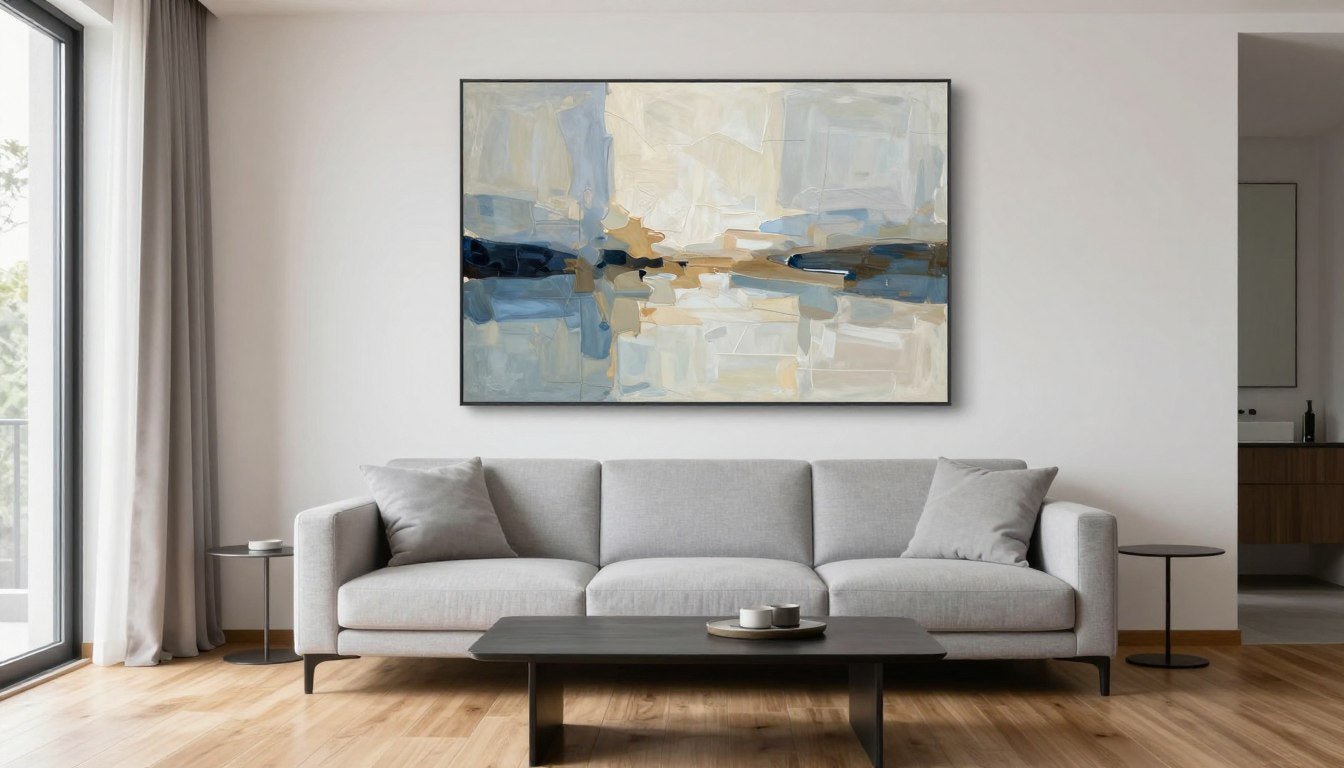
That empty expanse of wall behind your couch isn't just waiting to be filled. It's begging to become the focal point that ties your entire living room together.
When you walk into your living space, your eyes naturally land on the sofa wall. It's the largest uninterrupted surface in most rooms. What hangs there sets the mood, defines your style, and either elevates the space or leaves it feeling unfinished.
Finding the right modern wall decor behind couch transforms a functional seating area into a curated living room that feels intentional. The art you choose, how you size it, and where you place it makes the difference between a room that works and one that wows.

Why the Wall Space Behind Your Sofa Matters
The wall behind your sofa holds more design weight than any other surface in your living room. It anchors the entire space.
This wall serves as the primary focal point because it sits at eye level when you enter the room. Your guests see it first. You live with it daily. When styled correctly with modern wall decor behind couch, this space creates visual harmony that makes your room feel complete.
Empty walls create a void that makes even well-furnished rooms feel bare. The sofa itself becomes an island without context. But when you fill that space thoughtfully, everything clicks into place.

The right artwork draws the eye up and outward. It adds dimension and depth. Most importantly, it tells your design story in a way that throw pillows and coffee table books simply can't match.
Think of this wall as your canvas. The sofa is the frame. What you put behind it completes the picture.

Choosing the Right Size Art for Your Couch Wall
Size matters more than style when selecting wall decor for behind your sofa. Get the proportions wrong, and even museum-quality art looks out of place.
The golden rule: your artwork should span two-thirds to three-quarters of your sofa's width. For a standard 84-inch couch, you're looking at art between 56 and 63 inches wide. This creates visual balance without overwhelming the space.

Height placement follows a simple formula. Hang your art so the center sits at 57 to 60 inches from the floor. This puts it at average eye level. Leave 6 to 12 inches of space between your sofa back and the bottom edge of your artwork.
For gallery wall arrangements, treat the entire collection as one large piece. Map out the total width and height of your arrangement first. Then work within those boundaries.
Single Large Piece
- Creates bold, modern statement
- Easier to hang and position
- Works with minimalist design
- Makes small rooms feel larger
- Provides clean focal point
Gallery Wall Arrangement
- Adds visual texture and depth
- Showcases multiple art styles
- Fills wider wall spaces effectively
- Creates collected, layered look
- Allows personal curation

Scale mistakes happen when you size art to the wall instead of the furniture. A piece that looks perfect on an empty wall can shrink visually once the sofa sits in place. Always measure from your couch dimensions first.
Rossetti Art prints come in multiple size options with hand-stretched canvas and premium frames. Each piece ships made to order to ensure perfect proportions for your specific living room space.
Modern Styles That Work Behind the Sofa
Modern wall decor spans countless aesthetics. The key is matching your art style to your existing living room design language.
Abstract and Geometric Prints
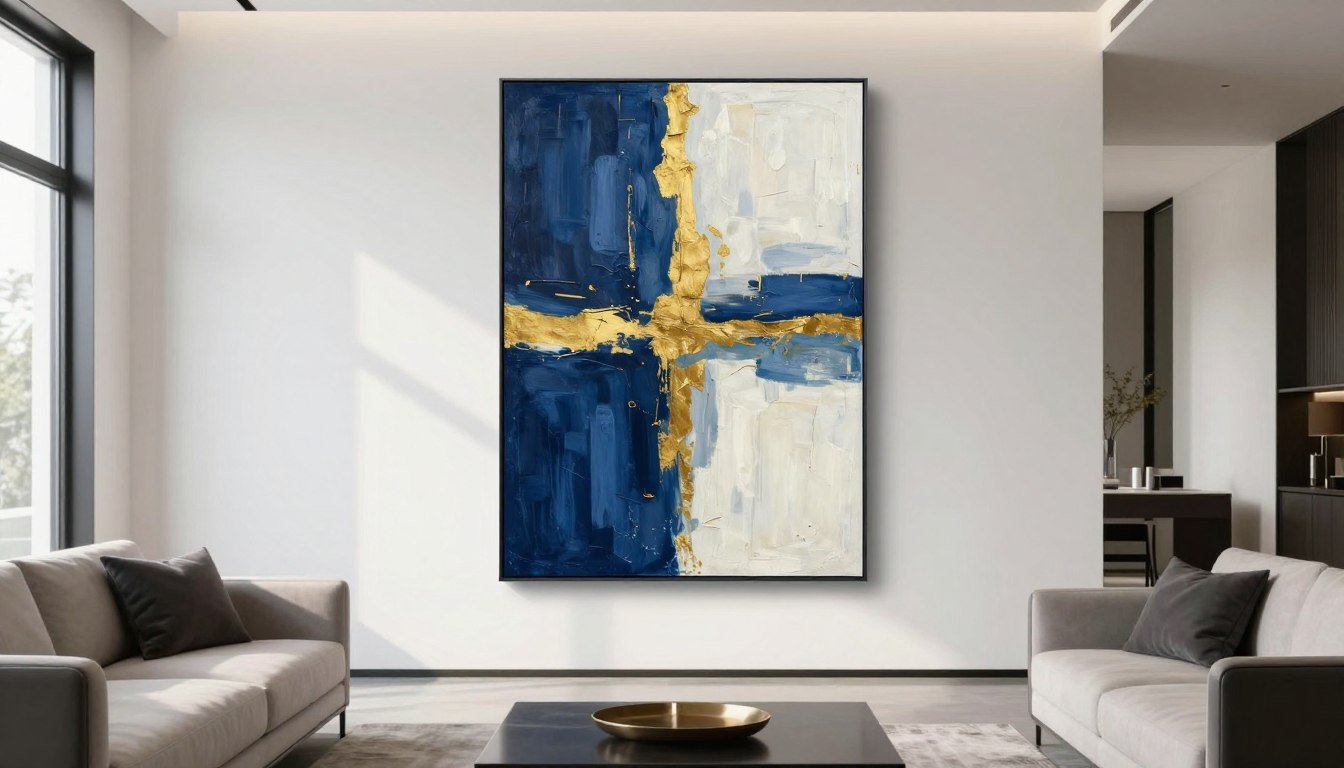
Abstract artwork brings movement and energy without demanding specific interpretation. These pieces work beautifully in contemporary living rooms where clean lines and open space dominate.

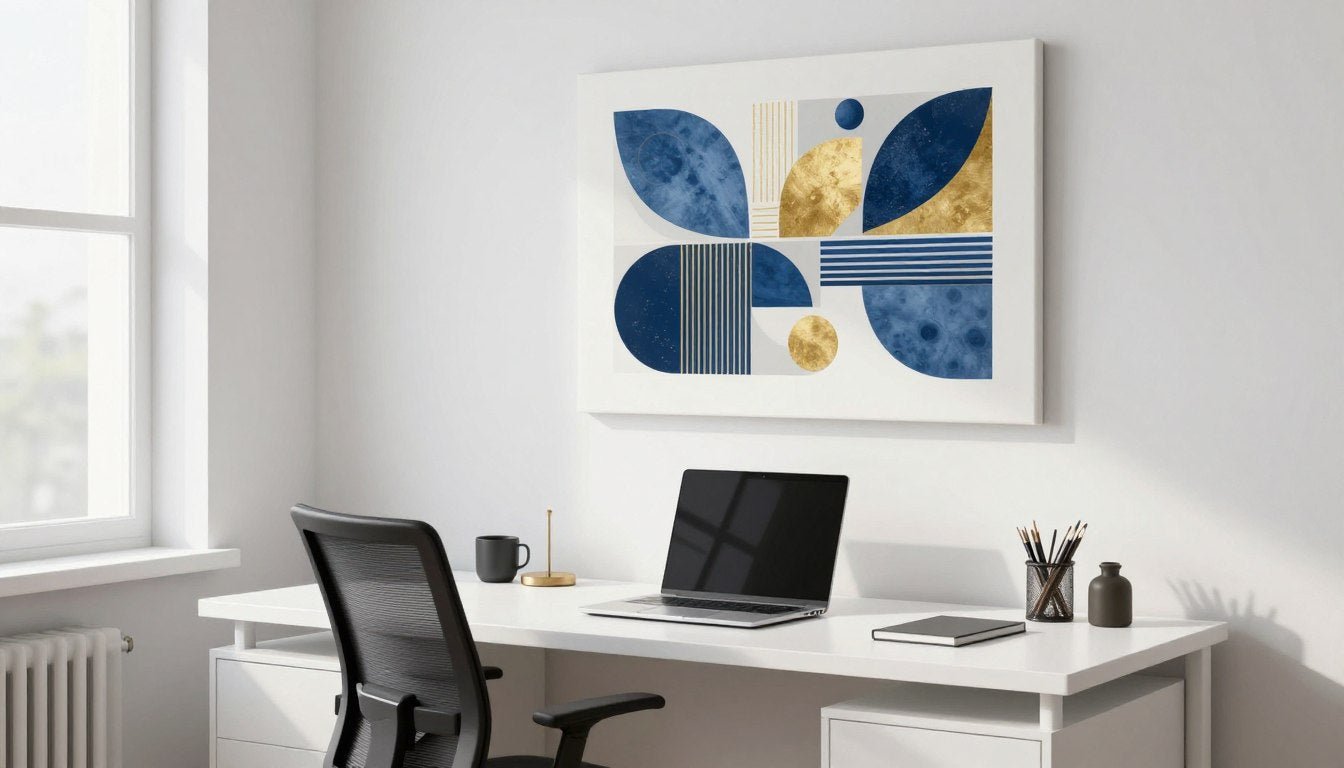
Look for prints with geometric patterns or organic shapes. Color blocking creates structure. Fluid forms add softness. The beauty of abstract art lies in its versatility – it complements rather than competes with your furniture.
Explore our Abstract Canvas Prints collection for gallery-quality pieces printed with archival inks that resist fading for decades.
Line Art and Minimalist Drawings
Line art brings sophisticated simplicity to modern spaces. Single-line drawings, continuous contour portraits, and minimalist botanical sketches create focal points without visual noise.

These pieces shine in rooms with bold furniture or busy textures. The restraint in the artwork gives your eyes a place to rest. Black and white line art works across any color palette in your room.
Our Line Art Canvas Prints feature crisp, clean designs on UV-resistant canvas that maintains its brightness year after year.
Photography and Cityscapes
Modern photography brings personality and narrative to your living space. Urban cityscapes, architectural details, and landscape photography work especially well behind sofas in contemporary homes.

Choose photography that echoes the mood you want. Moody black and white images add drama. Vibrant street scenes inject energy. Serene landscapes create calm.
Botanical and Nature-Inspired Art
Botanical prints bring organic warmth to modern interiors. Whether you prefer realistic plant photography or stylized illustrations, nature-inspired art softens contemporary design.

Large-scale single leaf prints make bold statements. Botanical gallery walls create collected charm. These pieces pair beautifully with natural textures like linen, wood, and stone found in modern living rooms.
📐 Not sure what size to choose? Use our free Wall Art Size Calculator → https://rossettiart.com/blogs/news/wall-art-size-calculator

Color Coordination and Your Living Room Palette
Color makes or breaks your wall decor choice. The right color palette creates cohesion. The wrong one creates chaos.
Start with your existing living room colors. Pull tones from your sofa, pillows, rug, and curtains. Your artwork should echo these colors without exactly matching them.

The 60-30-10 rule applies to art selection too. Sixty percent of your room uses the dominant color. Thirty percent features your secondary color. Ten percent provides accent pops. Your wall art can introduce that accent color or reinforce your secondary palette.
Neutral living rooms benefit from artwork with a bit more color. Introduce warm earth tones, soft pastels, or muted jewel tones through your prints. This adds visual interest without overwhelming the space.
Monochromatic Schemes
Stick to variations of one color family. Layer different shades and textures. This creates sophisticated depth while maintaining calm.

Complementary Colors
Use colors opposite on the color wheel. Blue and orange. Purple and yellow. This approach adds vibrant energy and visual pop.

Analogous Harmony
Choose colors next to each other on the wheel. Blues and greens. Reds and oranges. This creates natural, flowing harmony.

Black and white prints work universally. They ground colorful rooms and add contrast to neutral spaces. Gallery-quality black and white photography or line art never fights with your existing design.
Warm up cool-toned rooms with art featuring rust, terracotta, or warm browns. Cool down warm spaces with blues, grays, or sage greens. The wall behind your sofa offers the perfect opportunity to balance your room's temperature.

Patterns in your art add another layer. If your living room features solid furniture, patterned or textured artwork adds visual interest. Rooms with patterned textiles benefit from simpler, solid-color prints.
Arrangement Ideas for Maximum Impact
How you arrange your wall decor matters as much as what you hang. Strategic placement creates intentional design rather than random decoration.
Single Statement Piece
One large piece creates immediate impact. This approach works best in modern and minimalist living rooms where simplicity reigns.

Center your artwork above the sofa. Maintain equal space on both sides. This symmetrical arrangement feels balanced and intentional. A single piece makes the biggest statement when it spans most of your sofa's width.
Choose something with visual weight. Abstract art with bold colors. Large-scale photography. Oversized botanical prints. The piece needs presence to hold the wall alone.
Horizontal Triptych or Multi-Panel Display
Three panels hung side by side create horizontal movement. This arrangement works beautifully behind long sofas or sectionals.

Keep spacing between panels consistent. Two to four inches creates visual connection while maintaining individual identity for each piece. Align the top edges for clean, modern look.
Multi-panel art tells a story across the space. Look for sets designed to work together or create your own arrangement with complementary pieces from our Canvas Print Sets collection.
Asymmetrical Gallery Wall
Gallery walls bring personality and collected charm. This arrangement style suits eclectic and transitional living rooms.

Start with your largest piece slightly off-center. Build around it with smaller prints and photos. Maintain roughly equal visual weight on both sides even if the arrangement isn't symmetrical.
Keep frames consistent or deliberately varied. All matching frames create cohesion. Mixed frame styles add eclectic energy. Either works – just commit to your choice throughout the entire gallery.
Gallery Wall Pro Tip: Map your arrangement on the floor first. Lay out all pieces and adjust until you find the perfect composition. Then measure and transfer to your wall. This saves countless nail holes and frustration.
Layered Leaning Art
Leaning large artwork against the wall creates casual, lived-in style. This works on console tables behind sofas or directly on the floor.

This approach offers flexibility. Swap pieces seasonally without nail holes. Layer multiple frames for added depth. Combine leaning art with small decor objects on the console surface.
Use substantial frames that stand securely. Our oak floater frames and pine wood frames provide both stability and gallery-quality presentation for leaning displays.
Mix Art with Functional Elements
Combine your wall art with wall-mounted shelving, sconces, or mirrors for functional beauty. This layered approach adds dimension.

Flank your artwork with wall lamps to highlight the piece and provide ambient light in your living room. Add narrow floating shelves below for small plants or decorative objects. This creates a curated vignette rather than just hung art.
Keep additions minimal. The art should remain the focal point. Functional elements support and enhance rather than compete for attention.

Frequently Asked Questions
Q: How high should I hang art above my couch?
A: Hang your art so the center sits 57 to 60 inches from the floor, which places it at average eye level. Leave 6 to 12 inches of space between your sofa back and the bottom edge of the artwork. This creates visual connection between the furniture and wall decor while maintaining proper proportions. If you have higher ceilings, you can go up to 65 inches for the center point, but maintain that 6-12 inch gap from the sofa.
Q: What size art should I put above my sofa?
A: Your artwork should span two-thirds to three-quarters of your sofa's width for proper visual balance. For an 84-inch couch, choose art between 56 and 63 inches wide. For gallery wall arrangements, measure the total width of your entire collection rather than individual pieces. If you're using a single large piece, going slightly wider (up to 75% of sofa width) creates bold, modern impact without overwhelming the space.
Q: Should art above a couch match the room colors exactly?
A: No, your art should complement your color palette rather than match it exactly. Pull one or two accent colors from your existing room design, but don't try to match every color precisely. Art that echoes your room's tones while introducing subtle variations creates visual interest and depth. Neutral rooms benefit from artwork with a bit more color, while colorful spaces often work best with more subdued art that grounds the design.
Q: Can I use multiple pieces instead of one large artwork?
A: Absolutely. Gallery walls, triptychs, and multi-panel arrangements work beautifully behind sofas. Treat the entire collection as one large piece when planning dimensions. The total width should still span two-thirds to three-quarters of your sofa width. Maintain consistent spacing between pieces (2-4 inches works well) and align top edges for a cohesive, modern look. Multiple pieces add visual texture and allow you to curate a more personalized display.
Q: What style of wall art works best in modern living rooms?
A: Modern living rooms pair well with abstract prints, minimalist line art, black and white photography, and contemporary botanical pieces. The key is choosing art with clean lines and uncluttered compositions that complement your modern aesthetic. Abstract geometric patterns add energy, while simple line drawings create sophisticated calm. Black and white pieces work universally across any modern color palette, and large-scale single images make bold focal points that anchor contemporary spaces.

The wall behind your sofa holds transformative power in your living room design. When you choose the right modern wall decor behind couch, properly size it, and thoughtfully arrange it, that once-empty space becomes the anchor that pulls your entire room together.
Start with measurement and proportion. Consider your existing color palette and living room style. Then select artwork that speaks to you while serving your design goals.
Every piece you choose tells part of your story. Make it count.
Explore our Abstract Canvas Prints collection for gallery-quality modern artwork printed on hand-stretched canvas with archival inks and premium framing options.

About the Author
Chiara Rossetti
Chiara Rossetti is the founder of Rossetti Art, a canvas print and original art brand. She writes about interior design, wall art styling, and the art of making a home feel alive.

Leave a comment
This site is protected by hCaptcha and the hCaptcha Privacy Policy and Terms of Service apply.