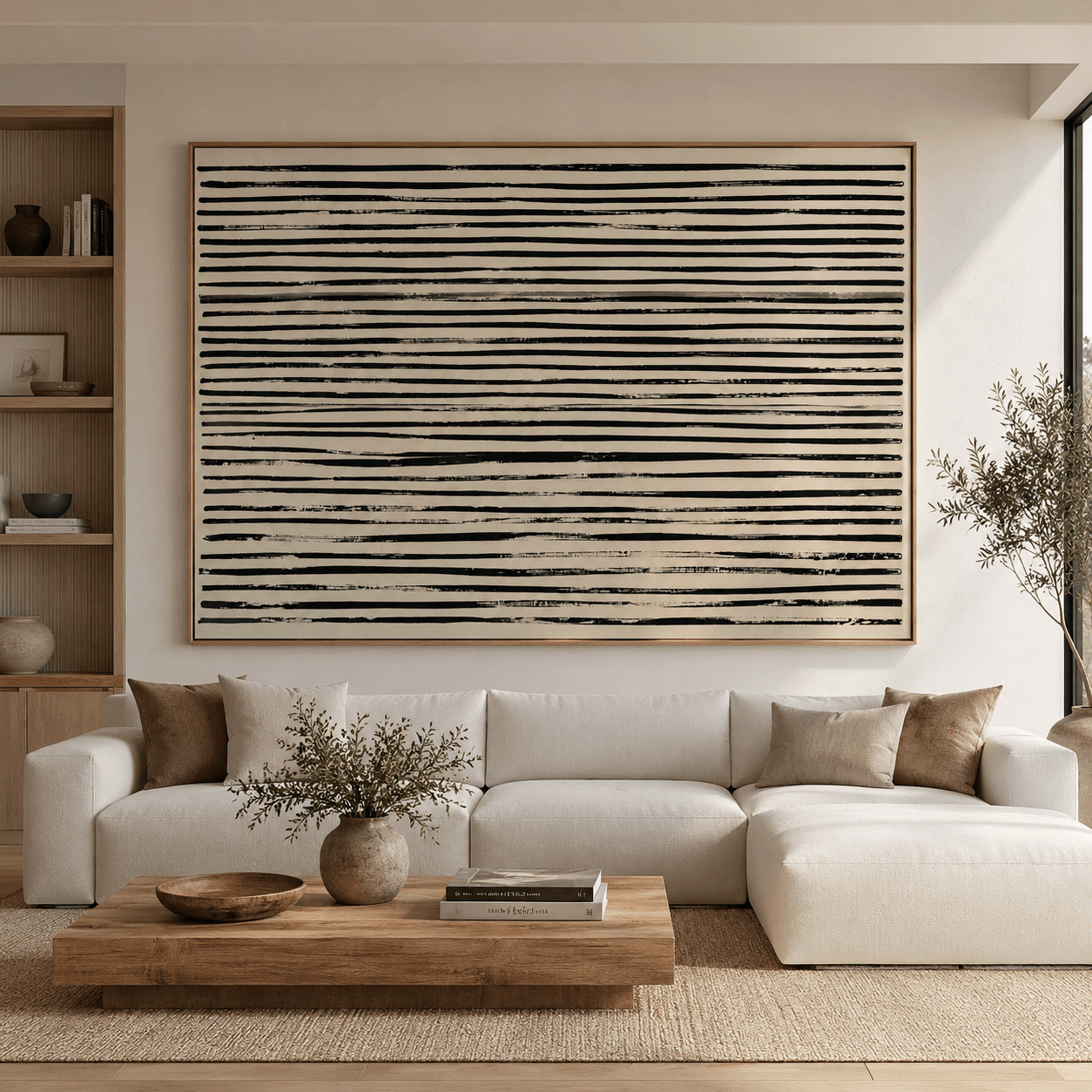
Minimalist wall art is one of those things that sounds simple but is surprisingly easy to get wrong. Pick something too small and the wall feels forgotten. Pick something too neutral and the room feels unfinished. The best minimalist art does something most people underestimate — it holds the room without shouting, bringing a sense of calm that makes everything around it feel more considered.
This guide covers exactly how to choose minimalist wall art that actually works: the right scale, the right palette, and the placements that make a room feel intentional rather than bare.
Quick Answer
Minimalist wall art works best when it's larger than you think you need, limited to two or three tones, and placed where the eye naturally rests — above a sofa, bed, or console. Use our Live Preview to test scale in your room before buying so it feels calm, not empty.

What Makes Wall Art Feel Minimalist
Minimalist wall art isn't defined by what it shows — it's defined by what it leaves out. A minimalist piece uses restraint: a limited palette, generous negative space, simple or abstract forms, and no visual clutter. It holds attention without demanding it. You can look at it for ten seconds or ten minutes and both feel natural.
The misconception is that minimalist means boring or safe. It doesn't. The best minimalist art has tension — a carefully placed line, a soft gradient that shifts across the canvas, a textured surface that changes in different lights. It rewards closer looking without ever feeling busy. That's the quality to look for: calm on the surface, alive underneath.
What minimalist art is not: a beige print with a single leaf, or a quote in thin font on a white background. Those are filler pieces. True minimalist wall art has compositional intention — the placement of every element is deliberate, and the empty space is as considered as the marks within it.

"Ground" — neutral abstract canvas with layered warm tones and a calm, grounded composition. View the piece →
The Right Colours for Minimalist Wall Art
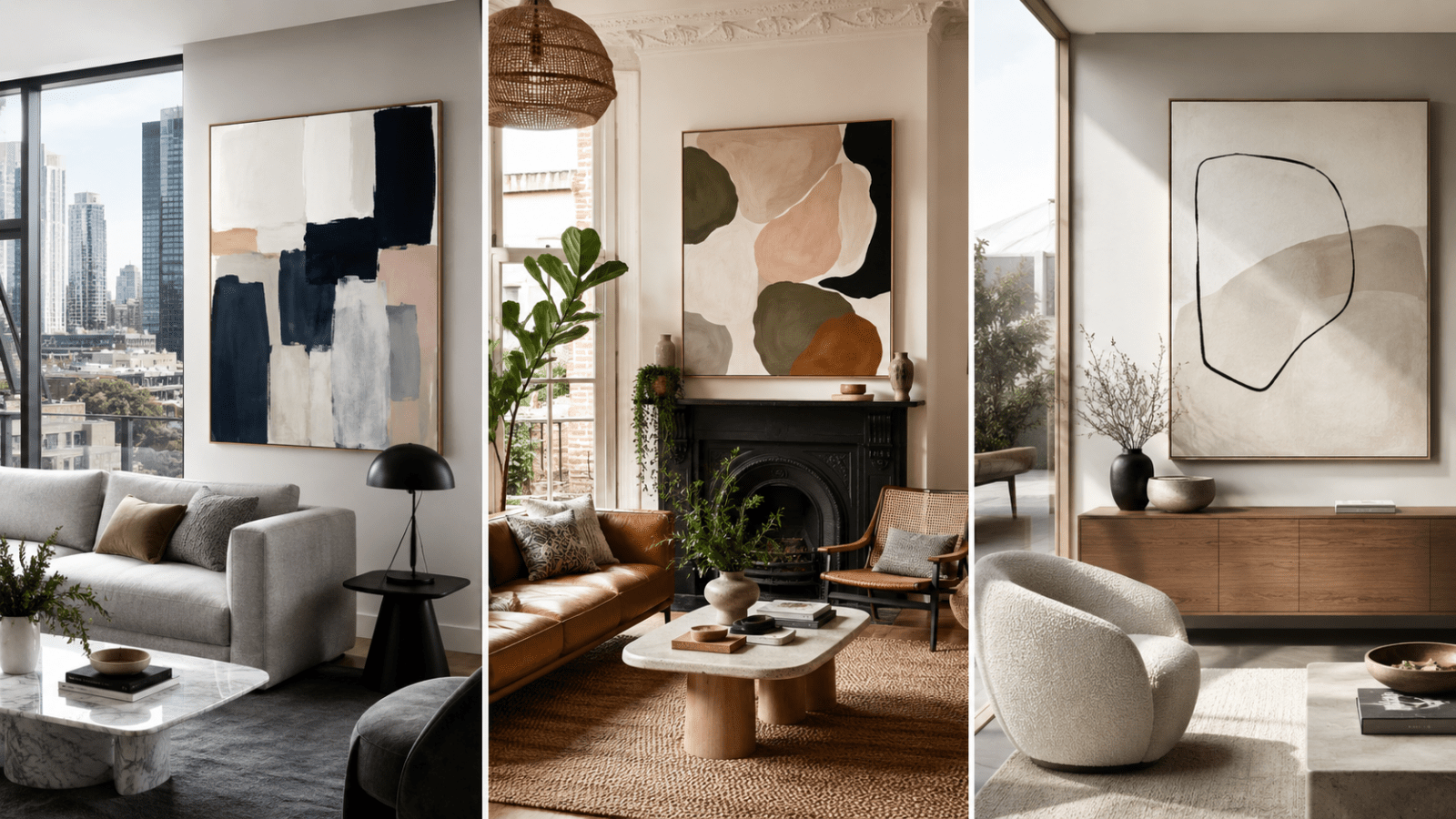
Colour is where minimalist art either holds a room or disappears into it. The safest and most effective approach is to work with the room's existing tones rather than against them. If your walls are warm white or linen, a canvas in ivory, sand, soft grey, or charcoal will feel like it belongs. If your walls are a deeper tone — slate, sage, terracotta — look for art that shares at least one colour with the wall, then adds one contrasting accent.
Black and white is the most timelessly minimalist palette of all. A strong black-and-white abstract print works in almost any room — warm or cool, modern or traditional — because the absence of colour is itself a statement. It doesn't compete with anything else in the space, which is exactly what minimalist art should do.
The one colour combination to avoid in minimalist art: anything that introduces more than three distinct tones. Once you're past three colours, the piece starts to feel busy rather than calm, no matter how restrained the forms are. Two tones is ideal. Three is the comfortable maximum.

"Frequency" — black and white abstract canvas print in a graphic, rhythmic composition. View the piece →

How to Size Minimalist Art Without Losing Impact
Scale is the most misunderstood part of buying minimalist wall art. People consistently buy too small — thinking that a large canvas will overwhelm a calm room. The opposite is usually true. A small canvas on a large wall doesn't feel minimal; it feels unfinished. It draws attention to itself for the wrong reasons, making the surrounding empty space look like oversight rather than intention.
A good starting rule: the canvas should fill at least half the width of the wall space or furniture it sits above. For a 180cm sofa, that means a canvas at least 90cm wide — ideally 110–120cm. For a bedroom wall, at least two-thirds of the bed width. When the art is the right size, the room breathes around it. When it's too small, everything looks restless.
Height matters too. In rooms with standard 240cm ceilings, hang the centre of the artwork at approximately 145–150cm from the floor. This places it at natural eye level whether you're standing or seated. Minimalist art hung too high feels detached from the room; too low and it loses the dignity the piece deserves.
Not confident about size? Use our Live Preview tool to visualise the canvas at exact scale in your actual room — or upload a photo of your wall and see it in your own space. No tape measures, no paper templates, no guesswork.
🎨 FREE ART STYLE FINDER QUIZ
Not sure if minimalist is really your style, or whether you'd be happier with something more textured or bold? Take our free Art Style Finder Quiz — it asks seven simple questions about your home and taste, then matches you with the aesthetic family that suits you best.
Download Free →Minimalist Wall Art for the Living Room
In the living room, minimalist wall art works hardest above the sofa. This is the most-viewed wall in most homes — it's where guests look when they sit down, and where the room's overall aesthetic is set. A single large canvas in a restrained palette pulls the seating area together and gives the eye somewhere to settle without demanding attention from everything else in the room.
Avoid hanging three or four small pieces in a grid above the sofa — that arrangement works for eclectic or maximalist interiors, but in a minimalist room it creates visual noise. One strong canvas, or two panels with deliberate spacing, is the better choice. The empty wall on either side of the artwork is part of the composition, not wasted space.
For living rooms with neutral walls and natural materials — linen sofas, oak floors, concrete accents — look for art in warm stone tones, off-white, or charcoal. Canvas prints are hand-stretched over a kiln-dried hardwood stretcher frame and arrive ready to hang, which means you can place them within minutes of opening the box. The hardwood floater frame option adds a refined, contemporary edge that suits minimalist interiors particularly well.
Minimalist Wall Art for the Bedroom
The bedroom is where minimalist wall art has the most room to breathe — and where the wrong choice is most disruptive. The goal is art that helps you slow down when you walk in, not art that energises or demands attention. That means soft tones, restrained composition, and nothing jarring.
Above the bed is the natural position. A single wide canvas — or a matching pair flanking the bed — gives the room a focal point that feels calm at the start and end of the day. Avoid anything with sharp geometric conflict or strong warm reds in a room where you want to sleep. Soft blues, greens, warm greys, and monochromatic neutral abstracts all work well.
Prints with subtle texture are particularly effective in bedrooms — the slight variation in surface catches light gently and gives the room warmth that a flat print can miss. The satin-matte, low-glare finish on every Rossetti Art canvas means the colours stay true even in rooms that catch direct morning light.

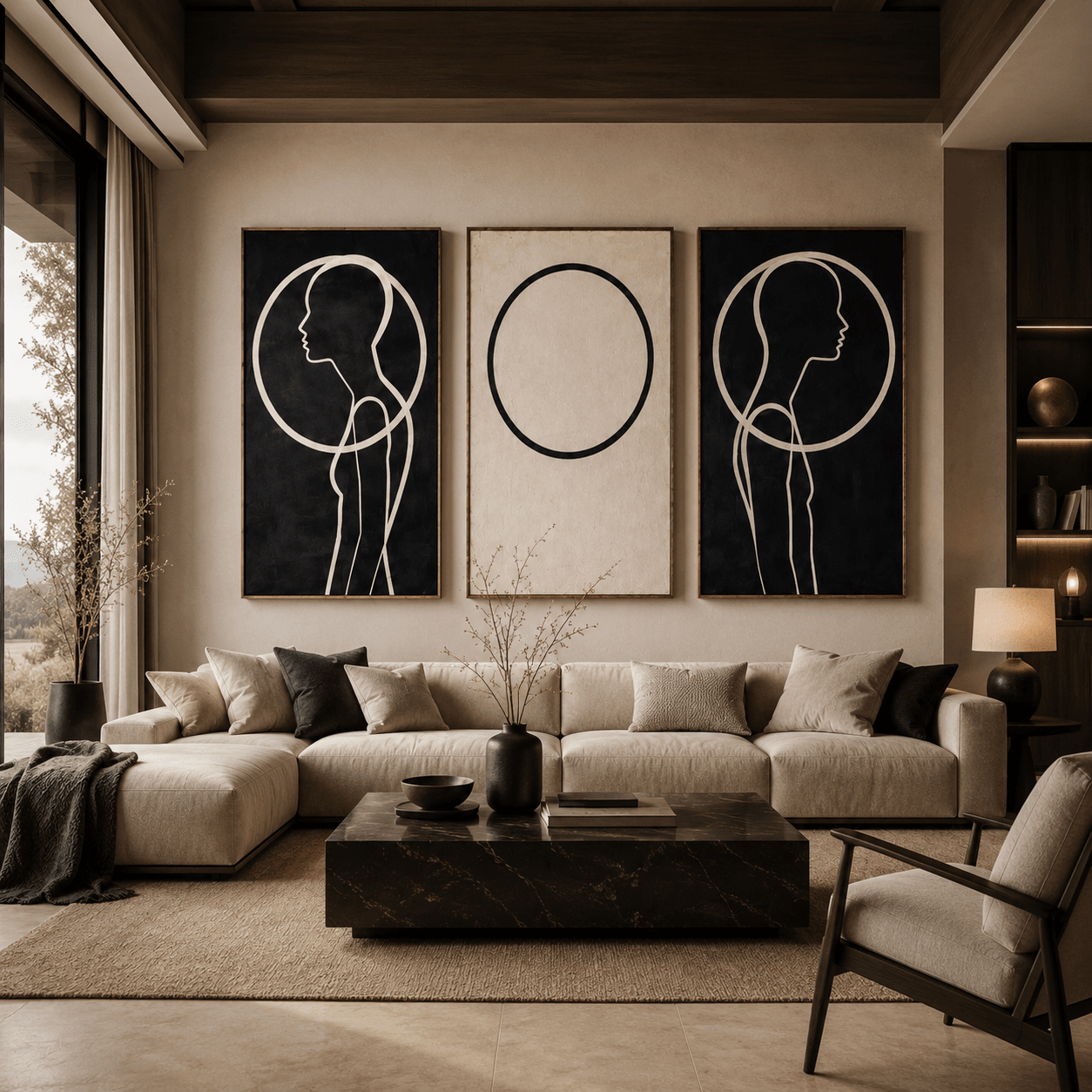
"Confluence" — large black and white original painting with a calm, sweeping composition. View the piece →

Frequently Asked Questions
What makes minimalist wall art different from just plain art?
Minimalist art is defined by intentional restraint — a limited palette (usually two or three tones), deliberate negative space, and simple or abstract forms. The composition is designed so that every element has a reason to be there. Plain or generic art often looks minimal simply because it's understated, but it lacks the compositional intention that gives true minimalist art its quiet power.
What size canvas works best for minimalist living rooms?
Bigger than most people expect. For above a sofa, aim for a canvas at least half the sofa's width — ideally 110–130cm wide for a standard three-seater. Minimalist art hung too small looks unfinished and makes the wall look like it was forgotten. Use our Live Preview to test the exact scale in your room before buying.
Should minimalist wall art match the sofa or the walls?
Ideally, it should respond to both — sharing at least one tone with the wall while adding a contrasting accent that's echoed somewhere else in the room (a cushion, a lamp, a throw). Matching too precisely makes the art disappear. Contrasting too strongly makes it compete. The goal is art that feels like it was always meant to be in that room.
Is black and white art always minimalist?
Not automatically — a busy black and white illustration or a detailed photographic print isn't minimalist even in the absence of colour. What makes black and white art feel minimalist is the same as any minimalist piece: generous negative space, restrained composition, and visual intention. A bold black graphic on a white field is minimalist. A detailed cityscape in monochrome isn't.
Are canvas prints a good choice for minimalist rooms?
Canvas prints work very well in minimalist spaces — particularly when displayed without a frame (gallery-wrapped, where the image wraps 1.25 inches around the edges) or in a hardwood floater frame, which gives a clean floating effect. Rossetti Art canvas prints are hand-stretched over kiln-dried hardwood frames and printed with UV- and fade-resistant HP latex inks designed to resist fading, making them a long-term choice that ages beautifully in a calm interior.
Browse the abstract canvas prints collection for a full range of minimalist and neutral pieces, or explore the original abstract paintings for something with genuine texture and the calm authority of a one-of-a-kind work.
Keep Reading
About the Author — Chiara Rossetti is the founder of Rossetti Art, a canvas print and original art brand. She writes about interior design, wall art styling, and the art of making a home feel alive.

About the Author
Chiara Rossetti
Chiara Rossetti is the founder of Rossetti Art, a canvas print and original art brand. She writes about interior design, wall art styling, and the art of making a home feel alive.

Leave a comment
This site is protected by hCaptcha and the hCaptcha Privacy Policy and Terms of Service apply.