
Your living room deserves more than something that simply fills a blank wall. The right luxury wall art for living room spaces transforms the entire atmosphere, creating a focal point that reflects your personality and elevates your interior design. Yet choosing premium art that truly resonates can feel overwhelming when you're faced with endless options and significant investment decisions.
This guide walks you through everything you need to know. From understanding what separates luxury pieces from standard prints to mastering placement techniques that interior designers use.

What Defines Luxury Wall Art for Your Living Room
Luxury wall art combines exceptional visual impact with superior craftsmanship and materials. It's not merely about price tags. True luxury pieces distinguish themselves through archival-quality production methods, carefully selected substrates, and attention to longevity.
Premium canvas prints use archival inks that resist fading for decades. They're printed on hand-stretched canvas that maintains tension without warping. The frames matter too—solid wood construction rather than hollow plastic composites.

The Hallmarks of Gallery-Quality Pieces
When you invest in gallery-quality art, you're purchasing museum-grade standards. This means UV-resistant coatings that protect against sunlight damage, acid-free materials that prevent yellowing, and printing resolutions that reveal intricate details even at close viewing distances.
The difference becomes apparent when you compare a standard poster to a proper framed canvas. The depth, texture, and visual richness simply cannot be replicated with budget production methods.

Investment Value Beyond Decoration
Quality wall art functions as a long-term investment in your home. Unlike fast-fashion decor that requires replacement every few years, premium pieces maintain their beauty and relevance across changing trends.
Consider how original art and limited-edition prints can appreciate in value. Even high-quality reproductions retain their visual appeal indefinitely when produced with proper materials. This makes the initial investment more justifiable when calculated over decades rather than seasons.
Material Quality Indicators
Recognizing superior construction ensures your investment lasts.
- Heavy-weight canvas (minimum 400gsm)
- Solid wood stretcher bars, not hollow
- Archival-grade inks with UV protection
- Hand-finished edges and corners
Production Method Differences
Understanding how pieces are created reveals their quality level.
- Giclée printing versus standard digital printing
- Individual color calibration per print
- Hand-stretching versus machine assembly
- Made-to-order versus mass production
Longevity Expectations
Premium materials translate directly to extended lifespan.
- 100+ year archival rating for inks
- Decades without fading in indirect light
- Resistance to environmental humidity
- Maintained tension without sagging
Finishing Touches
Small details separate exceptional pieces from adequate ones.
- Protective varnish or coating options
- Gallery-wrapped edges (image continues around sides)
- Included hanging hardware installed properly
- Certificate of authenticity for limited editions
Choosing the Perfect Style for Your Living Space
Your wall color, furniture style, and existing decor create a foundation that your art should complement rather than clash with. The most successful luxury art selections enhance the room's existing character while adding a fresh dimension.
Start by identifying your living room's dominant aesthetic. Is it modern minimalist, traditional elegance, eclectic bohemian, or contemporary transitional? This clarity guides you toward art styles that feel cohesive rather than forced.

Abstract and Contemporary Expressions
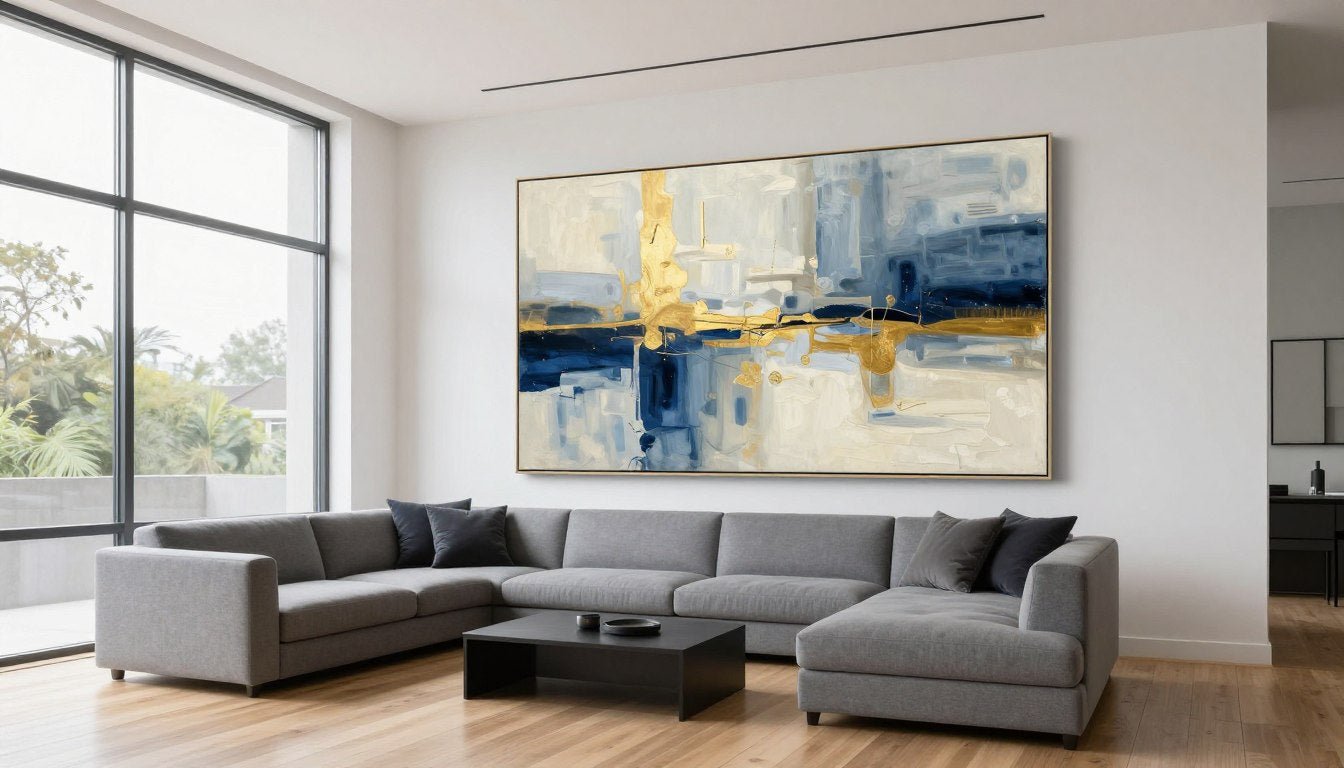
Abstract art offers versatility that works across multiple design styles. Bold brushstrokes, geometric patterns, and expressive color fields create visual interest without depicting specific subjects. This makes abstract pieces easier to integrate into existing spaces.
For living rooms with neutral color palettes, consider our Abstract Canvas Prints collection. These pieces introduce controlled pops of color while maintaining sophisticated restraint.

Abstract framed canvas works particularly well above sofas and mantels. The lack of specific imagery means the piece won't compete with your furniture or accessories for visual dominance.
Timeless Black and White Sophistication
Monochromatic art never goes out of style. Black and white photography, line drawings, and minimalist compositions bring elegance without overwhelming color schemes. These pieces work especially well in rooms where you want the art to feel integral rather than decorative.
Our Black & White Canvas Prints range from architectural photography to abstract compositions. They're particularly effective in creating gallery-wall arrangements where cohesive color themes matter.

Botanical and Nature-Inspired Elegance
Natural motifs bring organic warmth to formal living spaces. Oversized botanical prints, landscape photography, and nature-inspired abstract works create calming focal points that balance architectural elements.
Botanical wall art pairs beautifully with both traditional and modern interiors. The key is choosing pieces with sophisticated compositions rather than overly literal garden imagery.

Discover Your Perfect Style
Explore curated collections designed to complement every interior aesthetic, from bold contemporary statements to timeless classical elegance.
Size and Placement Mastery: Getting Proportions Right
Even the most beautiful luxury wall art for living room spaces falls flat when sized incorrectly. The relationship between your art dimensions and the furniture it hangs above determines whether the composition feels intentional or awkward.
Professional designers follow the two-thirds rule. Your framed print should span approximately two-thirds to three-quarters the width of the furniture below it. This creates visual balance without overwhelming the space.

Height and Eye-Level Considerations
Gallery standards suggest hanging art so the center point sits at 57-60 inches from the floor. This approximates average eye level and creates comfortable viewing. When hanging above furniture, leave 6-8 inches between the frame bottom and the furniture top.
Taller ceilings allow for larger pieces and higher placement. Adjust proportionally—in rooms with 10-foot ceilings, you can center art slightly higher while maintaining the relationship to surrounding furniture.

Large-Scale Impact Pieces
Oversized canvas pieces make dramatic statements in spacious living rooms. A single large work (60x40 inches or larger) can anchor an entire wall and eliminate the need for additional decor. This approach works particularly well in minimalist or contemporary spaces.
When selecting large-scale pieces, consider viewing distance. If your seating area sits 10-12 feet from the wall, you can comfortably display very large works without overwhelming viewers.

Working with Architectural Features
Fireplaces, built-in shelving, and windows create opportunities and constraints. Center your art on the mantel or architectural feature, not the entire wall. This creates intentional composition rather than default placement.
For walls with multiple windows, consider the negative space between them. Vertical prints work well in narrow sections, while horizontal pieces suit the areas flanking windows.

📐 Not sure what size to choose? Use our free Wall Art Size Calculator → https://rossettiart.com/blogs/news/wall-art-size-calculator
Common Sizing Mistakes to Avoid
- Choosing pieces too small for the wall space, creating a "floating" appearance
- Hanging art too high, disconnecting it from furniture groupings
- Ignoring ceiling height when selecting vertical dimensions
- Placing multiple small pieces where one large statement piece would work better
- Forgetting to account for frame width in total dimensions
- Matching art size to furniture width exactly (creates static composition)

Quality Markers That Matter in Premium Art Prints
Understanding production quality helps you distinguish genuine luxury wall art from marked-up standard prints. Several technical factors separate exceptional pieces from adequate ones, and these differences justify price variations.
UV-resistant coatings protect your investment from the primary cause of print degradation. Direct sunlight breaks down standard inks within months, causing noticeable fading. Premium treatments extend this timeline to decades, even in bright rooms.

Understanding Archival Standards
The term "archival" refers to materials tested for longevity under museum conditions. Archival inks use pigment-based formulas rather than dye-based alternatives. Pigments resist chemical breakdown, maintaining color accuracy for 100+ years when properly displayed.
This matters for your living room because even indirect natural light contains UV radiation. Standard dye-based prints show visible fading within 2-5 years. Archival pieces maintain their original appearance indefinitely with basic care.

Canvas Construction and Stretching Methods
Hand-stretched canvas demonstrates superior craftsmanship compared to machine-assembled alternatives. Skilled technicians ensure even tension across the entire surface, eliminating waves, wrinkles, or sagging that develops over time with inferior methods.
The canvas weight matters too. Premium canvas uses 400-450gsm fabric that resists environmental humidity changes. Thinner materials expand and contract noticeably, eventually loosening from the stretcher bars.

Frame Quality and Construction
Solid wood frames—whether pine wood frame or oak floater frame options—provide structural integrity that composite materials cannot match. Natural wood absorbs minor impacts without cracking and ages beautifully rather than deteriorating.
Floater frames create a contemporary presentation where the canvas appears to float within the frame. This style works particularly well with abstract framed canvas pieces where the gallery-wrapped edges contribute to the overall design.

Rossetti Art Quality Standards
Every piece from Rossetti Art meets rigorous production standards. We use only archival inks with proven 100-year stability. Our hand-stretched canvas maintains perfect tension using traditional techniques.
Each print receives UV-protective treatment and arrives made to order, ensuring freshness and customization. Our gallery-quality approach means you receive museum-grade pieces designed for permanent display.
Production Method Transparency
Legitimate luxury art brands provide detailed information about their production methods. This includes ink types, canvas specifications, printing technology, and frame materials. Vague descriptions often hide inferior components.
The made to order approach ensures your piece is freshly produced rather than sitting in warehouse inventory. This matters because even archival materials can degrade if stored improperly before purchase.

Creating Gallery Walls That Command Attention
Gallery wall arrangements transform single pieces into curated collections that showcase personality and design confidence. When executed well, they become the defining feature of your living room rather than supplementary decoration.
The key to successful gallery walls lies in intentional planning rather than random accumulation. Start with a theme—whether that's consistent color palette, unified subject matter, or complementary styles—and build around that framework.

Planning Your Layout Strategy
Begin by arranging pieces on the floor before committing to wall placement. This allows you to experiment with spacing, orientation, and relationships between individual works. Photograph your arrangements to evaluate them objectively.
Canvas Print Sets provide pre-coordinated groupings designed to work together. These eliminate guesswork while still achieving custom gallery aesthetics. Our Canvas Print Sets include complementary pieces in coordinated sizes.

Spacing and Symmetry Principles
Maintain consistent spacing between frames—typically 2-3 inches—to create visual cohesion. This consistent rhythm unifies disparate pieces into a deliberate collection. Inconsistent gaps feel accidental rather than intentional.
You can choose symmetrical or asymmetrical arrangements. Symmetrical layouts (grid patterns, matched pairs) suit traditional interiors and create formal impact. Asymmetrical arrangements feel more organic and contemporary but require more planning to achieve balance.

Mixing Sizes and Orientations
Dynamic gallery walls incorporate varied sizes and both horizontal and vertical orientations. Place your largest piece first as an anchor point, then arrange smaller works around it. This creates hierarchy and focal points rather than visual confusion.
When mixing frame sizes, maintain an imaginary alignment grid. Top edges, bottom edges, or center lines should align across multiple pieces even when dimensions vary. This subtle structure prevents chaos while allowing creative arrangements.

Color Coordination Strategies
Limit your color palette to 3-4 main hues that complement your room's existing scheme. Even when mixing styles or subjects, controlled color creates cohesion. Gold accents, silver frames, or wood tones can serve as unifying elements across diverse imagery.
Consider repeating specific colors across multiple pieces. If one print features a particular shade of blue, echo that blue in 2-3 other works within the arrangement. This subtle repetition strengthens visual connections.

Monochromatic Approach
Stick to black and white prints for timeless sophistication that never competes with interior colors.

Limited Palette
Choose 2-3 accent colors that appear across all pieces, creating unity through controlled color relationships.

Frame Unification
Use identical frame styles and finishes to unify diverse art styles and subject matters.
Subject Matter and Style Mixing
You can successfully combine abstract pieces with photography, botanical prints with geometric designs, and contemporary works with vintage finds. The unifying factors should be color palette, frame style, or compositional elements rather than literal subject matching.
Avoid overthinking thematic connections. A landscape print can work beautifully alongside abstract art if they share tonal qualities or visual weight. Trust your eye more than rigid rules about "matching" subjects.

Build Your Perfect Gallery Wall
Start with coordinated sets designed to work together, or mix and match individual pieces from complementary collections for a custom look.
Installation and Hardware Considerations
Proper installation determines whether your gallery wall survives long-term. Use appropriate wall anchors for your wall type—drywall anchors for standard walls, masonry anchors for brick or concrete. Each piece should hang securely without relying on picture hooks alone.
For arrangements with multiple pieces, mark all positions with painter's tape before drilling. This prevents misalignment and wasted holes. Create a paper template of your entire arrangement to visualize the final result before committing.

Lighting Your Gallery Collection
Dedicated lighting elevates gallery walls from nice to spectacular. Picture lights, track lighting, or strategically placed spotlights create drama and draw attention to your curated collection. Avoid direct sunlight, which causes fading even with UV-resistant materials.
LED picture lights work well for individual pieces within the arrangement. Position them to eliminate glare—typically angled downward at 30 degrees from the wall surface. This creates even illumination across the entire piece.

Frequently Asked Questions
What size luxury wall art works best above a standard sofa?
For a standard 84-90 inch sofa, choose art that spans 56-68 inches wide—approximately two-thirds to three-quarters of the sofa width. This creates balanced proportions without overwhelming the space. Height depends on your ceiling, but 30-40 inches tall works well in most living rooms with 8-9 foot ceilings.
Hang the piece 6-8 inches above the sofa back, centering it on the furniture rather than the wall. For sectional sofas, center the art on the longest section rather than the entire configuration.
How do I choose between framed canvas and framed prints for my living room?
Framed canvas offers dimensional texture and depth that photographs beautifully and works well in contemporary spaces. The canvas texture adds visual interest even from across the room. Canvas also eliminates glare issues since there's no glass covering.
Framed print options (under glass) suit traditional interiors and protect delicate works like watercolors or photography. They offer a more formal presentation and allow for mat borders that create breathing room around the image. Choose based on your room's aesthetic and the art style you prefer.
What makes wall art "luxury" versus standard decoration?
Luxury wall art uses archival-quality materials designed to last generations. This includes pigment-based inks rated for 100+ years, heavyweight canvas or fine art paper, hand-finishing, and solid wood frames. Production methods matter too—made to order pieces receive individual attention rather than mass production.
Standard decoration typically uses dye-based inks that fade quickly, thin materials, and hollow composite frames. The visual difference becomes apparent within months as standard pieces show degradation while luxury works maintain their original appearance.
Should I match my wall art to my existing color scheme exactly?
Exact matching often creates flat, uninspired results. Instead, choose art that incorporates your room's colors while introducing complementary accent tones. This approach ties the piece to your existing palette while adding fresh dimension and visual interest.
Look for works where your dominant room color appears as a secondary or accent hue rather than the primary focus. This creates cohesion without redundancy. Abstract pieces excel at this because they typically feature multiple colors you can coordinate with different room elements.
How do I protect luxury wall art from fading in bright living rooms?
Start by selecting pieces with UV-resistant coatings and archival inks. These provide inherent protection against light damage. Position art away from direct sunlight—even UV-protected pieces fare better with indirect exposure.
Consider window treatments that filter UV radiation during peak sunlight hours. Museum-quality glass or acrylic provides additional protection for extremely valuable pieces. Rotate seasonal light exposure if possible, or use LED lighting instead of natural light to illuminate your art in the evenings.
Can I mix different frame styles in one living room?
Yes, but maintain intentional relationships between different frame styles. You might use oak floater frame options for large statement pieces while incorporating thin black metal frames for smaller accent works. The key is creating deliberate contrast rather than random mixing.
Stick to 2-3 frame styles maximum within one space. More variety creates visual chaos. Group similar frames together—don't alternate frame types piece-by-piece. This creates distinct zones or collections within your room rather than scattered inconsistency.
What's the difference between standard delivery and hand-stretched canvas?
Standard delivery typically includes machine-assembled canvases with automated stretching. These work adequately but may develop tension issues over time. Hand-stretched canvas involves skilled craftspeople individually stretching each piece, ensuring even tension and eliminating waves or sags.
Hand-stretching also allows for precise corner finishing and staple placement. The stretcher bars receive canvas wrapped completely around edges for gallery presentation. This attention to construction details separates luxury pieces from standard products and justifies the investment in quality that lasts.
Selecting luxury wall art for living room spaces transforms more than just your walls. The right pieces elevate your entire environment, creating focal points that reflect your personal aesthetic while demonstrating design confidence. When you invest in gallery-quality works with proper materials and construction, you're creating a lasting impact that appreciates rather than depreciates over time.
Remember that genuine luxury lies in craftsmanship details—the archival inks, the hand-stretched canvas, the solid wood framed construction. These elements distinguish pieces that maintain their beauty for decades from temporary decoration that requires replacement every few years.

Ready to discover pieces that transform your living space? Explore our Canvas Prints collection, where every work meets rigorous quality standards and arrives ready to become the centerpiece of your home.

About the Author
Chiara Rossetti
Chiara Rossetti is the founder of Rossetti Art, a canvas print and original art brand. She writes about interior design, wall art styling, and the art of making a home feel alive.


Leave a comment
This site is protected by hCaptcha and the hCaptcha Privacy Policy and Terms of Service apply.