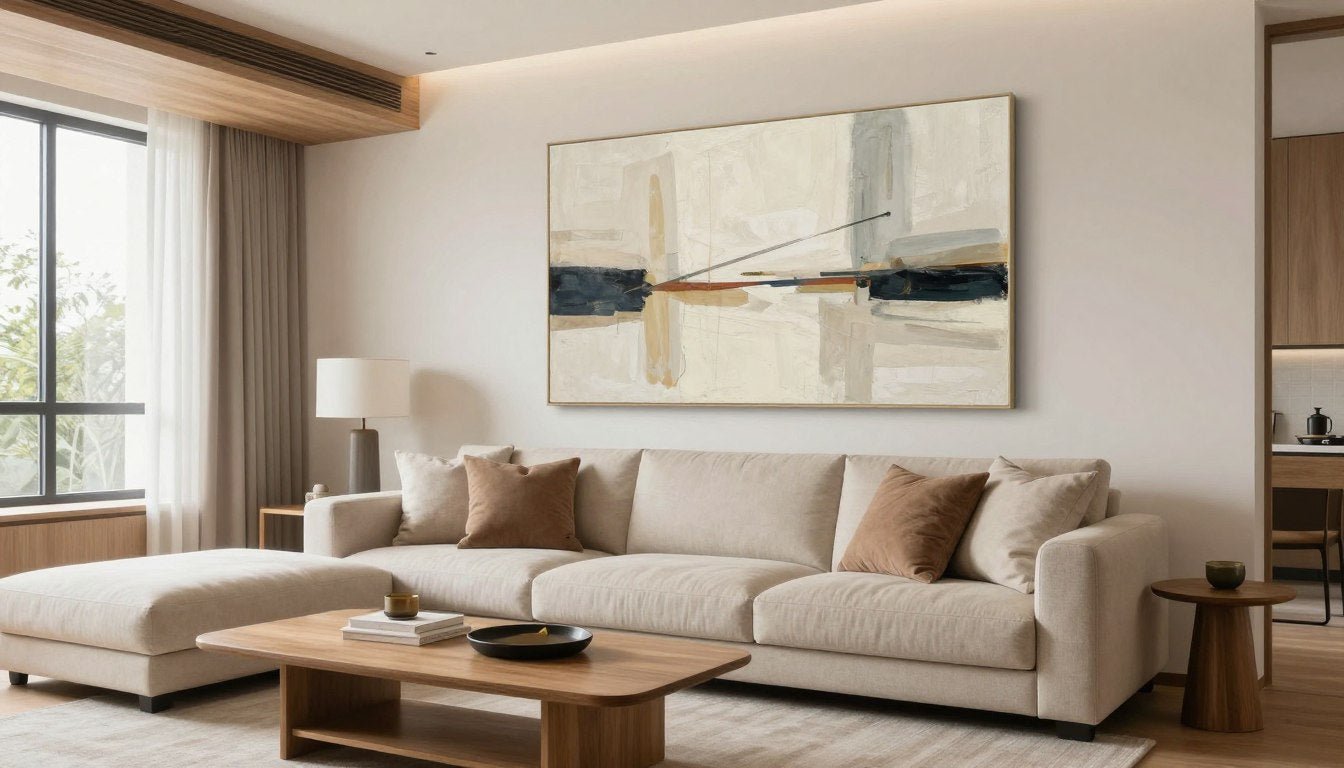
You can transform your living room without knocking down walls or hiring contractors. The key rule is this: focus on elements you can change in a day that create maximum visual impact.
This guide covers seven proven upgrades that work in any space. You will learn how to use art, textiles, lighting, and strategic styling to make your room feel completely different.
Each upgrade takes minimal time and budget. Some cost nothing at all. The results speak for themselves when you choose the right pieces.
Rossettiart canvas prints offer a quick way to anchor your new design. They arrive ready to hang and become instant focal points.

If You Love Modern Minimalism, Here Are 3 Prints That Bring That Mood Into a Room
These canvas prints work in spaces where you want clean lines and calm energy. Each piece adds personality without overwhelming your existing furniture.


Upgrade #1: Add a Statement Art Piece Above Your Sofa
The wall above your sofa is prime real estate. This spot creates your room's focal point and sets the tone for everything else.
A single large canvas works better than multiple small pieces. Scale matters more than you think. Your art should take up about two-thirds of your sofa width.
Choose a piece that pulls colors from your existing pillows or rug. This creates instant cohesion. The art becomes a bridge between different elements in the space.

How to Choose the Right Size
Measure your sofa width. Multiply by 0.66 to get your ideal art width. If your sofa is 90 inches wide, look for art around 60 inches.
For height, aim for 6 to 12 inches above the sofa back. This creates breathing room without the piece floating too high.
Hang art at eye level when standing. The center point should sit 57 to 60 inches from the floor. This is the standard gallery height.
Color Coordination Tips
Pull one accent color from your art and repeat it three times in the room. This could be in pillows, a throw blanket, and a decorative object.
Neutral art works in any space. It gives you flexibility to change other elements without replacing the art.
Bold color art demands attention. Make sure your furniture can handle sharing the spotlight.

Upgrade #2: Layer Throw Pillows and Blankets Strategically
Textiles add instant warmth and comfort. They also cost less than furniture but deliver similar visual impact.
The key is layering different textures and sizes. Start with large pillows in back, medium in middle, smaller in front.
Mix patterns carefully. One large pattern, one medium, one small works well. Add a solid color to give the eye a place to rest.
The Five-Pillow Formula
Two large pillows go in the back corners. These are usually 22 or 24 inches square.
Two medium pillows sit in front. Try 18 or 20 inches. These can introduce pattern or color.
One small lumbar pillow goes in the center front. This adds visual interest and neck support. Size is typically 12 by 20 inches.

Texture Combinations That Work
Pair smooth with rough. Velvet pillows next to linen create tactile interest.
Add a chunky knit throw over the arm or back. This brings dimension and invites people to get comfortable.
Leather or faux leather adds masculine balance in soft spaces. A single leather pillow grounds an otherwise feminine arrangement.
Avoid all shiny or all matte. Mix finishes for depth. A silk pillow looks richer next to cotton canvas.

Upgrade #3: Create Lighting Layers for Ambiance
Overhead lighting alone makes a room feel flat. You need three types of light to create depth and mood.
Ambient light provides overall illumination. This comes from ceiling fixtures or recessed lights.
Task light serves specific functions. Table lamps near seating areas fall into this category.
Accent light highlights features. Picture lights on art or uplights on plants add drama.
The Three-Light Minimum Rule
Every living room needs at least three separate light sources. This lets you control mood and function.
Place one lamp on each end table flanking the sofa. Match heights for symmetry or vary them for interest.
Add a floor lamp in a dark corner. This extends your usable space and eliminates shadows.

Dimmer Switches Change Everything
Install dimmers on overhead fixtures. This costs less than $20 per switch and takes 15 minutes.
Lower light in evening hours. Your room instantly feels more intimate and relaxing.
Bright light works for cleaning and daytime tasks. Dimmed light suits conversation and entertainment.
Choose bulbs in the 2700K to 3000K range. This warm white feels inviting, not clinical.
Lampshade Selection Matters
White or cream shades diffuse light evenly. They work in traditional and modern spaces.
Darker shades direct light up and down. They create mood but provide less ambient light.
Match lampshade size to lamp base. The shade should be roughly two-thirds the height of the base.

Upgrade #4: Define Your Space With an Area Rug
A rug anchors furniture and defines boundaries. It also adds color, pattern, and softness underfoot.
The right size rug makes your room feel larger. The wrong size chops it into pieces.
All furniture legs should sit on the rug, or at least the front legs. Floating furniture around a tiny rug looks disconnected.
Size Guidelines by Room Dimensions
Measure your seating area. Add 18 to 24 inches on all sides. This gives you your minimum rug size.
For most living rooms, 8 by 10 feet or 9 by 12 feet works well. Smaller spaces can use 5 by 7 or 6 by 9.
Leave 12 to 18 inches of floor showing between rug edge and wall. This creates a frame and prevents the room from feeling cramped.

Pattern and Texture Strategy
A patterned rug hides stains and wear. It works well in high-traffic family rooms.
Solid rugs show every spill but create calm. They let other elements take the spotlight.
Texture adds interest to solid rugs. A jute or sisal rug brings natural warmth without pattern.
Low pile rugs work under furniture. High pile rugs create cozy zones but can be hard to vacuum.
Color Selection Framework
Pull rug colors from your largest furniture piece. This creates immediate harmony.
Neutral rugs work long-term. You can change pillows, art, and accessories without replacing the rug.
Bold rug colors demand neutral furniture. Let one element star while others support.

Visual Palettes to Match Your Decor Goals
These color and material combinations create specific moods. Choose the palette that matches how you want your living room to feel.
Modern Minimalist Palette
- Base: White walls, light grey sofa, natural wood coffee table
- Accent: Black metal fixtures, single green plant, one terracotta pillow
- Materials: Linen, concrete, matte metal, smooth leather
- Lighting: Recessed lights plus one arc floor lamp in corner. Avoid warm yellow bulbs.
Common mistake: Adding too many colors. Stick to three maximum or the clean look disappears.
Warm Traditional Palette
- Base: Cream walls, tan or camel sofa, dark wood furniture
- Accent: Burgundy, navy, or forest green in pillows and art
- Materials: Velvet, wool, polished wood, brass fixtures
- Lighting: Multiple table lamps with fabric shades. Layer lighting at different heights.
Common mistake: Matching wood tones exactly. Mix light and dark wood for depth.

Coastal Fresh Palette
- Base: Soft white walls, light blue or grey sofa, whitewashed wood
- Accent: Navy, coral, natural rope or jute elements
- Materials: Cotton, linen, rattan, light wood, sea grass
- Lighting: Maximize natural light. Use sheer window treatments. Add white ceramic lamps.
Common mistake: Going too nautical with anchors and stripes. Keep it subtle.
Industrial Edge Palette
- Base: Exposed brick or concrete grey walls, charcoal sofa, metal furniture
- Accent: Rust orange, mustard yellow, deep teal
- Materials: Leather, metal, reclaimed wood, concrete
- Lighting: Edison bulbs in metal cages. Track lighting. One large pendant over seating area.
Common mistake: Too much cold metal. Add warm wood and textiles to balance.

Bohemian Eclectic Palette
- Base: Warm white walls, jewel-tone sofa or neutral with colorful pillows
- Accent: Mix of emerald, ruby, sapphire, gold, and burnt orange
- Materials: Macramé, woven textiles, mixed metals, layered rugs
- Lighting: String lights, Moroccan lanterns, mismatched lamps. Layer multiple sources.
Common mistake: Random clutter instead of intentional layering. Edit ruthlessly.
If you want to explore original artwork that fits these palettes, check out Original Paintings for pieces that bring authentic character to any style.
Match This Vibe to Your Space
Explore curated collections that fit your living room style. Each category offers pieces designed to work with the palettes and upgrades covered in this guide.
- Canvas Prints – Ready-to-hang modern art that creates instant focal points
- Original Paintings – One-of-a-kind pieces that add authentic character
- Modern Sculptures – Three-dimensional art for shelves, mantels, and tables
- Design Blog – Additional tips and inspiration for styling your home

Upgrade #5: Update Window Treatments for Privacy and Style
Windows frame your view and control light. The right window treatments make rooms feel taller, wider, and more polished.
Curtains add softness. Shades offer clean lines. Combining both gives you flexibility and visual interest.
Your choice affects how much natural light enters and how the room feels at different times of day.
Curtain Hanging Rules
Mount curtain rods 4 to 6 inches above the window frame. This makes ceilings look higher.
Extend rods 6 to 12 inches beyond each side of the window. When curtains are open, they won't block light.
Curtains should touch the floor or puddle slightly. Floating curtains look unfinished.

Fabric Selection Guide
Linen offers casual elegance and filters light beautifully. It wrinkles naturally, which adds to the relaxed look.
Velvet blocks light completely and adds luxury. Heavy velvet works in cold climates for insulation.
Sheer fabrics provide privacy while maintaining brightness. Layer sheers under heavier drapes for control.
Cotton blends resist wrinkles and clean easily. They work well in family spaces.
Color Impact on Space
White or cream curtains make rooms feel larger and brighter. They work in any style.
Dark curtains create drama but can shrink a room visually. Use them in large spaces with plenty of light.
Matching curtains to wall color makes windows disappear. The room reads as one continuous space.
Contrasting curtains frame windows as features. This works when you have beautiful views.

Upgrade #6: Style Your Coffee Table Like a Designer
Your coffee table sits at the center of conversation areas. It affects how the entire room reads.
A cluttered table makes the whole space feel chaotic. A bare table looks cold and uninviting.
The goal is functional beauty. You need space for drinks and remotes while creating visual interest.
The Rule of Three
Group items in odd numbers. Three objects feel balanced and intentional.
Vary heights. Combine a tall vase, medium stack of books, and low candle tray.
Leave negative space. Cover no more than two-thirds of the table surface.

Essential Coffee Table Elements
One organic element brings life. This could be flowers, branches, or a small plant.
One stack of books adds height and personality. Choose large format books with attractive covers.
One tray corrals smaller items. This keeps remotes and coasters organized.
One decorative object adds personality. Sculpture, interesting box, or art piece works.
Proportions Matter
Objects should relate to table size. Small items disappear on large tables.
Tall objects should not exceed half the distance to the sofa seat. You need sight lines for conversation.
Heavy visual weight works on large tables. Delicate items suit smaller surfaces.

Upgrade #7: Create a Gallery Wall That Tells Your Story
A gallery wall adds personality without permanent changes. You can rearrange or update pieces over time.
The key is planning before you hammer nails. Map your layout on paper or on the floor first.
Gallery walls work on any blank wall. They turn dead space into conversation starters.
Layout Strategies That Work
Grid layout offers clean, modern symmetry. Use frames of the same size and spacing. This works in contemporary spaces.
Salon style mixes frame sizes organically. Start with the largest piece in the center and build outward.
Linear arrangement keeps one line consistent. The tops or bottoms of frames align while sizes vary.

Frame Selection Guidelines
Match all frames for formal cohesion. Black, white, or natural wood frames work across styles.
Mix frame finishes for eclectic energy. Limit yourself to three finishes maximum.
Mat boards add breathing room around small art. Use white or cream mats for classic look.
Frame width should relate to art size. Larger pieces handle wider frames. Small art needs thin frames.
Spacing and Hanging Tips
Keep 2 to 3 inches between frames. Consistent spacing looks intentional.
The gallery center should sit at eye level. This is around 57 to 60 inches from the floor.
Create paper templates of each frame. Tape them to the wall to test arrangements before drilling.
Use a level and measuring tape. Eyeballing leads to crooked lines.

Art Selection for Cohesion
Choose one unifying element. This could be color palette, subject matter, or frame style.
Mix mediums for interest. Combine prints, photographs, and small objects in shadow boxes.
Include personal items. Family photos mixed with art make galleries feel authentic.
Leave room to grow. Start with a few pieces and add over time.
Rossettiart Picks for Living Room Decor Ideas
These pieces work specifically with the seven upgrades covered in this guide. Each one solves a common living room challenge.
Fragmented Whimsy — Abstract Canvas Wall Art
This large-scale abstract canvas creates an instant focal point above your sofa and anchors your entire color scheme. View Details
Golden Embrace — Abstract Couple Canvas Wall Art
Perfect for gallery walls, this medium-sized print coordinates with multiple decor styles and adds organic warmth. View Details
Cubist Muse — Abstract Figurative Canvas Print
A minimalist line drawing that works in modern spaces, adding sophistication without competing for attention. View Details
Monochrome Bloom — Abstract Floral Canvas Art
Textured abstract piece that brings depth to neutral palettes and pairs beautifully with natural materials. View Details
Yellow Dissent — Abstract Figurative Wall Art
Bold geometric design that serves as statement art in eclectic or industrial spaces. View Details
Inner Pulse — Black and White Circle Canvas
Coastal-inspired print with soft blues and neutrals that creates a calming atmosphere. View Details

Watch: Transform Your Living Room With Simple Styling Changes
Budget-Friendly Implementation Strategy
You do not need to complete all seven upgrades at once. Prioritize based on what makes the biggest visual difference in your specific space.
High-Impact, Low-Cost Upgrades
Rearranging furniture costs nothing. Move your sofa away from walls by 12 inches to create flow.
Throw pillows offer maximum style impact per dollar. Start here if budget is tight.
Curtains transform windows and add height. Choose one window to update first.

Phased Approach Timeline
Month one focuses on textiles. Update pillows, add throws, introduce an area rug.
Month two addresses walls. Add statement art or create a gallery wall.
Month three tackles lighting. Add lamps and install dimmer switches.
Month four refines window treatments. Update one room at a time.
Where to Invest vs. Save
Invest in art and area rugs. These pieces last years and affect the entire room.
Save on trendy items like throw pillows. Replace these as styles change.
Invest in quality curtain hardware. Cheap rods sag and break.
Save on curtain panels from discount stores. Focus budget on proper length and hanging.
Investment Pieces
- Large statement art
- Quality area rug
- Solid wood coffee table
- Durable sofa
- Curtain rods and hardware
Budget-Friendly Items
- Throw pillows and covers
- Curtain panels
- Decorative objects
- Seasonal accents
- Small plants and vases
Common Living Room Styling Mistakes to Avoid
Even with the right pieces, placement and proportion errors undermine your design. These mistakes appear in most amateur spaces.
Furniture Pushed Against Walls
Floating furniture creates conversation areas. Pull your sofa 12 inches from the wall.
Anchor seating groups with area rugs. This defines zones in open spaces.
Create walking paths around furniture groups. People should not need to navigate around coffee tables.
Wrong Scale Accessories
Tiny art on large walls looks lost. Go bigger than feels comfortable.
Oversized furniture in small rooms overwhelms. Measure before you buy.
Too many small objects create clutter. Group small items on trays or remove them.

Ignoring Lighting Layers
Overhead lights alone create harsh shadows. Add table lamps and floor lamps.
All lights at the same level feel flat. Vary heights from floor to table to ceiling.
Forgetting task lighting near reading areas reduces function. Place lamps beside seating.
Matching Everything Exactly
Furniture sets look staged and impersonal. Mix pieces from different sources.
Identical end tables flanking a sofa feel too perfect. Vary slightly in style or material.
All metal finishes matching reads as dated. Mix brass, black, and chrome intentionally.
Seasonal Living Room Updates Without Major Changes
Your living room can shift with seasons using accessories. These small changes keep the space feeling fresh.
Spring and Summer Lightness
Swap heavy throw blankets for lightweight cotton or linen versions.
Replace dark pillow covers with whites, soft blues, or pale greens.
Add fresh flowers or branches in clear glass vases.
Open curtains fully to maximize natural light during longer days.

Fall and Winter Warmth
Layer chunky knit throws and velvet pillows for texture.
Introduce warm metallics like brass and copper in accessories.
Use deeper colors in burgundy, navy, or forest green.
Close curtains earlier to create cozy cocoon feeling.
Holiday Transitions
Keep core decor neutral so holiday accents stand out.
Use removable elements like garland or small trees that do not require wall changes.
Change out coffee table accessories rather than adding more items.
Remove seasonal items promptly to avoid dated look after holidays end.
How to Maintain Your Living Room Style Long-Term
Initial styling effort pays off when you maintain the look. These habits prevent gradual decline.
Weekly Maintenance
Fluff throw pillows and fold blankets. This takes 30 seconds and maintains the polished look.
Wipe coffee table surface and rearrange items if needed. Keep the styling you created.
Dust picture frames and surfaces. Clean art looks more expensive.
Monthly Refresh
Rotate pillow covers if you have seasonal sets. This extends life and maintains interest.
Move accessories between rooms. Fresh placement prevents visual fatigue.
Vacuum area rug thoroughly. Clean rugs define boundaries better.
Clean lampshades with lint roller. Dusty shades dim light output.

Quarterly Deep Work
Evaluate what is working. Remove items that no longer serve the space.
Wash or dry clean curtains and pillow covers. Fresh textiles revive entire rooms.
Rearrange gallery walls if you have new pieces to add.
Assess lighting needs as seasons change. Adjust bulb types or add sources.
Annual Refresh
Consider one new statement piece. This could be art, a rug, or a major accessory.
Update one element completely. Perhaps new curtains or a fresh throw pillow set.
Photograph your space to see it with fresh eyes. Camera reveals what you have stopped noticing.
Compare to your original vision. Have you drifted from your intended style?
Making Style Work in High-Traffic Family Spaces
Beautiful living rooms can also be functional family spaces. The key is choosing pieces that handle real life.
Durable Material Choices
Performance fabrics repel stains while looking like linen or cotton. These work for sofas and pillows.
Leather ages well and wipes clean. It handles kids, pets, and daily wear.
Indoor-outdoor rugs resist moisture and clean easily. Many now come in stylish patterns.
Canvas prints are more durable than paper prints behind glass. They handle bumps without shattering.

Layout for Safety and Function
Round coffee tables eliminate sharp corners. They work better with young children.
Anchor tall furniture and art to walls. This prevents tip-over accidents.
Create toy storage that looks intentional. Baskets under console tables hide clutter.
Choose washable pillow covers with zippers. Quick removal makes cleaning simple.
Color Strategy for Busy Households
Medium-toned fabrics hide daily wear better than very light or very dark options.
Patterned area rugs camouflage stains between cleanings.
Reserve light colors for items you can easily wash like pillow covers and throws.
Dark wood shows every speck of dust. Light or medium wood finishes are more forgiving.
Adapting These Upgrades for Small Living Rooms
Limited square footage requires strategic choices. These modifications make the seven upgrades work in compact spaces.
Scale Adjustments
Choose apartment-sized furniture with exposed legs. This creates visual lightness.
Use one large art piece instead of gallery wall. Multiple frames overwhelm small walls.
Opt for armless chairs or benches as extra seating. Arms take up precious inches.

Multi-Function Pieces
Coffee tables with storage hide remotes and magazines. Clear surfaces make rooms feel larger.
Ottomans serve as seating, footrests, and side tables. They work harder than single-purpose pieces.
Console tables behind sofas add surface area without taking floor space.
Visual Tricks for Space
Hang curtains from ceiling to floor. This draws eyes up and makes ceilings feel taller.
Use large mirrors opposite windows. Reflected light brightens and expands small rooms.
Keep floor visible around furniture perimeter. Seeing floor space makes rooms read as larger.
Choose glass or acrylic coffee tables. See-through surfaces take up less visual weight.
Lighting in Tight Quarters
Wall-mounted swing-arm lamps save table space. They provide task light without consuming surfaces.
Replace table lamps with one dramatic floor lamp. This frees up end table space.
Use uplights in corners to wash walls with light. This pushes boundaries visually.
Transform Your Living Room Today
Ready-to-hang, museum-quality canvas. Free worldwide shipping.
Every piece arrives ready to display. No framing needed. No renovation required. Just instant style that changes everything.

Renter-Friendly Implementation of These Upgrades
Every upgrade in this guide works without permanent changes. Renters can create magazine-worthy spaces and take everything when they move.
No-Damage Hanging Solutions
Command strips hold up to 16 pounds. They work for most canvas art and work on painted walls.
Picture hanging strips remove cleanly. They leave no marks when you move out.
Lean large art against walls on mantels or shelves. No holes required.
Use tension rods for curtains inside window frames. These require no drilling.

Removable Updates
Area rugs define space without altering floors. Roll them up when you leave.
Throw pillows and blankets personalize generic furniture. Take them to your next place.
Table and floor lamps plug in anywhere. No electrical work needed.
Freestanding shelves add storage and display space. They move with you.
Deposit-Safe Choices
Test removable hooks in closets first. This ensures they work on your wall texture.
Avoid adhesives on textured walls. They may remove paint when taken down.
Use furniture pads under heavy pieces. These prevent floor scratches.
Keep paint samples from landlord. Touch up small marks before moving out.
Styling Living Rooms With Pets in Mind
Pet owners need beautiful spaces that accommodate four-legged family members. These adjustments make style and pet life coexist.
Fabric and Material Selection
Crypton and Sunbrella fabrics resist pet hair and stains. They look like regular upholstery.
Leather wipes clean easily. Scratches develop patina rather than looking damaged.
Avoid delicate silks and velvets on pet furniture. Save these for decorative pillows out of reach.
Choose tightly woven fabrics. Loose weaves snag on claws.

Layout Considerations
Mount art higher than jumping height. This protects pieces from tail wags and excited pets.
Secure floor lamps with heavy bases. Playful pets knock over lightweight lamps.
Create pet zones with their own bed or blanket. This gives them designated spots.
Avoid floor-length curtains cats can climb. Go for curtains that end above floor.
Color Strategy
Match upholstery to pet fur color. Black dogs show less on dark furniture.
Medium tones hide wear from both light and dark fur.
Patterned rugs camouflage pet accidents better than solids.
Keep lint rollers in attractive containers. Quick touch-ups maintain appearance.
Working With Furniture You Already Own
You do not need new furniture to implement these upgrades. These strategies refresh existing pieces.
Sofa Makeover Options
Slipcovers completely transform dated sofas. Choose neutral colors for longevity.
New throw pillows change the entire look. Invest here rather than in new furniture.
Add a throw blanket in trendy color. This updates without commitment.
Raise sofa height with furniture risers. This creates modern proportions.

Case Goods Updates
Swap hardware on cabinets and entertainment centers. New knobs cost dollars but change everything.
Paint wood furniture in current colors. This works on pieces with no special finish.
Add decorative legs to plain pieces. Attach furniture legs to bottom of cabinets for updated look.
Style tops with accessories. Even dated furniture looks fresh with current decor.
Coffee Table Refresh
Paint or stain existing table in modern color. Dark to light makes biggest impact.
Add tile or contact paper to surface for pattern. This protects and updates.
Replace glass top with wood. This warms up metal frame tables.
Style what you have using the tips in upgrade six. New accessories cost less than new table.
Bringing It All Together
These seven upgrades work independently or together. You create the transformation that fits your budget and timeline.
Start with the changes that address your biggest pain points. If your room feels bare, add statement art. If it lacks warmth, layer textiles.
Every upgrade builds on the others. Art anchors your color scheme. Textiles echo those colors. Lighting showcases both.
The beauty of no-renovation upgrades is flexibility. You can adjust as your taste evolves or as you move to new spaces.

Focus on quality over quantity. One great piece of art makes more impact than five mediocre ones.
Trust your instincts. If something feels wrong in your space, it probably is. Keep adjusting until it feels right.
Your living room should reflect how you actually live. Beautiful spaces that do not function fail over time.
Start today with one upgrade. You will see immediate results that motivate you to continue.
FAQ: Living Room Decor Ideas
What are the best living room decoration ideas for small spaces?
Focus on vertical space and multi-function pieces. Use one large art piece instead of multiple small ones to avoid visual clutter.
Choose furniture with exposed legs to create airiness. Mount curtains from ceiling to floor to make walls appear taller.
Mirrors opposite windows reflect light and expand perceived space. Keep floor visible around furniture perimeter.
How to decorate living room walls without drilling holes?
Command strips hold canvas art up to 16 pounds on most painted walls. Picture hanging strips remove cleanly when you move.
Lean large artwork against walls on mantels, consoles, or shelves. Use tension rods inside window frames for curtains.
Adhesive hooks work for lightweight frames and decorative items. Test in closets first to ensure they work on your wall texture.
What are budget living room decor upgrades under $100?
Throw pillows offer maximum impact per dollar spent. New pillow covers cost $15 to $30 each and completely change your sofa appearance.
One statement canvas print creates a focal point for $50 to $100. Area rug remnants or discount rugs define space affordably.
Update lighting with new lampshades for $20 to $40 each. Rearrange existing furniture for zero cost but fresh layout. Visit our design blog for more budget tips.
How do I choose the right size art for above my sofa?
Measure your sofa width and multiply by 0.66 for ideal art width. A 90-inch sofa needs approximately 60 inches of art width.
Hang art 6 to 12 inches above the sofa back. The center of the artwork should sit at 57 to 60 inches from the floor.
Use painters tape to mark dimensions on your wall before buying. This helps visualize the scale in your actual space.
What living room styling tips work for families with kids?
Choose performance fabrics that repel stains while looking like traditional upholstery. Leather and faux leather wipe clean easily.
Select round coffee tables without sharp corners. Use washable pillow covers with zippers for quick removal and cleaning.
Indoor-outdoor rugs resist moisture and clean better than traditional wool. Mount art higher than jumping height to protect from active play and accidental bumps.
How can I make my living room feel more expensive?
Add one quality statement piece rather than many cheap items. Large-scale art or a premium area rug elevates the entire space.
Layer lighting with three sources minimum: overhead, table lamps, and floor lamp. Install dimmer switches for adjustable ambiance.
Keep surfaces mostly clear with only styled groupings. Edit ruthlessly and remove excess items. Quality curtains hung properly make windows look custom.
What are living room makeover ideas that take one day?
Rearrange furniture to create better conversation areas and traffic flow. This costs nothing but dramatically changes room function.
Add new throw pillows, blanket, and canvas art for instant color refresh. Update window treatments with ready-made curtains hung at proper height.
Style coffee table using the rule of three with items you already own. Swap accessories between rooms for fresh placement without buying anything new.
How do I create a cohesive color scheme in my living room?
Start with one anchor piece like art or a rug. Pull three colors from this piece to repeat throughout the room.
Use the 60-30-10 rule: 60% dominant color, 30% secondary color, 10% accent color. Your walls typically provide the 60% portion.
Repeat your accent color in at least three places for cohesion. This could be pillows, art, and a decorative object. Keep neutrals as your base for flexibility over time.
What lighting makes the biggest difference in living rooms?
Layer three light types: ambient from ceiling, task from table lamps, and accent from uplights or picture lights. Never rely on overhead alone.
Add dimmer switches to control mood and function throughout the day. Place table lamps on each end table flanking the sofa for symmetry.
Choose warm bulbs between 2700K and 3000K for inviting atmosphere. Position floor lamp in darkest corner to extend usable space and eliminate shadows.
How often should I update my living room decor?
Refresh throw pillows and small accessories seasonally or twice yearly. These inexpensive updates keep your space feeling current.
Replace or update major pieces like art, rugs, or curtains every 3 to 5 years. Quality items last longer and justify the investment.
Evaluate your space quarterly to remove items that no longer work. Sometimes subtraction creates more impact than addition. Maintain styling weekly with quick fluffing and dusting.


Leave a comment
This site is protected by hCaptcha and the hCaptcha Privacy Policy and Terms of Service apply.