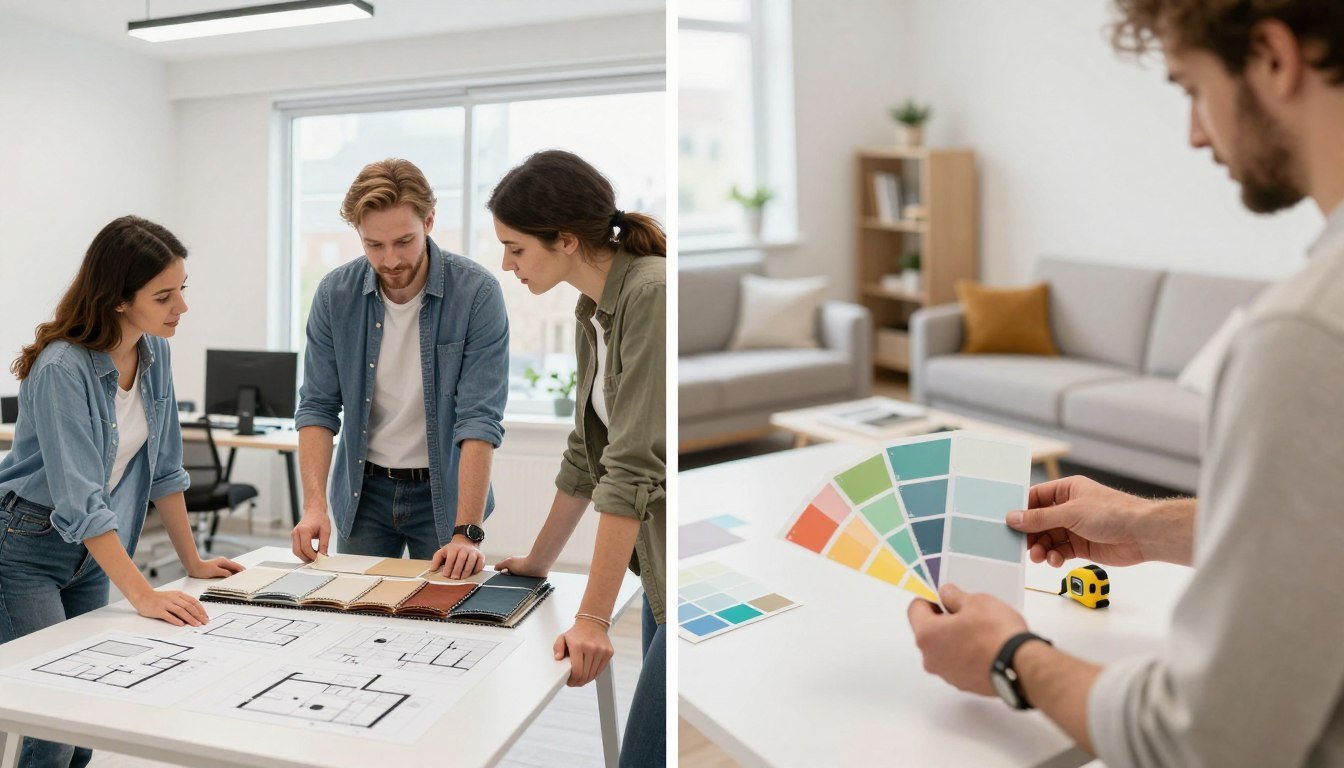
You stand in your empty living room, phone in hand, scrolling between an interior designer's portfolio and a Pinterest board you've been curating for months. The designer's quote sits heavy in your inbox. Your savings account whispers caution. This moment defines thousands of modern homeowners caught between professional expertise and the allure of doing it yourself.
The interior designer vs DIY modern home decision shapes not just your space but your budget, timeline, and stress levels for months ahead. According to the American Society of Interior Designers, professional design services can range from $50 to $500 per hour, while DIY projects promise unlimited creative control at a fraction of the cost. Yet the reality involves more complexity than simple price comparisons suggest.

This comprehensive guide examines both paths through the lens of real costs, time investment, and outcomes. Whether you're furnishing your first apartment or renovating a family home, understanding the true value proposition of each approach helps you make the decision that serves your goals, space, and budget best. Let's explore what interior designers actually deliver versus what skilled DIY projects can accomplish in modern home design.
Understanding the True Cost of Interior Design Services
Money conversations around interior design often start and stop at hourly rates, missing the complete financial picture. Professional interior designers typically charge through several models that affect your total project cost differently.

Designer Fee Structures Explained
Interior designers structure their business around three primary pricing models. Hourly rates range from $50 for emerging designers to $500 for established professionals in major markets. A typical living room redesign consuming 20-40 hours translates to $1,000-$20,000 in design fees alone before purchasing a single piece of furniture.
Flat fee arrangements offer predictability. Designers quote a fixed price for defined project scope, removing hourly uncertainty but requiring clear boundaries around revisions and changes. Percentage-based fees tie designer compensation to total project budget, typically 10-30% of furniture, materials, and contractor costs.
What Designer Fees Cover
- Initial consultation and space assessment
- Concept development and mood boards
- Space planning and furniture layout
- Material and finish selection
- Custom furniture design or sourcing
- Vendor coordination and project management
- Installation oversight and styling

Hidden Value in Designer Access
Professional interior designers bring access that justifies their cost beyond design expertise. Trade-only showrooms, contractor networks, and vendor relationships often deliver better pricing on furniture and materials. These industry connections can offset 10-20% of designer fees through discounts unavailable to retail consumers.
Designers also prevent expensive mistakes. A poorly planned furniture layout requiring returns, incorrect paint selections needing redoing, or ill-proportioned pieces that never work in the space - these DIY missteps often cost more than hiring a professional initially. The right art pieces selected professionally can transform a space immediately, while wrong choices collect dust in storage.
Time represents another hidden cost. Interior design projects demand research, shopping, comparing options, and coordinating deliveries. Professionals compress months of work into weeks through established processes and vendor relationships. For business owners and busy professionals, this time saved may exceed designer fees in opportunity cost.
The DIY Modern Home Design Approach
DIY interior design has evolved far beyond weekend craft projects. Modern homeowners access sophisticated tools, educational resources, and quality furnishings that make professional-looking results achievable without hiring an interior designer.

DIY Design Advantages
Budget control stands as the primary DIY benefit. You direct every dollar without markup or designer fees. A $5,000 furniture budget remains $5,000 for furnishings rather than splitting between designer fees and purchases. This financial transparency appeals to cost-conscious homeowners and first-time decorators.
Creative control follows closely. Your vision executes without translation through another person's aesthetic filter. Love bold abstract geometric art that designers might temper? DIY lets you commit fully. Prefer minimalist black and white prints throughout? No debate required.
If You Love Modern Minimalism
Here are 3 canvas prints that bring that clean, contemporary mood into any room - perfect for DIY decorators building their modern aesthetic.

Geometric Minimalism
Clean lines meet bold contrast in this statement piece perfect for modern living spaces.
View Collection
Neutral Abstract
Sophisticated neutral tones create calm, professional atmosphere in any room.
Shop Abstract Art
Line Art Elegance
Single-line artistry brings Scandinavian-inspired sophistication to bedrooms and entryways.
Explore Line ArtModern DIY Resources and Tools
Technology democratized interior design access. Virtual room planners let you test furniture arrangements before buying. Augmented reality apps show how specific pieces look in your actual space. Color visualization tools preview paint selections under different lighting conditions.
Educational content abounds. YouTube channels dedicated to interior design share professional techniques freely. Design blogs break down complex concepts into manageable steps. Online communities provide feedback and troubleshooting for DIY projects in real time.
Retailers now curate collections specifically for DIY decorators. Pre-designed room sets remove guesswork around coordination. Style guides match furniture to specific aesthetics. Ready-to-hang living room wall art eliminates the custom framing step that once required professional help.
DIY Challenges and Limitations
Time investment challenges many DIY projects. Research alone consumes dozens of hours before purchasing begins. Comparing options across retailers, reading reviews, measuring spaces, and validating choices stretches projects across months. What an interior designer completes in three weeks may take a DIYer three months.
Expertise gaps create risk. Space planning requires understanding traffic flow, furniture proportions, and functional zones. Color theory involves more than picking favorite shades. Lighting design impacts mood and functionality in ways not immediately obvious to untrained eyes.

Costly mistakes happen. Furniture that looked perfect online arrives too large for the space. Paint colors appear dramatically different than samples suggested. Art pieces clash rather than complement. These errors cost money to correct and extend project timelines significantly.
When Hiring an Interior Designer Makes Sense
Certain projects and circumstances favor professional interior designers over DIY approaches. Understanding these scenarios helps homeowners make informed decisions about when to invest in design services.

Complex Projects Requiring Expertise
Structural changes demand professional involvement. Moving walls, changing room functions, or integrating new spaces requires architectural understanding beyond typical DIY knowledge. Interior designers coordinate with contractors, architects, and engineers to ensure changes meet building codes while achieving aesthetic goals.
Kitchen and bathroom renovations benefit significantly from designer expertise. These high-stakes spaces involve plumbing, electrical, and ventilation systems where mistakes prove expensive. Designers familiar with industry standards prevent costly code violations and functional failures.
Designer Value Adds
- Access to trade-only resources and vendors
- Established contractor and tradesperson networks
- Space planning expertise for optimal function
- Project management across multiple vendors
- Better pricing through industry relationships
- Professional liability and project insurance
- Cohesive design across multiple rooms
Designer Limitations
- Significant upfront cost investment required
- Less direct control over creative decisions
- Communication delays on changes
- Potential style misalignment with designer
- Contract obligations and change order fees
- Extended timelines for designer availability
Time Constraints and Opportunity Cost
Business owners and professionals often find designer fees cheaper than their own time investment. If your hourly earning potential exceeds $100, spending 40 hours on DIY design costs $4,000 in opportunity cost before buying a single item. An interior designer completing the same work for $3,000 actually saves money while delivering better results.
Tight deadlines favor professionals. Preparing a home for sale, furnishing before guests arrive, or completing office space before business launch all benefit from designer efficiency. Their vendor relationships and project management experience compress timelines significantly.
High-Value Properties and Resale Considerations
Luxury properties warrant professional design investment. High-end buyers expect sophisticated interiors that DIY projects rarely achieve. The cost differential between amateur and professional results becomes negligible relative to property values above $500,000.
Homes being prepared for sale benefit from strategic design investment. Professional staging and updates can return 5-15% higher sale prices according to the National Association of Realtors. An interior designer's $5,000 fee that generates a $20,000 higher sale price delivers clear financial return.
DIY Design Success Strategies for Modern Homes
DIY interior design succeeds when approached systematically with clear strategies. These proven methods help homeowners achieve professional-looking results without hiring an interior designer.

Start with Clear Vision and Planning
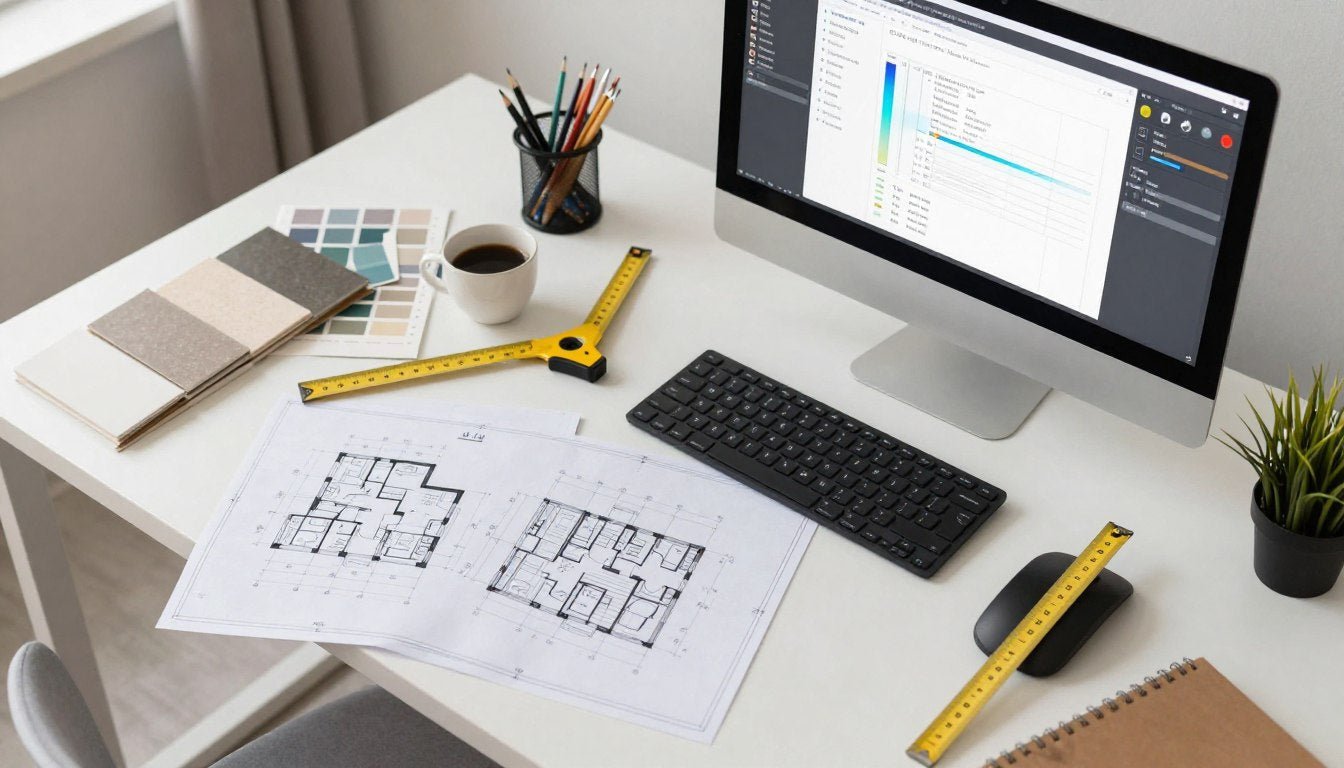
Successful DIY projects begin with thorough planning before purchasing anything. Create detailed mood boards that define your aesthetic direction. Measure every dimension of your space including ceiling height, window sizes, and doorway widths. Photograph your space from multiple angles to reference during shopping.
Define your design goals specifically. "Modern living room" lacks clarity. "Scandinavian-inspired living room with neutral palette, natural materials, and minimal clutter" provides actionable direction. Specific goals guide purchasing decisions and prevent style drift mid-project.
Match This Vibe to Your Space
Explore curated collections organized by room and style to find cohesive pieces that work together perfectly in your modern home.
Invest in Key Foundational Pieces
DIY budgets stretch further when invested strategically. Prioritize quality for high-use items that stand the test of time. Sofas, beds, and dining tables merit larger budget allocation than accent pieces easily changed later.
Artwork provides immediate impact at moderate investment. A well-chosen abstract canvas print anchors a living room design. Canvas print sets create gallery walls that rival designer installations at a fraction of custom art costs.
Foundation Investments
These items warrant higher budget allocation for longevity and impact.
- Sofa and primary seating
- Bed frame and mattress
- Dining table
- Quality lighting fixtures
Budget-Friendly Updates
These elements deliver style without major investment.
- Throw pillows and blankets
- Canvas wall art and prints
- Decorative accessories
- Plants and planters
DIY-Friendly Projects
Tasks that deliver professional results with moderate skill.
- Painting walls and trim
- Installing peel-and-stick wallpaper
- Hanging art and shelving
- Furniture assembly
Professional Territory
Projects that typically require expert help.
- Electrical work and lighting installation
- Plumbing modifications
- Built-in cabinetry
- Window treatments with complex hardware
Use the 60-30-10 Color Rule
Professional designers rely on the 60-30-10 rule for balanced color schemes. Your dominant color covers 60% of the space through walls, large furniture, and flooring. A secondary color accounts for 30% via curtains, accent chairs, and area rugs. The remaining 10% introduces a pop color through accessories, art, and small decor items.
This formula prevents the color chaos that plagues many DIY projects. A room with beige walls (60%), navy sofa and curtains (30%), and coral throw pillows and botanical canvas art (10%) achieves professional cohesion.

Phase Your Project to Spread Costs
DIY projects don't require completion in one budget cycle. Strategic phasing lets you live with choices before committing fully. Start with essential furniture and basic function. Add layers of comfort and style through subsequent phases as budget allows.
This approach prevents the costly mistake of rushing purchases to complete a room quickly. You discover how you actually use the space before investing in accent pieces. Paint color lives with you through different lighting before selecting art and textiles to match.
The Hybrid Approach: Combining Designer Help with DIY
Many successful modern home projects blend professional expertise with DIY execution. This hybrid approach maximizes value by investing designer fees strategically while maintaining budget control through self-execution.

Designer Consultation for DIY Execution
Hourly consultations provide professional guidance without full-service costs. A designer can review your space, identify potential issues, and create a basic plan for $500-$1,500. You then execute the plan independently, saving thousands in ongoing design fees while avoiding costly mistakes.
Virtual design services offer middle-ground pricing. Online interior designers create room plans, furniture layouts, and shopping lists for $300-$1,000 per room. You receive professional design without in-person meetings or project management fees.
Strategic Designer Investment
Hire professionals for complex decisions while handling simple execution yourself. An interior designer can create your space plan and select major furniture pieces. You then source your own accessories, art, and finishing touches at retail prices without design markup.
This approach works particularly well for challenging spaces. An awkward living room layout benefits from professional space planning expertise. Once furniture placement is optimized, you can confidently select wall art for your living room, throw pillows, and decorative objects independently.
DIY with Designer Review
Some designers offer review services for DIY projects. You develop your own plan, select furniture and finishes, then pay for a professional critique before purchasing. This safety net catches proportion errors, color mismatches, and functional oversights for a fraction of full-service fees.
Designer review typically costs $200-$500 and can prevent thousands in purchasing mistakes. The designer validates your choices or suggests alternatives before you commit financially. This peace of mind proves valuable for first-time decorators attempting ambitious projects.
Making Your Interior Designer vs DIY Decision
The interior designer vs DIY modern home choice depends on multiple factors beyond simple cost comparison. This decision framework helps you evaluate your specific situation objectively.

Evaluate Your Project Complexity
Simple refreshes favor DIY. Updating wall color, replacing outdated art with modern canvas prints, and adding new textiles rarely require professional help. These cosmetic updates deliver significant impact without technical complexity.
Complex renovations warrant professionals. Projects involving structural changes, multiple rooms, or significant budgets benefit from designer expertise. The risk of costly mistakes increases with project scale, making professional fees insurance against larger losses.
Assess Your Available Time
DIY projects demand significant time investment. Budget 40-80 hours for a single room including research, shopping, returns, and installation. If your schedule lacks this flexibility, designer efficiency may justify the cost.
Consider your opportunity cost honestly. High-earning professionals often save money by hiring interior designers despite higher upfront fees. Time spent on DIY design represents foregone income and work advancement opportunities.
Evaluate Your Design Confidence
Previous successful projects indicate DIY readiness. If you've completed room makeovers that you still love years later, your design instincts likely serve you well. Confidence grounded in experience differs from optimistic inexperience.
Design uncertainty suggests professional help. If you second-guess every choice or feel overwhelmed by options, a designer provides valuable decision-making structure. Their expertise converts your vague preferences into concrete plans.
Consider Your Risk Tolerance
DIY accepts higher mistake risk for budget savings. You might choose wrong-sized furniture, clash colors, or create awkward layouts. Some homeowners view this experimentation positively, others find it stressful.
Low risk tolerance favors designers. If purchasing mistakes cause significant anxiety or financial strain, professional guidance protects against these outcomes. Designer liability insurance also covers serious errors during execution.
Ready to Transform Your Modern Home?
Whether you choose the interior designer route or DIY approach, starting with stunning, ready-to-hang canvas art instantly elevates any space. Museum-quality prints, free worldwide shipping, and no professional installation needed.

Final Thoughts on Interior Designer vs DIY Modern Home Design
The interior designer vs DIY modern home decision requires honest assessment of your budget, time, skills, and goals. Neither approach universally wins every scenario. Professional designers deliver efficiency, expertise, and peace of mind for complex projects, high-value spaces, or time-constrained homeowners. DIY offers budget control, creative freedom, and personal satisfaction for those with time, confidence, and moderate project scope.
Many successful modern home projects blend both approaches strategically. Designer consultation paired with DIY execution maximizes value. Professional help for complex decisions combined with self-sourced accessories and art balances expertise with budget consciousness.

Your decision should prioritize long-term satisfaction over short-term savings. A DIY project you grow to dislike costs more to correct than hiring a designer initially. Conversely, paying designer fees for simple projects you could handle confidently wastes money better spent on quality furnishings.
Start with clear goals, realistic budget assessment, and honest capability evaluation. Whether you hire an interior designer, tackle projects yourself, or blend both approaches, informed decision-making based on your specific situation produces spaces you'll love for years. For additional design inspiration and practical tips, explore more insights on the Rossetti Art blog.
Frequently Asked Questions About Interior Designer vs DIY
How much does hiring an interior designer actually cost for a modern home?
Interior designer costs vary significantly based on experience, location, and project scope. Expect to pay $50-$200 per hour for most residential projects, or $2,000-$12,000 flat fee for a single room design. Percentage-based fees typically run 10-30% of total furniture and materials budget. A complete modern home design for a 2,000 square foot space might cost $15,000-$50,000 in designer fees alone, before purchasing furnishings. Consider that designers often provide access to trade discounts that can offset 10-20% of their fees.
Can DIY interior design really look as good as professional work?
DIY design can achieve professional-looking results with proper planning, research, and execution. Success depends on your design confidence, willingness to learn, and project complexity. Simple room refreshes, furniture arrangement, and decorative updates often work well as DIY projects. Complex renovations, space planning challenges, and high-budget projects typically benefit from professional expertise. The key lies in understanding your limitations and investing time in education before making purchasing commitments.
What are the biggest mistakes to avoid when doing DIY modern home design?
Common DIY design mistakes include purchasing furniture before measuring the space, ignoring scale and proportion, rushing color selections without testing samples, and buying everything at once without seeing how pieces work together. Also avoid following trends blindly without considering your personal style, neglecting proper lighting planning, and forgetting to establish a clear budget before shopping. Take time to plan thoroughly, measure twice, and phase your purchases to prevent costly errors that require returns or replacement.
When should I definitely hire an interior designer instead of DIY?
Hire an interior designer for projects involving structural changes, kitchen or bathroom renovations, whole-house designs requiring cohesive flow, high-value properties where mistakes prove costly, and situations with strict timelines. Professional help also makes sense when your budget exceeds $50,000, you lack design confidence, or your opportunity cost (hourly earning potential) makes DIY time investment financially illogical. If you've started a DIY project that feels overwhelming or you're making expensive mistakes, bringing in a designer mid-project can save money long term.
How can I save money on interior design without going fully DIY?
Consider hybrid approaches that blend designer expertise with DIY execution. Pay for an initial consultation where a designer creates your space plan and furniture layout, then source and install items yourself. Use online interior design services that provide virtual plans at lower cost than in-person services. Hire a designer for complex decisions like space planning and major furniture selection, then independently choose accessories, wall art, and finishing touches. This approach typically costs 40-60% less than full-service design while preventing costly mistakes.
What tools and resources help DIY interior design succeed?
Essential DIY design tools include room planning apps like Planner 5D or RoomSketcher, augmented reality apps to visualize furniture in your space, Pinterest for inspiration boards, and color visualization tools from paint brands. Educational resources such as YouTube design channels, interior design blogs, and online courses provide professional techniques. Join design communities on Reddit or Facebook for feedback and advice. Invest in a quality measuring tape, level, and stud finder for proper installation. These tools and resources help DIY decorators make informed decisions and avoid common mistakes.

Leave a comment
This site is protected by hCaptcha and the hCaptcha Privacy Policy and Terms of Service apply.