
That vast, empty wall looming behind your sofa can feel intimidating. You know it needs something, but what exactly? How to decorate a large living room wall over a couch is a question many homeowners face when trying to create a cohesive living space.
The wall behind your couch serves as the natural focal point in most living rooms. Getting this space right transforms your entire room from bland to breathtaking. Today, we'll explore practical ideas that work for any style, budget, and skill level.
Whether you're drawn to bold statement pieces or prefer a curated gallery wall, the right approach makes all the difference. Let's dive into proven strategies that turn that blank canvas into your room's crowning glory.
Understanding Your Wall Space and Proportions
Before you hang a single thing, take time to assess your wall dimensions. The size of your couch directly influences what works above it. Most designers recommend artwork or arrangements that span two-thirds to three-quarters of your sofa's width.
Measure your wall height from the sofa back to the ceiling. This vertical space determines whether you can use tall pieces or need to think horizontally. A common mistake people make today is choosing art that's too small, leaving the space feeling disconnected.

Consider your ceiling height as well. Standard 8-foot ceilings offer less vertical room than 10-foot or vaulted ceilings. Higher ceilings give you freedom to stack items or use exceptionally tall pieces that draw the eye upward.
The Golden Rule of Spacing
Leave 6 to 12 inches between your sofa top and the bottom of your wall art. This creates breathing room and prevents your décor from feeling cramped. Too much space makes items look disconnected, while too little makes the room feel cluttered.
Think about your room's overall scale. A large living room with substantial furniture can handle bigger, bolder pieces. A smaller living space needs more restrained choices to avoid overwhelming the area.
Gallery-Quality Prints That Command Attention
These statement pieces bring the bold presence your large wall needs. Each canvas is museum-quality, ready to hang, and designed to become your room's focal point.

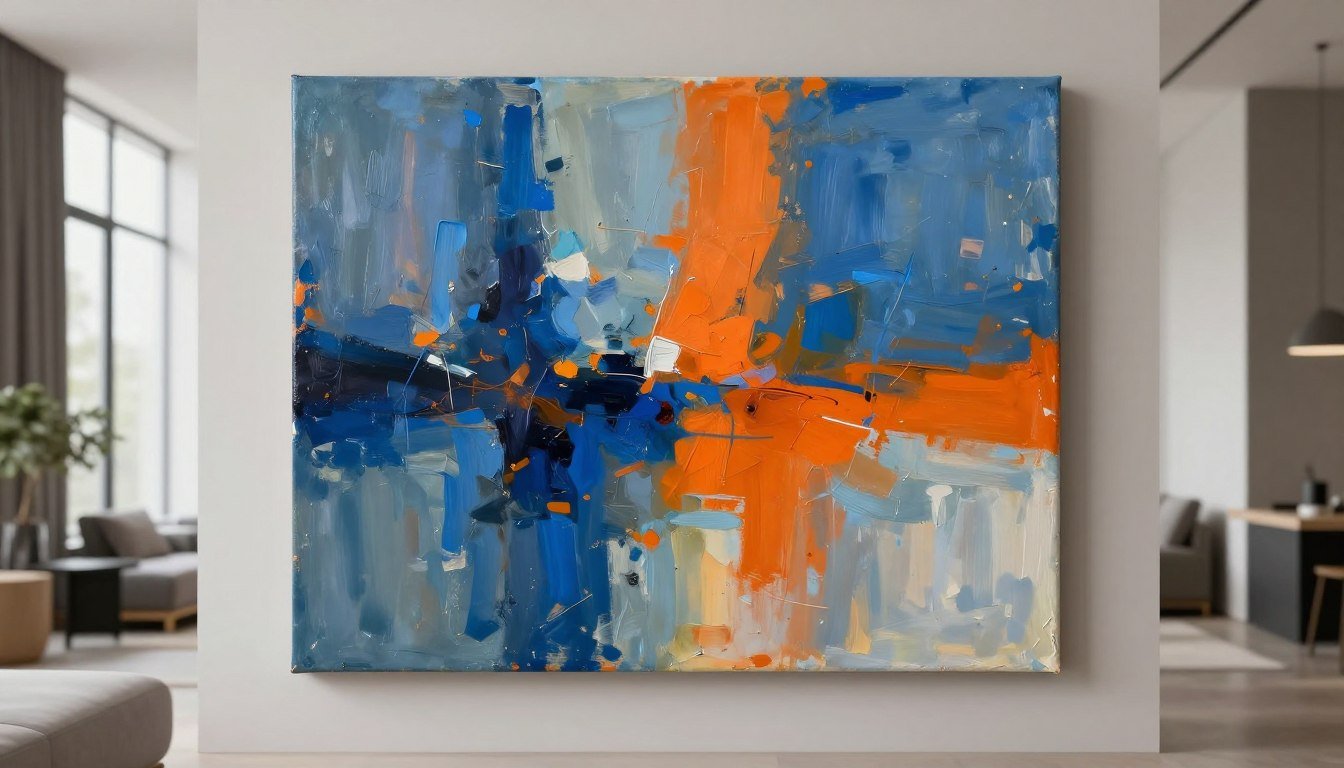
Abstract Expressions
Bold geometric patterns and rich colors create instant visual interest. Perfect for contemporary living rooms seeking a modern edge.

Botanical Beauty
Bring nature indoors with oversized botanical prints. These pieces add organic warmth and timeless elegance to any space.

Portrait Power
Figurative art adds human connection and sophistication. A striking portrait becomes an instant conversation starter.
Option One: The Power of a Single Statement Piece
Sometimes simplicity wins. A single large piece of art creates a clean, sophisticated focal point without overwhelming your living room space. This approach works exceptionally well in modern and minimalist homes where less truly is more.
Choose canvas prints that measure at least 40 to 60 inches wide for standard sofas. The piece should feel substantial without touching the sofa back or reaching the ceiling. Think of it as claiming the wall with confidence.

Choosing Your Statement Art
Consider the existing colors in your living room when selecting your statement piece. You can either complement your current palette or introduce a bold contrast that energizes the space. Many people today opt for abstract canvas prints because they work with various color schemes.
The style of your furniture guides your art selection. Contemporary spaces pair beautifully with geometric abstracts or line art canvas prints. Traditional rooms often benefit from landscapes or classical compositions.
Texture matters almost as much as the image itself. Canvas prints offer rich, gallery-quality depth that flat posters can't match. The slight texture catches light throughout the day, making your wall art feel dynamic and alive.
Hanging Height and Balance
Position your artwork so its center sits at eye level, typically 57 to 60 inches from the floor. This gallery standard ensures comfortable viewing whether people are standing or seated on your sofa. Adjust slightly higher if you have tall ceilings.
Step back and observe from multiple angles in your room. Your statement piece should feel anchored to the sofa without looking like it's falling onto it. The 6-to-12-inch rule we mentioned earlier applies perfectly here.
Option Two: Creating a Gallery Wall Above Your Couch
A gallery wall lets you tell a story with multiple pieces working together. This approach suits eclectic and traditional living rooms where personality and visual interest matter most. The key is making all those different items feel like one cohesive unit.
Start by laying out your arrangement on the floor first. Take a photo from above to see how pieces relate to each other. This simple step saves countless nail holes and frustration during installation.

Gallery Wall Layout Strategies
Grid layouts create order and sophistication. Use identical frame sizes and consistent spacing between pieces. This structured approach works beautifully in modern spaces and makes installation straightforward. Canvas print sets designed to work together simplify this process.
Salon-style arrangements embrace organized chaos. Mix different frame sizes, orientations, and even art styles. Start with your largest piece slightly off-center, then build around it. Allow 2 to 3 inches between frames for visual breathing room.
Symmetrical layouts appeal to those who love balance. Place a central anchor piece and mirror similar-sized works on either side. This classic approach never goes out of style and suits traditional living rooms perfectly.
Selecting Your Gallery Pieces
Establish a unifying element across all pieces. This might be a consistent color palette, matching frames, or a common theme. Without this connection, your wall can look cluttered rather than curated.
Mix black and white canvas prints with colorful pieces for dynamic contrast. Include different art styles like photography, illustrations, and paintings. Variety creates interest when held together by your unifying element.
Don't forget about scale. Your gallery wall should function as a single large artwork when viewed from across the room. Step back frequently during planning to ensure the overall shape and proportion work with your sofa and room space.
Option Three: Shelving and Layered Display
Floating shelves offer flexibility that permanent installations can't match. You can rotate items seasonally, swap things around on a whim, and adjust as your taste evolves. This dynamic approach suits people who like to refresh their living space regularly.
Install two to three floating shelves across your wall span. Space them 10 to 15 inches apart vertically to allow room for taller items. Dark shelves create dramatic contrast against light walls, while white shelves disappear for a floating art effect.

Styling Your Shelves
Layer artwork by leaning frames against the wall. Place larger pieces in back and smaller ones in front. This casual approach feels collected over time rather than overly designed. Mix in botanical wall art prints with sculptural objects for dimensional interest.
Incorporate books as both functional items and design elements. Stack them horizontally to create height variations. Use book spines to introduce additional colors that complement your art pieces.
Add three-dimensional objects to break up the flatness. Small sculptures, vases, or interesting found items create depth. Check out modern sculptures that complement your wall art without competing for attention.
The Rule of Odd Numbers
Group items in sets of three or five for the most pleasing arrangements. Our eyes find odd-numbered groupings more dynamic and interesting than even numbers. Vary heights within each grouping to create visual rhythm.
Leave empty space on your shelves. White space prevents the display from feeling cluttered and gives each item room to breathe. Aim to leave about 30% of your shelf surface empty.
Match Your Personal Style
Every living room has its own personality. Whether you lean toward bold contemporary statements or timeless classical beauty, find canvas prints that reflect your unique aesthetic. Explore curated collections designed for specific design sensibilities.
Modern & Minimalist
Clean lines, geometric forms, and monochromatic palettes define contemporary spaces. Discover pieces that embrace simplicity without sacrificing impact.
Warm & Organic
Bring the outdoors in with botanical prints and nature-inspired artwork. Perfect for creating serene, inviting living spaces that feel grounded and calm.
Option Four: Mirrors and Reflective Elements
Mirrors do double duty in any living room. They expand your space visually while reflecting natural light to brighten dark areas. A large mirror above your couch can actually make your room feel significantly larger than it is.
Choose mirrors with substantial frames that match your décor style. An ornate gold frame suits traditional rooms, while sleek metal frames work in modern spaces. The mirror size should follow the same two-thirds rule as artwork.

Mirror Placement Considerations
Position mirrors to reflect something attractive, not blank walls or clutter. Ideally, your mirror should catch windows, bringing more natural light into the room. Avoid reflecting the television, which can create distracting glare.
Consider mirror shape as part of your design strategy. Round mirrors soften angular furniture, while rectangular mirrors reinforce clean lines. Irregular or sunburst shapes add artistic flair to neutral living spaces.
Combining Mirrors with Art
You don't have to choose between mirrors and art. Create a mixed gallery wall incorporating both reflective and flat surfaces. This combination adds depth and visual complexity that engages the eye.
Flank a central mirror with abstract canvas prints on either side. This symmetrical arrangement balances the reflective quality of the mirror with the texture and color of artwork. The result feels both expansive and grounded.
Option Five: Textural Wall Treatments and Installations
Sometimes the wall itself becomes the art. Textural treatments like board and batten, shiplap, or wallpaper create visual interest without hanging anything. This architectural approach works especially well in homes with strong design themes.
Accent walls behind your sofa establish instant focal point status. Paint one wall a bold color while keeping others neutral. This draws the eye naturally to your seating area and makes the room feel intentionally designed.

Wallpaper as Statement
Modern wallpapers offer incredible variety beyond traditional florals. Geometric patterns, subtle textures, or dramatic murals transform your wall into art itself. Removable wallpaper makes this option commitment-free for renters.
Choose wallpaper that complements rather than competes with your furniture. A busy sofa pairs better with subtle patterns, while a plain couch can handle bold, graphic wallpaper. Consider scale carefully so the pattern doesn't overwhelm your room space.
Three-Dimensional Wall Art
Wall sculptures and dimensional installations add depth that flat art can't achieve. Metal wall art, wooden installations, or fabric hangings create shadows and texture that change throughout the day as light shifts.
These pieces work particularly well in modern living rooms where they enhance the architectural quality of the space. Pair three-dimensional installations with simple furniture to let the wall remain the focal point. Browse modern sculptures that transition beautifully from pedestal to wall mount.
Color Coordination and Room Harmony
Your wall décor should speak the same color language as the rest of your living room. This doesn't mean everything matches perfectly, but there should be intentional color relationships that tie things together. Think about how colors interact rather than exact matching.
Pull accent colors from your existing furniture and accessories. If your throw pillows feature teal and coral, incorporate those shades in your wall art. This creates visual threads that connect different areas of the room into a cohesive whole.

The 60-30-10 Design Rule
Professional designers use this simple formula: 60% dominant color, 30% secondary color, and 10% accent color. Your wall treatment usually falls into the 30% category, supporting your main wall and furniture colors while adding interest.
Neutral walls allow colorful art to pop. White or grey living room walls create the perfect backdrop for vibrant pop art canvas prints or bold abstracts. The contrast makes your art appear more vivid and energetic.
Creating Depth with Color Temperature
Warm colors (reds, oranges, yellows) advance visually, making walls feel closer. Cool colors (blues, greens, purples) recede, creating the illusion of more space. Use this knowledge strategically when choosing wall art for small living rooms.
Monochromatic schemes using different shades of one color create sophisticated, calming spaces. Vary the intensity rather than the hue itself. This approach works beautifully with black and white canvas prints that rely on tonal variation.
Lighting Your Wall Art Effectively
Even the most beautiful art falls flat without proper lighting. Natural light changes throughout the day, so test how your wall looks at different times. Morning light differs dramatically from afternoon and evening illumination in both quality and direction.
Add picture lights above individual artworks for gallery-level presentation. These focused lights eliminate glare while highlighting texture and color. Battery-operated options work when running electrical lines isn't practical.

Avoiding Glare and Shadows
Position light sources at 30-degree angles from the wall to minimize glare on glass or glossy surfaces. Track lighting offers flexibility to adjust as you change your display. Dimmer switches let you control intensity based on time of day and mood.
Canvas prints have an advantage over framed glass pieces because they don't create glare. The matte surface absorbs rather than reflects light, making canvas prints ideal for rooms with lots of windows or bright overhead lighting.
Ambient Room Lighting
Table lamps on side tables or the console table behind your couch create warm pools of light. This layered lighting approach makes your living space feel more inviting while drawing attention to your wall décor through shadow and highlight.
Avoid placing lamps directly in front of wall art where they cast shadows. Position them to the sides instead, creating grazing light that emphasizes texture without obscuring the view.
Style-Specific Decorating Approaches
Your overall décor style should guide your wall treatment choices. What works in a farmhouse living room might look out of place in a sleek contemporary space. Let's explore how different styles approach the large wall behind the couch.
Modern and Contemporary Living Rooms
These spaces embrace clean lines and uncluttered surfaces. A single oversized abstract piece makes a stronger statement than multiple smaller items. Choose abstract geometric canvas prints with bold colors or striking black and white contrasts.
Asymmetrical arrangements work well in modern spaces. Place your main art piece off-center, balanced by negative space or a single smaller element. This creates visual tension that feels intentional and sophisticated.

Traditional and Classic Spaces
Traditional rooms benefit from symmetry and classical compositions. A large landscape or portrait canvas print in an ornate frame anchors these spaces beautifully. Gold or carved wood frames enhance the formal feeling.
Salon-style gallery walls suit traditional living rooms when pieces share similar frames and classical themes. Include botanical prints, classical architecture, or figurative work. The key is cohesion through subject matter and frame style.
Farmhouse and Rustic Rooms
These spaces love texture and weathered materials. Reclaimed wood frames, distressed finishes, and natural subjects work perfectly. Layer different textures on floating shelves with botanical wall art prints alongside vintage finds.
Shiplap or board-and-batten accent walls provide architectural interest without artwork. If you add art, keep it simple with muted colors and natural themes. Black and white photography of rural scenes complements this aesthetic.
Eclectic and Bohemian Living Spaces
These styles thrive on collected, personal touches. Mix different frame styles, art mediums, and cultural influences freely. The more personal and unexpected, the better. Include pop art canvas prints alongside vintage finds and travel souvenirs.
Layer textiles like tapestries or macramé with framed art. Incorporate shelving filled with plants, books, and meaningful objects. The goal is a curated-over-time look that tells your unique story.
Budget-Friendly Decorating Solutions
Decorating a large wall doesn't require emptying your bank account. Smart strategies let you create high-impact looks while spending less. The key is being thoughtful about where you invest and where you can economize.
Start with one quality anchor piece rather than multiple mediocre items. A single stunning canvas print creates more impact than several cheap posters. You can always add complementary pieces over time as your budget allows.

DIY and Printable Art Options
Download high-resolution printable art online and have it printed at local print shops. Frame it yourself using affordable ready-made frames. This approach costs a fraction of original art while still looking professional.
Create your own abstract art using canvas panels and acrylic paint. Abstract pieces are forgiving for beginners, and bold color choices make them look intentional. Watch tutorials to learn simple techniques that yield impressive results.
Shopping Smart for Wall Decor
Look for living room wall art during sales and promotional periods. Many online galleries offer free shipping, which significantly reduces the total cost. Sign up for newsletters to catch special offers.
Consider canvas print sets designed to work together. These often cost less than buying individual pieces separately while guaranteeing a coordinated look. They eliminate the guesswork of making pieces work together.
Repurposing and Updating Existing Items
Refresh old frames with new paint or stain. Swap out outdated prints for new ones without replacing the frames. Even changing matting color can completely transform how artwork appears.
Rearrange existing art from other rooms in your home. That piece hiding in your bedroom might be perfect above your living room couch. Moving things around costs nothing but can dramatically refresh your space.
Common Mistakes to Avoid
Learning from others' mistakes saves time, money, and walls full of unnecessary nail holes. Many people make the same errors when decorating the space behind their couch. Here's what to watch out for today.
Scale and Proportion Errors
Too-small art is the most frequent mistake. A tiny piece above a large sofa looks like an afterthought rather than an intentional choice. Remember that two-thirds to three-quarters rule and don't be afraid to go large.
Hanging art too high is another common issue. If you have to crane your neck to see it, it's too high. The center should align near eye level, not float toward the ceiling. This creates a disconnected feeling between furniture and wall.

Ignoring Room Context
Don't choose wall art in isolation from your furniture, rug, and accessories. Everything should work together as a cohesive whole. Take photos of your room and bring them when shopping to ensure color and style compatibility.
Failing to consider your coffee table and other furniture creates awkward sightlines. Stand back and view the entire seating area together. The wall art should complement the three-dimensional furniture arrangement, not fight it.
Overthinking the Process
Perfection paralysis stops many people from making any decision. You don't need to get it perfect on the first try. Wall décor can be changed, moved, and updated over time. Start with something you love and adjust as needed.
Buying everything at once often leads to mismatched pieces that don't work together. Build your wall over time, letting each addition complement what's already there. This creates a more collected, personal look anyway.
Transform Your Living Room Today
Ready to turn that empty wall into your home's focal point? Rossetti Art offers museum-quality canvas prints that arrive ready to hang, backed by free worldwide shipping. Every piece is crafted to bring gallery-level sophistication to your living space.
Why Choose Rossetti Art?
- Museum-quality canvas with rich, fade-resistant inks
- Ready-to-hang with included mounting hardware
- Free worldwide shipping to Ireland and beyond
- Curated collections for every design style
- Satisfaction guaranteed on every order
Seasonal Updates and Refreshing Your Wall
Your wall doesn't have to stay static year-round. Small seasonal updates keep your living room feeling fresh without requiring complete redecoration. This approach lets you enjoy variety while maintaining your foundational design.
Swap out accent pieces on floating shelves with seasonal items. Incorporate autumn leaves in fall, fresh flowers in spring, or winter greenery during holidays. These small touches signal the changing seasons without overwhelming your space.

Rotating Your Art Collection
If you have multiple pieces you love, rotate them seasonally. Store pieces carefully in a closet or under beds, then swap them out quarterly. This gives you fresh inspiration without buying new things constantly.
Consider art that works across seasons as your anchor, then change supporting elements. A neutral abstract or black and white canvas print works year-round, while you swap seasonal accent pieces around it.
Quick Refresh Ideas
Change throw pillows on your couch to coordinate with new wall art. This simple switch creates cohesion without touching your walls. Bold spring florals transition to coastal blues in summer, warm autumn tones, then cozy winter textures.
Update frames or matting on existing art pieces for a fresh look. A simple frame change from black to gold, or adding a colorful mat, transforms how artwork appears. This costs far less than buying entirely new pieces.
Solutions for Challenging Wall Situations
Not every wall cooperates perfectly with standard decorating advice. Some living rooms present unique challenges that require creative solutions. Let's address these situations so you can overcome obstacles in your specific space.
Dealing with Windows Behind the Couch
Windows interrupt your wall space but don't make it impossible to decorate. Hang art on either side of the windows, treating them as part of your overall composition. Or install a curtain rod above the windows to create a unified backdrop when curtains are drawn.
Consider window treatments themselves as your wall décor. Beautiful floor-to-ceiling drapes in a statement color or pattern serve the same focal point purpose as art. Layer with sheer under-curtains for light control.

Very High or Cathedral Ceilings
Tall ceilings offer opportunity but can intimidate. Create a vertical arrangement that draws the eye upward without leaving awkward empty space. Stack pieces vertically or use exceptionally tall single pieces.
Consider where the ceiling line intersects with your wall. Some cathedral ceilings slope, creating irregular spaces. Work with the architecture rather than fighting it, perhaps echoing the slope angle in your arrangement.
Textured or Brick Walls
Rough surfaces make hanging traditional frames challenging. Use picture-hanging systems designed for masonry, or lean large pieces on deep floating shelves instead. Canvas prints mounted on floating frames work better than glass-framed pieces.
Embrace the texture as part of your design. Exposed brick or stone walls make dramatic backdrops that need minimal adornment. A single statement piece might be enough, letting the wall texture provide visual interest.
Narrow Walls or Unusual Dimensions
If your couch sits against a narrow wall section between doors or windows, work with vertical rather than horizontal pieces. Tall narrow art or a vertical series of small pieces suits these spaces better than trying to span horizontally.
Sometimes the best solution is doing less rather than more. In very restricted spaces, a single small meaningful piece makes more sense than forcing a larger solution that doesn't fit comfortably.
Professional Interior Designer Secrets
Interior designers use specific techniques to create polished, magazine-worthy spaces. These insider strategies help elevate your wall from "decorated" to "designed." Many of these secrets are simpler than you might think.
The Power of Negative Space
Don't feel compelled to fill every inch of wall. Strategic empty space makes your chosen pieces more impactful. Designers call this negative space, and it's just as important as the objects themselves.
Balance busy areas with calm areas throughout your room. If your wall is heavily decorated, keep surrounding walls and surfaces minimal. This prevents visual fatigue and makes your focal point wall truly stand out.

Creating Visual Weight Distribution
Distribute visual weight evenly across your wall and room. Dark or large objects carry more visual weight than light or small ones. Balance a dark piece on one side with either another dark piece or multiple lighter items opposite.
Consider your entire seating area as one composition. Your coffee table, side tables, and wall art should balance as a complete three-dimensional arrangement. What works from one angle should work from all viewing angles in your living space.
Using the Rule of Thirds
Divide your wall mentally into thirds both horizontally and vertically. Place key elements where these lines intersect for naturally pleasing placement. This photography principle works equally well in interior design.
The rule of thirds explains why centered arrangements sometimes feel static. Placing elements slightly off-center creates visual interest while maintaining balance. This technique makes your design feel more dynamic and professional.
Layering for Depth
Create depth by layering different planes. Your sofa forms one layer, the wall another. Add dimension with shelves that project outward, sculptures that cast shadows, or gallery-style frame arrangements that create small depth variations.
Lighting adds another layer entirely. Picture lights, wall sconces, or strategically placed table lamps create highlights and shadows that emphasize your three-dimensional arrangement. This professional touch makes enormous difference.
Watch more decorating inspiration and tips on the Rossetti Art YouTube channel
Maintaining and Caring for Your Wall Display
Once you've created your perfect wall arrangement, proper maintenance keeps it looking fresh for years. Regular care prevents damage and extends the life of your investment in beautiful art and décor.
Cleaning and Dusting
Dust accumulates on frames and canvas surfaces over time. Use a soft microfiber cloth to gently wipe frames monthly. For canvas prints, a clean, dry cloth removes surface dust without damaging the print.
Avoid harsh chemicals or water on canvas. If your canvas print needs deeper cleaning, very lightly dampen a cloth with water only. Never spray cleaning products directly onto artwork. For canvas prints, gentle care maintains their beauty.

Protecting from Sunlight Damage
Direct sunlight fades artwork over time. If your living room has windows, use UV-protective glass for framed pieces or position art away from direct sun exposure. Canvas prints fade more slowly than paper prints but still benefit from indirect lighting.
Close curtains or blinds during the brightest part of the day if sun hits your wall directly. This simple habit dramatically extends the life of your art. UV-filtering window film offers another protection layer without blocking views.
Checking Hardware and Stability
Every few months, check that hanging hardware remains secure. Screws and picture hooks can loosen over time, especially in homes with activity or vibration. Tighten anything that's worked loose to prevent accidents.
Heavy pieces need anchors in wall studs or specialized drywall anchors rated for the weight. Don't trust standard picture hooks for large canvas prints or mirrors. Proper installation prevents damage to both walls and artwork.
When to Hire Professional Help
Some wall decorating projects benefit from professional expertise. Knowing when to DIY and when to call for help saves frustration and potentially costly mistakes. Consider these situations carefully before proceeding alone.
Complex Installations
Very heavy pieces require professional installation to ensure safety. Anything over 50 pounds should be hung by someone experienced with proper anchoring techniques. The risk of damage or injury isn't worth saving the installation cost.
Gallery wall installations with many pieces benefit from professional eyes. An interior designer can layout your arrangement perfectly on the first try. This saves time and avoids walls riddled with extra nail holes from trial and error.

Design Consultation Value
If you feel completely overwhelmed by choices, a design consultation provides direction. Many designers offer one-hour consultations that give you a clear plan to execute yourself. This middle-ground approach saves money while providing expert guidance.
Designers see spatial relationships and color interactions you might miss. They suggest combinations and arrangements you wouldn't consider. This fresh perspective often leads to more creative, cohesive results than DIY alone.
Electrical Work for Lighting
Adding picture lights or wall sconces requires electrical work. Unless you're qualified, hire a licensed electrician for any wiring. Battery-operated lights offer a safe DIY alternative that still provides quality illumination.
Track lighting installation falls into this category as well. Professional installation ensures safety and proper function. Consider this investment worthwhile for long-term satisfaction with your lighting setup.
Bringing Your Living Room Wall to Life
Decorating a large living room wall over a couch transforms your entire space from ordinary to extraordinary. The strategies we've explored today give you multiple paths to success, regardless of your style, budget, or skill level. Your blank wall holds enormous potential.
Remember the key principles: proper scale and proportion, intentional color coordination, and arrangements that reflect your personal style. Whether you choose a single statement piece, gallery wall, shelving display, or alternative treatment, confidence in your decision matters most.
Start with pieces that genuinely speak to you. Your home should reflect your personality and make you happy when you walk through the door. Don't chase trends that don't resonate or please others at the expense of your own taste.
Take your time building your perfect wall. Many beautiful spaces evolve gradually rather than coming together overnight. As your collection grows and your confidence increases, you'll develop an eye for what works in your unique living room space.
The wall behind your couch serves as your home's focal point and deserves thoughtful attention. With the ideas and techniques shared today, you have everything needed to create a wall that amazes guests and brings you daily joy. Your dream living room is closer than you think.
Frequently Asked Questions
What size art should I hang over my couch?
Your wall art should span two-thirds to three-quarters of your sofa's width for proper visual proportion. For a standard 7-foot sofa, look for artwork between 56 to 63 inches wide.
If using multiple pieces in a gallery wall arrangement, measure the total arrangement span rather than individual pieces. The entire grouping should follow this proportion rule.
For height, aim for pieces between 24 to 40 inches tall depending on your ceiling height. Leave 6 to 12 inches between the sofa back and the bottom of your art.
How high should I hang artwork above my couch?
Hang artwork so its center sits at eye level, typically 57 to 60 inches from the floor. This standard gallery height ensures comfortable viewing whether standing or seated.
Leave 6 to 12 inches of space between your sofa's top and the artwork's bottom edge. This breathing room prevents the art from feeling cramped against the furniture.
For very tall ceilings, you can go slightly higher, but maintain that 6-to-12-inch gap above the couch. The relationship between furniture and art matters more than strict height measurements.
Can I use a mirror instead of art over my couch?
Absolutely! Mirrors work beautifully above couches, especially in smaller living rooms where they create the illusion of more space and reflect natural light throughout the room.
Position mirrors to reflect something attractive like windows or an interesting architectural feature rather than blank walls. Avoid reflecting the television to prevent distracting glare.
Follow the same sizing guidelines as artwork - the mirror should span two-thirds of your sofa width. Choose frame styles that complement your room's décor, from ornate traditional to sleek modern designs.
What's better: one large piece or multiple smaller pieces?
Both approaches work wonderfully depending on your style and space. Single large pieces create clean, modern focal points and work best in minimalist or contemporary living rooms.
Gallery walls with multiple pieces suit eclectic, traditional, or personalized spaces where you want to tell a story through collected items. They require more planning but offer greater flexibility.
Consider your furniture style - busy, patterned sofas pair better with single simple pieces, while plain sofas can handle more complex gallery arrangements. Your comfort level with DIY installation also matters, as gallery walls demand more precision.
Explore living room canvas art options for both single statement pieces and coordinated sets that simplify gallery wall creation.
How do I choose art colors that work with my living room?
Pull colors from existing elements in your room - throw pillows, rugs, or curtains. Your art doesn't need to match exactly but should include one or two colors already present in your space.
Alternatively, let your art introduce a new accent color to refresh your room. This works especially well with neutral furniture where you want to add personality and energy.
Consider the 60-30-10 rule: 60% dominant color (walls, large furniture), 30% secondary color (where art often falls), and 10% accent colors. This creates balanced, professional-looking color distribution.
If you're unsure, black and white canvas prints work with virtually any color scheme while adding sophistication and visual interest to your living room space.
What if I have windows behind my couch?
Windows don't prevent wall decoration - they just require creative approaches. Hang art on wall sections flanking the windows, treating the windows as part of your overall composition.
Install curtain rods extending beyond window frames to create a unified backdrop when curtains are drawn. Choose beautiful window treatments that serve as your focal point rather than competing with them.
Consider floating shelves that span across the wall including above windows. This creates continuous visual interest while working with rather than against your architectural features.

About the Author
Chiara Rossetti
Chiara Rossetti is the founder of Rossetti Art, a canvas print and original art brand. She writes about interior design, wall art styling, and the art of making a home feel alive.


Leave a comment
This site is protected by hCaptcha and the hCaptcha Privacy Policy and Terms of Service apply.