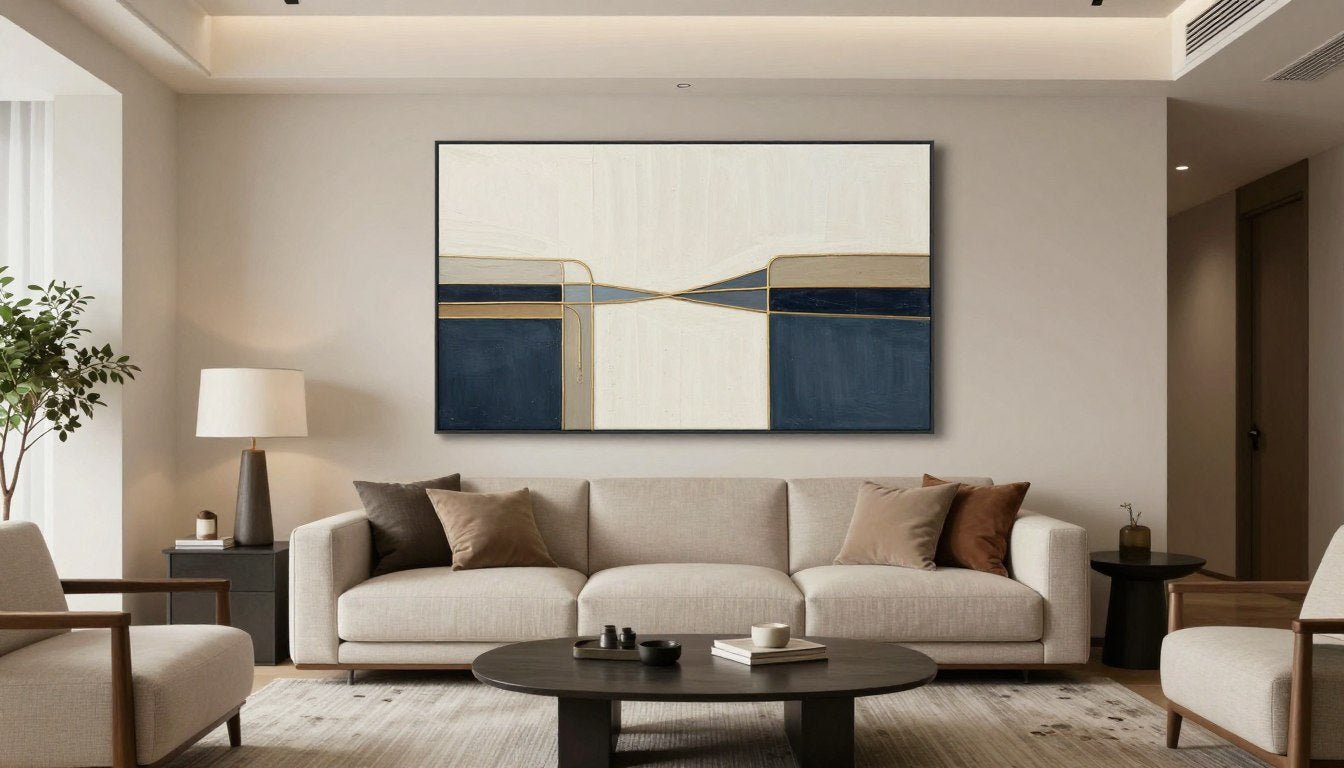

Choosing the right size canvas print for your wall can completely change how balanced and finished a room feels. If the artwork is too small, it can look disconnected from the space. If it is too large, it can overwhelm the furniture and architecture around it. This guide explains how to choose the right size canvas print for your wall using simple proportion rules, room-by-room examples, and practical styling tips.
Wall art transforms empty spaces into personal statements. The size you select determines whether a piece becomes a focal point or fades into the background. Understanding basic proportion principles helps you avoid common sizing mistakes. This way, you can shop for canvas prints with confidence and create rooms that feel intentionally designed.
Professional interior designers rely on mathematical ratios to achieve visual harmony. These same formulas work in any home, regardless of style or budget. You do not need design training to apply them. The following sections break down each rule in clear, actionable terms that make selecting wall art straightforward and stress-free.
Start With the 60 to 75 Percent Rule

The most reliable sizing formula states that wall art should span between 60 and 75 percent of the width of the furniture below it. This creates visual balance without making the artwork look too small or too dominant. Designers use this rule because it anchors art to furniture while leaving breathing room on each side.
Measure the width of your sofa, bed, console table, or buffet. Multiply that number by 0.60 and 0.75 to find your ideal art width range. For example, a 90-inch sofa works best with art that measures 54 to 68 inches wide. This range gives you flexibility while maintaining proportion.
If you choose art smaller than 60 percent, it may appear disconnected from the furniture. When art exceeds 75 percent, it can crowd the wall and reduce visual breathing space. This rule applies to single pieces and multi-panel canvas print sets. For sets, measure the combined width of all panels including the space between them.

Why This Formula Works
The 60 to 75 percent range creates visual anchoring. Your eye naturally connects the art to the furniture below when proportions fall within this sweet spot. This prevents floating artwork syndrome where pieces look randomly placed.
Commercial spaces like hotels and model homes follow this guideline consistently. It delivers professional results without requiring complex calculations or design expertise. Apply it to any room type or furniture arrangement for reliable outcomes every time.
What Size Canvas Print Works Best Above a Sofa

Sofas present the most common wall art placement challenge in homes. The right size wall art above a sofa depends on furniture dimensions and ceiling height. Most sofas measure between 72 and 96 inches wide. This gives you a target art width of roughly 43 to 72 inches for balanced proportions.
For a standard 84-inch sofa, select art between 50 and 63 inches wide. This applies whether you choose a single large piece or a multi-panel set. Sectional sofas require different treatment. Focus on the wall section behind the sofa, not the entire sectional length. Measure only the portion of the sectional against the wall where you plan to hang wall art.
Height placement matters as much as width. Position the center of your canvas print approximately 56 to 60 inches from the floor. This aligns with average eye level and creates comfortable viewing angles. Leave 6 to 12 inches of space between the sofa back and the bottom edge of the artwork to prevent crowding.
Living Room Canvas Art Recommendations
Explore our curated living room canvas art collection designed to complement your sofa and create visual harmony. Each piece is scaled for common furniture dimensions and available in multiple sizes to match your specific space requirements.
- Single statement pieces for minimalist spaces
- Multi-panel sets that span wide walls
- Abstract and landscape options
- Custom sizing consultation available

Adjusting for High Ceilings
Rooms with ceilings above nine feet allow for taller artwork. You can increase vertical dimensions without violating proportion rules. Consider pieces that reach 36 to 48 inches in height to fill vertical wall space above the sofa appropriately.
High ceilings create opportunities for dramatic focal point displays. Oversized canvas wall art makes bold statements in these spaces. Just maintain the 60 to 75 percent width rule even when increasing height. This preserves the visual connection between furniture and art.
How to Choose Canvas Art Size for a Bed, Console, or Dining Room Wall

Bedroom walls require special consideration when selecting art size. Above a queen or king bed, choose pieces between 40 and 60 inches wide. This range works for most standard headboards while maintaining proper scale. The art should never extend beyond the outer edges of the bed frame.
Console tables and buffets typically measure 48 to 72 inches wide. Apply the same 60 to 75 percent rule here. A 60-inch console pairs well with art measuring 36 to 45 inches across. Vertical pieces work beautifully in these locations since consoles often sit in narrower wall spaces like entryways and hallways.
Dining room walls offer flexibility for larger statement pieces. Measure the wall section above your dining furniture. If you have a sideboard or buffet, follow standard proportion rules. For blank walls without furniture below, you can go bigger. Just maintain visual balance with the room size and table dimensions.
Bedroom Sizing Strategy
Bed walls benefit from horizontal orientation artwork. This echoes the horizontal lines of the bed and headboard. Leave 4 to 8 inches of space between the headboard and art bottom edge.
Consider diptych or triptych sets for wide wall spaces above king beds. These multi-panel arrangements fill space elegantly without requiring one massive single canvas. Browse bedroom canvas prints designed specifically for these proportions.

Console and Entry Walls
Narrow walls in hallways and entryways work best with vertical or square art. These orientations fit the vertical proportions of the space. A 24 by 36-inch vertical piece often suits these locations better than wide horizontal formats.
Entry walls create first impressions. Select entryway wall art that welcomes guests without overwhelming the limited wall space. Smaller, curated pieces often outperform oversized options in compact entry areas.
Bedroom Canvas Collection
Discover bedroom canvas prints scaled perfectly for walls above beds, dressers, and nightstands. Our bedroom collection features calming imagery and sophisticated designs that promote rest and relaxation.
- Horizontal pieces ideal for headboard walls
- Calming color palettes for restful spaces
- Diptych and triptych bedroom sets
- Multiple size options for any bed size

Dining Room Considerations
Dining rooms accommodate bolder artwork choices. You spend less time staring at these walls compared to living rooms. This allows for more experimental sizing and styles. Just ensure pieces do not visually compete with chandeliers or pendant lights.
If your dining room has a large blank wall opposite the table, you can fill it with oversized wall art or a gallery wall arrangement. These spaces handle larger scale better than walls directly behind dining furniture.
When to Choose Oversized Wall Art vs a Multi-Panel Set

Oversized single pieces make powerful focal points in rooms with ample wall space. A single large canvas creates drama and draws the eye immediately. This works well in minimalist spaces where you want one strong visual statement rather than multiple competing elements.
Multi-panel sets offer different advantages. Canvas print sets allow you to fill wider wall spaces without needing one massive single canvas. Sets also add visual rhythm through repetition. Three-panel triptychs are especially popular for walls above sectionals and king beds.
Choose oversized single pieces when your style leans minimal and modern. Select multi-panel sets when you need to fill very wide walls or prefer more visual interest. Sets work beautifully in transitional and contemporary spaces where layered design feels appropriate.
Oversized Single Canvas Benefits
- Creates immediate focal point
- Works in minimalist design schemes
- Fewer hanging decisions required
- Bold statement with less complexity
Large single canvases suit open concept spaces. They hold their own against expansive walls without requiring multiple pieces. This approach simplifies decorating while maximizing impact.
Multi-Panel Set Advantages
- Fills extra-wide wall spaces efficiently
- Adds visual rhythm and movement
- Easier to transport and hang
- Adjustable spacing for custom widths
Canvas print sets offer installation flexibility. You control panel spacing to fine-tune the overall width. This makes sets adaptable to various furniture dimensions. Explore canvas print sets in two, three, and five-panel configurations.

Scale Considerations for Each Option
Oversized pieces typically measure 48 inches or larger in width. These dimensions work in rooms where other furniture also carries visual weight. Small rooms can feel overwhelmed by massive single canvases unless ceiling height provides balance.
Multi-panel sets distribute visual weight across separate pieces. This often feels less imposing than one equivalently sized canvas. Sets work particularly well in rooms with mixed furniture sizes where you need art that bridges different scales.
Common Wall Art Sizing Mistakes to Avoid

The single most common mistake is choosing art that is too small. Undersized pieces look like afterthoughts floating on the wall. They fail to create the visual anchor that properly proportioned art provides. This error happens most often when decorating large, blank walls.
Another frequent error involves ignoring furniture width when selecting art. People choose pieces they love without measuring. The artwork arrives and looks completely disconnected from the sofa or bed below it. Always measure furniture first, then calculate your target art width range.
Hanging art too high creates neck strain and awkward sight lines. The center of your artwork should align with average eye level, approximately 56 to 60 inches from the floor. This standard applies to most residential spaces unless you have unusually high ceilings.
Quick Mistake Checklist
- Buying art before measuring wall and furniture dimensions
- Selecting pieces smaller than 60 percent of furniture width
- Hanging art center point above 62 inches from floor
- Ignoring the space between furniture and art bottom edge
- Choosing only one small piece for a large, blank wall
Proportion Missteps
Mixing too many different sizes in one room creates visual chaos. While gallery walls intentionally vary frame sizes, random mismatched art throughout a space lacks cohesion. Maintain some consistency in scale across the main pieces in each room.
Oversized art in small rooms can work if ceilings provide adequate height. However, massive pieces in low-ceiling, compact spaces feel suffocating. Consider room volume, not just wall space, when evaluating whether a large canvas will work.

Installation Errors
Failing to leave adequate space between furniture and art creates a cramped appearance. Maintain 6 to 12 inches minimum between the furniture back and art bottom edge. This breathing room prevents the pieces from visually merging into one crowded element.
In multi-panel sets, spacing between panels matters significantly. Panels hung too close together lose their individual impact. Panels spaced too far apart read as separate unrelated pieces. Aim for 2 to 4 inches between panels in most sets.
Final Tips Before You Buy a Canvas Print

Create a paper template before purchasing to visualize the actual size on your wall. Cut newspaper or craft paper to the dimensions you are considering. Tape it to the wall in the intended location. Live with the template for a day or two to assess whether the size feels right in the space.
Measure your wall space carefully, accounting for architectural features. Note the locations of light switches, outlets, vents, and door frames. These elements limit usable wall space and may require you to adjust your planned art size. Document measurements with photos for reference while shopping.
Consider how the art will integrate with existing decor. Even perfectly sized pieces can clash with your style or color scheme. Look for abstract canvas prints and other styles that complement your furniture and accessories rather than compete with them.
Measurement Checklist
- Wall width and height in inches
- Furniture width below intended art location
- Distance from floor to desired art center point
- Ceiling height in room
- Space available between furniture and wall

Shopping With Confidence
Armed with exact measurements and proportion guidelines, you can shop for prints with complete confidence. Focus on options within your calculated width range. Most quality retailers provide detailed size specifications for every piece they offer.
Read product descriptions carefully to understand what you are buying. Canvas prints may come stretched on frames ready to hang, or as rolled canvas requiring professional stretching. Factor framing and installation into your budget and timeline.

When to Seek Professional Help
Complex wall configurations benefit from professional consultation. Angled walls, built-in shelving, and architectural focal points create unique challenges. Interior designers can help you navigate these situations and avoid costly mistakes.
Gallery walls require more planning than single pieces. If you want to create a multi-piece arrangement, consider consulting a design professional or using gallery wall planning tools. These investments prevent frustration and ensure polished results.
Find Your Perfect Canvas Print
Explore Rossetti Art canvas prints by room, style, and format to find a piece that fits your wall with the right scale and presence. Our collection includes single statement pieces, multi-panel sets, and custom sizing options designed to complement your space.
Creating Balanced Spaces With the Right Size Canvas Print

Selecting the right size canvas print for your wall transforms uncertain decorating decisions into confident design choices. The 60 to 75 percent rule provides a reliable foundation for any room and furniture arrangement. Measuring carefully and understanding proportion principles ensures your art enhances rather than overwhelms your space.
Every room presents unique opportunities for wall art. Sofas, beds, consoles, and blank walls each require slightly different approaches. By tailoring your size selection to specific furniture and room characteristics, you create intentional, polished spaces that reflect thoughtful design.
Take time to measure, visualize with templates, and apply the guidelines in this guide. The extra planning prevents expensive mistakes and delivers professional results. Your walls deserve artwork that fits perfectly and creates the balanced, finished atmosphere you envision for your home.


Leave a comment
This site is protected by hCaptcha and the hCaptcha Privacy Policy and Terms of Service apply.