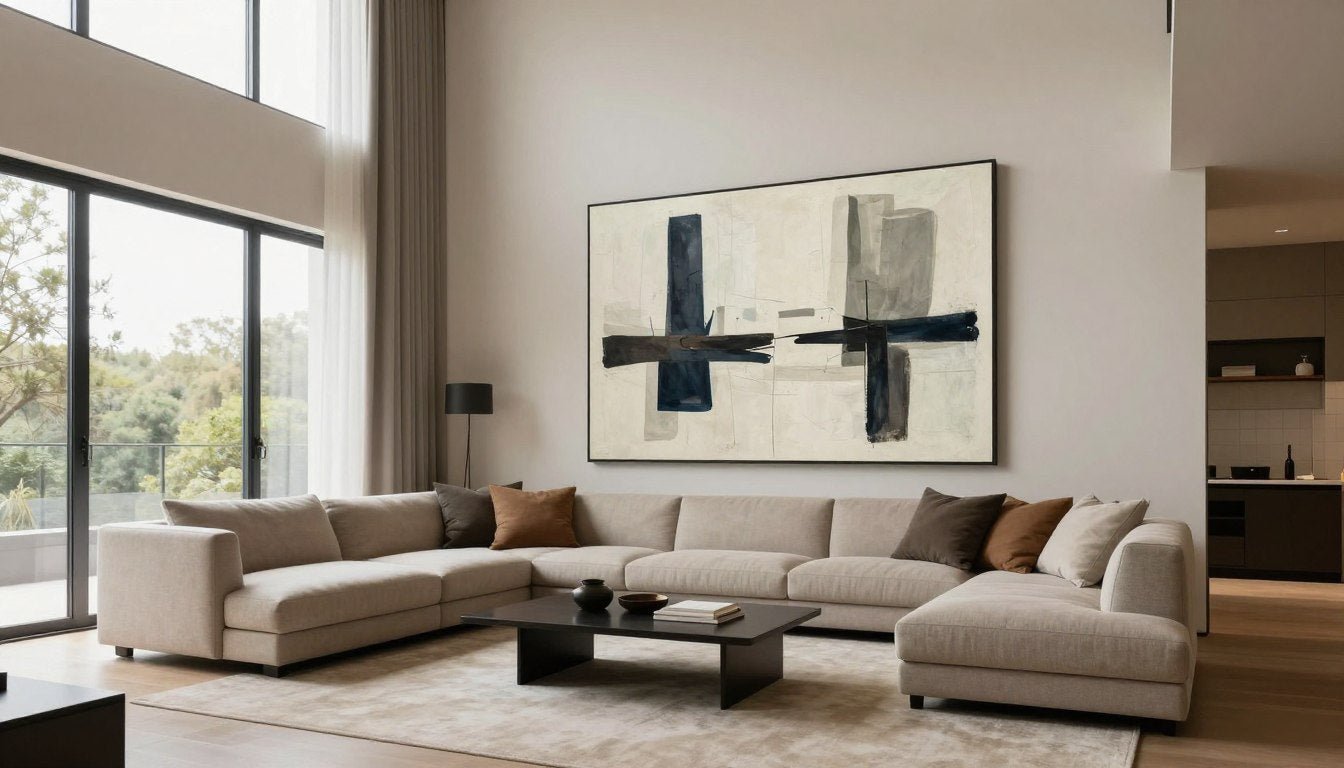

Walking into a large living room with bare walls can feel overwhelming. You know you need art, but choosing the wrong size can make your space look unfinished or awkward. Too small, and your beautiful piece disappears into the wall. Too large, and it overwhelms everything around it.
The right oversized wall art transforms your living room from empty to elegant. It creates a focal point that ties your furniture together and makes your space feel intentional. But getting the dimensions right requires more than guesswork.
This guide gives you exact formulas and practical measurements for selecting oversized wall art that fits your large living room perfectly. You'll learn professional sizing techniques that interior designers use to create balanced, visually stunning spaces.
Understanding Oversized Wall Art Dimensions
Oversized wall art typically starts at 40 inches on the shortest side. For large living rooms, you're looking at pieces between 60 to 99 inches wide. These substantial dimensions create the visual impact needed in spacious rooms.

Standard oversized dimensions include 60×40 inches, 72×48 inches, and 80×60 inches. For dramatic statements, sizes extend to 90×70 inches or even 99×99 inches. The key is matching the scale to your specific room proportions.
Large living rooms demand larger art because smaller pieces get visually lost. A 24×36 inch print that looks perfect in a bedroom will appear insignificant on a 15-foot wall in a spacious living area.
Transform Your Large Living Room with Bold Abstract Art
If you love dramatic modern style, here are three oversized prints that create stunning focal points in spacious living rooms. Each piece is museum-quality and ready to hang.

Abstract Geometric Canvas - 72"×48"
Bold earth-tone abstractions that anchor large wall spaces with sophisticated geometric forms and warm color palettes.
View Abstract Collection
Black & White Portrait - 60"×40"
Striking monochrome portraits that bring timeless elegance and visual depth to contemporary living spaces.
Explore Black & White Prints
Botanical Wall Art - 80"×60"
Oversized botanical prints that introduce organic beauty and calming natural elements to spacious interiors.
Shop Botanical CollectionThe Two-Thirds Rule for Wall Art Sizing
Professional designers follow the two-thirds rule when sizing wall art above furniture. Your artwork should span roughly two-thirds to three-quarters the width of the furniture piece below it.

For an 8-foot sofa (96 inches), your ideal art width ranges from 64 to 72 inches. This creates visual harmony without the piece looking too small or cramped. An oversized sectional spanning 10 feet needs art measuring 80 to 90 inches wide.
Calculating Art Width for Your Furniture
Measure your main furniture piece first. Multiply that width by 0.67 for the minimum art size. Multiply by 0.75 for the maximum recommended width.
A 120-inch sectional multiplied by 0.67 equals 80 inches minimum. Multiplied by 0.75 equals 90 inches maximum. Your ideal oversized wall art falls between 80 to 90 inches wide for that furniture arrangement.
Quick Reference: 6-foot sofa (72") = 48-54" art width | 8-foot sofa (96") = 64-72" art width | 10-foot sectional (120") = 80-90" art width | 12-foot sectional (144") = 96-108" art width
This formula works for any furniture configuration. Measure the total width of your seating arrangement, even if it includes multiple pieces grouped together. Apply the two-thirds calculation to find your target art dimensions.
Visit our design blog for more wall art sizing tips and room-specific guidelines.
Wall Space Considerations for Large Living Rooms
Empty wall space dictates how large your art can go. Measure your available wall from floor to ceiling and side to side. Leave breathing room around your artwork for proper visual balance.

A standard 15-foot wall with 10-foot ceilings offers substantial space for oversized art. After accounting for furniture height and recommended spacing, you have room for pieces up to 90 inches wide and 70 inches tall.
Vertical and Horizontal Orientation
Wide walls favor horizontal artwork. A 90×60 inch horizontal canvas complements the expansive width while maintaining proper proportions. Tall, narrow walls work better with vertical or square formats.
For walls with high ceilings above low furniture, consider vertical pieces measuring 48×72 inches. Square formats like 72×72 inches offer versatility for various wall configurations.
Leave 6 to 8 inches of space between your art's top edge and the ceiling. Position art 8 to 10 inches above furniture to create proper separation while maintaining visual connection.
Corner walls and walls with architectural features require special consideration. Measure around obstacles like windows, built-ins, or fireplaces. Subtract these dimensions from your total wall space before calculating art size.
Ceiling Height and Art Proportions
Ceiling height directly impacts ideal art dimensions. Standard 8-foot ceilings limit vertical artwork size differently than 10 or 12-foot ceilings common in large living rooms.

With 10-foot ceilings, you can comfortably display art up to 75 inches tall. Twelve-foot ceilings accommodate pieces reaching 90 inches in height. Higher ceilings demand taller artwork to avoid looking disproportionately small.
The 60 Percent Guideline
Art should occupy roughly 60 percent of the wall space between your furniture top and ceiling. For a wall section measuring 72 inches from sofa back to ceiling, target artwork around 43 inches tall.
This guideline prevents art from floating awkwardly high or sitting too close to furniture. It creates visual anchor points that guide the eye naturally through your space.
Cathedral ceilings and vaulted spaces need special attention. Focus on the usable wall height in your main seating area rather than the peak ceiling height. Measure from furniture to where the wall begins angling upward.
Find Perfectly Proportioned Art for Your Living Room
Match these professional sizing principles to your space with our curated living room collection. Each piece is available in multiple oversized dimensions.
Focal Point Placement Strategies
Oversized wall art functions as your room's visual anchor. Position this focal point where eyes naturally land when entering the space. Above your main seating area creates the strongest impact.

The center of your artwork should align with average eye level at 57 to 60 inches from the floor. This standard gallery height ensures comfortable viewing whether standing or seated.
Creating Visual Balance
Large art pieces need visual breathing room. Avoid hanging oversized artwork on walls cluttered with multiple smaller pieces. Let your statement piece command attention solo.
Balance your focal point art with complementary elements on adjacent walls. If your main wall features a 90×60 inch canvas, nearby walls might display smaller 30×40 inch pieces or coordinated canvas print sets.
Symmetrical Arrangements
Center your oversized art precisely above centered furniture for formal, balanced aesthetics. Measure from each side to ensure equal spacing. This approach works beautifully in traditional and contemporary spaces.
Asymmetrical Placement
Offset large artwork intentionally for dynamic, modern looks. Position art slightly left or right of center, balanced by a floor lamp, plant, or sculpture on the opposite side. This creates movement and visual interest.
Multiple seating areas in open-concept living rooms may require multiple focal points. Each area can have its own oversized art piece, creating distinct zones while maintaining overall design cohesion.
Room Layout and Furniture Configuration
Your furniture arrangement determines optimal art placement and sizing. Different layouts require different approaches to oversized wall art selection.

L-shaped sectionals create a natural corner focal point. Hang oversized art on the wall behind the longer section, sized to the full sectional width for maximum impact.
Facing Sofa Arrangements
Two sofas facing each other create dual focal point opportunities. Place a large statement piece behind one sofa measuring 72 to 90 inches wide. The opposite wall can feature a complementary piece or remain minimal.
This configuration works well in rectangular rooms where both long walls have significant space. Balance the visual weight by choosing similar size ranges for both walls if displaying multiple pieces.
Floating Furniture Layouts
Furniture pulled away from walls creates unique challenges and opportunities. With no backing wall directly behind seating, your oversized art hangs on the perimeter walls as backdrop.
Choose extra-large pieces measuring 80 inches or wider to maintain presence from greater viewing distances. These installations create gallery-like atmospheres in spacious, open-plan living areas.
Built-in shelving or entertainment centers require careful measurement. Calculate your open wall space between and around these elements. Art should complement architectural features without competing for attention.
Color and Style Impact on Perceived Size
Art colors and styles influence how large pieces feel in your space. Bold, dark colors make artwork appear larger and more commanding. Light, airy compositions can soften the visual weight of oversized dimensions.

A 90×60 inch canvas in deep navy or black commands more visual space than the same dimensions in soft pastels. Consider this when balancing your room's overall aesthetic and perceived proportions.
Abstract Versus Figurative Art
Abstract compositions with flowing forms create expansive feelings. Geometric abstracts with sharp lines and bold contrasts make strong architectural statements. Browse our abstract geometric collection for statement pieces.
Figurative art and portraits draw focus to specific elements within the frame. Oversized portraits create intimate, human-scaled focal points even at large dimensions. Our portrait canvas collection offers dramatic options for personal spaces.
Busy, detailed artwork in large formats can overwhelm smaller furniture groupings. Simple, bold compositions work better at oversized scales in most living rooms. Reserve intricate details for medium-sized pieces.
Monochrome Versus Colorful Pieces
Black and white art provides sophisticated neutrality that adapts to changing decor. These pieces maintain presence without dominating color schemes. Color-rich artwork makes bolder statements but requires more careful coordination with existing room colors.
For versatile, timeless appeal in large living rooms, consider black and white canvas prints in oversized dimensions. They provide dramatic impact while offering decorating flexibility.
Multi-Panel Versus Single Canvas Options
Large-scale wall coverage comes in two formats: single oversized canvases or multi-panel sets. Each approach offers distinct advantages for different spaces and aesthetics.

A single 90×60 inch canvas makes a unified, powerful statement. It draws the eye to one cohesive image without visual breaks. This works beautifully for dramatic landscapes, abstracts, or portraits.
Advantages of Multi-Panel Sets
Three-panel sets (triptychs) spanning the same 90 inches create rhythm and movement. The panels can hang with small gaps between them, adding architectural interest while covering equivalent wall space.
Multi-panel arrangements offer installation flexibility. Adjust spacing between panels to perfectly fit your exact wall width. This customization helps when working with specific architectural constraints.

Single Large Canvas
- Creates unified focal point
- Simpler installation process
- Stronger single image impact
- Works well for portraits and scenes
- Ideal for formal arrangements

Multi-Panel Sets
- Adds visual rhythm and flow
- Adjustable spacing for custom fit
- Creates contemporary aesthetic
- Better for abstract compositions
- Easier to transport and handle
Consider your room style when choosing between formats. Ultra-modern spaces often favor multi-panel sets. Traditional or transitional rooms typically look better with single statement pieces.
Explore our canvas print sets to see how multi-panel arrangements create cohesive large-scale impact in various styles.
Measurement Formulas for Different Wall Sizes
Use these specific formulas to calculate perfect art dimensions for any large living room wall. Start by measuring your wall width and the furniture piece below your planned art location.

Standard Wall Size Calculations
For walls 12 to 14 feet wide with standard 8-foot ceilings, target art between 60 to 80 inches wide and 40 to 55 inches tall. This provides substantial presence without overwhelming the space.
Walls 15 to 18 feet wide accommodate artwork from 80 to 100 inches in width. Height can range from 50 to 70 inches depending on ceiling height and furniture proportions.
| Wall Width | Ceiling Height | Recommended Art Width | Recommended Art Height | Example Dimensions |
| 12-14 feet | 8-9 feet | 60-80 inches | 40-55 inches | 72×48", 80×53" |
| 15-18 feet | 9-10 feet | 80-100 inches | 50-70 inches | 90×60", 96×64" |
| 18-20 feet | 10-12 feet | 96-120 inches | 60-80 inches | 99×66", 108×72" |
| Above furniture | Any height | 67-75% of furniture width | Based on wall space | 8' sofa = 64-72" art |
Gallery Wall Alternative Calculations
If you prefer a gallery wall instead of single oversized art, calculate the total arrangement as one unit. A gallery wall spanning 90 inches wide should contain pieces totaling that width including spacing.
Plan 2 to 4 inch gaps between frames within your gallery wall. If your gallery wall is 90 inches total width with five pieces, each piece averages 16 inches wide after accounting for spacing.
Gallery walls work well when you want coverage similar to oversized art but prefer variety. However, in very large living rooms, one substantial statement piece often creates stronger impact than multiple smaller works.
For more gallery wall guidance, read our article on creating balanced gallery wall arrangements.
Common Sizing Mistakes to Avoid
The most frequent error is choosing art that's too small for the wall and furniture scale. What looks large in a store often appears insignificant in a spacious living room.

A 36×24 inch piece above a 10-foot sectional creates an awkward proportion gap. The furniture dwarfs the artwork, making both look wrong. Always apply the two-thirds rule minimum to avoid this problem.
Hanging Art Too High or Too Low
Placing oversized art too high disconnects it from your furniture and creates floating visual elements. Too low, and the piece feels cramped and uncomfortable.
Maintain that 8 to 10 inch gap between furniture top and art bottom edge. Keep the art center at 57 to 60 inches from the floor for proper viewing height regardless of size.
Critical Mistake: Buying art before measuring your space. Always measure walls, furniture, and ceiling height before selecting dimensions. Visual estimation alone leads to sizing errors 80 percent of the time.
Ignoring Room Proportions
Choosing dimensions based solely on furniture width without considering ceiling height creates imbalance. A 90-inch wide, 40-inch tall canvas works on a wide wall with low ceilings but looks squat in rooms with 12-foot ceilings.
Similarly, selecting tall vertical art for short, wide walls fights against the room's natural proportions. Match your art orientation and dimensions to your actual wall shape and size.
Overcrowding walls represents another common error. Oversized art needs breathing room. Avoid hanging large pieces near busy architectural elements, multiple windows, or clustered furniture groupings.
Professional Installation Considerations
Oversized wall art requires proper installation for safety and aesthetics. Pieces over 60 inches wide or 50 pounds need specialized hanging hardware and wall anchors.

Locate wall studs for the most secure mounting. Use heavy-duty picture hooks rated for your artwork's weight plus 50 percent safety margin. A 40-pound canvas needs hooks rated for 60 pounds minimum.
Leveling and Alignment
Use a 6-foot level for oversized pieces to ensure perfect horizontal alignment. Even slight tilting becomes dramatically obvious at large scales. Mark your hanging points with painter's tape before drilling.
For pieces 80 inches or wider, use two hanging points spaced at least 24 inches apart. This distributes weight and prevents tilting or sagging over time.
Installation Tip: Ask a helper to hold large canvases in position before committing to drilling. Step back 10 feet to verify placement, height, and centering while someone holds the piece against the wall.
Wall Material Considerations
Drywall requires proper anchors for heavy artwork. Hollow wall anchors or toggle bolts work for weights up to 50 pounds. Heavier pieces need mounting directly into wall studs.
Plaster walls need special drill bits and anchors designed for masonry. Brick or concrete walls require masonry anchors and appropriate drill bits for secure installation of oversized pieces.
Wire hanging systems on the back of large canvases should use braided steel wire, not standard picture wire. Secure D-rings or hanging bars to the frame rather than relying on sawtooth hangers for heavy pieces.
Lighting Oversized Wall Art Effectively
Proper lighting enhances your oversized art investment and creates ambiance. Large pieces need adequate illumination to showcase details and colors, especially in rooms with limited natural light.

Picture lights mounted above the frame provide focused illumination. For art 60 to 80 inches wide, use picture lights spanning at least half the artwork width. LED picture lights offer energy efficiency and minimal heat.
Track and Recessed Lighting Options
Track lighting allows adjustable spotlights aimed at your art from ceiling-mounted rails. Position tracks 18 to 24 inches from the wall for optimal angles on oversized pieces.
Recessed ceiling lights placed 24 to 30 inches from the wall create ambient wash lighting. Use adjustable trim fixtures to direct light precisely onto your artwork without glare or hot spots.
Avoid placing oversized art in direct sunlight from windows. UV rays fade colors over time, especially in canvas prints and original paintings. If sunlight exposure is unavoidable, use UV-protective glass or acrylic glazing.
Wall sconces flanking large art create symmetrical ambient lighting. Position sconces 60 to 72 inches apart for pieces 80 inches or wider. Choose sconces with adjustable arms to direct light toward the artwork.
Consider dimmer switches for all art lighting. This allows you to adjust intensity based on time of day, natural light levels, and desired ambiance for different occasions.
Budget Considerations for Oversized Art
Oversized wall art represents a significant investment, with prices varying based on type, materials, and whether you choose prints or original paintings. Understanding cost factors helps you budget appropriately.

High-quality canvas prints in oversized dimensions typically range from $200 to $800 depending on size and framing options. A 72×48 inch museum-quality canvas print with floating frame costs approximately $400 to $600.
Original Paintings Versus Prints
Original paintings start at substantially higher price points, typically $1,000 and up for oversized dimensions. However, they offer uniqueness and potential value appreciation that prints cannot match.
Canvas prints provide the look and texture of original art at a fraction of the cost. Modern printing technology creates museum-quality reproductions that showcase rich colors and fine details beautifully.
Cost-Saving Strategies
- Purchase unframed canvases and add simple floating frames later
- Look for free shipping offers on large-format pieces
- Buy during seasonal sales or promotional periods
- Consider emerging artists for original work at lower prices
- Start with one statement piece rather than multiple smaller works

Long-Term Value
Quality oversized art lasts decades with proper care. Investing in well-crafted pieces with archival materials ensures your artwork maintains its beauty and doesn't need replacement.
Museum-quality canvas prints use fade-resistant inks and archival canvas that resist yellowing and deterioration. This longevity makes higher initial costs worthwhile compared to cheap alternatives requiring replacement.
Consider original paintings for truly unique statement pieces, or explore our canvas print collection for museum-quality reproductions at accessible prices.
Seasonal and Trend Considerations
Oversized wall art represents a long-term design investment. Choose timeless styles and colors that transcend temporary trends to ensure your piece remains relevant for years.

Neutral color palettes in abstract or geometric styles offer maximum versatility. These pieces adapt as you update furniture, paint colors, or accessories over time without clashing with new design directions.
Balancing Trends with Timelessness
Current popular styles include organic abstracts, minimalist line art, and bold geometric compositions. While these trends have staying power, extreme color combinations or hyper-specific themes may feel dated quickly.
Choose oversized art that reflects your personal taste rather than chasing trends. A piece you genuinely love will bring satisfaction long after current design fads shift to new directions.
Black and white photography, classic abstracts, and nature-inspired art maintain appeal across decades. These genres work in traditional, contemporary, and transitional spaces without appearing dated or trendy.
If you enjoy refreshing your decor seasonally, consider a neutral oversized anchor piece supplemented with smaller seasonal artwork you can rotate. The large piece provides consistent foundation while allowing decorative flexibility.
Browse our cityscape collection for timeless urban scenes or our line art prints for enduring minimalist appeal.
Matching Art to Living Room Style
Your living room's overall design style guides oversized art selection. Different aesthetics pair naturally with specific art genres and presentation styles for cohesive, intentional-looking spaces.

Modern and Contemporary Spaces
Clean-lined modern interiors pair beautifully with abstract compositions, geometric art, and minimalist pieces. Bold colors or stark black and white create striking focal points against neutral modern furniture.
Contemporary spaces accommodate experimental compositions and mixed-media pieces. Oversized abstracts with texture, metallic accents, or unconventional materials complement contemporary design's innovative spirit.
Traditional and Transitional Rooms
Traditional living rooms benefit from classic subject matter in oversized formats. Landscapes, botanical prints, or figurative art in ornate frames suit formal traditional aesthetics.
Transitional spaces blend traditional and contemporary elements. Choose oversized art with classical subjects rendered in modern styles, or contemporary compositions in traditional frames for balanced transitional appeal.
Minimalist Spaces
Simple, uncluttered rooms need equally restrained artwork that doesn't overwhelm the aesthetic.
- Monochromatic compositions
- Single bold shapes or forms
- Lots of negative space in the image
- Subtle color gradations
Eclectic Interiors
Mixed-style rooms allow creative freedom in art selection and presentation.
- Bold, expressive compositions
- Unexpected color combinations
- Mixed media and textures
- Artistic experimentation
Industrial Lofts
Raw, urban spaces call for edgy artwork that complements exposed elements.
- Urban photography or cityscapes
- Abstract expressionism
- Black and white high contrast
- Graphic pop art
Coastal and Organic
Nature-inspired rooms pair with artwork reflecting organic forms and natural elements.
- Botanical and nature scenes
- Ocean and beach imagery
- Soft, flowing abstracts
- Natural color palettes
Don't feel constrained by rigid style rules. The most successful spaces often include unexpected elements that create visual interest. A bold contemporary piece can energize a traditional room when sized and placed thoughtfully.
Explore style-specific collections like our pop culture and retro prints for eclectic spaces or whimsical animal art for playful interiors.
Ready to Transform Your Living Room
Selecting the right oversized wall art dimensions transforms your large living room from empty to extraordinary. Apply the two-thirds furniture rule, account for ceiling height, and choose dimensions that create proper visual balance.

Remember these key measurements: art should span 67 to 75 percent of your furniture width, hang 8 to 10 inches above furniture, and center at 57 to 60 inches from the floor. For most large living rooms, this means pieces ranging from 60 to 99 inches wide.
Measure your space carefully before purchasing. Consider your room's proportions, ceiling height, furniture scale, and design style. These factors work together to determine your ideal oversized art dimensions.
Museum-Quality Canvas Prints for Your Large Living Room
Ready-to-hang, professionally crafted oversized canvas prints. Free worldwide shipping. Available in sizes up to 99"×99". Every piece signed on the back by Rossetti Gallery artists with initials and the year.
Quality materials matter for long-term satisfaction. Museum-quality canvas prints with archival inks and proper framing provide decades of beauty. Original paintings offer unique investment pieces with artistic value.
Your oversized wall art choice reflects your personal style while serving as your room's visual anchor. Take time to find pieces you genuinely love in dimensions that properly fit your space. The right artwork elevates your entire living environment.
Frequently Asked Questions
What is the minimum size for oversized wall art in a large living room?
Oversized wall art for large living rooms should be at least 60 inches wide. Anything smaller risks looking disproportionate in spacious rooms with substantial furniture. For rooms with 10-foot or longer sofas, aim for 72 to 90 inches wide to create proper visual impact and balance.
How do I measure wall space for oversized art above a sectional sofa?
Measure the total width of your sectional's longest side or the wall section behind it. Apply the two-thirds rule: multiply that measurement by 0.67 for minimum art width and 0.75 for maximum. For a 120-inch sectional, your ideal oversized art ranges from 80 to 90 inches wide.
Can oversized wall art work in living rooms with low ceilings?
Yes, but choose horizontal orientations rather than tall vertical pieces. For 8-foot ceilings, select art no taller than 50 inches to maintain proper proportions. Focus on wider dimensions like 72×40 or 80×48 inches to create impact without overwhelming limited vertical space.
Should I choose one large piece or multiple smaller pieces for a big wall?
One oversized statement piece typically creates stronger visual impact in large living rooms than multiple smaller pieces. A single 90×60 inch canvas commands attention and looks more intentional than scattered smaller art. Reserve gallery walls for smaller wall sections or as complementary displays on adjacent walls. Our living room collection features both options.
What colors work best for oversized living room art?
Neutral colors (beige, gray, black, white) offer maximum versatility and timelessness. Bold accent colors create dramatic focal points but should coordinate with existing room colors. For long-term satisfaction, choose art with a neutral base and accent colors you can pull into accessories as your decor evolves.
How high should I hang oversized art above my sofa?
Hang oversized art 8 to 10 inches above your sofa's back. The center of the artwork should be at 57 to 60 inches from the floor for optimal viewing height. This creates visual connection between furniture and art while preventing the piece from floating awkwardly high on the wall.
What's the difference between canvas prints and original paintings for large spaces?
Canvas prints offer museum-quality reproductions at accessible prices, typically $200-$800 for oversized dimensions. Original paintings are unique artworks starting around $1,000+ with potential investment value. Both provide beautiful focal points; choose based on your budget and preference for uniqueness versus cost-effectiveness. View our original paintings collection or canvas print options.
Do I need professional installation for oversized wall art?
Pieces over 60 inches wide or 50 pounds generally benefit from professional installation for safety and precision. However, with proper wall anchors, stud mounting, and a helper, many homeowners successfully install large art themselves. Always use hardware rated for 150 percent of your artwork's actual weight.
How do I choose between horizontal and vertical orientation?
Match your art orientation to your wall shape and furniture. Wide walls above long sofas call for horizontal pieces. Tall, narrow walls work better with vertical formats. For standard large living rooms with wide furniture arrangements, horizontal orientations measuring 72×48 or 90×60 inches typically work best.
Can I use oversized art in a living room with lots of windows?
Yes, but place oversized art on solid walls opposite or adjacent to windows rather than between windows. This prevents competing visual elements and protects artwork from direct sunlight that can cause fading. If you must hang near windows, use UV-protective glazing to preserve colors long-term.

Leave a comment
This site is protected by hCaptcha and the hCaptcha Privacy Policy and Terms of Service apply.