
Pop Art burst onto the scene in the 1950s as a revolutionary artistic movement that challenged traditional notions of what constituted "fine art." By embracing imagery from mass media, advertising, and consumer culture, Pop Art created a bold visual language that continues to influence our aesthetic world today. This vibrant movement transformed everyday objects and popular icons into thought-provoking works that blurred the boundaries between high art and popular culture.
TL;DR: Pop Art Quick Facts
- What is Pop Art? An artistic movement that emerged in the 1950s-60s using imagery from mass media and consumer culture to challenge traditional art concepts.
- When did it start? Mid-1950s in Britain with the Independent Group, before exploding in America in the early 1960s.
- Key features: Bold colors, flat imagery, repetition, appropriation of everyday objects, celebrity portraits, comic book aesthetics.
- Famous artists: Andy Warhol, Roy Lichtenstein, Richard Hamilton, Claes Oldenburg.
Ready to bring this iconic style into your home? Browse our Pop Culture & Retro Canvas Prints collection to find the perfect piece for your space.
What Is Pop Art?

Pop Art's iconic visual language combines everyday objects, bold colors, and mass media imagery
Pop Art Definition
Pop Art is an artistic movement that emerged in the mid-20th century as a reaction against the elitist nature of Abstract Expressionism. It draws inspiration from popular culture, mass media, and consumer goods, transforming these everyday elements into fine art. Pop artists deliberately blurred the lines between "high art" and "low culture" by incorporating images from advertisements, comic books, product packaging, and celebrity culture into their work.
What makes Pop Art so distinctive is its bold use of color, clean lines, and simplified forms. Artists often employed commercial techniques like screen printing to create works that mimicked mass production methods, further challenging traditional notions of artistic originality and craftsmanship.
Why Pop Art Still Feels Modern Today
Despite originating over 60 years ago, Pop Art remains remarkably relevant in our digital age. The movement's focus on mass media, celebrity culture, and consumerism perfectly anticipated our current social media landscape and brand-saturated world. Today's viral memes, Instagram filters, and digital remixes echo Pop Art's appropriation techniques and its blending of high and low culture.
The movement's bold visual language continues to influence contemporary design, advertising, and fashion. Its accessibility and ironic take on consumer culture make it particularly appealing to younger generations navigating an increasingly visual and commercial world. To explore how Pop Art relates to other contemporary styles, check out our guide to 6 Modern Art Styles You Need to Know.
Pop Art Origins and Timeline
| Era | Key Developments | Notable Artists/Works |
| 1950s: Early British Pop | The Independent Group in London begins exploring American consumer culture and mass media in art | Richard Hamilton's "Just What Is It That Makes Today's Homes So Different, So Appealing?" (1956) |
| Early 1960s: American Explosion | Pop Art gains mainstream recognition in New York; artists begin using commercial printing techniques | Andy Warhol's "Campbell's Soup Cans" (1962), Roy Lichtenstein's "Whaam!" (1963) |
| Mid-1960s: Global Movement | Pop Art spreads internationally; influences fashion, music, and advertising | Claes Oldenburg's soft sculptures, James Rosenquist's billboard-sized paintings |
| 1970s-80s: Evolution | Pop Art principles evolve into new movements; artists continue exploring consumer culture | Keith Haring, Jean-Michel Basquiat blend Pop with street art |
| 1990s-2000s: Neo-Pop | New generation of artists revisits Pop themes with contemporary twists | Jeff Koons, Takashi Murakami, Damien Hirst |
| 2010s-Present: Digital Pop | Pop Art aesthetics merge with digital media and internet culture | Digital artists, NFT creators, social media-inspired works |
This evolution shows how Pop Art has continuously adapted to reflect changing cultural landscapes while maintaining its core principles of appropriation, bold imagery, and engagement with mass culture.
Pop Art Characteristics (The "Style DNA" Checklist)

The distinctive visual elements that define the Pop Art aesthetic
- Bold Outlines: Clean, thick black lines that define shapes and forms, often reminiscent of commercial printing
- Flat Color Blocks: Vibrant, unshaded areas of color with minimal gradients or shadows
- High Contrast: Strong color oppositions (red/blue, yellow/black) that create visual impact
- Repetition: Serial imagery and patterns that reference mass production
- Ben-Day Dots: Small, colored dots (like in comic books) used for shading and texture
- Comic Elements: Speech bubbles, thought clouds, and action words ("POW!", "BAM!")
- Appropriation: Direct use of commercial imagery, logos, and everyday objects
- Celebrity Iconography: Portraits of famous figures, often in stylized, simplified forms
- Irony & Humor: Playful or satirical takes on consumer culture
How to Spot Pop Art in 10 Seconds
Look for: bright primary colors, comic-book style dots, repeated images, familiar consumer products or celebrities depicted in unexpected ways, and a sense of both celebration and critique of popular culture.
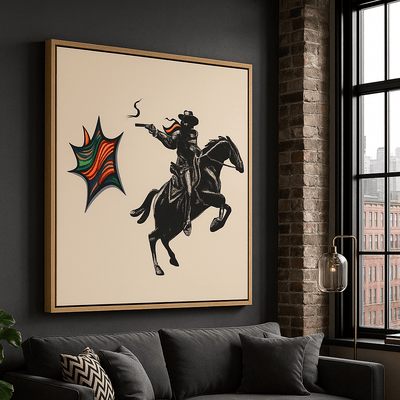
Cowboy Pop Art – Retro Western Wall Print
This striking canvas combines classic western iconography with bold pop art treatment, perfect for adding a playful yet sophisticated touch to living rooms or home offices.
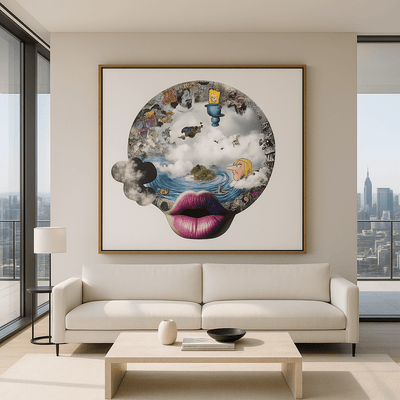
Lips Don't Lie | Pop Art Canvas with Red Lips & Soundwaves
This contemporary take on pop art combines iconic red lips imagery with modern soundwave graphics, creating a perfect statement piece for entertainment spaces or bedrooms.
Pop Art Style Matrix
Finding the perfect pop art style for your space can be challenging with so many variations available. Use this style matrix to identify which pop art sub-style best matches your aesthetic preferences and interior design needs.
| Sub-Style | Visual Cues | Best Room Placement | Color Pairings | Mood | Rossetti Art Suggestion |
| Classic Pop | Bold outlines, flat colors, commercial imagery | Living room, entryway | Neutrals, monochrome furniture | Nostalgic, iconic | Cowboy Pop Art |
| Comic Pop | Ben-Day dots, speech bubbles, action words | Home office, entertainment room | Primary colors, white walls | Playful, energetic | Lips Don't Lie |
| Street-Pop | Graffiti elements, urban motifs, text | Studio, urban loft spaces | Industrial materials, raw textures | Rebellious, contemporary | You Are in the Army Now |
| Retro-Western Pop | Cowboy imagery, vintage Americana | Den, rustic modern spaces | Earth tones, leather furniture | Nostalgic, rugged | Rodeo Spirit Canvas |
| Pop Surrealism | Dreamlike imagery, unexpected juxtapositions | Bedroom, creative spaces | Jewel tones, eclectic decor | Whimsical, thought-provoking | Dreamscape Mind Collage |
| Space-Pop | Cosmic imagery, astronauts, sci-fi elements | Media room, modern office | Deep blues, metallic accents | Futuristic, adventurous | Cosmic Wave Rider |
Iconic Pop Art Artists and What They Changed

The revolutionary artists who defined the Pop Art movement and their groundbreaking approaches
Pop Art was shaped by several visionary artists who each brought unique perspectives and techniques to the movement. Rather than providing exhaustive biographies, here's what made each artist's contribution revolutionary:
Andy Warhol (1928-1987)
The most recognizable name in Pop Art, Warhol transformed commercial imagery and celebrity culture into fine art through his iconic screen prints. His work challenged notions of originality by embracing mechanical reproduction and repetition. Key innovation: Using silkscreen printing to create multiple, slightly varied images that commented on mass production and celebrity worship.
Roy Lichtenstein (1923-1997)
Lichtenstein elevated comic book aesthetics to high art status with his meticulously hand-painted reproductions of comic panels, complete with Ben-Day dots and speech bubbles. Key innovation: Transforming the emotional narratives of comics into frozen, monumental moments that examined American mythology and gender roles.
Richard Hamilton (1922-2011)
Often called the "father of Pop Art," this British artist created collages that examined consumer culture with both fascination and critique. Key innovation: Using collage techniques to juxtapose commercial imagery in ways that revealed the constructed nature of desire in advertising.
Claes Oldenburg (1929-2022)
Oldenburg brought Pop Art into three dimensions with his oversized soft sculptures of everyday objects. Key innovation: Transforming hard consumer objects into soft, drooping forms that subverted their utilitarian purpose and commented on America's obsession with size and abundance.
These artists fundamentally changed how we understand the relationship between art, commerce, and popular culture. Their work continues to influence contemporary artists and designers across all media. To explore available works inspired by these masters, check out our guide to iconic Pop Art pieces.
Pop Art vs Street Art vs Graffiti
While Pop Art, Street Art, and Graffiti share certain visual elements and cultural influences, they represent distinct artistic movements with different histories, contexts, and intentions. Understanding these differences can help you select artwork that truly resonates with your aesthetic preferences.
| Aspect | Pop Art | Street Art | Graffiti |
| Historical Origins | 1950s-60s galleries and art schools | 1980s-90s urban spaces, often evolving from graffiti | 1970s urban youth culture, particularly in New York City |
| Primary Context | Museums, galleries, commercial spaces | Public spaces, commissioned murals, increasingly galleries | Unauthorized public spaces, trains, abandoned buildings |
| Key Visual Elements | Commercial imagery, flat colors, Ben-Day dots, repetition | Stencils, wheatpaste, characters, social commentary | Stylized lettering, tags, throw-ups, wildstyle |
| Relationship to Authority | Generally accepted by art establishment | Semi-legitimate, often commissioned | Typically unauthorized, often criminalized |
For a deeper exploration of the distinctions between street-based art forms, check out our article on Street Art vs. Graffiti: Understanding the Key Differences. To learn more about the historical development of public art, read our piece on The Surprising Roots of Street Art.
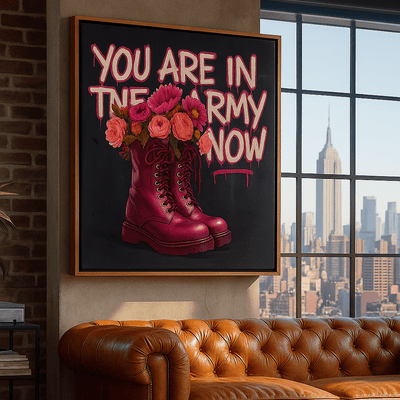
You Are in the Army Now – Bold Modern Graffiti Canvas Print
This canvas brilliantly merges pop art's bold colors with street art's urban aesthetic, featuring pink combat boots and floral elements for a striking contrast that works perfectly in contemporary spaces.
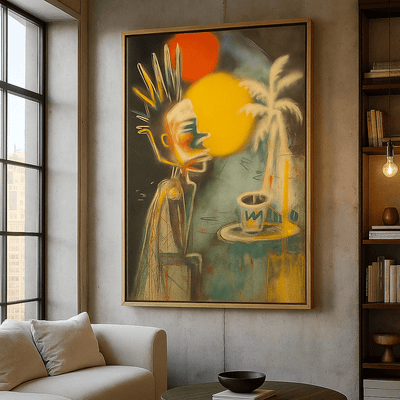
Double Sun Mood – Urban Graffiti-Style Canvas Art with Coffee Vibes
This energetic piece combines the visual language of street art with pop art's celebration of everyday objects (coffee), creating a vibrant addition to kitchen spaces or breakfast nooks.
How to Decorate With Pop Art (Room-by-Room Guide)

Pop art pieces serve as vibrant focal points in this contemporary living space
Pop Art's bold aesthetic can transform any space, but knowing how to integrate these vibrant pieces into different rooms requires strategic planning. Here's how to effectively incorporate Pop Art into various areas of your home:
Living Room: Statement Pieces with Balanced Surroundings
The living room offers prime real estate for showcasing Pop Art as a conversation starter. For maximum impact:
- Position a large, bold Pop Art canvas as the focal point above a sofa or fireplace
- Balance the vibrant artwork with neutral furniture (whites, grays, blacks)
- Consider scale—larger rooms can handle bigger, more colorful pieces
- For cohesion, pick up one or two colors from the artwork in small accessories like pillows or vases
Office/Studio: Energizing Focus Points
Pop Art's dynamic energy makes it perfect for workspaces where creativity and motivation are essential:
- Choose pieces with inspiring or thought-provoking imagery
- Position artwork within your line of sight but not directly behind computer screens
- For home offices that double as Zoom backgrounds, select pieces that reflect your professional personality
- Consider a series of smaller Pop Art prints for a gallery wall that stimulates different perspectives
Entertainment Room/Bar Corner: Playful Atmosphere
Entertainment spaces benefit from Pop Art's playful, social energy:
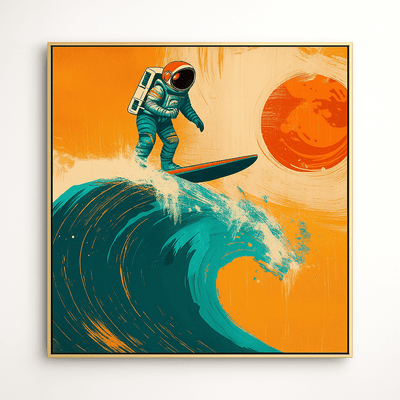
Cosmic Wave Rider - Astronaut Surfing Canvas Print
This playful space-themed pop art piece brings a sense of adventure and whimsy to media rooms or entertainment spaces, perfect alongside modern furniture and ambient lighting.
- Select pieces with cultural references or nostalgic elements that spark conversation
- Consider Pop Art with music, film, or beverage themes for thematic coherence
- For bar areas, vintage-inspired Pop Art advertisements or cocktail imagery work particularly well
- Don't be afraid to go bold—entertainment spaces can handle more visual stimulation
Bedroom: Softer Pop Sensibilities
Bedrooms require a more thoughtful approach to Pop Art integration:
- Choose Pop Art with softer color palettes or dreamier imagery
- Pop Surrealism works well in bedrooms, offering whimsy without overwhelming energy
- Consider the mood you want to create—some Pop Art is energizing, while other pieces are more contemplative
- Scale is crucial—oversized pieces can dominate smaller bedrooms
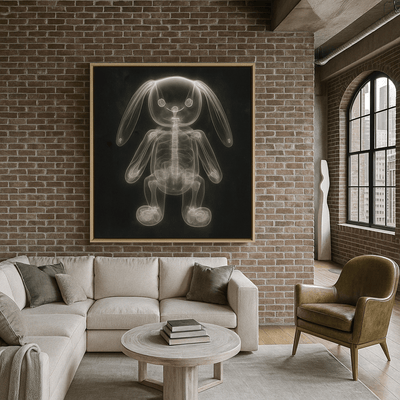
Radiant Bones Bunny - Surreal X-Ray Bunny Canvas Print
This surreal pop art piece brings a gentle whimsy to bedrooms or creative spaces, combining pop art's bold colors with dreamlike imagery that won't overwhelm restful environments.
Quick Styling Tips for Pop Art
- Lighting matters: Proper lighting (especially directed track lighting) can enhance Pop Art's vibrant colors
- Framing choices: Simple black or white frames let the artwork speak for itself
- Spacing rule: Allow breathing room around Pop Art pieces—they need space to make an impact
- Color coordination: Either complement or deliberately contrast with your existing color scheme
Frequently Asked Questions About Pop Art
What is Pop Art in simple terms?
Pop Art is an art movement that uses imagery from popular culture like advertisements, comic books, and everyday products. It emerged in the 1950s-60s as a reaction against traditional fine art, celebrating ordinary objects and mass media while often containing subtle social commentary.
When did Pop Art start?
Pop Art began in the mid-1950s in Britain with the Independent Group, a collection of artists and critics who explored American consumer culture. It gained major momentum in the early 1960s in the United States, reaching its peak popularity between 1962-1968 before evolving into various related movements.
What are the main characteristics of Pop Art?
Pop Art is characterized by bold colors, flat imagery, clean lines, and the use of commercial techniques like screen printing. It frequently features appropriation of everyday objects, celebrity portraits, comic book aesthetics (including Ben-Day dots), repetition, and ironic or humorous takes on consumer culture.
Who are the most famous Pop Art artists?
The most renowned Pop Art artists include Andy Warhol (Campbell's Soup cans, Marilyn Monroe portraits), Roy Lichtenstein (comic-inspired paintings), Richard Hamilton (collages), Claes Oldenburg (soft sculptures), James Rosenquist (billboard-sized paintings), and Peter Blake (album cover for The Beatles' Sgt. Pepper).
Is Pop Art the same as street art?
No, Pop Art and street art are distinct movements. Pop Art emerged in the 1950s-60s within the traditional art world, focusing on consumer culture and mass media. Street art developed later (1980s-90s) in urban public spaces, often unauthorized, with stronger countercultural and political messages. They share some visual elements but have different contexts and histories.
How do I decorate with Pop Art without overwhelming a room?
To incorporate Pop Art without overwhelming your space, use it as a focal point against neutral backgrounds, balance it with simpler furniture, and consider scale carefully. For smaller rooms, choose one statement piece rather than multiple works. You can also pick Pop Art with a more limited color palette that complements your existing decor.
What colors work best with Pop Art prints?
Pop Art works beautifully against neutral backgrounds like white, black, or gray, which allow the artwork's colors to stand out. For furniture and accessories, either pick up one accent color from the artwork or choose complementary colors that enhance the piece. Monochromatic rooms with a Pop Art focal point create particularly striking effects.
What size Pop Art canvas should I choose for my wall?
For maximum impact, Pop Art generally benefits from larger sizes, especially in living areas with ample wall space. As a rule of thumb, artwork should occupy about 2/3 to 3/4 of the available wall space above furniture. For dining rooms or hallways, a series of smaller related pieces can be more effective than one large canvas.
Bringing Pop Art Into Your Home
Pop Art's enduring appeal lies in its ability to be both accessible and thought-provoking, bringing vibrant energy and cultural relevance to any space. Whether you're drawn to classic Pop imagery, contemporary interpretations, or the movement's more surreal expressions, there's a Pop Art style that can enhance your home while reflecting your personal aesthetic.
The beauty of Pop Art lies in its versatility—it can serve as a bold statement piece in minimalist surroundings or as part of an eclectic, layered design approach. By understanding the movement's history, characteristics, and styling principles, you can confidently incorporate these dynamic works into your interior design.
Ready to find the perfect Pop Art piece for your space? Explore our curated collection of Pop Culture & Retro Canvas Prints at Rossetti Art, where contemporary interpretations of Pop Art await to transform your walls and elevate your interior design.

Leave a comment
This site is protected by hCaptcha and the hCaptcha Privacy Policy and Terms of Service apply.