
Your dining room deserves more than blank walls. The right artwork turns every meal into an experience worth remembering. Whether you host elegant dinner parties or casual family breakfasts, art sets the mood and sparks conversation.
Choosing dining room art feels overwhelming with countless styles, sizes, and placement options. This guide walks you through proven ideas that work for any space. You'll discover how to select pieces that complement your furniture, match your color palette, and reflect your personal style.

From bold statement pieces to curated gallery walls, the possibilities are endless. The dining room offers a unique opportunity to showcase art that reflects who you are. Your walls become a canvas for creativity, whether you prefer classic portraits or modern abstract designs.
Ready to transform your dining space? Let's explore practical ideas that bring walls to life and make your room feel complete.
Curated Dining Room Art Collection
These handpicked pieces capture the sophisticated ambiance that makes dining rooms special. Each canvas brings warmth, conversation, and timeless style to your space.

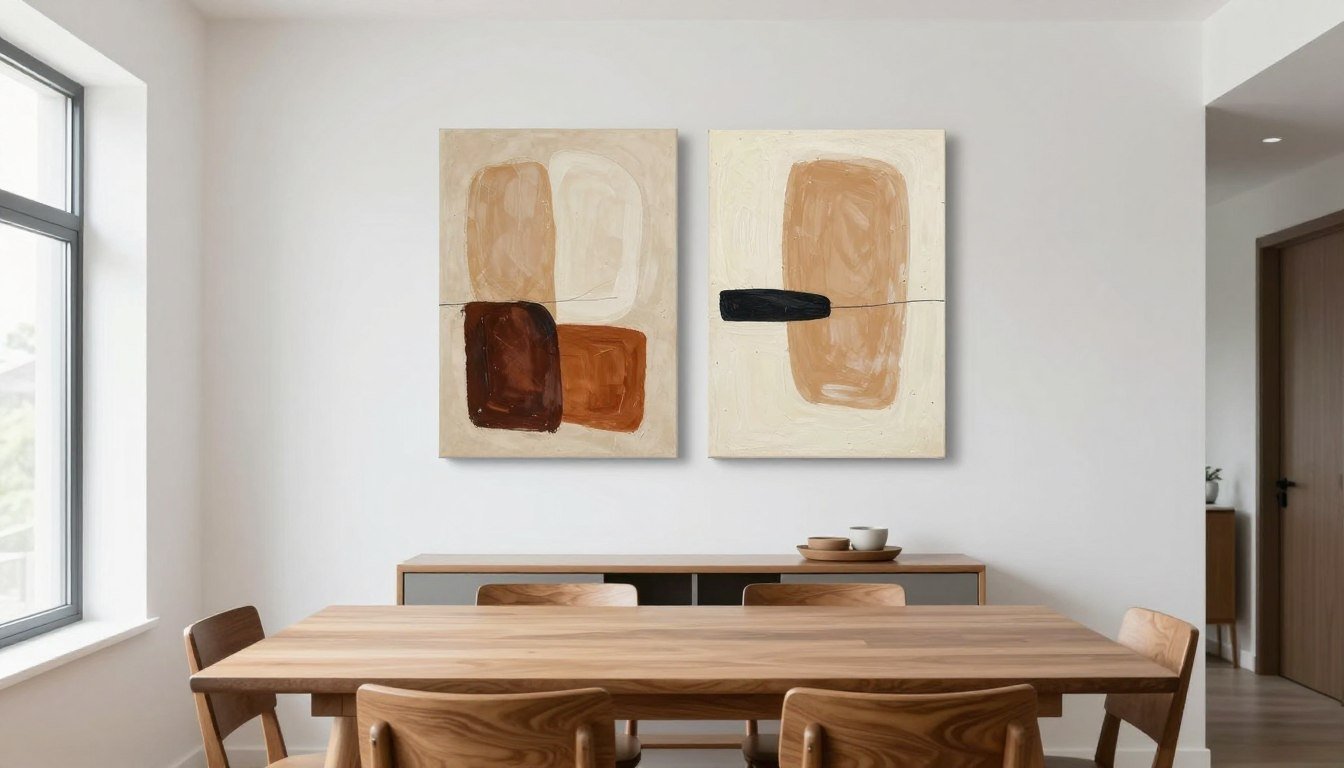
Earth Tones Abstract Collection
Warm geometric designs that create an inviting atmosphere perfect for gathering around the table.

Botanical Elegance Series
Fresh greenery and organic forms bring natural beauty that complements any dining aesthetic.

Minimalist Line Art
Sophisticated simplicity with continuous line drawings that add modern elegance without overwhelming.
Choosing the Right Size for Dining Room Wall Art
Size matters when selecting art for dining spaces. The wrong dimensions make rooms feel cramped or empty. Your wall art should balance the scale of furniture without dominating the entire space.

A general rule helps: choose art that covers two-thirds to three-quarters of your furniture width. For a six-foot sideboard, look for pieces between four and five feet wide. This creates visual harmony between wall and furniture.
Measuring Your Wall Space
Start by measuring the empty wall where you plan to hang art. Consider the space above furniture like buffets or serving tables. Leave at least six inches of breathing room on each side.
Ceiling height affects size choices too. Rooms with eight-foot ceilings work well with art around 24 to 36 inches tall. Higher ceilings accommodate larger pieces that draw the eye upward.

Small Dining Rooms
Compact spaces need careful consideration. One medium-sized piece often works better than multiple small ones. A single abstract canvas print becomes a focal point without cluttering limited wall space.
Consider vertical orientations to make ceilings appear higher. Portrait-style pieces draw eyes upward and create the illusion of more space.

Large Dining Rooms
Spacious rooms demand bolder choices. Go big with statement pieces that command attention. An oversized canvas fills substantial wall space and anchors the entire room design.
Alternatively, create a canvas print set with multiple coordinating pieces. This approach adds visual interest across expansive walls.
Statement Pieces vs. Multiple Artworks
One large piece creates dramatic impact. It simplifies decision-making and establishes a clear focal point. Single oversized art works especially well in modern or minimalist dining rooms.

Multiple smaller pieces offer flexibility and personality. They let you mix styles, colors, and themes. Gallery walls work beautifully when you want to display collected treasures or family memories alongside purchased art.
Your choice depends on the overall design vision. Contemporary spaces lean toward single bold pieces. Traditional or eclectic rooms embrace curated collections that tell stories.
Popular Art Styles That Enhance Dining Room Ambiance
The style you choose sets your dining room's entire mood. Different art movements evoke distinct emotions and complement various interior design approaches. Your selection should align with existing decor while expressing your personality.

Art transforms the dining experience beyond visual appeal. The right piece sparks conversation among guests and creates memorable impressions. Consider how different styles make you feel when selecting work for this social space.
Abstract and Modern Art
Abstract art brings energy and sophistication to dining spaces. Bold colors and geometric shapes create contemporary vibes that pair well with modern furniture. These pieces work as conversation starters without requiring specific interpretation.

Modern abstract canvas prints offer versatility that traditional art cannot match. They complement various color schemes and adapt as your decor evolves. The non-representational nature means they never clash with changing trends.
Consider pieces with colors pulled from your existing palette. This creates cohesion between walls, furniture, and artwork. A canvas featuring blues and grays ties together navy chairs and gray table linens beautifully.
Classic and Traditional Portraits
Portrait art adds timeless elegance to formal dining rooms. Historical figures, family ancestors, or classic artistic portraits create sophisticated atmosphere. These works connect spaces to art history and cultural heritage.

Modern interpretations of portraiture offer fresh takes on classic themes. Portrait canvas prints by contemporary artists bring the genre into current design contexts. They honor tradition while feeling relevant.
Black and white portraits create dramatic contrast in contemporary settings. The monochromatic approach bridges traditional subject matter with modern aesthetics. This works especially well in transitional design schemes.
Botanical and Nature-Inspired Prints
Botanical art brings the outdoors inside. Lush greenery, delicate flowers, and organic forms create calming atmosphere perfect for dining. These pieces connect to the natural world and promote relaxation during meals.

Nature themes work universally across design styles. A botanical wall art print complements farmhouse, coastal, or modern organic interiors. The versatility makes these pieces smart investments that transition between homes.
Oversized leaf prints make bold statements in contemporary spaces. Think dramatic palm fronds or architectural succulents rendered in striking detail. These pieces add organic texture without feeling fussy or overly decorative.
Food and Wine-Themed Art
Culinary-inspired art celebrates the dining experience itself. Vintage wine labels, fruit still lifes, or modern food photography embrace the room's purpose. These pieces create thematic coherence that guests immediately understand.

Modern interpretations move beyond obvious kitchen imagery. Abstract representations of wine bottles or minimalist line drawings of fruit bring sophistication. The theme remains present without feeling literal or campy.
Consider cultural cuisine that resonates with your heritage. Italian market scenes, French bistro art, or Asian tea ceremonies connect dining to broader food traditions. These pieces tell personal stories about what food means to you.
Black and White Photography
Monochromatic photography brings timeless elegance to any dining room. The absence of color creates sophisticated atmosphere that never feels dated. Black and white work complements any color scheme you choose for furniture and accessories.

Architectural photography works especially well in urban dining spaces. Cityscapes, bridges, or building details add metropolitan sophistication. Black and white canvas prints of iconic structures create conversation without overwhelming.
Portraiture in monochrome offers drama and intimacy. The simplified palette focuses attention on expression and composition. This approach works beautifully in both traditional and contemporary settings.
Find Your Perfect Dining Room Style
Whether you lean toward bold modern statements or timeless traditional elegance, discover curated collections designed specifically for dining spaces. Each piece is carefully selected to enhance the ambiance where you gather with loved ones.
Color Coordination: Matching Art to Your Dining Room Palette
Color transforms mood more powerfully than any other design element. The hues in your artwork should harmonize with existing dining room colors while adding visual interest. Strategic color coordination creates cohesive spaces that feel intentionally designed.

You don't need perfect matching. In fact, exact color replication often feels flat and uninspired. Instead, aim for coordination that acknowledges your palette while introducing complementary or accent colors.
Working With Existing Color Schemes
Start by identifying your room's dominant colors. Look at wall paint, furniture upholstery, and curtains. These established elements form the foundation your art should enhance.
Pull one or two colors from your art that appear elsewhere in the space. A dining room wall art decor print featuring navy blue works beautifully if your chair cushions share that shade. This creates visual connections that tie the room together.

Don't forget about wood tones. Natural materials count as colors in your palette. Warm wooden furniture pairs with art featuring earth tones, while cooler woods complement grays and blues.
Complementary and Contrasting Colors
Complementary colors sit opposite each other on the color wheel. Blue and orange, purple and yellow, red and green create dynamic tension that energizes spaces. Using these combinations in art adds vibrancy to neutral rooms.
A predominantly beige dining room benefits from artwork with pops of complementary color. An abstract piece with burnt orange accents brings warmth and personality to cream walls. The contrast creates focal points without repainting entire rooms.
Analogous Color Harmony
Colors next to each other on the wheel create harmonious, restful combinations. Blue, blue-green, and green flow naturally together. These palettes feel cohesive and sophisticated.
Use this approach when you want calm, unified atmosphere. Analogous schemes work especially well in dining rooms where you want guests to relax and linger over meals.
Monochromatic Sophistication
Different shades of the same color create depth without jarring contrast. Navy, sky blue, and powder blue in one piece demonstrates monochromatic elegance.
This technique adds visual interest to rooms painted in neutral tones. The variation in value keeps things interesting while maintaining peaceful atmosphere.
Neutral Art for Versatile Spaces
Neutral artwork offers maximum flexibility. Blacks, whites, grays, and beiges work with any color scheme. These pieces adapt as you change accent colors seasonally or during future redecorating.

Neutrals don't mean boring. Texture, composition, and subject matter create interest even without color. A black and white canvas print with dramatic subject matter commands attention despite its limited palette.
Consider neutral art when you frequently change decor. Perhaps you swap tablecloths seasonally or rotate decorative accessories. Neutral wall art provides constant foundation while other elements evolve.
Bold Color Statements
Sometimes rooms need that punch of unexpected color. Bold art introduces hues you love but hesitate to use on walls or furniture. A vibrant piece becomes the room's personality without major commitment.

Use bold color strategically. One vivid piece creates focal point and conversation starter. Multiple bold pieces can overwhelm unless you're intentionally going for eclectic, maximalist style.
The 60-30-10 rule applies to art selection too. Your room's dominant neutral color covers 60 percent, secondary color fills 30 percent, and accent color appears in 10 percent. Let bold art provide that accent percentage.
Strategic Placement and Hanging Height for Maximum Impact
Where you hang art matters as much as what you hang. Proper placement creates balanced compositions that enhance room flow. Poor positioning undermines even the most beautiful pieces.

The golden rule for hanging art: position the center at 57 to 60 inches from the floor. This places artwork at average eye level, creating comfortable viewing angles for most people. Adjust slightly based on your height and that of household members.
Above the Sideboard or Buffet
The wall above your sideboard or buffet provides prime real estate for dining room art. This location naturally draws eyes as guests enter and sit at the table. Position artwork so it feels connected to furniture below.

Leave six to eight inches between furniture top and art's bottom edge. This creates breathing room while maintaining visual connection. Closer positioning makes art feel cramped; wider gaps make it float disconnected.
Choose art proportional to furniture width as discussed earlier. The piece should feel anchored to the sideboard, not randomly placed above it. This relationship grounds the composition.
Creating Gallery Walls
Gallery walls let you display multiple pieces in cohesive arrangements. This approach works beautifully when you have collection of smaller works or want to combine different sizes and styles.
Plan your gallery wall layout on the floor first. Arrange pieces until you find pleasing composition. Take a photo for reference when hanging. This prevents nail holes from experimental arrangements.

Maintain consistent spacing between pieces. Two to three inches works well for most gallery walls. Consistent gaps create order even when mixing different sizes and orientations.
Gallery Wall Layout Options
- Grid arrangement with uniform frames and spacing for formal, organized look
- Salon style with varied sizes arranged organically for eclectic, collected appearance
- Linear arrangement with pieces aligned along top or bottom edge for modern flow
- Center-focused design with largest piece in middle, smaller works radiating outward
Focal Wall Treatment
Designating one wall as the focal point concentrates attention and simplifies design decisions. The wall opposite or adjacent to the main entrance typically serves this purpose best in dining rooms.

A focal wall approach works especially well in open-concept spaces. It defines the dining area without physical barriers. The dramatic art announces "this is the dining room" within larger combined living spaces.
Keep other walls minimal when creating focal wall. One powerful statement prevents competition for attention. Additional walls might feature subtle mirrors or simple shelving without major artistic elements.
Artwork in Relation to Furniture and Lighting
Art doesn't exist in isolation. Its relationship to furniture and lighting fixtures affects overall impact. Consider these elements together when planning placement.

Center artwork with the dining table when possible. This creates symmetry that feels intentionally designed. If your table sits off-center, align art with the wall's midpoint instead for better balance.
Account for lighting fixtures when hanging art. Chandeliers and pendant lights shouldn't block artwork views. Ensure seated and standing guests can appreciate pieces without obstruction.
Consider how natural and artificial light affects art throughout the day. Avoid placing valuable pieces in direct sunlight, which causes fading. Position lighting to illuminate artwork in evening hours when dining typically occurs.
Framing Options and Finishing Touches
The frame you choose affects how art integrates into your dining room. Framing decisions influence whether pieces feel formal or casual, traditional or contemporary. These details complete the overall presentation.

Canvas prints offer built-in versatility. Gallery-wrapped canvases arrive ready to hang without additional framing. The image extends around edges, creating finished look that works in contemporary settings.
Traditional Frame Styles
Classic wooden frames bring formality and weight to artwork. Ornate gold or silver frames suit traditional dining rooms with antique furniture. These frames reference museum and gallery presentations from art history.

Wide mats inside frames add breathing room around images. This approach works especially well with prints, photography, or smaller original pieces. The mat creates visual rest between image and frame.
Match frame finish to other wood tones in your space. Cherry frames complement cherry furniture; ebony frames pair with dark woods. This coordination creates cohesion even before considering artwork itself.
Modern and Minimalist Frames
Sleek frames with clean lines suit contemporary dining rooms. Thin black or white frames provide definition without overwhelming the artwork. Metal frames in brass, silver, or black offer industrial edge.

Floating frames create the illusion that art hovers within the frame. A gap between artwork and frame adds dimensional interest. This technique works beautifully with abstract canvas prints and modern photography.
Frameless presentation makes bold contemporary statement. Gallery-wrapped canvases need no additional framing. The clean edges suit minimalist aesthetics and let the artwork speak without interference.
Mixing Frame Styles in Gallery Walls
Gallery walls allow frame experimentation that single large pieces cannot. Mixing frame styles adds personality and creates collected-over-time appearance. The key is finding unifying element.

Unify diverse frames through consistent color. All-white frames in different styles create cohesion despite varying profiles. Alternatively, all-black frames work across ornate to minimal designs.
Another approach: vary frame styles but keep consistent matting. White mats in every frame unify the collection regardless of frame differences. This technique works especially well with photography or prints.
Matting and Mounting Considerations
Mats serve both aesthetic and preservation purposes. They create visual space between art and frame while protecting artwork from touching glass. The mat color influences how we perceive the image.
White and Cream Mats
Classic white or cream mats offer clean, gallery-style presentation. They work with virtually any artwork and frame combination. The neutral background lets the image dominate attention.
White mats brighten darker images and create contrast with warm-toned frames. This traditional approach never goes out of style.
Colored and Textured Mats
Colored mats can enhance specific hues within artwork. A navy mat might emphasize blue tones in the image. Use this technique sparingly for intentional effect.
Textured mats like linen or suede add tactile interest. These work well with art styles that feature texture themselves, creating dimensional quality.
Canvas Wraps and Gallery Presentation
Gallery-wrapped canvases arrive ready to hang. The image extends around the sides, eliminating need for frames. This presentation style dominates contemporary art markets.

The wrap depth matters. Standard 0.75-inch depth works for most spaces. Deeper 1.5-inch gallery wraps create more dramatic shadow and dimensional presence on walls.
Choose image wrap or mirror wrap for canvas sides. Image wrap continues the picture around edges. Mirror wrap reflects border elements for seamless appearance. Both options work; preference depends on the specific image.
Gallery presentation offers practical benefits beyond aesthetics. Canvas prints resist glare better than glass-covered frames. They're also lighter weight, making hanging easier and safer.
Seasonal Updates and Changeable Art Displays
Your dining room art doesn't need permanence. Rotating pieces keeps spaces feeling fresh and reflects changing seasons or moods. This approach lets you enjoy more of your collection throughout the year.

Seasonal rotation works especially well for people who collect art over time. Instead of committing to one piece forever, you enjoy different works as seasons change. This also protects pieces from continuous light exposure.
Creating a Rotation System
Store alternate pieces properly when not displayed. Keep canvas wrapped in acid-free paper or cloth. Avoid damp basements or hot attics that damage artwork over time.
Label each piece with dimensions and preferred hanging location. This streamlines future rotations. You won't need to remeasure or experiment with placement each time you swap.

Consider themed rotations: spring botanicals, summer coastals, autumn harvests, winter abstracts. This approach creates anticipation and marks seasonal transitions. Guests notice and appreciate the attention to detail.
Interchangeable Frame Systems
Special frame systems let you swap artwork easily without rehanging. Magnetic frames or frames with accessible backs simplify the process. Initial investment pays off through convenience over time.
Standard poster frames offer budget-friendly changeability. The hinged backs open easily for quick swaps. Use these for prints, photography, or paper-based art you want to rotate frequently.
Ledge and Rail Systems
Picture ledges or rails let you lean rather than hang artwork. Pieces rest on the shelf, easily swapped without tools. This casual approach suits eclectic or transitional dining rooms.
Layer multiple pieces on deeper ledges for added dimension. Front pieces hide portions of back pieces, creating gallery-like depth on a single wall.
Grid and Wire Systems
Professional gallery systems use ceiling-mounted rails and adjustable wires. Artwork hangs from hooks that slide along wires, making repositioning effortless.
While more expensive initially, these systems offer ultimate flexibility. They work beautifully in homes where art rotation is priority and clean aesthetic matters.
Themed Collections for Different Occasions
Consider rotating art for special occasions beyond seasons. Holiday gatherings might warrant festive pieces. Formal dinner parties could feature elegant portrait canvas prints. Casual family meals feel comfortable with relaxed, colorful work.

This approach requires storage space and organization. But for people who entertain frequently in different styles, the versatility proves valuable. Your room adapts to match the occasion's formality.
Create collections around color families too. Warm-toned pieces for cozy winter gatherings. Cool blues and greens for summer refreshment. This subtle shift affects room atmosphere more than you might expect.
Budget-Friendly Dining Room Art Ideas
Beautiful dining room art doesn't require enormous budgets. Strategic choices and creative approaches deliver impressive results at various price points. Quality and impact matter more than price tags.

The democratization of art through online platforms means access to affordable prints from talented artists worldwide. You no longer need to compromise on style when working with limited budgets.
Affordable Art Print Options
Digital printing technology makes high-quality reproductions accessible. Museum-quality canvas prints capture detail and color of original pieces. Canvas prints arrive ready to hang, eliminating framing costs.

Look for artists who offer digital downloads. You print at local shops or online services at sizes you need. This approach gives you flexibility while supporting independent creators.
Poster prints in simple frames create sophisticated look when chosen thoughtfully. The key is selecting quality images and clean frames. Avoid obviously cheap materials that undermine the overall effect.
DIY and Personal Art Projects
Creating your own art adds personal meaning while saving money. Abstract painting requires no formal training. Large canvases, acrylic paint, and courage are the only requirements.

Paint color blocks or stripes in hues matching your room. Geometric designs look intentional and modern. The personal connection to self-created art adds value beyond professional work.
Frame meaningful items like vintage maps, botanical prints from old books, or family recipes written in elegant script. These personal touches spark conversations and cost little beyond framing.
Thrift Store and Secondhand Finds
Estate sales, thrift stores, and online marketplaces offer hidden treasures. Original art and quality prints appear regularly at fraction of retail prices. The hunt becomes part of the fun.

Look past dated frames to the artwork itself. Quality pieces in ugly frames represent opportunity. Reframing costs less than buying new art in the style you want.
Vintage still lifes, landscapes, and abstracts from unknown artists often possess real quality. Not everything needs famous provenance. Trust your eye and choose what you genuinely love.
Maximizing Impact on Limited Budgets
Strategic placement matters more than expensive pieces. One well-positioned affordable work creates bigger impact than scattered expensive pieces poorly displayed.
- Invest in one larger statement piece rather than multiple small ones
- Use consistent simple frames to unify disparate art styles and sources
- Focus budget on the most visible wall; keep other areas minimal
- Mix one or two investment pieces with affordable complementary works
- Frame fabric remnants, wallpaper samples, or decorative papers as instant art
Remember that perceived value comes from overall presentation. Clean frames, proper sizing, and confident placement make affordable art look intentional and curated. Nobody asks price tags when they admire your dining room walls.
Lighting Your Dining Room Art for Optimal Display
Proper lighting transforms good art into stunning focal points. The way light hits artwork affects how we perceive colors, textures, and details. Strategic lighting elevates your entire dining room design.

Natural and artificial light sources work together to create layered illumination. Consider both when planning art placement and lighting design. The goal is consistent, flattering light that doesn't damage artwork over time.
Natural Light Considerations
Natural light brings life to rooms but poses risks to artwork. Direct sunlight fades colors and damages materials over time. Position valuable pieces away from windows receiving harsh afternoon sun.

Use window treatments to control light exposure. Sheer curtains diffuse harsh rays while maintaining brightness. UV-protective window film shields art without blocking views or natural illumination.
North-facing walls receive consistent indirect light throughout the day. This makes them ideal locations for displaying art. The steady illumination prevents dramatic color shifts as sun angles change.
Artificial Lighting Options
Picture lights mounted above or beside artwork provide focused illumination. Traditional brass fixtures suit formal traditional spaces. Sleek LED versions work in contemporary settings while using minimal energy.

Track lighting offers flexible solutions for multiple pieces or gallery walls. Adjustable heads direct light precisely where needed. This system works especially well when rotating art seasonally.
Recessed ceiling spotlights can highlight artwork when angled correctly. Use narrow beam spread to focus light on art without spilling onto surrounding walls. Dimmer controls adjust intensity for different occasions.
LED vs Traditional Lighting
LED bulbs transformed art lighting by eliminating heat and UV radiation that damage artwork. They last years longer than incandescent bulbs and use fraction of the energy.
LED Advantages
- No heat emission protects art from damage
- Minimal UV light prevents fading
- Long lifespan reduces maintenance
- Energy efficiency lowers costs
- Available in various color temperatures
Color Temperature Selection
- 2700K warm white for traditional settings
- 3000K neutral white for versatile lighting
- 4000K cool white for contemporary spaces
- Match dining room ambient lighting
- Test before committing to ensure satisfaction
Creating Layered Lighting Schemes
Effective dining room lighting combines ambient, task, and accent layers. Ambient light provides overall illumination. Task lighting serves the dining table. Accent lighting highlights artwork.

Chandeliers or pendant lights over tables provide ambient and task lighting. Wall sconces add supplementary ambient light. Picture lights or track lighting accent art. Each layer serves specific purpose while contributing to overall atmosphere.
Install dimmer switches on all light circuits. This crucial detail allows you to adjust lighting for different occasions. Bright light for family dinners, softer ambiance for intimate gatherings, focused art lighting for cocktail parties.
Avoiding Common Lighting Mistakes
Glare ruins art viewing experience. Position lights to illuminate without reflecting off glass or glossy finishes. The light source should remain invisible from normal viewing angles.

Avoid placing art directly across from windows. Backlighting creates silhouette effect that obscures image details. If this placement is unavoidable, use supplementary front lighting to compensate.
Don't over-light artwork. Too much illumination washes out colors and creates unnatural appearance. Art lighting should be approximately twice as bright as surrounding ambient light for balanced effect.
Museum-Quality Canvas Art, Ready for Your Walls
Every piece in our collection arrives ready to hang with museum-quality canvas and professional gallery wrapping. We ship worldwide at no cost, so your perfect dining room art is just days away. Curated by artist Chiara Rossetti, each print brings sophisticated style that transforms ordinary dining spaces into gallery-worthy rooms.
Mixing Art with Other Dining Room Decor Elements
Wall art rarely exists alone. Mirrors, shelving, plates, and other decorative elements compete for wall space. Creating harmonious balance between these components requires thoughtful planning.

The key to successful mixing is establishing hierarchy. One element should dominate while others play supporting roles. This prevents visual chaos and creates intentional design.
Art and Mirrors Together
Mirrors and art serve different purposes but can coexist beautifully. Mirrors reflect light and create spatial illusion. Art provides color, subject matter, and personality. Using both adds dimension to dining rooms.

Place mirrors and art on different walls when possible. This prevents competition for attention. A large abstract canvas print on the main wall pairs beautifully with mirror on adjacent wall.
If you must use the same wall, establish clear hierarchy. A large statement art piece anchors the design. A smaller mirror in different area provides functional purpose without competing.
Incorporating Shelving and Wall Objects
Floating shelves add three-dimensional interest to flat walls. They provide surfaces for rotating decorative objects. Balance shelving with artwork to create layered, collected look.

Position shelves below artwork rather than above. This creates stable visual weight distribution. Art floats freely at eye level while shelves ground the composition with tangible objects.
Coordinate shelf styling with art colors and theme. If your art features blues and greens, include pottery or objects in complementary hues. This creates color flow between wall elements.
Plate Walls and Art Combinations
Decorative plates offer traditional dining room charm. While plate collections work alone, combining them with art creates interesting contrast. Mix old and new, dimensional and flat elements.

Use plates to fill spaces between or around larger artwork. The circular shapes provide visual relief from rectangular canvases. Vary sizes to create rhythm and movement across the wall.
Keep color palettes coordinated even when mixing styles. If your plates feature blue and white patterns, incorporate those colors into your art selection or vice versa.
Balancing Symmetry and Asymmetry
Perfect symmetry creates formal, traditional atmosphere. Two identical sconces flanking centered artwork exemplifies classic symmetrical design. This approach suits formal dining rooms with traditional furniture.

Asymmetrical arrangements feel more relaxed and modern. Large art piece on one side balanced by collection of smaller objects on the other creates dynamic tension. This approach suits contemporary or eclectic spaces.
Mix both approaches by creating symmetry within asymmetry. A gallery wall might fill space asymmetrically, but internal arrangement maintains balanced composition. This combines traditional stability with modern energy.
Seasonal Decor Integration
Permanent wall art provides foundation for seasonal decorations. Holiday garlands, autumn branches, or spring flowers temporarily enhance fixed artwork without requiring removal.

Lean seasonal art against walls rather than hanging when changes are temporary. Picture ledges make this approach seamless. The permanent piece remains hung while seasonal additions come and go.
Choose neutral permanent art that accommodates seasonal color changes. A sophisticated black and white canvas print works with autumn oranges, winter blues, spring pastels, and summer brights equally well.
Selecting Art for Different Dining Room Styles
Your dining room's overall design style guides art selection. What works beautifully in rustic farmhouse spaces might feel wrong in sleek modern rooms. Understanding these relationships helps make confident choices.

Art doesn't need to match perfectly. In fact, some contrast creates interest. But understanding style principles prevents jarring disconnects between architecture, furniture, and wall art.
Modern and Contemporary Dining Rooms
Clean lines, minimal ornamentation, and neutral palettes define modern design. Abstract art complements this aesthetic perfectly. Geometric shapes and bold colors provide personality without clutter.

Large-scale single pieces work better than multiple smaller works in modern spaces. The simplicity aligns with modernist principles. One powerful abstract geometric canvas print makes stronger statement than scattered gallery wall.
Contemporary spaces embrace current trends while maintaining clean aesthetic. Line art canvas prints offer sophisticated simplicity perfect for contemporary dining. The minimal approach feels fresh and uncluttered.
Traditional and Classic Spaces
Traditional dining rooms feature rich woods, upholstered chairs, and formal arrangements. Art choices should honor this classical approach. Portraits, landscapes, and still lifes feel appropriate.

Ornate frames enhance traditional artwork. Gold leaf, carved wood, and substantial frames reference historical art presentation. These details complete the traditional dining room aesthetic.
Portrait canvas prints bring classical subjects into accessible price ranges. Modern printing technology makes museum-quality reproductions available for traditional homes without art collection budgets.
Farmhouse and Rustic Dining Rooms
Farmhouse style embraces natural materials, vintage finds, and cozy simplicity. Art should feel organic and approachable. Botanical prints, farm animal images, and landscape scenes fit naturally.

Botanical art perfectly suits farmhouse dining rooms. Botanical nature canvas prints connect indoor spaces to gardens and countryside. The organic subjects align with farmhouse values.
Vintage-inspired prints in simple wood frames capture farmhouse aesthetic. Look for reproduction seed packets, farm advertisements, or botanical illustrations that reference agricultural heritage.
Coastal and Beach-Themed Rooms
Coastal dining rooms feature light colors, natural textures, and relaxed atmosphere. Art should evoke seaside feelings. Ocean photography, abstract water-inspired pieces, and nautical themes work beautifully.

Keep colors light and airy. Blues, aquas, sandy beiges, and crisp whites dominate coastal palettes. Art should reinforce rather than contradict these color schemes.
Abstract pieces inspired by water offer sophisticated coastal style without literal seashell imagery. Fluid shapes and coastal color palettes evoke the ocean without feeling cliché or overly themed.
Industrial and Loft Dining Spaces
Industrial design celebrates raw materials, exposed structures, and urban edge. Art should embrace this aesthetic with bold graphics, urban photography, or modern abstract work.

Black and white photography suits industrial spaces perfectly. Black and white canvas prints of cityscapes or architectural details echo the urban context. The monochrome palette complements metal, concrete, and wood.
Oversized pieces work well in lofts with high ceilings and open layouts. Don't be timid with scale. Industrial spaces can handle bold artistic statements that might overwhelm traditional rooms.
Eclectic and Bohemian Dining Rooms
Eclectic style mixes periods, cultures, and aesthetics fearlessly. Art provides opportunities to showcase global travels, varied interests, and personal history. Gallery walls thrive in eclectic spaces.

Mix art styles, sizes, and subjects with confidence. The only rule is choosing pieces you genuinely love. Personal connection matters more than coordinating everything perfectly.
Incorporate textiles, masks, or three-dimensional objects alongside traditional artwork. This layered approach creates rich visual interest characteristic of bohemian style. Modern sculptures add dimensional elements to eclectic walls.
Maximizing Art Impact in Small Dining Spaces
Limited square footage requires strategic art choices. Small dining rooms and nooks need careful consideration to avoid overwhelming compact areas. The right approach makes small spaces feel intentional rather than cramped.

Small doesn't mean insignificant. Compact dining spaces benefit from thoughtful art that enhances rather than diminishes the area. Smart choices create intimacy and character.
Vertical Emphasis
Vertical artwork draws eyes upward, making ceilings appear higher. This optical trick creates sense of spaciousness in tight quarters. Choose portrait-oriented pieces rather than wide landscape formats.

Tall narrow pieces work especially well in corners or narrow wall sections. They fill vertical space without consuming precious width. This approach maximizes impact in areas that might otherwise remain empty.
Light Colors and Simple Subjects
Dark, heavy artwork makes small rooms feel smaller. Choose lighter palettes that reflect light and create airy feeling. Whites, pastels, and soft neutrals open up tight spaces visually.

Simple subjects prevent visual clutter. A serene botanical wall art print with plenty of negative space feels calming rather than busy. Complex, detailed work can overwhelm when viewed in close proximity.
Minimalist line drawings offer sophistication without weight. Line art canvas prints provide visual interest through simple elegant strokes that don't crowd small walls.
Mirror and Art Combinations
Strategic mirror placement alongside art amplifies light and creates spatial illusion. Mirrors reflect artwork, effectively doubling its presence. This technique especially benefits dining nooks with limited wall space.

Position mirrors perpendicular to artwork rather than opposite. This creates interesting angles without the odd effect of seeing art reflected directly. The oblique reflection adds dimension without confusion.
One Statement Piece Strategy
Small spaces benefit from single bold choice rather than multiple pieces competing for attention. One well-chosen artwork becomes the room's personality. Everything else remains supporting player.

Choose art slightly larger than you initially think appropriate. A piece that fills substantial portion of available wall makes intentional statement. Timid small artwork in small room emphasizes limitations rather than celebrating the space.
This strategy works especially well in dining room wall art selection for apartments or open-concept homes where dining area is carved from larger space.
Art in Open-Concept Dining Areas
Open floor plans present unique challenges for dining room art. Without walls defining separate rooms, art helps establish visual boundaries. Strategic placement creates distinct zones within continuous space.

The dining area competes for attention with living room, kitchen, and other zones. Your art needs enough presence to establish the dining zone without conflicting with neighboring areas.
Creating Visual Boundaries
A substantial artwork behind the dining table announces "this is the dining area." The piece acts as visual anchor that defines space without physical barriers. Scale matters significantly in open plans.

Choose dining room art that coordinates with but differs from living room pieces. This maintains cohesion while establishing each zone's identity. Similar color families with different subjects or styles work well.
Consider art scale relative to the entire open space, not just the dining area. A piece that looks substantial in traditional room might disappear in vast open concept. Go bigger than expected.
Coordinating Multiple Art Collections
Open spaces visible from multiple angles require coordinated art strategy. Dining room, living room, and kitchen art should relate through color, style, or theme. Complete disconnect creates chaos.

Use a consistent frame style or color throughout open areas. This subtle connection unifies spaces while allowing varied artwork subjects. All black frames or all natural wood creates thread connecting separate zones.
Alternatively, maintain consistent art style with varied subjects. All abstract pieces or all botanical prints throughout creates cohesive aesthetic. The repetition feels intentional rather than mismatched.
Sight Lines and Viewing Angles
Open concepts mean dining art is visible from multiple rooms and angles. Consider these varied perspectives when selecting and hanging pieces. What looks perfect from the dining table might appear off-center from the sofa.

Test hanging positions by viewing from all main seating areas. Adjust placement until the art looks intentional from every angle. This extra effort prevents the awkwardness of art that only works from one spot.
Symmetrical or centered placement helps in open plans. Off-center hanging that looks dynamic in closed rooms can appear accidental in open layouts. Classic centered positioning reads clearly from all directions.
Color Flow Between Zones
Use dining room art to bridge color transitions between adjacent zones. If your living room features blues and your kitchen has warm woods, dining art might incorporate both color families.

This bridging technique creates smooth visual transitions. Colors flow from one area to another through strategic art placement. The open space feels unified rather than segmented with jarring shifts.
Abstract canvas prints work especially well for this purpose. Their multi-colored compositions naturally incorporate various hues that tie together different zones.
Practical Tips for Hanging and Installing Art
Even perfect artwork disappoints when hung incorrectly. Proper installation ensures security and ideal presentation. Understanding basic techniques prevents damage to both walls and precious pieces.

Taking time for proper installation pays off in professional-looking results. Crooked or insecure hanging undermines even museum-quality art. Follow proven methods for best outcomes.
Essential Tools and Hardware
Gather proper tools before starting. A level, measuring tape, pencil, hammer or drill, and appropriate hangers prevent frustration mid-project. Having everything ready streamlines the process.
- Laser level or traditional bubble level for accurate alignment
- Measuring tape for precise positioning and spacing
- Pencil for marking wall positions lightly
- Stud finder for locating solid anchoring points
- Appropriate wall anchors for your wall type and art weight
- Picture hanging wire or D-rings depending on frame type
- Small hammer and finish nails or drill with appropriate bits
Finding the Right Hanging Height
The 57-60 inch center rule works in most situations. Measure from the floor to where art's vertical center should be. Mark this point lightly on the wall as your reference.

Account for the distance between art's center and hanging hardware. Measure from your mark upward based on this distance. This ensures the center point ends up correct after hanging.
Adjust slightly for furniture relationships. Art above sideboards should consider furniture height in addition to the standard rule. Leave that 6-8 inch gap between furniture top and art bottom.
Wall Types and Appropriate Anchors
Different walls require different hanging methods. Drywall, plaster, brick, and concrete each present unique challenges. Using correct hardware prevents disasters.
Drywall Installation
Locate studs with finder tool for heavy pieces. Screws into studs support substantial weight safely. For locations between studs, use appropriate drywall anchors rated for your art's weight.
Lightweight canvas under 10 pounds may only need finish nails. Medium weight pieces (10-25 pounds) require wall anchors. Heavy art over 25 pounds must anchor to studs.
Plaster and Masonry
Old plaster requires gentler treatment than modern drywall. Drill pilot holes slowly to prevent cracking. Use picture hooks designed for plaster walls.
Brick and concrete need masonry anchors and drill bits. These harder materials support heavy pieces well once proper anchors install correctly.
Leveling and Alignment Techniques
Nothing ruins professional appearance faster than crooked artwork. Use your level religiously. Check multiple times during installation rather than trying to fix afterward.

For gallery walls with multiple pieces, establish horizontal baseline. Use painter's tape to mark this line temporarily. Align bottom or top edges of various pieces to this reference for cohesive appearance.
Laser levels make alignment easier, especially for multiple pieces or rows. The projected line provides constant reference visible across entire wall.
Alternative Hanging Methods
Traditional nail or screw hanging isn't the only option. Alternative systems offer advantages in certain situations. Consider these methods for specific needs.

Adhesive strips work for lightweight pieces in rental situations. They remove cleanly without damaging walls. Follow weight limits strictly to prevent falling art.
Picture rail systems install once at ceiling level. Art hangs from adjustable wires, allowing easy repositioning without new holes. This investment makes sense when you rotate art frequently.
Safety Considerations
Secure hanging protects both art and people below. Never trust adhesive alone for valuable or heavy pieces. Proper anchoring prevents injuries from falling artwork.
- Always use hardware rated beyond your art's actual weight
- Check installations periodically for loosening over time
- Keep heavy pieces away from beds, cribs, and seating areas
- Use earthquake-proof hanging in seismic zones
- Consider museum putty or brackets for extra security in homes with children
In earthquake-prone areas, add security brackets or museum gel. These extras prevent art from becoming dangerous projectiles during tremors. The small effort provides significant protection.
Maintaining and Caring for Your Dining Room Art
Dining rooms present special challenges for artwork preservation. Cooking moisture, temperature fluctuations, and food particles threaten art over time. Proper care extends the life and beauty of your investment.

Regular maintenance requires minimal time but prevents major problems. Simple habits protect art from cumulative damage that might otherwise require expensive restoration or replacement.
Protecting Art from Cooking and Moisture
Steam, grease, and odors from cooking affect nearby artwork. Position dining art away from direct paths between kitchen and dining area when possible. This simple placement choice prevents much exposure.

Consider glass or acrylic glazing for framed pieces in dining rooms. This protective layer shields artwork from airborne particles and moisture. Clean glass easily without touching actual art surface.
Canvas prints without glass need regular dusting. Use soft microfiber cloth or feather duster gently. Never use cleaning chemicals directly on canvas. The porous material absorbs liquids that cause damage.
Cleaning Different Art Types
Each art medium requires specific cleaning approaches. Understanding these differences prevents accidental damage from inappropriate methods.
Canvas and Unframed Prints
Dust gently with soft brush or cloth monthly. For stubborn dirt, barely dampen cloth with distilled water. Never saturate canvas. Dab rather than rub to avoid disturbing surface.
Professional cleaning may be needed for valuable pieces. Don't attempt deep cleaning on original paintings or precious prints yourself.
Framed and Glazed Art
Clean glass or acrylic with appropriate glass cleaner. Spray cleaner on cloth, not directly on glass. This prevents liquid seeping behind glazing and damaging art.
Dust frames with dry cloth. Wood frames benefit from occasional furniture polish. Avoid getting moisture or products on matting or artwork.
Temperature and Humidity Control
Extreme conditions damage art over time. Dining rooms near kitchens experience temperature swings and humidity spikes. Monitoring and moderating these factors preserves artwork.

Aim for 65-75°F temperature and 40-50% relative humidity. These ranges prevent warping, cracking, or mold growth. Small dehumidifiers help in humid climates or during summer months.
Avoid hanging art directly above heating vents or radiators. The concentrated heat and dry air cause premature aging. Likewise, avoid positions near air conditioning units that create cold drafts.
UV Light Protection
We discussed positioning art away from direct sunlight earlier. Even indirect light contains UV radiation that fades colors over time. Additional protection extends art lifespan significantly.

UV-protective glass or acrylic blocks harmful rays while allowing visible light through. This option protects framed art without changing room brightness or views.
Window films provide alternative UV protection. Applied to glass, they filter harmful radiation while maintaining transparency. This protects all room contents, not just artwork.
LED lighting eliminates UV exposure from artificial sources. Replace old incandescent or fluorescent picture lights with LED versions. This simple switch removes one damage source completely.
Inspection and Maintenance Schedule
Regular inspection catches small problems before they become disasters. Establish routine for checking your dining room wall art condition and hanging security.
- Monthly: Dust artwork gently and check for any visible issues
- Quarterly: Verify hanging hardware remains secure and level
- Bi-annually: Clean glass/acrylic glazing thoroughly
- Annually: Inspect behind frame for insects, moisture, or mold
- As needed: Rotate art away from problematic locations seasonally
Document your art with photographs. These records help with insurance claims if damage occurs. They also track condition changes over time, alerting you to developing problems.
Where to Buy Quality Dining Room Art
Finding perfect dining room art requires knowing where to look. Quality, price, and selection vary dramatically between sources. Understanding options helps you shop efficiently and confidently.

The art market has democratized significantly. Original works, quality prints, and custom pieces are more accessible than ever. You no longer need gallery connections or unlimited budgets to acquire beautiful art.
Online Art Retailers and Galleries
Online shopping offers convenience, selection, and often better prices than traditional galleries. You browse thousands of options from home, comparing styles and prices easily.

Specialized art sites curate collections by style, color, or room. This targeted browsing saves time compared to general marketplaces. Sites focused on canvas prints offer museum-quality reproductions at accessible prices.
Look for generous return policies when buying art online. Colors appear differently on screens than walls. The ability to return pieces that don't work provides essential flexibility.
Artist Websites and Direct Purchases
Buying directly from artists often provides best value. You eliminate gallery markups while building relationships with creators. Many artists maintain online shops alongside their gallery representation.

Direct purchases often include customization options. Artists may adjust sizes, colors, or even create commissioned pieces matching your specific needs. This personalization is impossible with mass-produced prints.
Rossetti Art offers curated collections designed specifically for dining spaces. Artist Chiara Rossetti's blog provides insights into her creative process and design philosophy.
Local Galleries and Art Fairs
Viewing art in person reveals details photos cannot capture. Texture, true colors, and scale become apparent. Local galleries and art fairs provide these hands-on experiences.

Gallery staff offer expert guidance on selecting and positioning art. Their experience helps you make confident choices. Established galleries often provide installation services and authentication.
Art fairs and studio tours connect you with emerging artists. Prices tend to be lower than established galleries. You discover unique pieces unlikely to appear in neighbors' homes.
Print-on-Demand Services
Some platforms let you upload images for custom printing. This works for personal photography or public domain artwork. Quality varies significantly between services.
Research print quality before ordering expensive large pieces. Order small test prints first. Paper or canvas quality dramatically affects final appearance and longevity.
Understand copyright before printing images. Personal use of family photos is fine. Reproducing copyrighted artwork, even from museum websites, violates law and artist rights.
Custom Commissioned Art
Commissioning original art creates truly unique pieces. You work with artists to create something specifically for your space. This process takes time and costs more but delivers perfect customization.

Begin with clear vision of desired outcome. Collect inspiration images, color samples, and room photos. This information helps artists understand your needs and create appropriate pieces.
Commissioned original paintings become family heirlooms. The investment in unique art often appreciates over time, especially from artists whose careers grow.
Evaluating Quality Before Purchase
Not all art prints offer equal quality. Understanding quality indicators helps you make informed decisions and avoid disappointing purchases.
- Giclée printing on archival canvas or paper ensures longevity
- Minimum 300 DPI resolution prevents pixelation at large sizes
- Archival inks resist fading for decades with proper care
- Gallery-wrapped edges should show professional tensioning without ripples
- Return policies indicate company confidence in their products
Read customer reviews focusing on color accuracy and quality. Photos from actual buyers reveal true product quality better than professional marketing images.
Frequently Asked Questions About Dining Room Art
What size art should I hang in my dining room?
Art should cover two-thirds to three-quarters of your furniture width. For a six-foot buffet, choose pieces between 48-54 inches wide. In small dining rooms, one medium-sized piece (30-40 inches) works better than multiple small ones. Large dining rooms can accommodate oversized statement pieces or gallery wall collections.
Always consider the wall in proportion to your entire room. A piece that looks substantial in isolation might disappear on a large wall with high ceilings.
How high should I hang artwork above my dining table?
Position the center of your artwork at 57-60 inches from the floor, which represents average eye level. When hanging above furniture like sideboards, leave 6-8 inches between the furniture top and art's bottom edge. This creates visual connection while maintaining breathing room.
Adjust slightly for ceiling height and your household's average height. The goal is comfortable viewing from both seated and standing positions.
What art styles work best in dining rooms?
Abstract art, botanical prints, food and wine themes, and portraiture all work beautifully in dining spaces. The best choice depends on your overall decor style. Modern dining rooms suit bold abstract geometric canvas prints. Traditional spaces benefit from classical portraits or landscapes. Farmhouse dining rooms shine with botanical or vintage-inspired art.
Consider the mood you want to create. Energetic abstracts stimulate conversation. Calming botanicals promote relaxation. Food-themed art celebrates the dining experience itself.
Should dining room art match my living room art?
Art should coordinate rather than match exactly. In open-concept spaces, maintain consistent color families or styles while varying subjects. This creates cohesion without feeling repetitious. Closed dining rooms allow more freedom to establish distinct personality separate from adjacent spaces.
Use similar frame styles or color palettes as unifying elements even when artwork subjects differ. This subtle connection feels intentional without requiring identical pieces.
Can I hang valuable art in my dining room?
Yes, with proper precautions. Position art away from direct sunlight and kitchen moisture. Use UV-protective glazing for framed pieces. Maintain stable temperature and humidity levels. Regular cleaning and monitoring preserve artwork condition.
Consider the specific challenges of dining rooms: cooking grease, steam, and temperature fluctuations. Canvas without glass requires more maintenance but works when positioned strategically away from the kitchen area.
How do I choose art colors for my dining room?
Pull one or two colors from your art that appear in existing furniture, curtains, or table linens. This creates visual connections tying the room together. Alternatively, use art to introduce accent colors you love but hesitate to use on walls or large furniture pieces.
Complementary colors (opposites on the color wheel) add energy. Analogous colors (neighbors on the wheel) create harmony. Neutral art offers maximum flexibility for changing decor over time.
Is framed or canvas art better for dining rooms?
Both work beautifully. Framed art with glass protects from cooking moisture and food particles. Gallery-wrapped canvas offers contemporary, ready-to-hang convenience without additional framing costs. Canvas resists glare better than glass.
Choose based on your style preferences and practical needs. Traditional dining rooms often use framed pieces. Contemporary spaces embrace frameless canvas. You can successfully mix both approaches in the same space.
How many pieces of art should I put in my dining room?
One substantial statement piece often creates more impact than multiple smaller works, especially in modern or minimalist spaces. Gallery walls with 5-9 coordinated pieces work well in traditional or eclectic dining rooms. The key is avoiding clutter while filling appropriate wall space.
For small dining rooms, stick with one medium-large piece. Spacious formal dining rooms can accommodate multiple walls with art or substantial gallery wall arrangements.
Can I use mirrors and art together in a dining room?
Absolutely. Mirrors and art serve different purposes and coexist beautifully. Place them on different walls to prevent competition for attention. Mirrors reflect light and create spatial illusion while art provides color and personality.
If using the same wall, establish clear hierarchy with one larger element dominating. A substantial piece of dining room wall art pairs with smaller decorative mirror, or vice versa.
How do I protect dining room art from cooking damage?
Position art away from direct paths between kitchen and dining table. Use glass or acrylic glazing for framed pieces to shield from airborne particles. Dust canvas prints monthly with soft cloths. Consider UV-protective glass and maintain stable humidity levels.
Avoid hanging valuable pieces directly adjacent to the kitchen entrance where steam and cooking moisture concentrate. Strategic placement prevents most problems before they occur.
Should I buy original art or prints for my dining room?
Both offer advantages. Original art provides unique pieces with investment potential and personal artist connections. High-quality prints deliver museum-level aesthetics at accessible prices. Modern giclée canvas prints rival originals in visual impact.
Budget, personal preferences, and collecting goals determine the best choice. Many collectors mix original pieces with quality prints throughout their homes.
How often should I change my dining room art?
There's no requirement to change art regularly. Some people enjoy the same pieces for decades. Others rotate seasonally or annually for variety. If you tire of looking at specific pieces, rotating keeps your space feeling fresh.
Seasonal rotation works well for people who collect multiple pieces over time. Store alternate pieces properly in climate-controlled spaces. This approach also protects art from continuous light exposure.
Creating Your Perfect Dining Room Art Display
Transforming your dining room with thoughtful art choices elevates everyday meals into special occasions. The right pieces reflect your personality while enhancing the space where you gather with loved ones. Whether you prefer bold modern statements or timeless traditional portraits, your walls tell your story.

Start with one piece that truly speaks to you. Build from there as your confidence and collection grow. Perfect dining room art doesn't require enormous budgets or expert knowledge. It requires paying attention to what you love and trusting your instincts.
Remember that art selection is personal journey. Trends come and go, but pieces chosen with genuine connection remain meaningful for years. Your dining room should reflect who you are, not what magazines dictate.
The practical guidance in this article provides framework for confident decisions. Understanding size proportions, color coordination, and proper placement removes intimidation from the process. You now have tools to create dining space that impresses guests and nourishes your soul.
Consider exploring curated collections designed specifically for dining spaces. Dining room wall art selections offer starting points for various styles and preferences. From abstract to botanical, contemporary to classic, options exist for every taste.

Your dining room art journey begins with single step. Browse galleries online or visit local shops. Save images of pieces that catch your eye. Notice which colors, subjects, and styles appear repeatedly in your saved collection. These patterns reveal your authentic preferences.
Don't rush the process. Living with empty walls temporarily is better than filling them with pieces you don't love. The right art is worth waiting for. When you find it, you'll know immediately.
Most importantly, trust yourself. You don't need formal art education to know what looks beautiful in your home. Your dining room reflects your life, your taste, and your values. The art you choose should celebrate that uniqueness.
Welcome to a transformed dining space where every meal feels special. Where walls inspire conversation and creativity. Where guests linger longer, drawn by the beauty you've created. Your perfect dining room art awaits discovery.

About the Author
Chiara Rossetti
Chiara Rossetti is the founder of Rossetti Art, a canvas print and original art brand. She writes about interior design, wall art styling, and the art of making a home feel alive.


Leave a comment
This site is protected by hCaptcha and the hCaptcha Privacy Policy and Terms of Service apply.