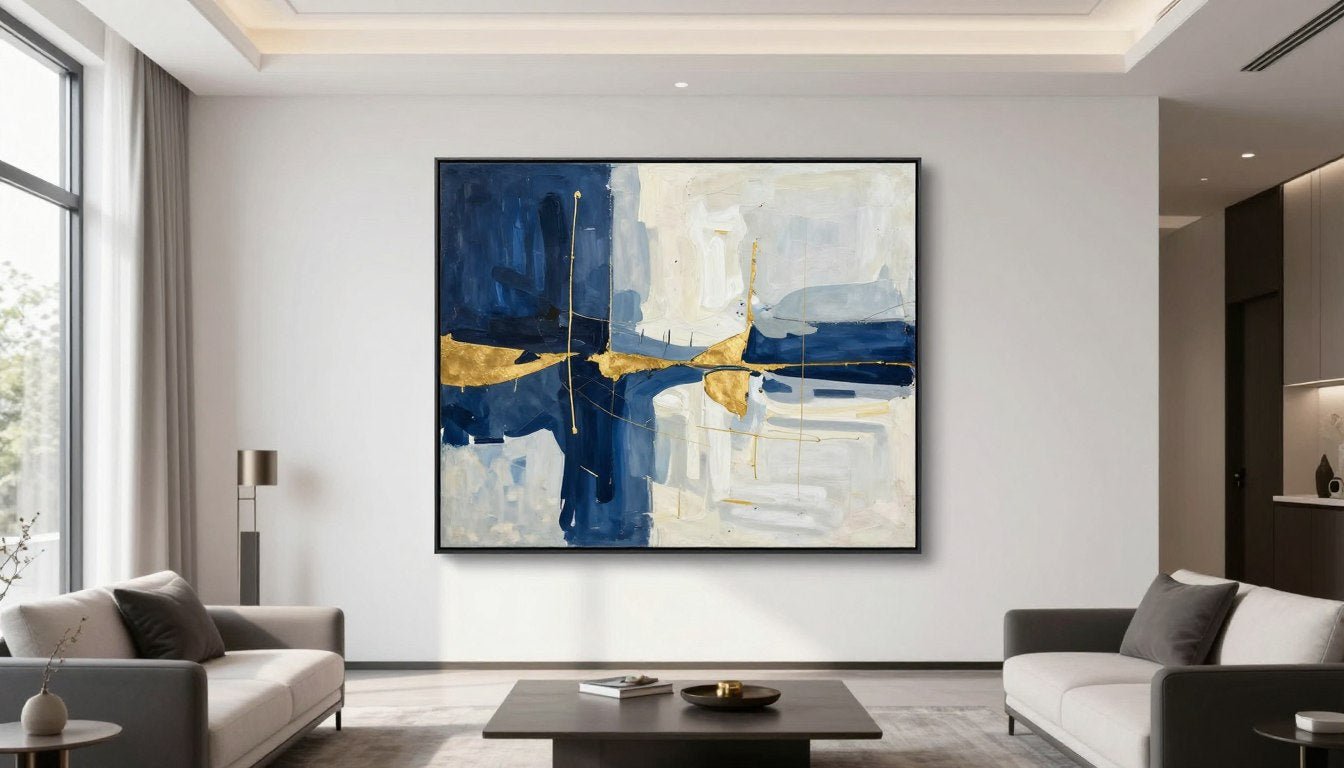

Abstract wall art possesses extraordinary power to transform interior spaces. Yet this same transformative quality can sometimes work against your design intentions. Many homeowners discover their carefully chosen abstract art prints create unexpected visual chaos rather than the sophisticated ambiance they envisioned.
The relationship between abstract wall art room busy dynamics stems from fundamental design principles that govern how our eyes process visual information. Understanding these principles helps you select wall art that enhances rather than overwhelms your living spaces.
This comprehensive guide explores the science behind visual clutter in abstract art. You will discover practical strategies for choosing pieces that complement your rooms perfectly. Whether you're decorating a compact urban flat or a spacious country home, these insights will help you create balanced, beautiful interiors.
Understanding Visual Weight in Abstract Wall Art

Visual weight determines how much attention a piece of wall art commands within a room. Abstract art often carries substantial visual weight due to bold colors and dynamic compositions. This characteristic makes abstract pieces powerful design elements.
Complex abstract wall art featuring multiple colors and intricate patterns demands significant visual attention. Your eye naturally moves across the canvas, following shapes and color transitions. In smaller rooms, this constant visual movement can create restlessness rather than calm.
The density of visual elements within abstract art prints directly impacts perceived room busyness. Pieces with numerous competing focal points fragment your attention. This fragmentation makes spaces feel crowded even when physically spacious.
Expert Insight on Visual Balance
Interior designers measure visual weight by analyzing color intensity, pattern complexity, and compositional density. Abstract art with concentrated visual weight in one area creates natural focal points. Pieces with evenly distributed weight across the entire canvas require more visual processing, potentially contributing to room busy sensations.

How Color Psychology Creates Abstract Art Too Busy Environments
Color psychology profoundly influences how abstract wall art affects room atmosphere. Vibrant, saturated colors stimulate visual cortex activity more intensely than muted tones. This neurological response explains why bright abstract art can make spaces feel energetically charged.

Contrasting color schemes in abstract art prints activate different neural pathways simultaneously. Your brain works harder to process multiple competing color signals. This cognitive load translates into the perception of visual busyness within your living room or bedroom.
High-Energy Color Combinations
- Red and orange pairings create immediate visual stimulation
- Complementary colors like blue and orange generate strong contrast
- Multiple primary colors compete for attention
- Neon or fluorescent tones overwhelm neutral backgrounds

Warm colors advance visually while cool colors recede. Abstract wall art dominated by warm tones appears to project forward from the wall. This spatial illusion makes rooms feel smaller and more confined.
The solution lies in understanding color temperature balance. Carefully curated abstract art collections feature pieces where color relationships create harmony rather than competition. Selecting art with intentional color stories prevents overwhelming your space.

Scale and Proportion: Critical Factors in Abstract Wall Art Visual Clutter
Proportion mistakes rank among the most common causes of abstract art too busy problems. A massive canvas in a small room dominates the entire visual field. Your eye cannot escape the artwork's presence, creating constant visual stimulation.

Design professionals follow the two-thirds rule for wall art sizing. Your artwork should occupy approximately two-thirds of the available wall space width. This proportion creates visual balance without overwhelming the room's architectural features.
Small Rooms Under 150 sq ft
Compact spaces require careful art print selection. Single medium pieces or small gallery walls work best.
- Maximum 30-40 inches width for single pieces
- Consider vertical orientations
- Avoid multiple competing artworks
Medium Rooms 150-300 sq ft
Standard living room dimensions accommodate larger abstract wall art comfortably.
- 40-60 inch width optimal range
- Pairs or triptychs work well
- Balance with furniture scale
Large Rooms Over 300 sq ft
Spacious environments demand statement pieces with substantial presence.
- 60+ inch width recommended
- Multiple coordinated pieces
- Create deliberate gallery walls

Ceiling height influences appropriate art scale significantly. Standard eight-foot ceilings require different proportions than ten-foot ceilings. Vertical abstract wall art draws the eye upward, making rooms feel taller. However, excessively tall pieces can create top-heavy visual imbalance.
Multiple smaller pieces require thoughtful arrangement to avoid creating abstract wall art visual clutter. Each individual print competes for attention. Without cohesive spacing and theme, gallery walls become chaotic rather than curated.
Pattern Complexity and Density in Modern Wall Art

Pattern density within modern abstract wall art significantly impacts room atmosphere. High-density patterns feature numerous visual elements competing simultaneously. Your brain continuously processes these multiple stimuli, creating mental fatigue.
Abstract art prints with repetitive patterns can either soothe or overwhelm depending on scale and complexity. Small, intricate repetitions demand close viewing attention. From across a room, these patterns may vibrate visually, creating unintended busy effects.
The Goldilocks Principle of Pattern Density
Successful abstract wall art for home environments balances pattern complexity with negative space. Too simple appears bland. Too complex creates visual noise. The ideal middle ground engages viewers without exhausting them. Premium galleries understand this balance instinctively when selecting pieces for residential collections.
Geometric wall art introduces structured patterns that interact with room architecture. When geometric patterns in your art clash with existing patterns in furnishings or architectural details, visual competition intensifies. This layering of competing patterns generates the classic abstract art room busy problem.

Organic, flowing patterns in abstract wall art decor typically feel less busy than rigid geometric designs. Curved lines guide eye movement naturally without creating hard stops. This fluidity reduces perceived visual clutter even in complex compositions.
Texture adds another layer of complexity to pattern perception. Heavy impasto techniques create physical depth that casts shadows and catches light. While beautiful, highly textured abstract art intensifies visual stimulation, particularly under dramatic lighting conditions.
Matching Abstract Art Prints to Room Function and Mood
Different rooms serve distinct purposes requiring tailored art selection. Your living room may benefit from conversation-starting abstract wall art, while bedrooms demand calming visual environments. Mismatching art energy to room function creates discord.

Bedrooms require particular consideration when selecting abstract wall art. Sleep quality depends partly on visual environment. Busy, stimulating art prints near your bed can disrupt relaxation and rest. Calm, flowing compositions support better sleep hygiene.
Living Room Abstract Art
Social spaces accommodate bolder artistic statements. Your living room tolerates higher visual energy than private spaces.
- Statement pieces become conversation starters
- Moderate complexity engages guests
- Coordinate with existing decor palette
- Consider viewing distances and seating arrangements
Bedroom Wall Art Strategy
Restful environments benefit from serene abstract compositions. Visual calm supports relaxation and sleep quality.
- Soft, muted color palettes work best
- Flowing, organic compositions soothe
- Minimize high-contrast elements
- Select pieces that promote tranquility
Home Office Considerations
Work environments need balance between stimulation and focus. Abstract art should inspire without distracting.
- Structured geometric patterns support focus
- Avoid overly complex compositions
- Cool colors enhance concentration
- Single focal point prevents distraction
Dining Room Art Selection
Dining areas benefit from art that stimulates appetite and conversation without overwhelming meal experiences.
- Warm color palettes enhance dining
- Moderate visual interest maintains focus
- Complement rather than compete with food
- Scale appropriately to wall dimensions

Kitchen spaces traditionally feature less prominent wall art due to functional requirements. However, modern open-plan designs integrate kitchens with living areas. Here, abstract wall art must work harmoniously with both food preparation and social functions.
Bathrooms present unique challenges for abstract art placement. High humidity requires appropriate framing and materials. Additionally, bathroom wall art should feel clean and refreshing rather than visually cluttered.
How Lighting Conditions Affect Abstract Wall Art Room Busy Perception

Lighting dramatically alters how you perceive abstract wall art complexity. Natural daylight reveals subtle color nuances and textures. Artificial lighting can either enhance or diminish visual impact depending on color temperature and direction.
Glossy canvas prints reflect light differently than matte finishes. In brightly lit rooms, glossy surfaces create hotspots that fragment visual attention. These reflections add another layer of visual activity, contributing to busy sensations.
Professional Lighting Recommendations
Gallery-quality presentation requires proper illumination. Picture lights mounted above framed wall art create controlled lighting that minimizes glare. Adjustable track lighting allows you to direct light precisely, reducing unwanted reflections while highlighting intended visual elements.
Rooms with abundant natural light demand different art selection than dimly lit spaces. Abstract art prints with dark, dense compositions may appear brooding and heavy in low-light conditions. The same piece might feel balanced and sophisticated in bright, airy rooms.

Time of day influences art perception significantly. Morning light carries different color qualities than afternoon or evening light. Abstract wall art that looks perfect at midday might feel overwhelming under warm evening lighting.
Consider your room's primary usage times when selecting abstract art. Evening-use spaces benefit from art that remains visually comfortable under artificial lighting. Daytime rooms can accommodate pieces that truly shine under natural illumination.
Coordinating Abstract Wall Art with Existing Interior Design
Your abstract wall art must harmonize with existing decor elements to avoid creating visual chaos. Furniture patterns, textile designs, and architectural features all compete for visual attention. Adding complex art to already busy interiors amplifies clutter.

Pattern mixing requires sophisticated understanding of scale and color relationships. Small-scale patterns in upholstery can complement large-scale abstract art patterns. However, competing mid-scale patterns create visual confusion rather than intentional eclecticism.
Assessing Your Current Visual Load
Before adding abstract wall art, evaluate existing visual complexity honestly. Count pattern sources in your room including fabrics, rugs, wallpaper, and architectural details.
Minimalist interiors with solid-color furnishings can accommodate complex abstract art beautifully. The art becomes the focal point without competing against other patterns.
Traditional or maximalist interiors already carry substantial visual weight. These spaces benefit from simpler abstract wall art that adds sophistication without overwhelming.
Consider whether your room needs visual activation or calming influence. This assessment guides appropriate art complexity selection.

Color coordination prevents abstract art from feeling disconnected or jarring. Pull accent colors from your art into room accessories like cushions, throws, or decorative objects. This repetition creates visual cohesion that reduces perceived busyness.

Architectural features deserve consideration in art selection. Rooms with decorative moldings, coffered ceilings, or prominent fireplace mantels already possess visual interest. Simple, modern abstract wall art provides contemporary contrast without creating competition.
Open-plan living requires particular attention to sightlines and visual flow. Your abstract art prints should work together when viewed from multiple angles and distances. Pieces that coordinate without matching create sophisticated visual journeys through connected spaces.
The Power of Negative Space in Abstract Wall Art Decor

Negative space within abstract wall art provides essential visual rest. Your eyes need places to pause between active compositional elements. Pieces lacking adequate negative space feel relentlessly demanding of attention.
White or neutral backgrounds in abstract art prints create breathing room that prevents busy sensations. These quiet areas balance active pattern zones, allowing complex elements to shine without overwhelming.
"The space between the elements is as important as the elements themselves. Master artists understand that restraint creates power."
Minimalist abstract art embraces negative space as primary compositional element. Single bold gestures against expansive backgrounds create maximum impact with minimum visual clutter. This approach works brilliantly in contemporary interiors.

Wall space surrounding your art also functions as negative space in room composition. Crowding multiple pieces together or placing art too close to furniture reduces this breathing room. Generous spacing prevents the wall itself from appearing busy.
The Japanese concept of 'ma' emphasizes meaningful emptiness in design. Applied to abstract wall art selection, this principle suggests that what you choose to leave out matters as much as what you include. Restraint demonstrates sophistication.
How Framing and Presentation Affect Visual Complexity
Framing choices significantly influence whether abstract wall art feels busy or balanced. Ornate frames add visual complexity that compounds with complex artwork. This doubling effect overwhelms rather than enhances.

Modern framed wall art typically employs simple, clean frames that don't compete with artwork. Black, white, or natural wood frames in narrow profiles provide definition without distraction. This restraint keeps attention focused on the art itself.
Canvas Gallery Wraps
Frameless canvas prints wrapped around stretcher bars offer clean, contemporary presentation.
- Eliminates frame visual weight
- Creates floating appearance
- Works well in modern interiors
- Reduces overall visual complexity
Float Mounting Systems
Art appears suspended from wall, creating sophisticated depth and dimension.
- Adds architectural interest
- Maintains focus on artwork
- Creates premium presentation
- Suitable for statement pieces
Traditional Framing
Classic frames suit certain abstract styles when chosen thoughtfully.
- Match frame complexity to art
- Consider room style consistency
- Avoid ornate frames with busy art
- Quality matters enormously

Matting creates additional negative space around artwork, providing visual breathing room. This buffer zone reduces visual intensity particularly for smaller art prints. However, excessive matting can make pieces appear lost or diminished.
Glass versus acrylic glazing affects both reflection and visual clarity. Museum-quality glazing minimizes reflections that create visual noise. Standard glass may introduce unwanted reflective complexity in brightly lit rooms.
Installation height influences perceived busyness as well. Art hung too high creates neck strain and disconnection. The standard center-at-57-inches rule places art at comfortable viewing height, reducing visual stress.
Expert Strategies for Choosing Balanced Abstract Art for Small Rooms

Small room environments demand particularly thoughtful abstract wall art selection. Limited square footage amplifies any visual clutter issues. Strategic choices can actually make compact spaces feel larger and more sophisticated.
Vertical orientations draw eyes upward, creating height illusion in rooms with standard ceilings. Long, narrow abstract art prints emphasize vertical dimension without consuming precious wall width.
Small Room Art Selection Checklist
- Choose pieces with substantial negative space
- Limit color palette to 2-3 main hues
- Select single focal point compositions
- Consider light, airy color schemes
- Avoid heavy, dark compositions
- Prefer flowing over geometric patterns
- Match art scale to wall dimensions
- Minimize frame visual weight

Light color palettes visually expand spaces. Abstract art prints featuring whites, soft grays, pale blues, or gentle neutrals reflect light effectively. This luminosity counteracts the closing-in sensation small rooms can create.
Mirror elements strategically placed near abstract wall art amplify light and create depth illusion. This technique works particularly well with lighter, more open compositions. Avoid mirroring busy, complex pieces which multiplies visual clutter.

Quality trumps quantity in compact spaces. One perfectly chosen statement piece outperforms multiple smaller works competing for attention. This restraint demonstrates design confidence and creates sophisticated impact.
Curated minimalist collections offer pre-selected pieces designed specifically for spatial efficiency. These carefully chosen works maximize visual interest while maintaining breathing room essential for smaller environments.
Creating Cohesive Gallery Walls Without Visual Clutter
Gallery walls present unique opportunities and challenges for abstract wall art display. Multiple pieces working together create dynamic visual interest. Poor planning results in chaotic, overwhelming arrangements.

Unified color stories bind gallery collections together visually. Select abstract art prints sharing complementary or analogous color palettes. This chromatic thread creates cohesion that prevents busy sensations despite multiple pieces.
The Grid Method for Gallery Success
Professional designers often employ invisible grid systems when planning gallery walls. Equal spacing between pieces creates visual rhythm and order. Consistent 2-3 inch gaps prevent compositions from feeling cramped while maintaining cohesive grouping. This structured approach transforms potential chaos into intentional design.
Theme consistency matters enormously in multi-piece arrangements. Mixing abstract styles randomly creates visual confusion. Geometric wall art pieces group beautifully together. Organic, flowing abstracts form coherent collections. Mixing the two requires exceptional design skill.

Symmetrical Gallery Arrangements
Formal symmetry creates calm, organized visual impact suitable for traditional and contemporary spaces.
- Mirror arrangements left and right
- Use identical or similar-sized pieces
- Creates formal, balanced aesthetic
- Ideal for flanking architectural features
Asymmetrical Gallery Walls
Organic asymmetry feels dynamic and modern when properly balanced through visual weight distribution.
- Vary sizes strategically
- Balance visual weight across composition
- Maintain consistent spacing
- Requires more planning but feels contemporary
Salon-Style Hanging
Dense, floor-to-ceiling arrangements create intentional visual richness when unified by theme.
- Requires strong unifying element
- Works in larger rooms with high ceilings
- Demands expert eye for balance
- Creates gallery-like atmosphere
Linear Gallery Arrangements
Single horizontal rows provide clean, modern presentation that suits contemporary interiors.
- Align tops or centers consistently
- Works above furniture beautifully
- Creates strong horizontal emphasis
- Easiest arrangement to execute successfully
Scale variation within gallery walls requires careful consideration. Mixing dramatically different sizes creates intentional hierarchy. However, too many competing scales fragment attention and increase perceived busyness.

Frame consistency simplifies gallery wall composition significantly. Matching frames in identical styles and colors create visual unity that allows individual artworks to shine. Varied framing adds complexity that requires sophisticated design skills to execute successfully.
Testing Abstract Wall Art Placement Before Final Installation
Premature installation commits you to potentially problematic placements. Smart designers test configurations thoroughly before making permanent decisions. This planning prevents costly mistakes and regrets.

Paper templates matching your intended art dimensions allow risk-free experimentation. Tape these templates to walls and live with arrangements for several days. Observe how natural light changes throughout the day affect visual impact.
The 72-Hour Rule for Art Decisions
Interior designers recommend living with potential art selections for at least 72 hours before purchasing. This waiting period allows initial excitement to settle. You'll discover whether pieces truly work in your space or simply caught your eye momentarily. Many abstract art galleries, including Rossetti Art, offer visualization services or generous return policies supporting this thoughtful approach.
Digital visualization tools and augmented reality apps let you preview abstract wall art in your actual space. These technologies eliminate guesswork, showing precisely how pieces will look at true scale in your specific lighting conditions.

Photograph your space with temporary art placements from multiple angles. Review these images objectively. Photos reveal visual relationships your eye might miss when physically present in the room. This distanced perspective highlights potential busy-making issues.
Consult with friends or family members for fresh perspectives. People unfamiliar with your space notice things you've become blind to through daily exposure. Their honest reactions provide valuable insight into whether your selections work harmoniously.
Professional art consultations eliminate uncertainty entirely. Expert guidance from experienced curators ensures your abstract wall art choices enhance rather than overwhelm your carefully designed spaces.
When Busy Abstract Wall Art Works Beautifully

Not all busy abstract wall art creates negative effects. Certain spaces and design intentions benefit from high-energy, complex compositions. Understanding when complexity works helps you make intentional rather than accidental choices.
Creative workspaces like studios, craft rooms, or artistic offices thrive on visual stimulation. Complex abstract art provides inspiration and energetic atmosphere that supports creative thinking. Here, busy compositions become functional rather than problematic.
When Complex Abstract Art Works
- Large rooms with high ceilings absorb visual complexity
- Minimalist interiors need focal point drama
- Creative spaces benefit from stimulating environments
- Statement walls designed for intentional impact
- Gallery-style rooms celebrating art as primary purpose
- Eclectic interiors where maximalism is intentional
When to Avoid Visual Complexity
- Small rooms lacking adequate wall space
- Bedrooms requiring restful atmospheres
- Spaces with already busy decor elements
- Rooms with low ceilings feeling cramped
- Areas designed for relaxation and meditation
- Homes with young children needing calm environments
Maximalist design philosophies embrace abundant visual richness intentionally. If your aesthetic leans toward maximalism, complex abstract wall art fits perfectly. The key lies in owning the choice confidently rather than accidentally creating chaos.

Transitional spaces like hallways, staircases, and entryways tolerate more visual complexity than destination rooms. People move through these areas rather than dwelling. Brief exposure to busy abstract art creates impact without overwhelming.
Scale matters enormously in determining whether complexity works. Massive statement pieces in expansive rooms carry their complexity successfully. The same composition at smaller scale in confined space fails dramatically.
Maintaining Visual Balance as Your Space Evolves
Interior spaces evolve continuously through furniture changes, new acquisitions, and shifting personal tastes. Abstract wall art that worked perfectly initially may feel increasingly busy as other elements accumulate. Regular reassessment prevents gradual visual clutter buildup.

Rotating art seasonally keeps spaces feeling fresh while allowing you to adapt to changing visual loads. Store pieces that feel too intense during busy life periods. Reintroduce them when circumstances change and you crave more stimulation.
"The best art collections grow and breathe with their owners. Permanent installations become invisible. Thoughtful rotation maintains engagement and allows pieces to be appreciated anew."
Life stage transitions affect art needs significantly. Young families with small children benefit from calmer visual environments. Empty nesters may embrace bolder statements they previously avoided. Your abstract wall art should evolve alongside your life.

Document your rooms periodically with photographs. Compare current states to earlier images. This historical perspective reveals whether gradual accumulation has created unintended busyness requiring editing and simplification.
Quality abstract art prints retain value and desirability over time. Building relationships with reputable galleries like Rossetti Art provides access to trade-in programs or collection building guidance as your needs evolve.
The Value of Professional Art Consultation Services

Professional art consultants bring trained eyes and extensive experience to selection challenges. They identify subtle issues you might miss and prevent expensive mistakes. This expertise proves particularly valuable for significant investments.
Consultants understand technical aspects like lighting requirements, proper framing, and installation methods. Their knowledge ensures your abstract wall art displays optimally, looking exactly as intended rather than accidentally creating busy effects through poor presentation.
Personalized Space Assessment
Expert consultants evaluate your specific room dimensions, lighting conditions, existing decor, and personal preferences. This comprehensive analysis identifies perfect pieces matching your unique requirements rather than generic recommendations.
Curated Collection Building
Professional guidance helps build cohesive art collections over time. Consultants ensure new acquisitions complement existing pieces while maintaining overall visual balance throughout your home as your collection grows.
Installation Supervision
Proper installation makes enormous difference in final presentation. Consultants oversee hanging, ensuring optimal heights, spacing, and lighting that showcase your abstract wall art beautifully while preventing visual clutter issues.
Access to exclusive collections represents another consultation benefit. Established galleries reserve certain pieces for clients working with consultants. These curated selections ensure uniqueness preventing your abstract art from appearing in neighboring homes.

Investment guidance protects your financial interests. Quality abstract art appreciates over time when selected wisely. Consultants help identify emerging artists and enduring styles offering both aesthetic satisfaction and financial prudence.
Time savings alone justify consultation costs for busy professionals. Rather than visiting countless galleries and scrolling endless online options, consultants present pre-selected choices matching your criteria perfectly. This efficiency eliminates decision fatigue while ensuring superior results.
Creating Perfectly Balanced Spaces with Abstract Wall Art

Understanding why abstract wall art can make a room feel busy empowers you to make confident, informed selections. Visual weight, color psychology, scale proportions, and pattern complexity all contribute to overall room atmosphere. Awareness of these factors transforms art selection from guesswork into intentional design.
Your abstract art choices should enhance daily living rather than create subtle stress through visual overwhelm. Rooms designed with proper consideration feel welcoming, sophisticated, and personally meaningful. This balance represents the ultimate goal of thoughtful interior design.
Remember that perfection emerges through experimentation and occasional editing. Even professional designers refine choices over time as spaces evolve and needs change. Grant yourself permission to adjust, rotate, and refresh your art displays maintaining visual vitality.
Quality matters profoundly in abstract wall art selection. Investment in well-crafted pieces from established galleries like Rossetti Art ensures lasting satisfaction. Superior craftsmanship, archival materials, and expert curation justify premium pricing through decades of enjoyment.
Transform Your Space with Expert Guidance
Rossetti Art's experienced curators understand the delicate balance between visual interest and overwhelming complexity. Our complimentary consultation service helps you select abstract wall art that enhances your unique space beautifully. We assess your room dimensions, lighting, existing decor, and personal preferences to recommend pieces that create perfect harmony.
Begin your journey toward perfectly balanced interiors today. Explore curated collections designed specifically to enhance rather than overwhelm. With proper knowledge and expert guidance, your abstract wall art will become the sophisticated focal point you've always envisioned.
Frequently Asked Questions About Abstract Wall Art and Room Busyness
How do I know if my abstract wall art is too busy for my room?
Assess whether your art creates restlessness rather than pleasure when you enter the room. If your eye cannot find a resting place or you feel visually fatigued after spending time in the space, your abstract art may be too complex for the environment. Ask trusted friends for honest opinions, as fresh perspectives notice issues you've become accustomed to seeing daily.
Can I mix different abstract art styles in the same room?
Mixing abstract styles succeeds when unified by common elements like color palette, scale, or framing. Geometric and organic abstracts can coexist if they share complementary colors or similar visual weight. However, dramatically different styles require substantial design skill to combine without creating visual confusion. Beginning collectors typically achieve better results focusing on cohesive style families.
What size abstract art works best in small living rooms?
For small living rooms under 150 square feet, select pieces between 30-40 inches in width. A single medium-large piece creates more sophisticated impact than multiple smaller works competing for attention. Vertical orientations work particularly well in compact spaces, drawing eyes upward and creating height illusion. Always leave generous negative space around art to prevent walls from feeling crowded.
Should abstract bedroom art differ from living room selections?
Absolutely. Bedrooms require calmer abstract art promoting relaxation and restful sleep. Choose pieces with flowing organic compositions, muted color palettes, and minimal high-contrast elements. Living rooms accommodate bolder statements with more visual energy since they serve social rather than restful functions. This functional differentiation ensures each space serves its intended purpose optimally.
How many pieces should I include in a gallery wall?
Odd-numbered groupings (3, 5, 7 pieces) typically create more visually pleasing arrangements than even numbers. For standard residential walls, 3-5 carefully selected pieces work beautifully. Larger salon-style walls may include 7-12 pieces but require expert planning to avoid overwhelming chaos. Always prioritize cohesion through unified color stories or consistent framing over sheer quantity.
Does lighting really affect how busy abstract art appears?
Lighting profoundly impacts perceived complexity. Bright natural light reveals all details and color nuances, intensifying busy compositions. Dimmer artificial lighting can actually soften complex pieces, making them feel less overwhelming. Consider your room's primary lighting conditions when selecting art. Test potential pieces under actual lighting circumstances rather than relying solely on gallery or online presentation.

Leave a comment
This site is protected by hCaptcha and the hCaptcha Privacy Policy and Terms of Service apply.