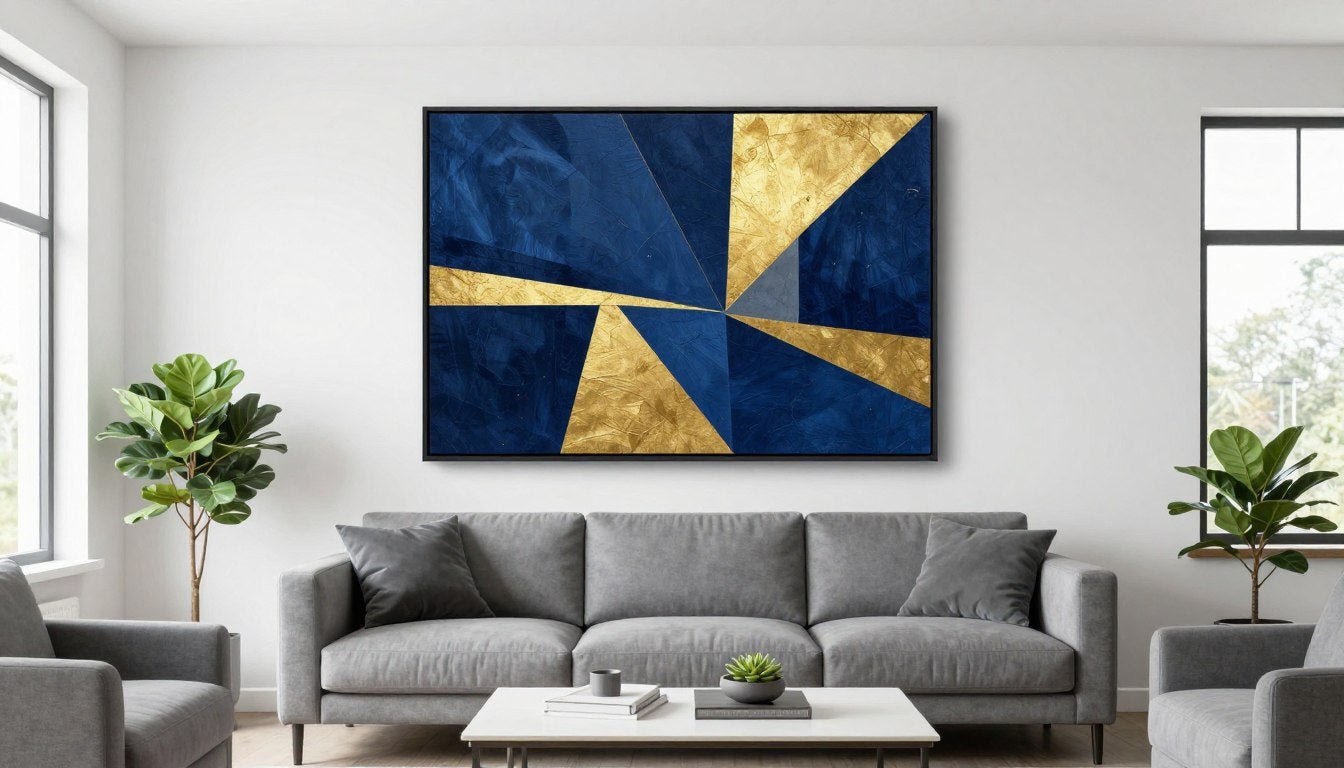
That blank space behind your sofa is calling out for something special. The wall art above sofa becomes the focal point of your entire living room, setting the tone for how the space feels when you walk through the front door.
Getting it right transforms the room. Getting it wrong makes everything feel off-balance.
This guide walks you through every decision, from measuring the right dimensions to selecting pieces that make your living space feel intentional and complete.

How to Choose the Perfect Size Wall Art for Above Your Sofa
The most common question homeowners ask is about size. Too small, and your artwork looks lost. Too large, and it overwhelms the space.
The golden rule: your wall art should be two-thirds to three-quarters the width of your sofa. This proportion creates visual harmony. For an 84-inch sofa, aim for artwork between 56 and 63 inches wide.
Measure your sofa width first. Then calculate using this simple formula. A standard three-seater sofa typically measures 72 to 96 inches wide, which means your art should span 48 to 72 inches.

Size Guidelines by Sofa Type
Standard Three-Seater Sofa
For sofas measuring 72-84 inches wide, choose one large piece measuring 48-63 inches, or create a gallery wall within that same width parameter.
- Single large canvas: 48x36 inches or 60x40 inches
- Diptych set: Two 24x36 inch pieces
- Triptych arrangement: Three 20x30 inch pieces
Sectional or Large Sofa
Larger sofas ranging from 96 to 120 inches need bigger statements. Consider oversized pieces or expansive gallery walls that fill the space sofa creates.
- Extra-large canvas: 72x48 inches or larger
- Gallery wall: 5-9 pieces spanning 70-90 inches
- Horizontal panoramic print: 80x30 inches

One large piece creates a bold focal point. Gallery wall arrangements offer flexibility and personality. Both options work beautifully when sized correctly for your sofa.
If you're drawn to abstract compositions, abstract canvas prints make striking centerpieces above sofas. The contemporary style suits modern and transitional living rooms.
Vertical vs. Horizontal Orientation
Horizontal pieces complement the long horizontal line of your sofa. They create visual flow and make the room feel wider. Most designers prefer this orientation for the space behind sofa.
Vertical pieces work when you have high ceilings or want to draw the eye upward. They're less common above sofas but can look stunning in the right setting with proper proportion.

Wall Art Placement: Getting the Height Right
Height matters as much as width. Hang your artwork too high, and it floats disconnected from the sofa. Too low, and it feels cramped.
The standard rule: leave 6 to 12 inches of blank space between the top of your sofa back and the bottom of your artwork. This creates breathing room while maintaining visual connection.

The Eye-Level Principle
Art galleries hang pieces with the center at 57 to 60 inches from the floor. This eye-level standard works for most wall art, but the space sofa requires slight adjustment.
When you sit on your sofa, the art should feel comfortably positioned in your sight line. Stand back and evaluate from different angles. The piece should anchor the seating area without demanding you crane your neck.
Pro Tip: Use painter's tape to outline your planned artwork on the wall before making any holes. Live with it for a day or two. This simple trick prevents costly mistakes and ensures the placement feels right in different light conditions throughout the day.

Ceiling Height Considerations
Standard 8-foot ceilings require careful planning. You have limited vertical space, so maintain that 6 to 12-inch gap and ensure the top of your frame doesn't crowd the ceiling.
High ceilings offer more flexibility. You can go larger with your artwork or create stacked gallery wall arrangements. Just maintain proper proportion to your sofa width and keep the bottom edge within that 6 to 12-inch zone.

Best Wall Art Styles for Living Room Above Sofa
Style choice depends on your existing room design and personal taste. The wall art above sofa should complement your color palette and enhance the overall aesthetic.
Abstract and Geometric Prints
Abstract pieces bring contemporary energy to living rooms. Bold shapes and dynamic color create instant focal points. They work especially well in modern and mid-century spaces.
Geometric patterns add structure and sophistication. These pieces suit minimalist design while providing visual interest. The clean lines echo modern furniture shapes.

Botanical and Nature-Inspired Art
Botanical prints create calming atmospheres. Oversized leaf patterns or floral compositions bring the outdoors inside. These pieces suit transitional and organic modern styles beautifully.
Nature photography works for various design schemes. Black and white botanical images offer timeless elegance. Color nature scenes introduce warmth and life to neutral rooms.
For those drawn to natural themes, botanical wall art prints provide gallery-quality options that transform living room walls into peaceful retreats.

Portrait and Figurative Art
Portrait artwork adds human connection to spaces. Whether classical or contemporary, faces draw the eye and create conversation. These pieces work as powerful focal points.
Line art portraits offer modern sophistication. Simple continuous line drawings provide visual interest without overwhelming. They suit minimalist and contemporary rooms perfectly.
Explore portrait canvas prints for statement pieces that bring character and depth to your living room walls.

Black and White Photography
Monochromatic photography offers timeless appeal. Black and white images suit virtually any design style and color palette. They provide sophistication without competing with other room elements.
Architecture, landscape, or abstract photography in black and white creates drama. These pieces work especially well in rooms with bold colored sofas or busy patterns elsewhere.

Creating a Gallery Wall Above Your Sofa
Gallery wall arrangements let you display multiple pieces as one cohesive installation. This approach works beautifully above sofas when planned thoughtfully.
Planning Your Layout
Start by cutting paper templates matching your frame sizes. Arrange them on the floor first, then transfer the approved layout to your wall using painter's tape. This method eliminates guesswork and prevents unnecessary holes.
Maintain consistent spacing between frames. Most designers recommend 2 to 3 inches between pieces. This creates unity while letting each piece breathe.

Gallery Wall Arrangement Styles
Grid Layout
Symmetrical grid arrangements create order and calm. Use identical frame sizes and consistent spacing. This style suits modern and contemporary rooms where clean lines matter.
- Works best with 4, 6, or 9 pieces
- Requires precise measurement and alignment
- Creates cohesive, gallery-quality look
Salon Style
Eclectic salon walls mix frame sizes and orientations. Arrange pieces organically while maintaining overall rectangular shape. This approach offers personality and flexibility.
- Accommodates various sizes and styles
- Creates visual interest and depth
- Allows for personal expression


For gallery wall projects, canvas print sets offer pre-coordinated options designed to work together, eliminating the guesswork of mixing individual pieces.
Frame Selection for Gallery Walls
Matching frames create cohesion across different images. Black frames work universally, while oak floater frame options add warmth to gallery walls. White frames suit bright, airy spaces.
Mixed frame styles can work in salon arrangements if you maintain some unifying element like color or material. Rossetti Art offers gallery-quality hardwood frame and oak floater frame options that elevate any canvas print.

Coordinating Color and Frame Choices
Color coordination between your artwork and room creates intentional design. The piece doesn't need to match exactly, but it should relate to your existing color palette.
Working with Your Color Scheme
Pull accent colors from your art into pillows, throws, or other decor items. This technique ties the room together. Even one shared color creates connection.
Neutral sofas offer the most flexibility. You can go bold with color in your artwork without clashing. Colored sofas require more careful selection to ensure harmony.

The 60-30-10 Rule
Interior designers use this color distribution rule. Sixty percent dominant color, thirty percent secondary color, ten percent accent color. Your wall art can introduce or reinforce any of these elements.
In a neutral room, your artwork might provide that ten percent accent color punch. In a colorful space, it might echo the thirty percent secondary tone for balance.
Design Insight: Rossetti Art prints use archival inks and UV-resistant coatings to ensure colors stay true for years. This quality matters when building a coordinated color palette, as fading artwork disrupts your carefully planned design scheme.
Frame Finishes and Materials
Frame color affects the overall look significantly. Black frames create contrast and modern edge. Natural wood frames add warmth and organic feel. White frames suit coastal and Scandinavian styles.
Hand-stretched canvas without frames offers contemporary minimalism. The clean edges work beautifully in modern spaces where you want the art itself to be the focus.

Common Mistakes to Avoid
Even experienced decorators make placement errors. Knowing what to avoid saves time and creates better results from the start.
Size and Proportion Errors
The most frequent mistake is choosing artwork that's too small. A tiny piece above a large sofa looks lost and creates an unfinished feel. Always err on the side of larger when uncertain.
Another common issue is creating gallery walls that exceed the sofa width significantly. Remember that two-thirds to three-quarters guideline. Going wider makes the sofa look disproportionate.
Do This
- Measure your sofa width before shopping
- Use the two-thirds to three-quarters rule
- Maintain 6-12 inch gap above sofa back
- Test placement with paper templates
- Consider ceiling height in planning
Avoid This
- Choosing artwork based on wall size alone
- Hanging pieces too high or too low
- Creating gallery walls wider than sofa
- Mixing too many competing styles
- Ignoring lighting conditions on art

Lighting Considerations
Natural light affects how art looks throughout the day. Direct sunlight can cause fading over time, even with UV-resistant prints. Consider window placement when selecting your wall.
Add picture lights or track lighting to highlight your artwork in the evening. Proper lighting transforms how colors appear and creates ambiance in your living room space.

Installation and Hanging Hardware
Using inadequate hanging hardware is a safety risk and damages walls. Large canvases require proper anchoring. Use wall anchors rated for the weight of your piece, especially on drywall.
Level your artwork carefully. Even slight tilts are noticeable and create an unfinished look. Use a quality level tool and take your time during installation.

Frequently Asked Questions
Q: How high should wall art be above a sofa?
A: Leave 6 to 12 inches of space between the top of your sofa back and the bottom edge of your artwork. This creates visual connection while providing breathing room. The center of the art should generally sit at or slightly above eye level when you're seated.
Q: What size art should go above a sofa?
A: Your artwork should be two-thirds to three-quarters the width of your sofa. For a standard 84-inch sofa, choose a piece or gallery wall arrangement spanning 56 to 63 inches wide. This proportion creates balanced, professional-looking design.
Q: Can you put a gallery wall above a sofa?
A: Yes, gallery walls work beautifully above sofas when planned correctly. Arrange multiple pieces within the two-thirds to three-quarters width guideline, maintain 2 to 3 inches between frames, and ensure the overall arrangement stays within those proportions. Test your layout with paper templates before hanging.
Q: Should wall art above sofa be horizontal or vertical?
A: Horizontal orientation works best in most cases because it complements the long horizontal line of the sofa. Vertical pieces can work with high ceilings or in specific design scenarios, but horizontal creates better visual balance and makes rooms feel wider.
Q: What style of art looks best above a sofa?
A: The best style depends on your room's design and personal taste. Abstract and geometric prints suit modern spaces, botanical art creates calm atmospheres, portraits add character, and black and white photography offers timeless versatility. Choose art that relates to your existing color palette and complements your overall design aesthetic.
Q: How do I choose between one large piece or multiple smaller pieces?
A: One large piece creates a bold focal point and works well in minimalist or contemporary spaces. Multiple pieces in a gallery wall arrangement offer flexibility and personality, working beautifully in eclectic or transitional rooms. Both options are equally valid when properly sized to your sofa width.
The wall art above sofa transforms your living room from ordinary to intentional. When you get the size, placement, and style right, everything clicks into place. The room feels complete.
Start with measurements. Apply the two-thirds rule. Test your layout before committing. These simple steps prevent the most common mistakes and create results that look professionally designed.
Your living room deserves artwork that makes you smile every time you walk through the door. Whether you choose one bold statement piece or a carefully curated gallery wall, make it something you genuinely love.
Ready to find your perfect piece? Explore our abstract canvas prints, botanical wall art, and curated canvas sets designed specifically for spaces like yours.

About the Author
Chiara Rossetti
Chiara Rossetti is the founder of Rossetti Art, a canvas print and original art brand. She writes about interior design, wall art styling, and the art of making a home feel alive.

Leave a comment
This site is protected by hCaptcha and the hCaptcha Privacy Policy and Terms of Service apply.