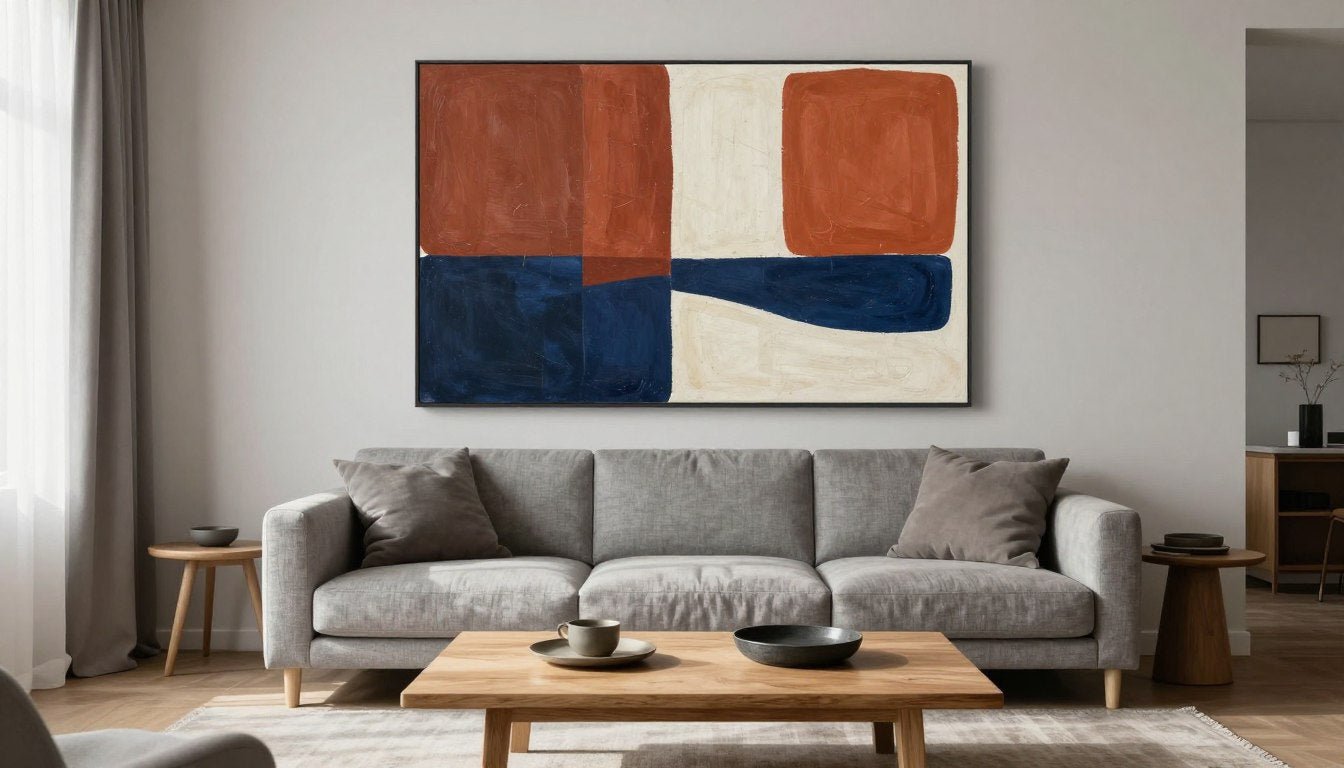
Your living room wall is not just empty space. It holds the power to shift the entire atmosphere of your home. A single piece of statement wall art for living room can anchor your design, spark conversation, and reflect who you truly are.
Yet choosing that perfect piece feels overwhelming. Size, color, style, placement—each decision matters more than you might think.

What Makes Wall Art a Statement Piece
Statement wall art commands attention the moment you enter a room. It serves as the focal point that draws the eye and sets the design tone for your entire living space. Unlike decorative accents, statement art makes a bold declaration about your aesthetic preferences and personal style.
The key characteristic is scale. Statement pieces typically measure at least 90cm wide, creating visual impact that cannot be ignored. This substantial presence transforms blank walls into compelling design features.

But size alone doesn't define statement art. The piece must also possess visual strength—whether through bold colors, striking contrast, dramatic subject matter, or compelling composition. Think of a vivid abstract canvas print with sweeping brushstrokes or a powerful portrait canvas print that captures raw emotion.
Statement art creates an immediate emotional response. It might evoke calm through serene landscapes, energy through dynamic abstracts, or sophistication through elegant line drawings. This emotional connection separates true statement pieces from mere decoration.

Quick Tip: Your statement art should be visible from the room's entrance. If guests don't immediately notice it, the piece may be too small or poorly placed for maximum impact.
The Psychology Behind Statement Art Selection
Our brains process visual information before words. When someone enters your living room, their eyes scan for focal points within seconds. Statement art provides that anchor point, creating a sense of completion and intentional design.
Research in environmental psychology shows that art influences mood and behavior. Large-scale pieces particularly affect our perception of space—they can make rooms feel larger, more intimate, or more energetic depending on their composition and color palette.

Color plays a crucial role. Warm tones like terracotta, gold, and burnt orange create welcoming, intimate spaces. Cool blues and greys promote calmness and expansion. Dramatic contrasts inject energy and contemporary edge.
Investment in Quality Over Quantity
One exceptional statement piece outperforms a gallery wall of mediocre prints. Quality matters—from the art itself to how it's produced and presented.
Rossetti Art creates gallery-quality canvas prints using archival inks that resist fading for decades. Each piece is printed on hand-stretched canvas mounted on sturdy hardwood frames, ensuring your investment maintains its beauty and impact for years.

The difference between standard prints and gallery-quality canvas art becomes apparent over time. UV-resistant inks prevent the color degradation that plagues cheaper alternatives. Proper canvas stretching prevents sagging and warping. These details determine whether your statement piece remains stunning or becomes disappointing.
Choosing the Right Art Style for Your Living Room
Your living room's existing design language guides your art selection. Statement pieces should complement—not clash with—your established aesthetic while adding that bold element that elevates the entire space.

Abstract and Geometric Statement Art
Abstract art brings contemporary sophistication to modern living spaces. These pieces work brilliantly in rooms with clean lines, minimal decoration, and neutral color schemes. The organic shapes and bold color fields become the room's personality.
Geometric patterns add structured visual interest without overwhelming. They pair exceptionally well with mid-century modern furniture and Scandinavian design principles. Think bold triangles, circular compositions, or linear abstractions that create movement across your wall.

Abstract canvas prints allow flexibility in interpretation. Each viewer brings their own meaning, making these pieces excellent conversation starters. They adapt to evolving room designs better than literal imagery.

When Abstract Works Best
Choose abstract statement art when your room needs:
- A focal point without literal representation
- Color without recognizable imagery
- Contemporary edge in modern spaces
- Flexibility to work with changing decor
- Sophisticated artistic presence
Botanical and Nature-Inspired Canvas Prints
Botanical wall art brings the outdoors inside, creating fresh, calming environments. Oversized leaf prints, floral compositions, and natural landscapes offer organic beauty that works across multiple design styles from coastal to cottage to contemporary.
These pieces particularly suit living rooms with natural materials like wood, rattan, and linen. They soften industrial elements and add warmth to minimalist spaces. The connection to nature provides stress-reducing benefits backed by environmental psychology research.

Large-scale botanical art makes dramatic statements without aggression. The organic forms feel inherently calming while still commanding attention through scale and detail. This balance makes them ideal for family living rooms where both impact and comfort matter.
Portrait and Figurative Canvas Art
Human figures create immediate emotional connection. Whether contemporary portraits, classical figure studies, or stylized representations, these pieces bring soul and narrative to your living space.
Figurative art particularly suits eclectic, traditional, and maximalist interiors. It adds personality and sophistication, suggesting cultured taste and artistic appreciation. Consider black and white portraits for timeless elegance or colorful contemporary figures for bold modern spaces.

The key with figurative work is scale and subject matter. Oversized portraits make powerful statements. Choose subjects that resonate personally rather than following trends—you'll live with this face in your home daily.
Black and White Statement Prints
Monochromatic art delivers maximum impact through contrast rather than color. Black and white canvas prints bring graphic punch to any living room, working seamlessly with virtually any color scheme.
These timeless pieces suit modern, industrial, minimalist, and even traditional spaces. The absence of color directs attention to composition, texture, and subject matter. Photography, line art, and abstract works all translate powerfully into black and white formats.

Consider black and white art when your room already contains multiple colors. The monochromatic piece unifies the space without competing with existing hues. It adds sophistication without complexity.
Style Matching Guide: Modern/Contemporary spaces pair best with abstract or geometric art. Traditional rooms suit figurative or landscape pieces. Eclectic spaces can handle bold, mixed-media statement art. Natural/organic interiors shine with botanical prints.
Sizing and Placement: Getting the Proportions Right
Size determines whether your art makes a statement or gets lost on the wall. The most common mistake in living room design is choosing pieces that are too small. Your statement art should command attention, not disappear into the background.

The Golden Ratio for Wall Art Sizing
Your statement piece should span two-thirds to three-quarters of your sofa width. This proportion creates visual balance without overwhelming the furniture arrangement. For a standard 200cm sofa, aim for canvas art measuring 130-150cm wide.
Height matters equally. The art center should sit at eye level—typically 145-150cm from the floor. When hanging above furniture, leave 15-20cm of space between the furniture top and the art's bottom edge. This breathing room prevents the piece from appearing to sit directly on the sofa.
Sizing by Room Dimensions
- Small living rooms (3m x 3.5m): 90-120cm wide canvas
- Medium living rooms (4m x 5m): 120-150cm wide canvas
- Large living rooms (5m+ x 6m+): 150-200cm+ wide canvas
- Cathedral ceilings: Vertical orientation, 150cm+ tall

Don't let empty wall space intimidate you into going too large. Balance is essential. Oversized art in small rooms can feel oppressive rather than impressive. The piece should enhance space perception, not dominate it. If you're furnishing a larger space, our guide on how big oversized wall art should be for a large living room breaks down the sizing benchmarks in more detail.
Canvas Print Sets as Statement Pieces
Multi-panel canvas sets create statement impact through collective presence. Triptychs (three panels) or diptychs (two panels) allow larger total dimensions while maintaining visual interest through segmentation.
Canvas print sets work particularly well above long sofas or in wide wall expanses. Ensure consistent spacing between panels—typically 5-8cm creates cohesion while allowing each piece to breathe. The combined width should still follow the two-thirds rule relative to furniture.

Choose sets where panels share color palettes or themes but maintain individual interest. Each piece should work independently while contributing to the unified statement. This approach particularly suits abstract and landscape imagery.
Placement Beyond the Sofa Wall
While above the sofa remains the most common placement, statement art shines in alternative locations. A large canvas on the wall opposite your seating creates a focal point you actually see while sitting—something sofa-wall art doesn't provide.
Fireplace walls offer natural focal point opportunities. If hanging art above a mantel, ensure the combined height doesn't overwhelm the architecture. The art should enhance, not compete with, the fireplace's presence.

Corner walls and entry-facing walls work beautifully for statement pieces. These positions ensure your art greets visitors immediately upon entering. Consider sight lines from doorways when determining placement—the piece should reveal gradually or immediately depending on the impression you want to create.
Placement Rule: Stand where you spend the most time in your living room. Your statement art should be visible and impactful from that position. If it's not in your natural sight line, reconsider the placement.
Height Adjustments for Different Situations
Standard eye-level hanging (center at 145cm) works for most situations. However, adjust for specific circumstances:
Above Furniture
Leave 15-20cm gap between furniture top and art bottom. The art bottom edge typically sits 190-200cm from floor when above a standard-height sofa.
High Ceilings
Raise art slightly higher than standard—center at 150-155cm—to prevent it from appearing to sink too low in the vertical space.
Gallery Walls
The collection's visual center should hit 145cm. Individual pieces may sit higher or lower within the grouping.

Remember that viewing angles change throughout the room. Walk around your space and observe the art from multiple positions. Statement pieces should maintain their impact regardless of where you stand.
📐 Not Sure What Size to Choose?
Use our free Wall Art Size Calculator to find the perfect dimensions for your space. Get instant recommendations based on your wall and furniture measurements.
Color Coordination in Living Spaces
Color makes or breaks your statement art selection. The right palette ties together your entire room design. The wrong choice creates visual discord that even the most beautiful art cannot overcome.

Working with Existing Room Colors
Your statement art should contain at least one color that appears elsewhere in the room. This connection creates cohesion rather than jarring contrast. Survey your space—identify the dominant colors in furniture upholstery, curtains, rugs, and accessories.
The art doesn't need to match perfectly. Instead, look for complementary shades within the same color family. If your sofa features sage green, consider art with deeper emerald or softer mint tones alongside other colors. This relationship feels intentional without appearing overly coordinated.

Neutral-dominant rooms gain energy from statement art with bold color. If your space features mostly whites, greys, and beiges, a vibrant canvas brings life without requiring a complete redesign. Let the art introduce color you might hesitate to commit to through furniture.
The 60-30-10 Color Rule
Interior designers rely on this proven formula: 60% dominant color, 30% secondary color, 10% accent color. Your statement art typically falls into the accent category, providing that crucial 10% of visual pop.
This positioning gives art permission to be bold. Since it occupies a small percentage of the visual field, strong colors feel exciting rather than overwhelming. Choose art featuring your accent color prominently, with touches of your secondary shade for connection.

Consider how lighting affects color perception throughout the day. Art colors appear different under morning daylight versus evening artificial light. Test paint samples and art prints under various lighting conditions before committing to large statement pieces.
Monochromatic Schemes with Statement Art
Rooms styled in varying shades of one color benefit from art that either extends the monochromatic theme or breaks it strategically. Extending the theme creates sophisticated, calming spaces. Breaking it with complementary colors adds dynamic energy.
In all-white or grey living rooms, black and white canvas prints maintain the monochromatic serenity while adding graphic impact. Alternatively, a single color splash—like a golden abstract or blue botanical print—becomes a powerful focal point against the neutral backdrop.

Metallics count as neutrals in color theory. Gold, copper, and bronze elements in art add warmth without disrupting monochromatic schemes. These metallic touches pair beautifully with grey, white, and black interiors, introducing luxury without color commitment.
Seasonal Color Considerations
Your statement art becomes a permanent fixture, so choose colors with year-round appeal. While trendy hues come and go, classic color combinations—navy and white, grey and yellow, green and cream—maintain their sophistication indefinitely.
That said, you can embrace seasonal elements through smaller accessories while keeping statement art timeless. A botanical canvas with deep greens works year-round but feels especially fresh in spring and summer. Abstract art in warm terracotta and rust tones suits autumn and winter yet doesn't feel out of place during warmer months.

Color Psychology: Blues and greens promote calm and relaxation. Warm reds, oranges, and yellows create energy and conversation. Earth tones foster comfort and groundedness. Choose based on the atmosphere you want your living room to provide.
Creating Contrast Without Clash
Contrast adds visual interest, but too much creates chaos. Successful statement art balances contrast with harmony. Look for pieces where colors complement rather than compete with your existing palette.
Complementary colors (opposites on the color wheel) create vibrant contrast—blue and orange, purple and yellow, red and green. Analogous colors (neighbors on the wheel) create harmonious flow—blue, blue-green, and green. Consider which approach suits your design goals.

Test color relationships before purchasing. Many art retailers, including Rossetti Art, offer visualization tools or return policies. Seeing how canvas colors interact with your specific lighting and decor prevents costly mistakes.
Framing and Canvas Options That Elevate Your Art
The presentation quality of your statement art matters as much as the image itself. Gallery-quality materials and proper framing transform good art into exceptional pieces that maintain their beauty for decades.

Canvas Stretching and Quality Considerations
Hand-stretched canvas over sturdy wooden frames ensures your art maintains proper tension without sagging. This craftsmanship becomes evident over time—inferior stretching leads to warping, loose canvas, and diminished visual appeal within months.
Rossetti Art uses hand-stretched canvas mounted on quality hardwood frames. This construction provides stability while allowing the canvas to breathe naturally. The stretching technique ensures clean corners and uniform surface tension across the entire print area.

Canvas depth affects presentation style. Standard 2cm depth frames suit traditional spaces. Deeper 4cm frames create a bold, contemporary gallery-wrap look where the image extends around the sides. This frameless appearance works beautifully in modern living rooms.
Check for archival-quality materials throughout. Acid-free canvas prevents yellowing and deterioration. UV-resistant coating on frames protects against sun damage. These details separate investment-worthy art from disposable decoration.
Oak Floater Frames for Premium Presentation
Oak floater frames create museum-quality presentation by suspending the canvas within the frame, leaving a small gap around all edges. This technique draws attention to the art itself while the natural oak provides warm, sophisticated framing.
Floater frames particularly suit contemporary and transitional living rooms. The natural wood grain adds organic warmth without the formality of traditional framing. This presentation style works across multiple art styles—from abstracts to botanicals to portraits.

The floating effect creates subtle shadow lines that add dimension. This depth makes the art appear to hover slightly away from the wall, enhancing its presence and importance within the room's design.
Ink Quality and Color Longevity
Archival inks determine how your statement art looks years from now. Standard inks fade noticeably within 2-3 years, especially in rooms with natural light exposure. Archival-quality inks maintain color vibrancy for 100+ years when properly displayed.
UV-resistant inks are non-negotiable for living room art. Even indirect sunlight causes color degradation over time. Premium canvas prints use pigment-based archival inks with UV inhibitors that preserve the original colors you fell in love with.

The printing technology matters equally. Giclée printing—the gold standard for canvas art—uses specialized inkjet technology with microscopic droplets that create smooth color gradients and incredible detail. This method reproduces original artwork with exceptional accuracy.
Quality Checklist: Ensure your statement canvas features archival inks, hand-stretched canvas, solid wood frames, UV-resistant coating, and giclée or comparable printing quality. These elements justify investment in art that lasts.
Made-to-Order Benefits
Made-to-order canvas prints offer customization impossible with mass-produced art. You choose exact dimensions for perfect room fit, select preferred frame styles, and ensure fresh production with the latest ink and material technologies.
This approach eliminates the compromise of "close enough" sizing. Your living room gets exactly the statement piece it needs—not whatever dimensions happen to be in stock. Custom sizing particularly benefits unusual wall spaces or specific furniture arrangements.

Rossetti Art's made-to-order process ensures your canvas prints arrive ready to hang, with proper mounting hardware included. The attention to preparation details—from protective packaging to pre-installed hangers—reflects the quality standard throughout.
Protective Measures for Longevity
Even gallery-quality canvas requires thoughtful placement and care. Avoid hanging statement art in direct sunlight—even UV-resistant inks benefit from protection. Position away from heat sources like radiators or fireplaces that can cause canvas expansion and contraction.
Clean canvas prints gently with a soft, dry microfiber cloth. Never use cleaning solutions, which can damage inks and canvas coatings. Proper handling during installation prevents fingerprints and surface marks that detract from the art's appearance.

Climate control matters more than most realize. Consistent temperature and humidity prevent canvas warping. Living rooms with extreme seasonal temperature swings or high humidity may benefit from dehumidifiers or climate monitoring to protect art investments.
Frame Style Selection Guide
- Pine wood frames: Budget-friendly, clean lines, suits modern and contemporary spaces
- Oak floater frames: Premium presentation, natural warmth, works across styles
- Gallery wrap (frameless): Modern, seamless, image wraps around edges
- Traditional frames: Classic elegance, suits formal and traditional rooms

Frequently Asked Questions
Q: What size statement wall art should I choose for my living room?
A: Your statement art should span two-thirds to three-quarters of your sofa width for proper proportion. For a standard 200cm sofa, choose canvas measuring 130-150cm wide. The art's center should hang at eye level (145-150cm from floor), with 15-20cm gap between furniture top and art bottom. Room size also matters—small living rooms (3m x 3.5m) suit 90-120cm wide pieces, while large rooms (5m+ x 6m+) can accommodate 150-200cm+ canvases. Always consider your sight lines—the art should be visible and impactful from where you spend most time in the room.
Q: How do I choose the right colors for living room wall art?
A: Select statement art containing at least one color that appears elsewhere in your room—in furniture, cushions, rugs, or curtains. This creates cohesion without requiring perfect matches. Use the 60-30-10 color rule: let your art provide the accent 10%, tying together your dominant (60%) and secondary (30%) room colors. For neutral-dominated spaces, bold colorful art adds energy without requiring furniture changes. Consider complementary colors (opposites on the color wheel like blue and orange) for vibrant contrast, or analogous colors (neighbors like blue and green) for harmonious flow. Test how art colors look under both natural daylight and evening artificial lighting before committing.
Q: What art style works best for statement pieces in living rooms?
A: The best art style depends on your existing decor. Modern and contemporary spaces shine with abstract or geometric canvas prints that provide bold visual interest without literal imagery. Traditional and eclectic rooms suit figurative art or portraits that add sophistication and narrative. Natural and organic interiors benefit from botanical wall art that brings calming outdoor elements inside. Black and white prints work across all styles, providing timeless graphic impact that coordinates with any color scheme. Choose art that resonates personally—you'll live with it daily—rather than following trends. Your statement piece should reflect your personality while complementing your room's design language.
Q: Should I frame my canvas print or leave it as a gallery wrap?
A: Gallery wrap (where the image extends around canvas edges) creates modern, seamless presentation perfect for contemporary living rooms. Oak floater frames provide museum-quality display with natural warmth that suits multiple styles—the canvas appears to float within the frame for dimensional impact. Traditional pine wood frames offer clean, budget-friendly presentation with classic appeal. Your choice should align with your room's style and the formality level you want to achieve. Floater frames add premium quality perception, while gallery wraps feel more casual and modern. Consider that framed pieces protect canvas edges better over time.
Q: Where should I hang statement art besides above the sofa?
A: The wall opposite your seating creates a focal point you actually see while sitting—something sofa-wall art doesn't provide. Fireplace walls offer natural focal opportunities, though ensure combined height with the mantel doesn't overwhelm. Entry-facing walls ensure your statement piece greets visitors immediately. Corner walls work beautifully for creating visual interest in underutilized spaces. The key is considering sight lines from doorways and where you spend most time—your art should be visible and impactful from your primary vantage points. Walk through your room and observe the wall from multiple positions before deciding placement.
Q: What makes canvas prints fade and how can I prevent it?
A: Direct sunlight causes the most fading, even with UV-resistant inks. Position statement art away from windows with intense sun exposure or use UV-filtering window film. Heat sources like radiators and fireplaces accelerate deterioration through temperature fluctuations that cause canvas expansion and contraction. Choose gallery-quality canvas with archival inks and UV-resistant coatings—these maintain color vibrancy for 100+ years versus 2-3 years for standard prints. Rossetti Art uses archival inks and hand-stretched canvas specifically to prevent fading and warping. Clean canvas gently with dry microfiber cloths only—never use cleaning solutions. Consistent room temperature and humidity levels also protect your investment.

Your living room deserves art that makes you pause and smile every time you enter. Statement wall art transforms blank space into personal expression, empty walls into conversation starters, and houses into homes that feel unmistakably yours.
The right piece balances size, color, style, and quality—creating focal points that anchor your design while reflecting who you are. Whether you're drawn to bold abstracts, calming botanicals, sophisticated portraits, or timeless black and white prints, your perfect statement art exists.
Remember that quality matters. Gallery-quality canvas with archival inks, hand-stretched mounting, and proper framing ensures your investment maintains its beauty for decades. Your living room wall is prime real estate—fill it with art worthy of the space.
Ready to Find Your Perfect Statement Piece?
Explore our curated collections of gallery-quality canvas prints designed to transform living spaces. From bold abstracts to elegant botanicals, discover art that speaks to your style.


About the Author
Chiara Rossetti
Chiara Rossetti is the founder of Rossetti Art, a canvas print and original art brand. She writes about interior design, wall art styling, and the art of making a home feel alive.

Leave a comment
This site is protected by hCaptcha and the hCaptcha Privacy Policy and Terms of Service apply.