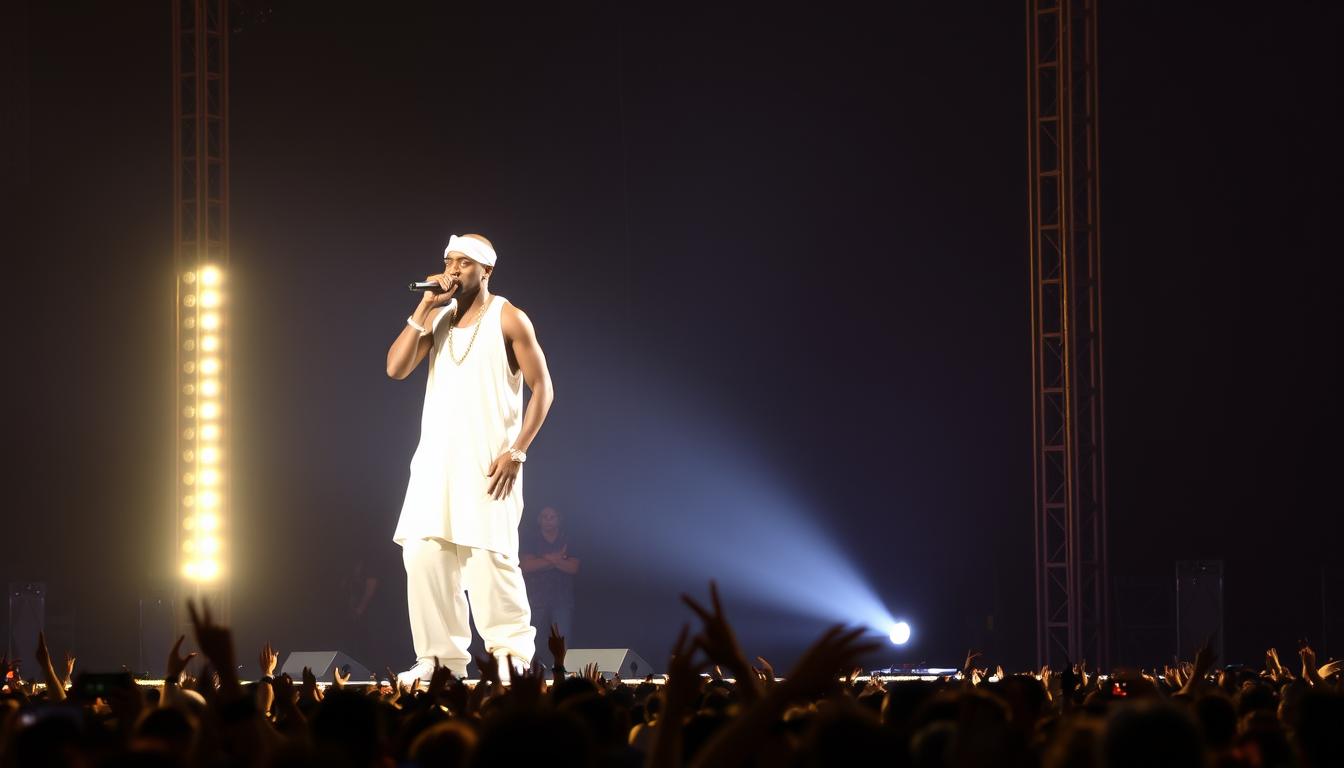
When Tupac Shakur appeared on stage at Coachella 2012, the world stood still. This wasn't just another performance—it was a digital resurrection that blurred the lines between past and present. The Tupac hologram cost became a hot topic of discussion, with estimates ranging from $100,000 to $400,000. But beyond the price tag lies a fascinating story of technological innovation, artistic vision, and cultural impact that continues to resonate today.

The Coachella 2012 Moment That Shocked the World
On April 15, 2012, Dr. Dre and Snoop Dogg were headlining the final night of Coachella when something unprecedented happened. A lifelike image of Tupac Shakur—who had been dead for 16 years—materialized on stage, greeting the crowd with "What up, Coachella!" before launching into performances of "Hail Mary" and "2 of Amerikaz Most Wanted."
The Tupac hologram cost was significant, with Nick Smith, president of AV Concepts (the company behind the projection), revealing to MTV that the price tag fell somewhere between $100,000 and $400,000. Most reports settle on approximately $250,000 for the complete production. The creation process wasn't quick either—it took several months of planning followed by four months of intensive studio work.

"We worked with Dr. Dre on this and it was Dre's vision to bring this back to life," Smith told MTV. "It was his idea from the very beginning and we worked with him and his camp to utilize the technology to make it come to life." The hologram was created through a collaboration between AV Concepts and Digital Domain, the special effects studio known for work on blockbusters like "The Curious Case of Benjamin Button" and "TRON: Legacy."
The audience reaction was electric—a mixture of awe, disbelief, and emotional connection. Social media exploded with videos and comments, and the performance became one of the most talked-about moments in Coachella history. What many initially thought was a simple technological trick turned out to be a complex artistic endeavor with a substantial Tupac hologram cost attached.
The Technology Behind the Magic
Despite being commonly referred to as a "hologram," the Tupac resurrection actually employed a 19th-century illusion technique called Pepper's Ghost. This method involves reflecting an image onto an angled piece of glass or film, creating the appearance of a three-dimensional figure on stage.

For the Tupac hologram, cost considerations led to an innovative approach. AV Concepts used the Musion Eyeliner system, projecting a 2D image onto an angled piece of glass on the ground, which then reflected onto a transparent Mylar screen on stage. This created the illusion of Tupac standing alongside living performers.
"This is not found footage. This is not archival footage. This is an illusion. This is just the beginning. Dre has a massive vision for this."
The technical specifications were impressive. According to AV Concepts, they used a customized 302 x 132 screen that descended onto the stage between sets. Their proprietary Liquid Scenic server delivered uncompressed media for three stacked 1920 x 1080 images, providing 54,000 lumens of projected imagery.
Digital Domain handled the CGI aspects, creating a completely digital model of Tupac rather than using existing footage. This allowed them to make the hologram perform movements and say phrases that the real Tupac never did—like acknowledging Coachella, an event that began three years after his death.

Cultural Legacy and Emotional Impact
The Tupac hologram transcended its technological novelty to become a cultural touchstone. It raised profound questions about legacy, memory, and the digital afterlife. For many fans, the emotional impact was powerful—seeing an artist whose voice had been silenced tragically early performing "live" again created a unique blend of nostalgia and futurism.

The cultural significance extended beyond the performance itself. The Tupac hologram cost may have been high, but it pioneered a new form of entertainment that has since influenced posthumous appearances by other artists. It sparked debates about the ethics of digital resurrection and who controls an artist's image after death.
Music historian and cultural critic Mark Anthony Neal noted that the hologram represented "a bridge between generations of hip-hop fans," allowing younger audiences to experience the energy of a Tupac performance while giving older fans a chance to revisit a formative musical influence.
The performance also demonstrated how technology could preserve cultural heritage in new ways. While no digital recreation can replace the authentic presence of an artist, the hologram offered a glimpse of how art and memory might evolve in the digital age—creating experiences that blend past and present in emotionally resonant ways.
From Digital Icon to Wall Art
While the Tupac hologram cost hundreds of thousands to create for a single performance, there are more accessible ways to bring the legend's presence into your space. Rossetti Art's Vibrant Abstract 2Pac Canvas Print transforms the digital legend into tangible art that captures the spirit and energy of the iconic rapper.
Bring the Legend Home

Our premium canvas print honors Tupac's legacy with bold colors and contemporary street-art styling that makes a statement in any space.
Explore the ArtworkWhy Collectors Love It

Vibrant Color Palette
Our artists use a spectrum of bold, energetic colors that capture Tupac's dynamic presence and cultural impact—creating a visual experience that resonates with the power of his music.

Abstract Street-Art Style
The contemporary street-art approach merges urban aesthetics with fine art sensibilities—perfect for modern interiors that balance sophistication with cultural relevance.

Gallery-Ready Design
Each canvas arrives perfectly stretched on a wooden frame with hanging hardware installed—ready to transform your space immediately with museum-quality presentation.
The Future of Digital Icons
The Tupac hologram cost set a precedent for how we might preserve and celebrate cultural icons in the digital age. Since that groundbreaking Coachella moment, holographic and AI-powered performances have evolved significantly. Artists like Whitney Houston, Roy Orbison, and Amy Winehouse have received similar treatments, suggesting a future where beloved performers might continue to "tour" long after they're gone.

As technology advances, the line between digital and physical art continues to blur. From NFTs to augmented reality experiences, we're witnessing new ways to engage with artistic legacies. Yet there remains something uniquely powerful about physical art that occupies real space in our homes and lives.
The Rossetti Art 2Pac Canvas Print represents this bridge between digital innovation and tangible expression—transforming the energy of a performer whose digital resurrection captivated millions into a physical artwork that brings that same spirit into everyday spaces.
Let Art Speak Your Story
At Rossetti Art, we celebrate icons who shaped culture and emotion. Our Vibrant Abstract 2Pac Canvas Print honors the energy and rebellion that defined a generation. Bring the legend to your walls and let art speak your story.
Shop Now


Leave a comment
This site is protected by hCaptcha and the hCaptcha Privacy Policy and Terms of Service apply.