
A thoughtfully chosen frame can transform your oil painting from a beautiful artwork into a stunning focal point that commands attention in any space. Beyond aesthetics, proper framing protects your canvas edges from damage, prevents warping, and makes installation simpler. This comprehensive guide will walk you through everything you need to know about framing oil paintings on canvas—from selecting the perfect style to proper measurement and installation.
TL;DR: Quick Framing Guide
- Most modern oil paintings on canvas look best in a floater frame
- Never place glass directly against an oil painting surface
- Measure canvas depth carefully and allow for the "float gap" when ordering
- Use D-rings (not flimsy wire) for heavier framed pieces
- If the paint is thick or fragile, consult a professional framer
- Match frame finish to your room (black, oak, walnut, gold accents)
- Keep humidity and heat in mind (avoid placing near radiators or fireplaces)
- Allow oil paintings to fully cure (6-12 months) before framing
Do You Need to Frame an Oil Painting on Canvas?

Framed vs unframed oil painting on canvas: visual impact comparison
While framing isn't always necessary, it offers several significant benefits. A well-chosen frame provides a polished, finished appearance that elevates your artwork's presence. It creates visual weight and importance, drawing the eye and establishing the painting as a focal point in your space.
Frames also offer practical protection for your canvas edges and corners, which are vulnerable to damage, dents, and tears. For paintings that will be moved or handled frequently, this protection is particularly valuable.
However, framing may be optional if your canvas features gallery-wrapped edges (where the canvas wraps around the sides of the stretcher bars) that are either painted as a continuation of the image or finished in a solid colour. Many contemporary artists specifically create works intended to be displayed without frames.
Collector Note: If your oil painting is valuable, features heavy impasto (thick paint) textures, or has historical significance, professional framing is strongly recommended. These pieces benefit from specialized mounting techniques that provide additional protection while preserving the artwork's integrity.
Frame Types for Canvas Paintings (What Works Best)
Floater (Float) Frames — The "Gallery Look"

Floater frames have become the gold standard for framing canvas paintings in contemporary settings. These frames create the illusion that the artwork is floating within the frame, with a small gap (typically 0.8 cm, or 5/16") between the canvas edge and the frame.
This style showcases the entire painting, including the edges of the canvas, while still providing the finished look and protection of a frame. Floater frames are particularly effective for modern and contemporary oil paintings, and they've become the preferred choice in galleries and museums worldwide.
Traditional Frame with Spacers (No Glass on the Paint)

For a more classic look, traditional frames with decorative moulding can beautifully complement oil paintings, especially those with traditional or historical subjects. When using traditional frames, spacers are essential to keep any protective glass from touching the paint surface.
These frames often feature wider profiles and more ornate details than floater frames, making them ideal for formal spaces or period-appropriate settings. The key is ensuring proper spacing between the canvas and any glass or acrylic glazing.
Canvas Trays / Shadowbox Styles

Canvas tray or shadowbox frames create dramatic depth by recessing the artwork within a deep frame. This style adds significant dimension and can make smaller paintings appear more substantial. The additional depth also provides excellent protection for textured paintings with heavy impasto techniques.
Shadowbox frames work particularly well for object-focused still lifes, creating an almost three-dimensional display effect that enhances the subject matter.
No Frame (Gallery Wrap) — When It Works

Gallery-wrapped canvases with neatly finished edges can be displayed without frames, particularly in contemporary, minimalist settings. This approach works best when:
- The canvas is professionally stretched on deep stretcher bars (3.5 cm/1.5 inches or deeper)
- The edges are painted (either as a continuation of the image or in a complementary solid colour)
- The artwork is intended for a modern, casual setting
- The artist specifically designed the piece to be displayed without a frame
While this approach offers a clean, contemporary look, it provides less protection for the canvas edges and corners than framed options.
| Frame Type | Best For | Protection Level | Weight Added | Budget | DIY Difficulty | Biggest Mistake to Avoid |
| Floater Frame | Modern, contemporary art; showing full canvas | Medium-High | Low-Medium | Medium-High | Medium | Incorrect depth measurement |
| Traditional + Spacers | Classical, traditional subjects; formal settings | High | High | High | High | Glass touching paint surface |
| Shadowbox/Tray | Textured paintings; creating depth | Very High | Medium-High | Medium-High | Medium-High | Insufficient depth for textured paint |
| No Frame (Gallery Wrap) | Minimalist settings; deep-edge canvases | Low | None | Low | N/A | Using with thin-profile canvases |
The Measurement Cheat Sheet (So You Order the Right Frame)

Accurate measurements are crucial when ordering frames, especially floater frames where precision determines how well the canvas appears to "float" within the frame. Here's what you need to measure:
- Canvas Size (W × H): Measure the width and height of the canvas face in centimetres (and inches if needed). For example: 40 cm × 50 cm (16" × 20").
- Canvas Depth (Profile): Measure from the front face to the back edge of the stretcher bars. Common depths are 1.9 cm (¾"), 3.5 cm (1⅜"), or 4.5 cm (1¾").
- Preferred Float Gap: Decide how much space you want between the canvas edge and the inner frame edge. Typically 0.8 cm (5/16") looks best.
- Frame Face Width: Consider how wide you want the visible frame face to be. Smaller paintings often look best with proportionally narrower frames (1.5-2.5 cm or ⅝"-1"), while larger pieces can support wider frames (3-5 cm or 1¼"-2").
Example Measurement: For a 40 cm × 50 cm canvas with 3.5 cm depth and 0.8 cm float gap, you would order a floater frame with an internal dimension of 41.6 cm × 51.6 cm and a depth accommodation of at least 4.3 cm.
Always double-check your measurements before ordering. A frame that's even 0.5 cm too small won't fit your canvas, while one that's too large will create an uneven, unprofessional float gap.
Before You Order a Frame: Checklist
- Confirm canvas depth (measure from front face to back edge)
- Check if staples are on the sides or back (side staples may be visible in floater frames)
- Decide on frame finish to complement both artwork and room (black, oak, walnut, gold)
- Confirm your hanging hardware plan (D-rings recommended for heavier pieces)
- Consider wall colour and lighting (avoid reflective finishes if placed opposite windows)
- Verify if the canvas is square (measure diagonally corner-to-corner both ways)
- Check if the canvas has any protruding elements that need extra clearance
Step-by-Step: How to Frame an Oil Painting in a Floater Frame

- Inspect the Canvas: Check for stability, loose corners, or areas with particularly thick paint that might need special accommodation. Ensure the painting is completely dry and cured (ideally 6-12 months for oil paintings).
- Clean Handling: Work in a clean, dust-free environment. Handle the canvas by the stretcher bars only, never touching the painted surface. Cotton gloves are optional but recommended for valuable pieces.
- Measure and Prepare: Confirm all measurements and ensure your floater frame has the correct depth to accommodate your canvas. Lay the frame face-down on a clean, soft surface.
- Dry-Fit and Centre: Place the canvas face-down into the frame to check the fit. Centre the canvas carefully, ensuring an even float gap on all sides. Use a ruler to verify equal spacing.
- Secure with Brackets: Once centred, secure the canvas using the appropriate offset clips or brackets that came with your frame. Place brackets at the midpoint of each side for smaller canvases, or every 20-25 cm (8-10 inches) for larger pieces. Tighten screws carefully—overtightening can warp the stretcher bars.
- Add Hanging Hardware: Install D-rings approximately one-third of the way down from the top of the frame on both sides. For paintings larger than 60 cm (24 inches) in either dimension, consider using two-point hanging systems for better stability.
- Final Check: Stand the framed painting upright and verify it sits level. Add bumper pads to the bottom corners of the frame back to protect your wall and allow for air circulation. Ensure the painting will hang away from heat sources and direct sunlight.
If your oil painting has heavy impasto (thick paint) or is particularly valuable, consider having it professionally framed. Improper handling or mounting can damage delicate paint surfaces.
Traditional Frames for Oil Paintings (When You Want a Classic Look)

Traditional frames with decorative moulding offer timeless elegance that complements classical subjects and formal interiors. When choosing this style for oil paintings, several considerations are essential:
The Critical Importance of Spacers
If you choose to include glass or acrylic glazing with a traditional frame (which is optional for oil paintings), spacers are absolutely essential. These small, often unnoticeable strips create crucial separation between the painting surface and the glazing.
Without spacers, the glass could touch the paint surface, potentially causing adhesion, damage to textured areas, or condensation issues that harm the painting. Professional framers typically use unobtrusive spacers that maintain at least 0.5 cm (¼ inch) separation.
Choosing the Right Profile
Traditional frames come in countless profiles, from simple ogee designs to elaborate baroque styles. The key is selecting a profile that complements rather than competes with your painting. Consider:
- The period and style of the artwork (match historical pieces with period-appropriate frames)
- The scale of the painting (larger works can support more substantial frames)
- The level of detail in the painting (intricate paintings often pair well with simpler frames)
For heirloom-quality or valuable oil paintings, professional framing is strongly recommended. A skilled framer can suggest historically appropriate mouldings and ensure proper mounting techniques that preserve your artwork for generations.
Common Mistakes (and Fixes)

Ordering the Wrong Depth
Many floater frames come in standard depths that may not accommodate thicker canvases. Always confirm your canvas depth and order a frame with sufficient clearance.
Fix: Measure from the front face to the back edge of your canvas before ordering, then add 0.3 cm (⅛") for clearance.
Uneven Float Gap
An uneven gap between the canvas and frame creates a sloppy, unprofessional appearance.
Fix: Use a ruler to measure the gap on all sides during installation, adjusting until perfectly even before securing brackets.
Overtightening and Warping
Excessive force when tightening mounting brackets can warp stretcher bars, causing canvas distortion.
Fix: Tighten screws just until secure—never force them. Use more brackets with less pressure for larger pieces.
Weak Hanging Hardware
Picture wire can sag over time, and single hooks are insufficient for heavier framed pieces.
Fix: Use D-rings and appropriate wall anchors. For pieces over 5 kg, consider a French cleat mounting system.
Glass Against the Paint
Placing glass directly against oil paint can cause adhesion and damage.
Fix: Always use spacers with traditional frames if including glazing, or choose a floater frame that inherently provides separation.
Exposure to Heat and Humidity
Placing framed oil paintings near fireplaces, radiators, or in bathrooms can cause paint cracking and canvas warping.
Fix: Hang artwork away from heat sources and areas with fluctuating humidity.
Clashing Frame Finish
A frame that conflicts with either the artwork palette or room décor creates visual discord.
Fix: Choose frame finishes that either complement the dominant tones in the painting or match existing room elements.
Undersized Frame for Large Canvas
A frame that's too thin or delicate for a large canvas looks disproportionate and provides inadequate support.
Fix: Scale your frame width proportionally to canvas size—larger canvases need wider, more substantial frames.
Ignoring Wall Colour and Lighting
Reflective frames in bright rooms or frames that blend into wall colours reduce visual impact.
Fix: Consider your wall colour and lighting when selecting frame finishes. Matte finishes reduce glare in bright rooms.
Single-Point Hanging for Heavy Pieces
Using just one hook for heavy framed canvases creates wall stress and hanging instability.
Fix: Use two-point hanging systems for any framed piece over 60 cm wide or 5 kg in weight.
Style Guide — Choosing the Right Frame Finish

Black Frame: Modern Contrast
Black floater frames create dramatic contrast that makes colours pop, especially with vibrant or monochromatic artwork. They work beautifully in contemporary, minimalist spaces with white or light walls, providing a clean, gallery-like presentation that lets the artwork command attention.
Oak/Natural Wood: Warm Neutrals
Light, natural wood frames bring organic warmth that complements coastal, Scandinavian, and casual interiors. These frames pair exceptionally well with landscapes, seascapes, and paintings featuring earthy or pastel palettes, creating a harmonious, relaxed presentation.
Walnut/Dark Wood: Heritage Tones
Rich, dark wood frames convey sophistication and gravitas, making them ideal for traditional interiors, studies, and spaces with heritage elements. These frames enhance paintings with deep, moody colours or classical subjects, adding weight and importance to the presentation.
Gold Accents: Classic Warmth
Gold frames (from subtle champagne to rich gilt) add luxurious warmth and elevate artwork to statement status. Use sparingly in contemporary spaces or more liberally in traditional settings. Gold particularly enhances paintings with warm undertones or highlights, creating a cohesive visual connection.
Caring for Framed Canvas Art

Proper care ensures your framed oil painting remains vibrant and structurally sound for generations. Follow these simple guidelines:
- Dusting: Gently dust the frame and canvas edges (never the painted surface) with a soft, clean artist's brush or microfiber cloth. Never use household cleaners or damp cloths on either the frame or painting.
- Avoid Direct Sunlight: UV exposure causes fading and can accelerate canvas deterioration. Hang artwork away from direct sunlight or use UV-filtering glass in windows.
- Maintain Stable Environment: Avoid extreme temperature fluctuations and high humidity. The ideal environment is 18-21°C (65-70°F) with 40-55% relative humidity.
- Handling: When moving framed paintings, always hold by the sides of the frame with both hands, never by the top rail alone. For valuable or large pieces, have a second person assist.
- Inspection: Periodically check the frame joints, hanging hardware, and canvas tension. Address any looseness or warping promptly to prevent further issues.
If your oil painting requires cleaning beyond simple dusting, consult a professional art conservator. Improper cleaning can permanently damage the paint surface.
Rossetti Art Examples

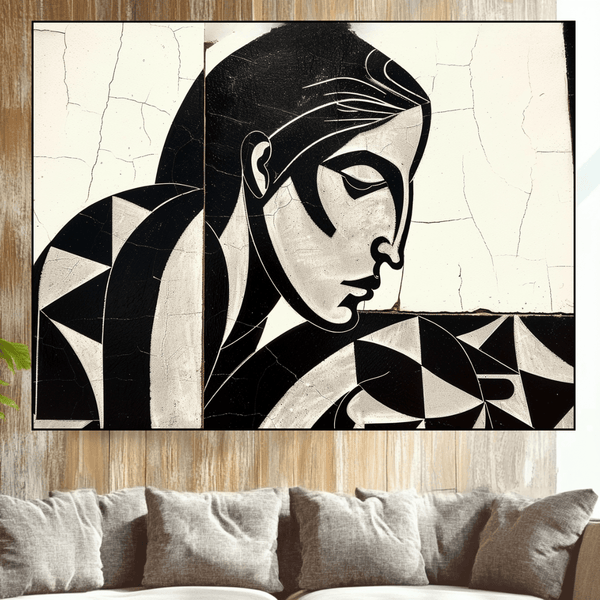
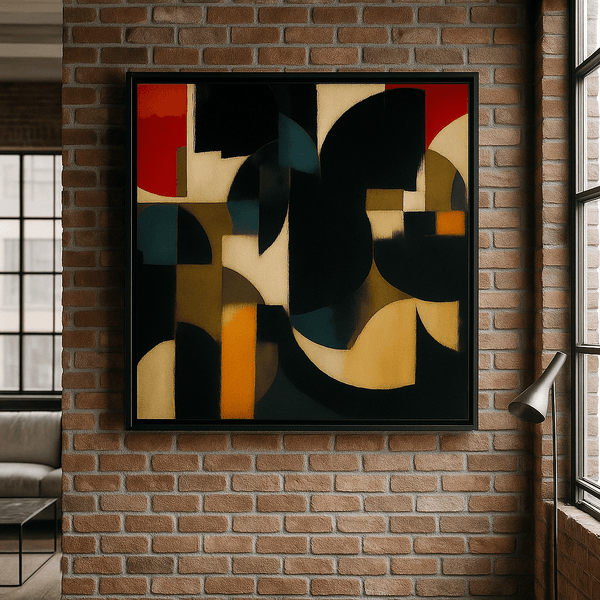
Our "Urban Rhythm" abstract series showcases how black floater frames create powerful contrast that makes vibrant colours leap from the canvas. These modern frames provide a clean, contemporary finish that works beautifully in minimalist spaces.
Our monochrome coastal series demonstrates how crisp white floater frames can enhance subtle tonal variations. These elegant frames create breathing space around the artwork, perfect for contemporary interiors with a light, airy aesthetic.

Our geometric nature series pairs perfectly with natural oak floater frames, creating a harmonious connection between organic subject matter and frame material. These warm wood frames complement Scandinavian and coastal interiors beautifully.
Whether you're looking for original oil paintings or high-quality canvas prints, we offer a range of framing options to suit your space. Our custom framing service ensures your artwork is presented perfectly, enhancing both the painting and your interior.
Frequently Asked Questions
Should you frame an oil painting on canvas?
While not always necessary, framing an oil painting on canvas offers both aesthetic and protective benefits. Frames provide a finished look, protect vulnerable canvas edges, and can enhance the artwork's presence in your space. Gallery-wrapped canvases with painted edges can look complete without frames, but most oil paintings benefit from appropriate framing.
What is a floater frame and why is it popular for canvas?
A floater frame creates the illusion that the canvas is floating within the frame, with a small gap between the canvas edge and frame. This style is popular because it shows the entire painting (including edges), provides a clean, contemporary look, and offers edge protection without hiding any of the painted surface. Floater frames have become the standard in galleries and museums for displaying modern canvas paintings.
Can you put glass over an oil painting on canvas?
It's generally not recommended to place glass directly over an oil painting on canvas. Oil paint needs to breathe, and enclosing it can trap moisture and potentially damage the paint surface. If protection is necessary, use spacers to create distance between the painting and glass, ensuring air circulation. For most oil paintings, proper framing without glass is the preferred approach.
How do I measure a canvas for a floater frame?
To measure for a floater frame, you need: 1) The exact width and height of the canvas face, 2) The depth of the canvas (from front to back edge), and 3) Your preferred float gap (typically 0.8 cm, or 5/16"). The frame's internal dimensions should equal the canvas dimensions plus twice the float gap. Always ensure the frame depth can accommodate your canvas depth with a little extra clearance.
What's the best hanging hardware for a framed canvas?
D-rings installed on both sides of the frame approximately one-third down from the top provide the most secure hanging system for framed canvases. For larger or heavier pieces (over 60 cm wide or 5 kg), use a two-point hanging system with appropriate wall anchors. Picture wire can be used for smaller pieces but may cause the frame to hang at an angle over time.
Is DIY framing safe for valuable oil paintings?
DIY framing is generally not recommended for valuable, historical, or heavily textured oil paintings. Professional framers have the expertise and equipment to safely handle delicate artwork and can recommend conservation-grade materials. For standard oil paintings with stable surfaces, DIY framing with quality floater frames is possible if you're careful and follow proper handling procedures.
What frame colour works best with warm/cool palettes?
For paintings with predominantly warm colours (reds, oranges, yellows), frames with warm undertones like gold, bronze, or natural wood enhance the palette. For cool-toned paintings (blues, greens, purples), silver, black, or cooled wood tones like ash or whitewashed oak often work well. Neutral frames like black or white create contrast with any palette and let the artwork's colours take center stage.
Do gallery-wrapped canvases need frames?
Gallery-wrapped canvases (with 3.5+ cm depth and painted edges) can look complete without frames, especially in contemporary settings. However, adding a frame provides edge protection and can enhance the artwork's presence. The decision often depends on the painting style, your interior design, and personal preference. Many artists specifically create gallery-wrapped works intended to be displayed without frames.
Conclusion
Framing your oil painting on canvas is both a practical choice for protection and an aesthetic decision that can dramatically enhance your artwork's presence in your space. Whether you opt for a contemporary floater frame that showcases the entire canvas or a traditional frame that complements a classical piece, the right frame creates a finished presentation that elevates your art from beautiful to breathtaking. Choose a framing solution that not only protects your investment but also harmonizes with both the artwork and your interior design. For personalised advice or to explore our collection of framed and unframed oil paintings, visit Rossetti Art online or in our gallery.

About the Author
Chiara Rossetti
Chiara Rossetti is the founder of Rossetti Art, a canvas print and original art brand. She writes about interior design, wall art styling, and the art of making a home feel alive.


Leave a comment
This site is protected by hCaptcha and the hCaptcha Privacy Policy and Terms of Service apply.